Korean Seafood with Doenjang Sauce Grill
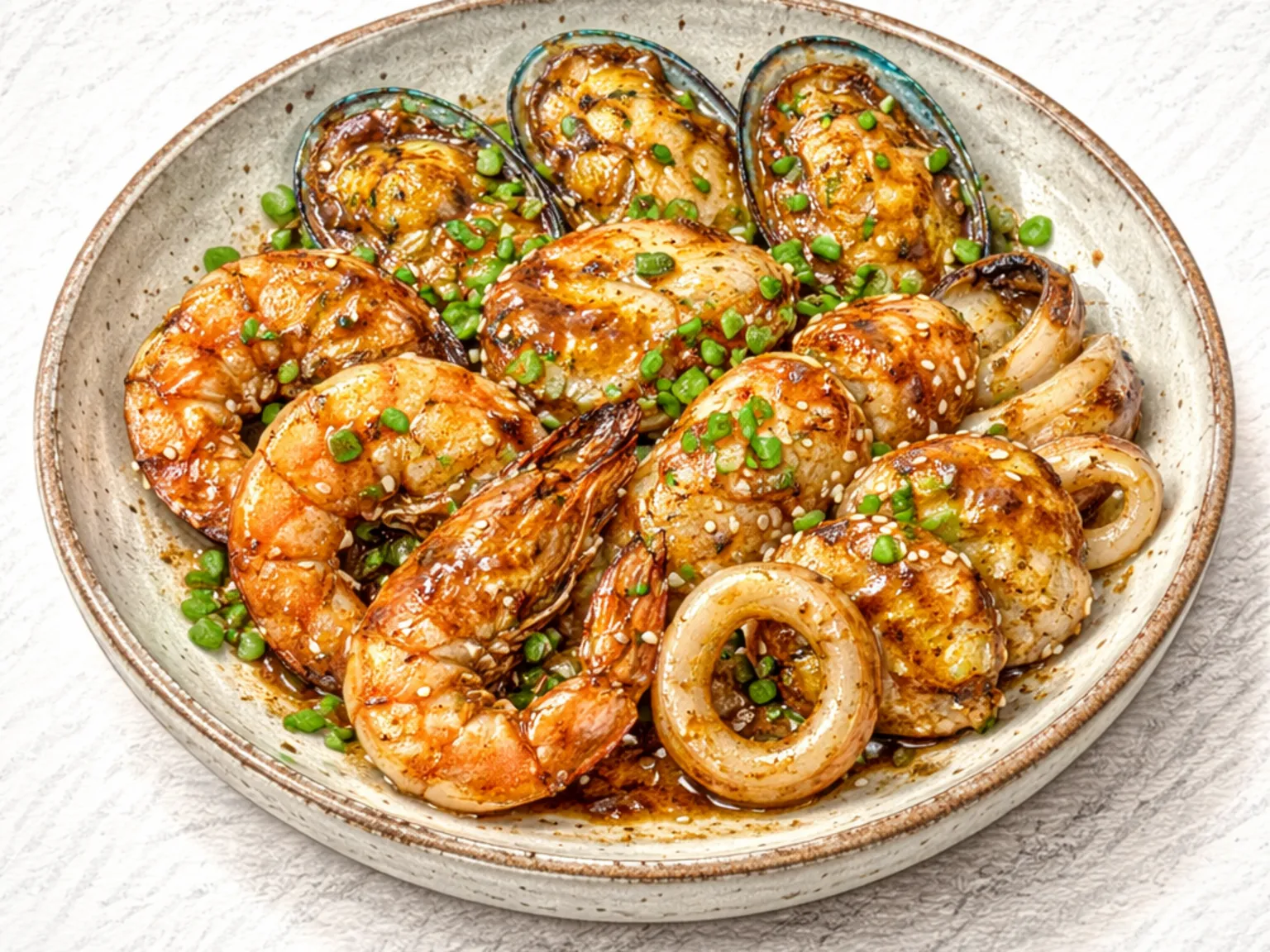
Haemul doenjang-gui is a Korean grilled seafood dish where shrimp and squid are coated with a sauce of doenjang, a touch of gochujang, minced garlic, sesame oil, and sugar, then grilled or pan-fried until the paste caramelizes. The fermented soybean paste's deep, earthy umami layers over the seafood's natural brine, and the small addition of gochujang provides a background warmth without overpowering the doenjang's nuttiness. Sugar in the sauce is essential-without it, the high-protein doenjang scorches on the grill before it can develop the fragrant, mahogany-brown caramelization that defines the dish. The seafood is done when the sauce darkens and becomes aromatic, which is the precise moment when the doenjang's concentrated savory flavor peaks.
Adjust Servings
Instructions
- 1
Mix doenjang, gochujang, garlic, sesame oil, and sugar for the sauce.
- 2
Prepare seafood and coat with sauce.
- 3
Heat grill or pan and add seafood.
- 4
Grill over medium heat, turning once.
- 5
Done when the sauce is caramelized and fragrant.
As an Amazon Associate, we may earn from qualifying purchases.
Tips
Nutrition (per serving)
More Recipes

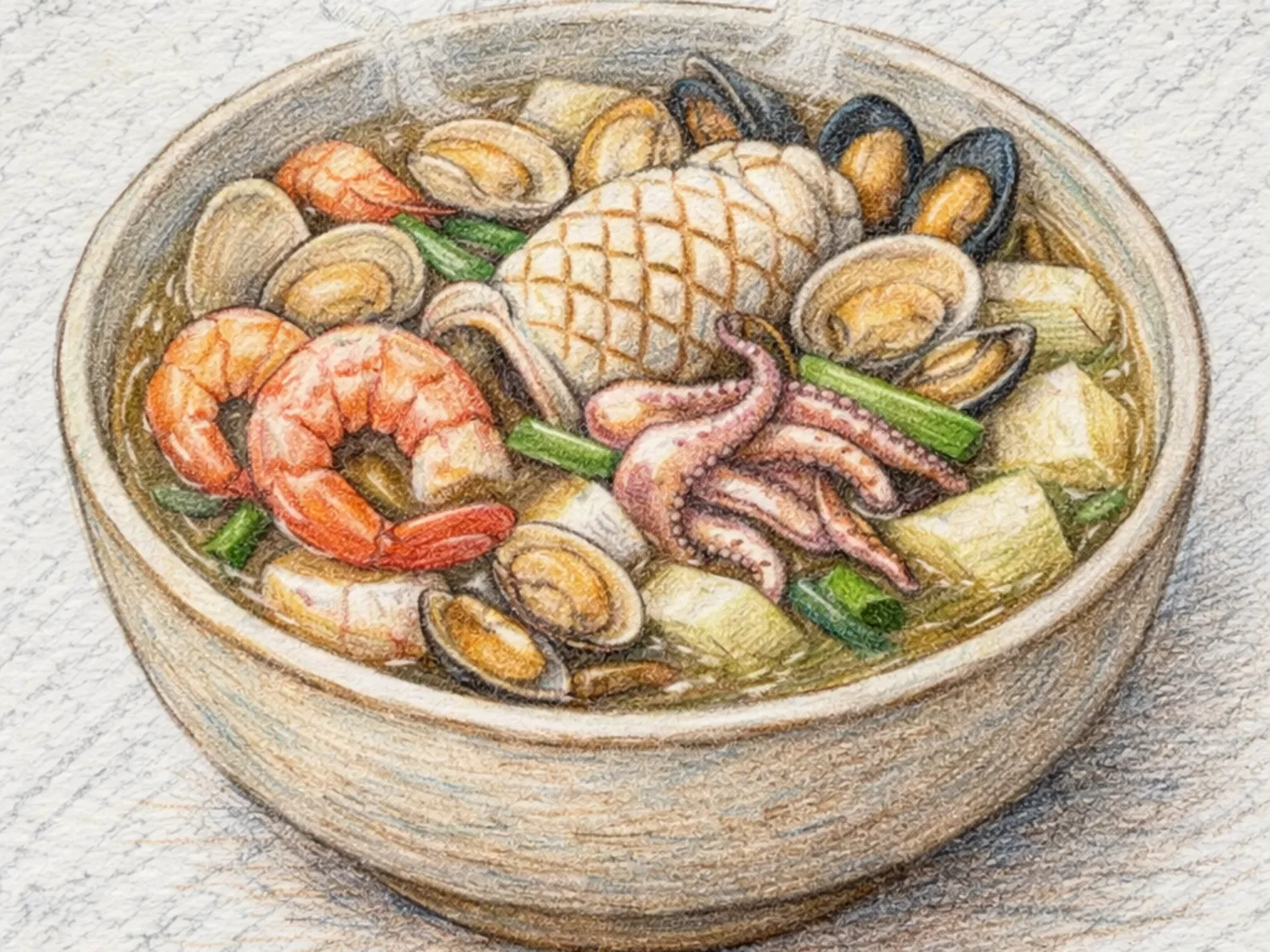
Soybean Paste Stew with Clams
Korea's most comforting one-pot stew -- briny clams pop open in a bubbling doenjang broth, releasing their salty liquor into fermented soybean paste for a flavor no other stew can match. Manila clams are purged of sand, then added to a pot of doenjang-laced broth where they pop open and surrender their salty liquor into the soup, transforming the base from merely savory to sea-tinged and complex. Zucchini softens in the bubbling liquid and contributes a natural sweetness, while blocks of tofu act as sponges, soaking up the broth and bursting with hot, flavorful liquid when bitten. Sliced cheongyang chili peppers are stirred in to cut through the heaviness of the fermented paste and lift the overall flavor. The stew is served bubbling in an earthenware pot alongside rice - many Koreans spoon the broth directly over their bowl - and adapts to any season: light with summer vegetables from the refrigerator, or piping hot in a stone pot during winter.

Korean Grilled Broccoli with Soybean Paste
Broccoli doenjang-gui is a Korean roasted broccoli dish where bite-sized florets are blanched for just one minute, tossed in olive oil, coated with a thick paste of doenjang, gochujang, garlic, and oligosaccharide syrup, then baked at 200 degrees Celsius for twelve minutes. The brief blanching softens the stems just enough while preserving crunch, and coating with oil first ensures the paste clings evenly rather than sliding off. High oven heat chars the edges of the florets, concentrating the fermented soybean paste into a deeply savory, slightly smoky crust. Sesame seeds scattered on at the end add a toasted nuttiness that rounds out the salty-spicy profile.

Korean Grilled Scallops (Butter Garlic Shell-On Scallop Grill)
Garibi-gui is a Korean grilled scallop dish where shell-on scallops are placed directly on the grill until they pop open, then topped with butter and minced garlic that sizzle and melt into the adductor muscle. The natural sweetness of the scallop melds with the richness of melted butter and the sharp bite of garlic, and a cap of mozzarella cheese added for the final two to three minutes creates a stretchy, golden layer over the plump flesh. Restraint with cheese is key-covering only about half the scallop prevents the dairy from overwhelming the clean marine sweetness underneath. Over charcoal, the shells channel smoky heat directly into the meat, adding another layer of flavor that a stovetop cannot replicate.

Korean Brisket Soybean Paste Stew
This version of doenjang jjigae adds thinly sliced beef brisket to the classic soybean paste stew. The marbled brisket renders its fat into the rice-rinsing water base, giving the broth a richer, more full-bodied character than the standard recipe. Potato, zucchini, tofu, and a cheongyang chili round out the pot, making each spoonful a mix of creamy, starchy, and spicy elements.

Korean Grilled Soy-Doenjang Pork
Maekjeok-gui is a traditional Korean grilled pork dish with roots tracing back to the Goguryeo dynasty, made by marinating thick-cut pork neck in a paste of doenjang, soy sauce, rice syrup, minced garlic, ginger powder, sesame oil, and black pepper. The fermented soybean paste fuses with the pork's intramuscular fat during grilling, producing a deep, savory intensity, while the viscous rice syrup transforms into a shiny glaze under heat. Shallow scoring on both sides of the pork allows the marinade to reach the center of each thick slice, and lowering the heat for the final glaze application prevents the doenjang from burning and turning bitter. Resting the meat for two minutes under sliced green onion before cutting lets the juices redistribute evenly.

Korean Mixed Grilled Seafood
Haemul-gui modeum is a Korean mixed grilled seafood platter where shrimp, squid, Manila clams, and scallops are lightly dressed in olive oil, salt, and black pepper, then grilled at different intervals to account for each ingredient's cook time. Shrimp and scallops need only two to three minutes, squid takes three to four, and clams stay on the grill just until their shells pop open-staggering the timing ensures everything finishes together at peak texture. Overcooking any element by even a minute turns it rubbery, so close attention is the most important ingredient in this dish. A squeeze of fresh lemon juice over the entire platter at the table brightens the natural sweetness of each shellfish and ties the assortment into a cohesive, clean-tasting spread.