Korean Seafood Doenjang Stew
Stews Easy

Korean Seafood Doenjang Stew

Quick answer

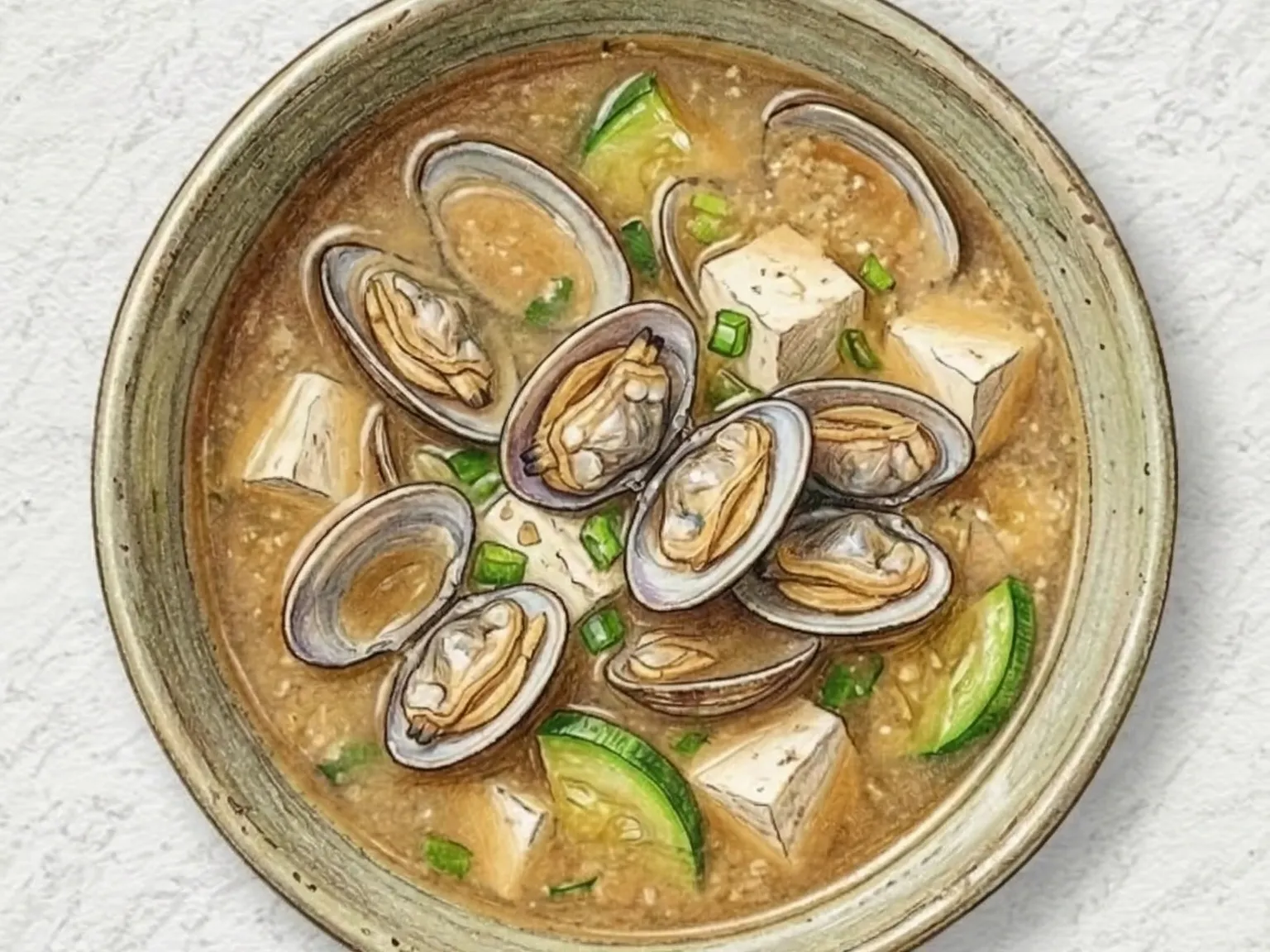
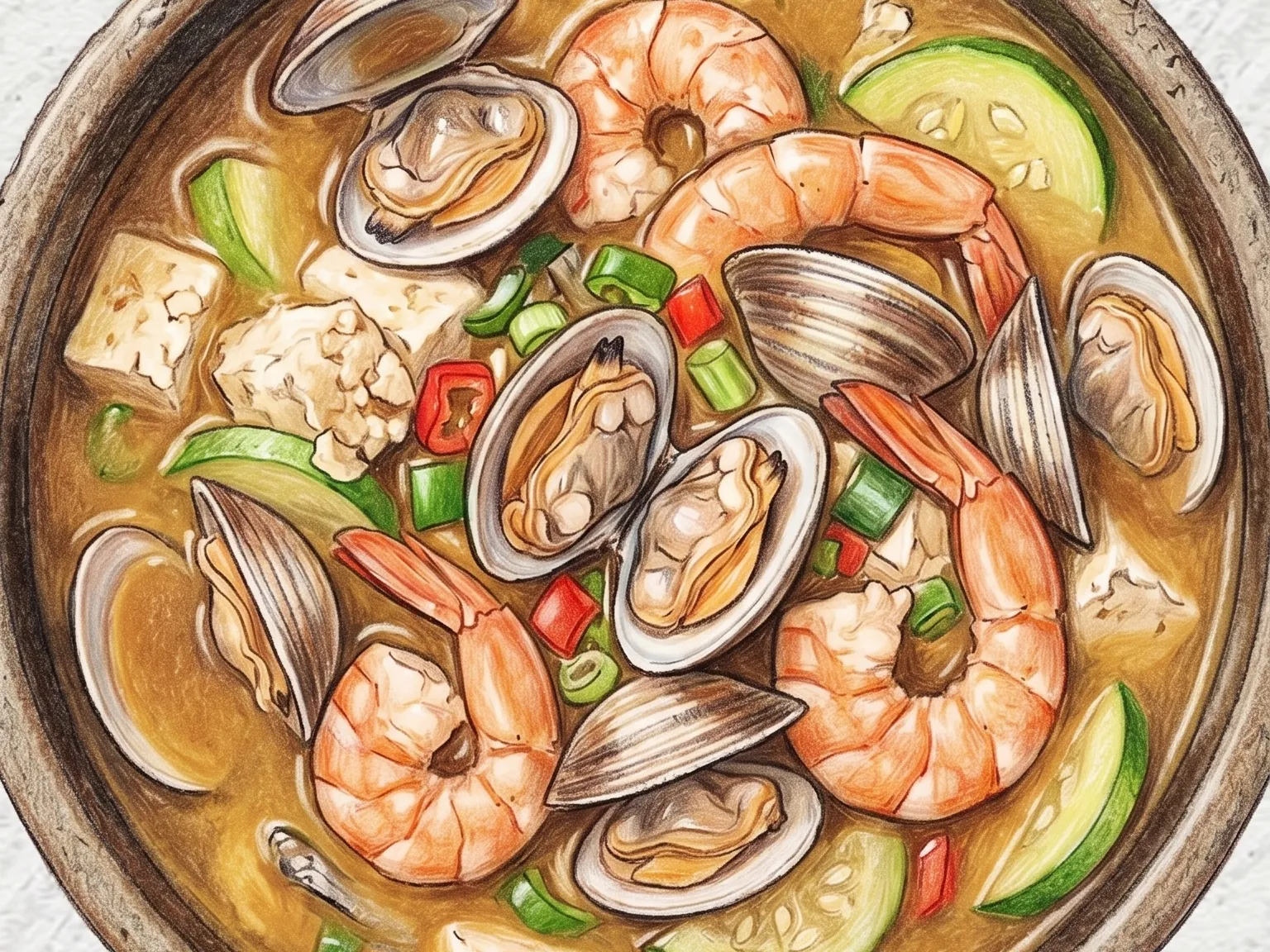
Haemul doenjang jjigae is a Korean soybean paste stew enriched with clams and shrimp.

What makes this special

  • Haemul doenjang jjigae incorporates briny juices from fresh clams and shrimp into a savory soybean paste base for a complex, oceanic fermented stew.
  • Clams opening release oceanic broth directly into the doenjang base
  • Shrimp stack a second seafood flavor layer over the clam foundation
Total time
35 min
Level
Easy
Servings
2 servings
Ingredients
6
Calories
230 kcal
Protein
24 g

Key ingredients

ClamsShrimpDoenjangTofuZucchini

Core cooking flow

  1. 1 Purge 150g clams in salted water until no grit remains, then rub and rinse them under running water.
  2. 2 Cut 200g tofu into bite size pieces and slice half a zucchini slightly thick, not paper thin.
  3. 3 Pour 500ml kelp and anchovy broth into a pot and bring it to a steady boil over medium heat.

Haemul doenjang jjigae is a Korean soybean paste stew enriched with clams and shrimp. The broth is built on a kelp and dried anchovy stock into which doenjang is dissolved, then clams are added and the pot is brought to a boil. As the clams open, they release their clear, briny liquor into the doenjang base, adding a layer of ocean flavor that plain vegetable stews cannot replicate. Shrimp go in next and contribute their own distinct seafood sweetness. Tofu and zucchini round out the stew with soft, yielding textures that absorb the enriched broth fully. Clams should be purged in salted water beforehand to eliminate any grit, and doenjang is best added conservatively at the start and adjusted gradually during cooking to avoid over-salting. The seafood transforms the already satisfying doenjang stew into something noticeably more layered and complex, making it equally at home as a rice accompaniment or as food alongside drinks.

Prep 15min Cook 20min 2 servings

Instructions

Read the steps as a cooking flow: prep, heat, seasoning, doneness control, and finish.

6 steps
  1. 1
    Season

    Purge 150g clams in salted water until no grit remains, then rub and rinse them under running water.

    Peel 100g shrimp and remove the dark vein from the back so the stew tastes clean.

  2. 2
    Prep

    Cut 200g tofu into bite size pieces and slice half a zucchini slightly thick, not paper thin.

    This keeps the tofu from crumbling and helps the zucchini soften without disappearing into the broth.

  3. 3
    Control

    Pour 500ml kelp and anchovy broth into a pot and bring it to a steady boil over medium heat.

    When bubbles gather around the edge, dissolve the 2 tablespoons of doenjang gradually.

  4. 4
    Control

    When the broth boils again, add the tofu and zucchini and simmer over medium low heat for about 3 minutes.

    Stir gently from the bottom so the doenjang does not settle and scorch.

  5. 5
    Heat

    Add the clams and shrimp, then raise the heat briefly to high so the pot returns to a boil.

    Stop extended boiling once the clams open and the shrimp turn pink, keeping the seafood tender.

  6. 6
    Finish

    When the broth tastes deeper, add the minced garlic and simmer for only 30 seconds more.

    Taste before serving, loosen with a little more broth if it is salty, and serve the stew hot.

After the steps

Pick a recipe that fits this dish.

Continue with shared ingredients, meal pairings, or a similar method.

Recipes That Go Well With This

More Stews →

Based on shared ingredients and meal pairing

Korean Crab Doenjang Stew
Shared ingredient: firm tofu Stews

Korean Crab Doenjang Stew

Gejang-jjigae is a Korean stew made by simmering a whole blue crab in an anchovy broth base seasoned with doenjang, the fermented soybean paste. The crab shell and meat release a concentrated seafood stock as they cook, and that liquid merges with the doenjang to create a broth that is simultaneously briny, earthy, and deeply savory. Using anchovy broth as the foundation amplifies the oceanic notes rather than diluting them, so both the doenjang umami and the crab sweetness come through at the same time. Tofu and zucchini absorb the rich cooking liquid throughout the simmering process, becoming flavorful in their own right rather than acting merely as filler. The tofu in particular pulls in the solids that settle from the fermented paste, softening into a silky texture that contrasts with the firmer crab meat. Picking the sweet crab meat out of the shell with chopsticks is one of the characteristic pleasures of eating this stew, and the contrast between the naturally sweet crab flesh and the bold, fermented broth gives each mouthful a satisfying complexity.

Korean Apple Snail Doenjang Stew
Shared ingredient: firm tofu Stews

Korean Apple Snail Doenjang Stew

Ureong doenjang jjigae is a rustic Korean stew featuring chewy apple snails and fermented soybean paste in an anchovy broth. Rooted in traditional Korean countryside cooking where snails were gathered from rice paddies, this dish highlights the contrast between the mild, chewy snails and the deep flavor of the doenjang. Preparing the dish begins by rubbing the snails in salted water to remove grit. Next, doenjang is dissolved into boiling anchovy broth, and sliced zucchini is added to cook until tender. The cleaned snails are added along with minced garlic and simmered briefly. It is important to cook the snails for only five to six minutes, as overcooking makes them tough. Tofu and green onions are added at the very end to complete the stew. The resulting dish offers a rich broth with a pleasant contrast of soft tofu and chewy snails.

Korean Kimchi Rice Bowl (Stir-Fried Aged Kimchi over Steamed Rice)
Serve together Rice

Korean Kimchi Rice Bowl (Stir-Fried Aged Kimchi over Steamed Rice)

Stir-frying aged kimchi in a hot pan drives off moisture and triggers caramelization, mellowing the sharpness into a deeper, sweeter intensity that raw kimchi cannot replicate. Cooking the kimchi over medium-high heat for five to seven minutes transforms its texture from wet and tangy to slightly charred and richly savory. A splash of soy sauce and a drizzle of sesame oil finish the seasoning with a salty, nutty note. Spooned over a bowl of steamed rice and topped with a single sunny-side-up egg, the dish is deceptively simple in construction. Using well-fermented kimchi like mukeunji introduces complex layers of lactic sourness and umami depth that more than compensate for the minimal ingredient list. Adding thin slices of pork shoulder or a can of tuna to the pan alongside the kimchi turns it into a more substantial meal with added protein. The whole dish comes together in under fifteen minutes, making it the first choice Korean rice bowl when the pantry is almost bare.

Korean Mushroom Doenjang Stew
Similar recipe Stews

Korean Mushroom Doenjang Stew

Three types of mushrooms - shiitake, oyster, and enoki - are simmered together in doenjang-seasoned anchovy broth. The anchovy stock lays the foundational depth of umami, and each mushroom type adds its own compounds to the broth as they cook, building flavor in distinct layers. Shiitake holds its meaty chew, oyster mushroom separates into silky strands along its grain, and enoki stays crisp, so the bowl delivers varied textures from a single pot. Soft tofu absorbs the broth all the way through, carrying the fermented soybean flavor to the center of each cube. The stew is satisfying as a full meal without any meat. A sliced cheongyang chili sharpens the finish if extra heat is wanted.

Serve with this

Korean Young Radish Kimchi
Side dishes Medium

Korean Young Radish Kimchi

Young radish greens and their slender stems are salted briefly, dressed in a gochugaru-based paste, and fermented into a kimchi that defines Korean summer eating. The greens are more delicate than mature radish, absorbing the seasoning quickly while retaining a refreshing crunch that lasts well into fermentation. Gochugaru and anchovy fish sauce form the backbone of the paste, delivering heat and deep umami in equal measure, while garlic lends a pungent undercurrent that mellows as the fermentation progresses. Once dressed, the radish greens release their own moisture, creating a naturally occurring brine that becomes the hallmark of yeolmu kimchi: a tangy, chili-flecked liquid that can be spooned over cold noodles or rice. Even half a day at room temperature kicks off the fermentation, introducing a sharp, fizzy acidity that signals the kimchi is alive. Transferring it to the refrigerator slows the process and stabilizes the flavor at a bright, appetizing sourness. Draped over bibim-guksu or naengmyeon, it brings a cooling, spicy bite that defines the Korean summer table.

🏠 Everyday 🥗 Light & Healthy
Prep 30min 4 servings
Korean Fermented Kale Kimchi
Kimchi Medium

Korean Fermented Kale Kimchi

Kale kimchi is made by wilting kale leaves in coarse salt, then tossing them with julienned radish, scallions, gochugaru, soup soy sauce, and pear puree before fermenting. The kale's strong green flavor mellows during fermentation while its sturdy leaf structure maintains a satisfying chew, and the radish strips add a crisp counterpoint to the soft seasoning. Pear puree wraps around the chili heat with fruit sweetness, and soup soy sauce anchors the seasoning with a quiet umami depth. Made using the same technique as napa cabbage kimchi but carrying kale's distinctive slight bitterness, this version adds a layer of complexity and nutritional density to the traditional format. Kale requires less salting time than napa cabbage, and weighting it down evenly during the process ensures consistent wilting throughout the batch.

🍱 Lunchbox 🏠 Everyday
Prep 30min Cook 5min 4 servings
Korean Dried Radish Greens Pancake
Pancakes Easy

Korean Dried Radish Greens Pancake

Boiled dried radish greens are combined with doenjang and pan-fried into a dense, rustic jeon with deep fermented character. The fibrous texture of the radish greens gives the pancake a satisfying chew, and the soybean paste saturates the batter so thoroughly that no dipping sauce is necessary. Buckwheat flour adds an earthy coarseness that suits the greens well. Cheongyang chili provides a spicy accent throughout. Minced garlic benefits from a brief saute in oil before being mixed into the batter-the raw edge cooks off and the garlic's savory depth integrates fully into the finished pancake. Cooking over low heat lets the inside set without burning the outside, producing a crisp surface and a tender, flavorful center.

🍺 Bar Snacks ⚡ Quick
Prep 18min Cook 10min 2 servings

Similar recipes

Korean Silken Tofu Seafood Stew
Stews Easy

Korean Silken Tofu Seafood Stew

Sundubu haemul jjigae is a seafood soft tofu stew that combines silken tofu with shrimp and Manila clams in an anchovy stock seasoned with gochujang and Korean chili flakes. The aromatics are stir-fried in sesame oil first to build a deeper base before the stock is added. As the shrimp and clams cook through, they release their own briny juices into the spicy broth and push the umami noticeably higher. An egg cracked in at the end binds gently with the silken tofu, adding richness and a slight body to the broth. Deveining the shrimp and removing the back intestine keeps the flavor clean, and soaking the clams in lightly salted water beforehand purges any sand that would otherwise cloud the stock.

🏠 Everyday ⚡ Quick
Prep 15min Cook 15min 2 servings
Korean Seafood Rice Bowl (Shrimp Squid Clam Starchy Sauce Bowl)
Rice Easy

Korean Seafood Rice Bowl (Shrimp Squid Clam Starchy Sauce Bowl)

Haemul deopbap is a Korean seafood rice bowl built on a thick, glossy sauce that starts with garlic stir-fried over high heat before shrimp, squid, and clams are added and tossed together. Oyster sauce and soy sauce form the seasoning base - the oyster sauce brings a rounded, caramel-like sweetness and body, while the soy adds depth and color. A cornstarch slurry stirred in at the end transforms the thin pan juices into a glossy, clingy sauce that coats every piece of seafood and, when ladled over rice, seeps downward slowly rather than running off. The key to keeping the seafood tender is to add it last and remove the pan from heat before it overcooks - squid turns rubbery within seconds of going past done, and shrimp loses its snap if left even a moment too long. Clams contribute their natural briny-sweet liquor to the sauce, adding a layer of umami that oyster sauce alone cannot replicate. Browning the garlic first in oil before anything else goes into the pan reduces any raw edge in the flavor and lays a savory, aromatic foundation for the entire dish. The whole process takes about 25 minutes from start to finish, making this one of the more practical weeknight meals in the Korean home kitchen.

🏠 Everyday ⚡ Quick
Prep 15min Cook 10min 2 servings
Korean Boiled Seafood Broth
Soups Easy

Korean Boiled Seafood Broth

Haemul suyuk-tang is a clear Korean seafood soup where clams, shrimp, and squid are simmered together in lightly seasoned water with garlic and green onion. The defining quality of this dish is its restraint: no gochujang, no doenjang, no complex spice paste, just salt and the natural briny liquor each ingredient contributes to the pot. The clams open first and release their saline juice into the water, establishing the initial salinity of the broth. As the shrimp cook they turn pink and contribute a sweet current beneath the salt. The squid firms and curls into rings, adding a chewy textural counterpoint to the soft clam meat and the tender shrimp. Each of these three seafoods produces a different form of marine umami, and together they layer into a broth that reads as remarkably full despite being completely transparent. There is no competition from fermented paste or chili, so the ocean flavor comes through cleanly and directly. The visual effect of the finished bowl is also appealing: open clam shells scattered through the pot, curved pink shrimp, and white squid rings give the bowl a sense of abundance without heaviness. The soup works well as a light meal alongside rice, and it is the dish to reach for when the goal is to taste the seafood itself without interference from heavier seasonings.

🏠 Everyday 🍺 Bar Snacks
Prep 15min Cook 25min 3 servings

Tips

Don't overcook the seafood - add it at the end to keep it tender.

Nutrition (per serving)

Calories
230
kcal
Protein
24
g
Carbs
10
g
Fat
8
g