Korean Jellyfish Salad (Chilled Mustard Vinegar Dressed Cold Dish)
Haepari-naengchae starts with salted jellyfish rinsed thoroughly in cold water to remove excess brine, then blanched in boiling water for about ten seconds to firm up its texture before being chilled. The jellyfish is cut into strips and tossed with julienned cucumber and bell pepper, then dressed in a mixture of vinegar, sugar, and Korean mustard that delivers a sharp nasal heat followed by bright acidity. A small drizzle of sesame oil ties the dish together with a nutty gloss. Served cold, the jellyfish maintains a distinctive crunchy, snappy bite that contrasts with the crisp vegetables.
Adjust Servings
Instructions
- 1
Rinse jellyfish thoroughly and soak for 15 minutes to reduce saltiness.
- 2
Blanch in boiling water for 10 seconds, then cool and drain well.
- 3
Julienne cucumber and bell pepper.
- 4
Mix vinegar, sugar, mustard, and sesame oil for dressing.
- 5
Toss jellyfish and vegetables with dressing and serve chilled.
As an Amazon Associate, we may earn from qualifying purchases.
Tips
Nutrition (per serving)
More Recipes

Korean Poached Octopus Slices
Muneo-sukhoe is a Korean poached octopus dish prepared by simmering whole raw octopus in water with radish, green onion, and ginger for about 20 minutes, then slicing it thin and serving with vinegared gochujang. Before cooking, the octopus is rubbed thoroughly with salt to strip away its slippery mucus, which is the critical step for eliminating any off-putting ocean smell. Turning off the heat and letting the octopus rest in the pot for five minutes relaxes the muscle fibers, yielding a texture that is chewy without being tough. The radish in the poaching liquid absorbs impurities, while ginger suppresses fishiness, leaving the sliced octopus clean-tasting and ready for the tangy-spicy dipping sauce.

Korean Soybean Sprout Cold Salad
Kongnamul-naengchae is a chilled Korean salad of boiled soybean sprouts and vegetables tossed in mustard dressing - conceptually distinct from regular kongnamul-muchim because it is designed to be served cold. The mustard sauce defines the dish: mustard powder (or tube mustard) mixed with vinegar, sugar, and salt creates a sharp, nose-tingling heat alongside a sweet-sour brightness. Prepared mustard needs five to ten minutes of resting after hydration for the allyl isothiocyanate compound to fully develop its pungency. Julienned cucumber and carrot release moisture, so they should be briefly salted or patted dry to prevent diluting the sauce. Chilling for at least ten minutes before serving maximizes the refreshing effect, and cold temperatures actually sharpen the mustard's bite. This banchan excels as a palate cleanser alongside fatty main dishes like samgyeopsal or bulgogi.

Korean Butter-Grilled Mushrooms
This dish takes thickly sliced king oyster and button mushrooms, sears them in melted butter over high heat for about four minutes until golden, then finishes with a quick toss of soy sauce for a glossy coating. Garlic goes in with the butter at the start, releasing its fragrance into the fat before the mushrooms hit the pan. A crack of black pepper and a scatter of chopped chives complete the plate, delivering concentrated umami without any meat.

Korean Poached Squid Slices
Ojingeo-sukhoe is a Korean poached squid dish where cleaned whole squid is blanched for just two to three minutes in boiling water seasoned with salt, cooking wine, and green onion, then sliced and served with vinegared gochujang. Removing the innards thoroughly and rinsing well is the key step for a clean taste, and the cooking wine in the poaching liquid neutralizes any remaining fishiness. Pulling the squid out promptly and letting it cool briefly prevents carryover cooking from toughening the flesh, preserving smooth, clean-cut slices. The tangy, spicy dipping sauce provides a sharp contrast against the mild squid, turning a minimalist preparation into a dish with genuine depth of flavor.

Korean Butter-Grilled Squid Beaks
Ojingeo-ip-butter-gui is a Korean bar snack made by searing squid beaks in melted butter with minced garlic over high heat. Thoroughly drying the squid beaks beforehand is essential: residual moisture causes splattering and prevents the butter from forming a direct, fragrant coating on the surface. Three minutes of rapid stir-frying keeps the texture springy and chewy rather than rubbery, and adding soy sauce and cooking wine creates a savory glaze as the liquid rapidly evaporates. A finish of red chili flakes and black pepper introduces a warm heat that lingers behind the buttery garlic flavor, making each piece compulsively snackable.

Yuja Mustard Chicken Naengchae Salad
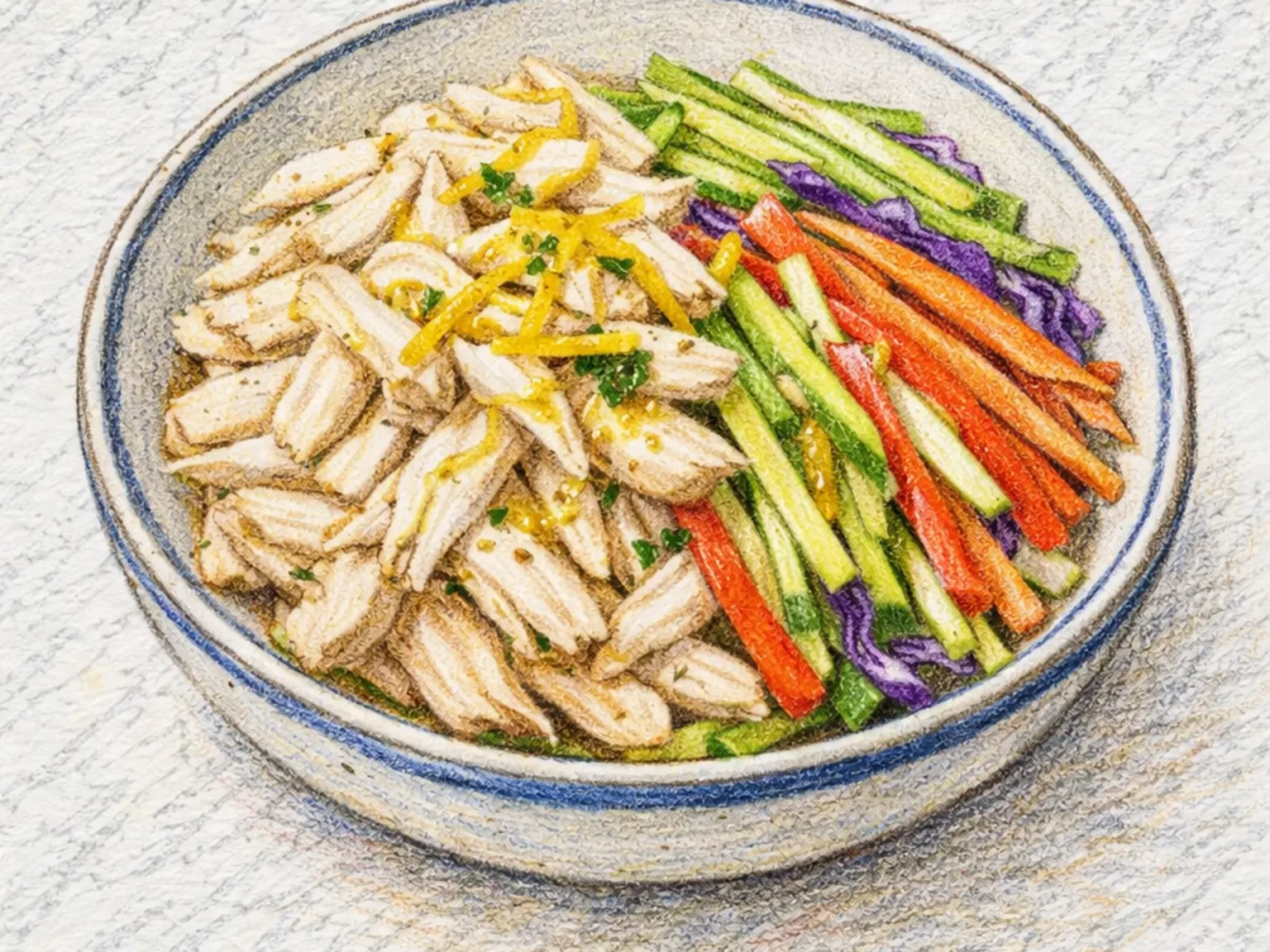
Yuja mustard chicken naengchae salad shreds boiled chicken breast along the grain and tosses it with julienned cucumber, Korean pear, bell pepper, and cabbage in a dressing of yuja marmalade, Korean mustard paste, vinegar, and sesame oil. Soaking the chicken breast in lightly salted water for ten minutes before boiling helps the muscle fibers retain moisture, keeping the shredded meat tender rather than dry. The yuja marmalade brings a bright citrus fragrance, and the Korean mustard delivers a sharp, nasal heat - vinegar binds these two strong personalities into a cohesive dressing. Slicing the pear just before serving preserves its juice and crisp sweetness. Adding two-thirds of the dressing first, then tasting and adjusting, prevents the acidity from overwhelming the delicate balance of the salad.