Korean Seafood & Chicken Herbal Soup
Quick answer
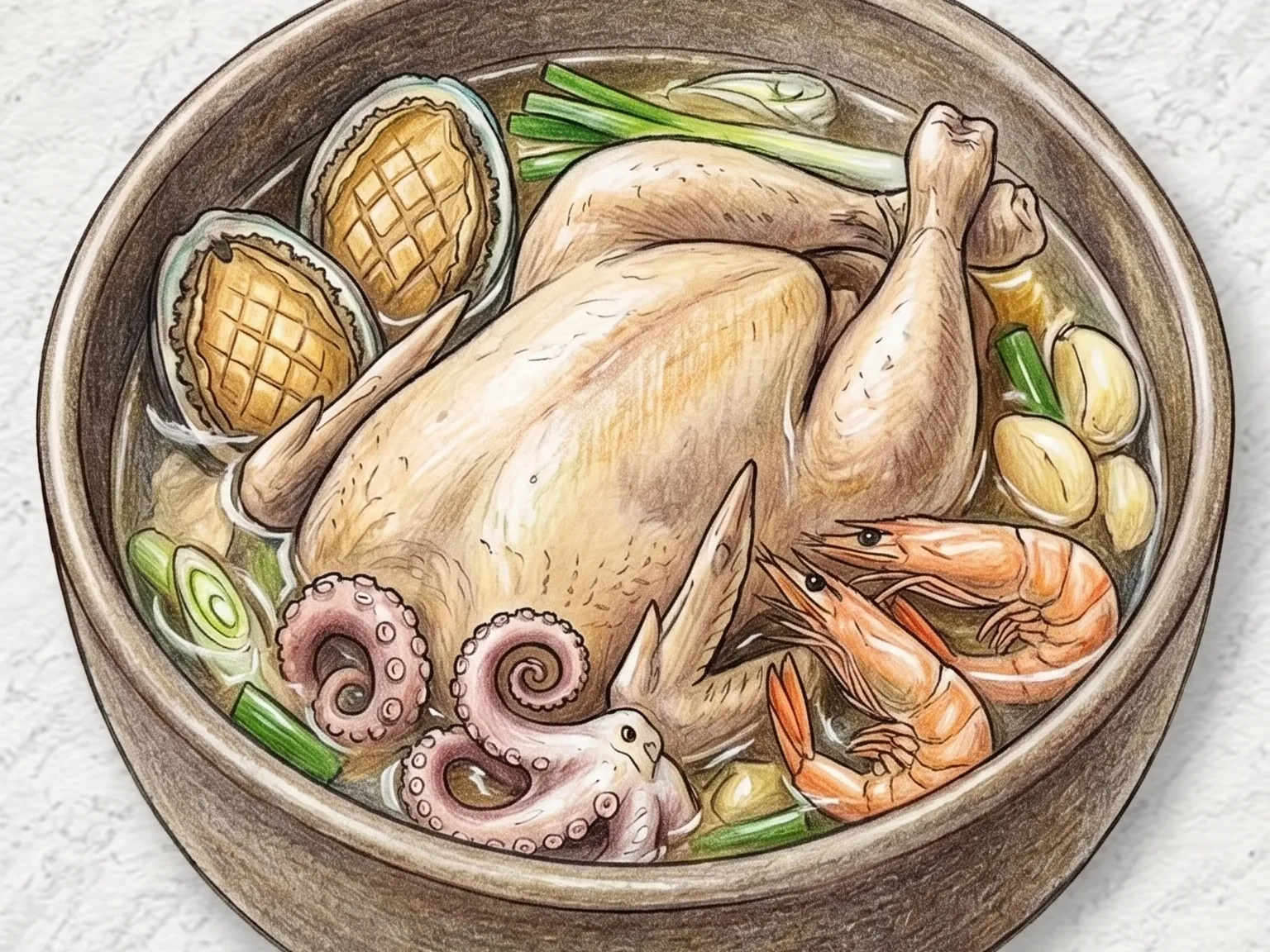
Haesintang is a premium Korean restorative soup that combines a whole chicken with abalone, octopus, and shrimp, simmered together in a single large pot for an extended period.
What makes this special
- Haesintang delivers a restorative soup pairing a whole chicken with fresh abalone and octopus.
- Chicken simmered 40 minutes first, then abalone and octopus added
- Abalone liver intensifies the broth when included
Key ingredients
Core cooking flow
- 1 Trim large fat deposits and any remaining innards from 1 whole chicken.
- 2 Put 2200 ml water, the chicken, 1 green onion, and 12 garlic cloves in a large pot.
- 3 Once boiling, lower the heat to medium low and simmer for at least 1 hour.
Haesintang is a premium Korean restorative soup that combines a whole chicken with abalone, octopus, and shrimp, simmered together in a single large pot for an extended period. The chicken goes in first and cooks for well over an hour, building a cloudy, collagen-rich stock with a naturally silky body. The seafood is added later in the process to avoid overcooking: abalone stays chewy, octopus retains its characteristic bounce, and shrimp turn just pink and stop there. The interaction between the poultry fat and the marine umami produces a broth with a depth that neither chicken alone nor seafood alone could achieve. Seasoning is deliberately restrained, typically garlic, green onion, and salt, so the flavors of the ingredients themselves define the soup rather than any added sauce or spice. In Korea, haesintang is categorized as a stamina food, most commonly eaten on the hottest days of summer in the traditional belief that rich nourishment combats heat fatigue. Its combination of two high-end protein sources places it firmly in the celebratory register of Korean home and restaurant cooking.
Instructions
Read the steps as a cooking flow: prep, heat, seasoning, doneness control, and finish.
- 1Step
Trim large fat deposits and any remaining innards from 1 whole chicken.
Rinse the cavity well under cold water, then drain it briefly so loose blood and residue do not cloud the broth too heavily.
- 2Control
Put 2200 ml water, the chicken, 1 green onion, and 12 garlic cloves in a large pot.
Bring to a boil over high heat, then skim off foam as it rises to keep the broth clean.
- 3Control
Once boiling, lower the heat to medium low and simmer for at least 1 hour.
Keep a gentle bubbling pace; the broth should turn cloudy and the chicken meat should soften before adding seafood.
- 4Prep
Scrub 4 abalone well with a brush while keeping the shells on, and clean 2 small octopus by removing the innards.
Cut the octopus into manageable pieces; keep abalone innards only if a deeper broth is desired.
- 5Control
Add the abalone and octopus to the broth and simmer over medium heat for about 10 minutes.
Stop pushing this stage once the octopus turns opaque and springy, since longer cooking can make it tough.
- 6Finish
Add 150 g shrimp at the end and simmer only 3 to 5 minutes.
When the shells turn red and the flesh is just firm, season with 1 tsp salt, taste the broth, and serve immediately.
After the steps
Pick a recipe that fits this dish.
Continue with shared ingredients, meal pairings, or a similar method.
Recipes That Go Well With This
More Soups →Based on shared ingredients and meal pairing
Korean Astragalus Chicken Soup
Hwanggi-dak-tang is a Korean herbal chicken soup built around astragalus root, a staple of traditional East Asian medicine long valued for its restorative and immune-supporting properties. The dried root, known in Korean as hwanggi, carries a faintly sweet, earthy flavor that is subtle enough to complement rather than dominate the broth. A whole chicken simmers for well over an hour with the dried root, jujubes, and garlic, producing a clear yet full-bodied liquid with a gentle herbal undertone that deepens as the pot reduces. The extended cooking dissolves collagen from the skin, cartilage, and joints, giving the broth a velvety weight that coats the palate without turning cloudy. The chicken meat, by the time the soup is ready, pulls apart with almost no resistance. Jujubes gradually soften into the broth over the long cooking time and add a subtle fruity sweetness that bridges the medicinal and culinary aspects of the dish without making it taste overtly medicinal. Seasoning is kept to salt alone so the herb-infused stock remains the focus. In Korea, this soup appears most often during the seasonal transitions of early summer and late autumn, or during recovery from illness, typically served steaming in a heavy stone pot.
Korean Octopus Clear Soup
Yeonpo-tang is a Korean clear octopus soup cooked with minimal seasonings to highlight the natural qualities of its ingredients. The cooking process starts by simmering sliced Korean radish in anchovy stock for ten minutes to establish a clear and sweet vegetable base. Cleaned octopus pieces and minced garlic are then added to the boiling broth and cooked for only three minutes to prevent the seafood from turning rubbery. After adding green onions and skimming off any foam to keep the broth clear, the soup is seasoned with salt. Right before turning off the heat, water dropwort is added for twenty seconds to wilt. This introduces a fresh herbal aroma that complements the ocean flavor of the tender octopus.
Korean Seaweed Roe Pot Rice
The preparation starts by layering finely diced radish at the bottom of a heavy pot before adding soaked rice. A specific technique defines this dish: warming the salted pollock roe and butter using only the residual heat of the vessel after the flame is extinguished. Avoiding direct heat prevents the roe's proteins from tightening into a dry or crumbly texture. Instead, the indirect warmth maintains a soft consistency where individual eggs pop and release their salty essence into the grains. As the butter melts, it coats each piece of rice, acting as a bridge between the sharp saltiness of the fish roe and the mild nature of the rice. Throughout the cooking process, the radish pieces release moisture upward, ensuring the rice remains hydrated while contributing a subtle sweetness and a clean finish. Before the meal begins, crumbling gamtae over the surface introduces a distinct oceanic scent that sits above the savory layers of butter and roe. Sliced scallions provide a sharp, crisp contrast to the overall richness. Pouring hot water into the pot at the end creates a toasted rice water that clears the palate. It is important to place the roe and butter within four minutes of turning off the heat to ensure the remaining warmth is sufficient to soften the ingredients.
Korean Perilla Chicken Soup
Deulkkae samgye-guk is a perilla-enriched Korean chicken soup that delivers the warming, restorative depth of samgyetang with a considerably simpler preparation -- no glutinous rice to stuff, no ginseng required, just chicken pieces and perilla seed powder. The chicken is cut into large pieces and placed in cold water from the start, then simmered for forty minutes so the collagen and flavor compounds dissolve gradually into the broth, turning it milky and full-bodied. Perilla powder must be pre-dissolved in a small cup of water before being stirred in -- adding it dry causes it to clump -- and ten more minutes of gentle simmering allows its oils to emulsify fully into the chicken stock, creating a broth with a smooth, nutty coating on every sip. Seasoning with only soup soy sauce and salt lets the natural savoriness of the chicken and the distinctive fragrance of perilla come through without distraction. Rich in the omega-3 fatty acids of perilla seed and the protein of chicken, this soup is eaten as a restorative meal during hot summers and whenever energy levels drop.
Serve with this
Korean Beef & Shiitake Japchae
Japchae originated as a Joseon royal court dish of stir-fried vegetables before sweet potato glass noodles were added to create the form recognized today. This version pairs glass noodles with soy-marinated beef and sliced shiitake mushrooms. Each component cooks separately: beef and mushrooms stir-fried with garlic, spinach blanched and squeezed dry, carrots and onions sauteed until just tender. A final toss with sesame oil brings everything together. The noodles should be translucent and springy, carrying a sweet-salty soy glaze into each forkful. A standard presence on every Korean holiday table at Chuseok, Seollal, and birthday celebrations alike.
Korean Stuffed Perilla Leaf Pancakes
Kkae-ip-jeon are pan-fried perilla leaf parcels stuffed with a filling of ground pork and firm tofu, coated in flour and egg. The tofu must be squeezed dry in a cloth before mixing; excess moisture causes the filling to spread and stick to the pan. Garlic chives and onion add crunch and fragrance to the mix, and the filling seasoned with soy sauce and black pepper pairs cleanly with the perilla's strong herbal character. Dusting with flour first, then dipping in egg, produces an even coating, and frying covered over medium-low heat for two minutes per side ensures the filling is cooked through to the center. The bite-sized pieces work well as a packed lunch side or as bar food.
Korean Amaranth Greens Pickles
Bireumnamul jangajji is a soy-vinegar pickle of amaranth greens made by submerging the tender leaves in a boiled brine of soy sauce, vinegar, and sugar with cheongyang chili and garlic. The soft leaves absorb the pickling liquid within a day, taking on a balanced sweet-salty flavor that makes them ready to eat as banchan. Vinegar neutralizes the grassy raw taste of the greens, and the chili and garlic deliver a sharp, spicy finish that builds at the back of the palate. The flavor deepens noticeably from the second day onward, so chilling the jar longer intensifies the pickle. Refrigerated, this keeps well for two to three weeks, making it a practical way to preserve in-season amaranth greens through the summer.
Similar recipes
Korean Short Rib and Octopus Soup
Galnak-tang is a Korean restorative soup that combines beef short ribs and fresh octopus in the same pot, producing a broth that carries two distinct umami registers simultaneously. The ribs are simmered first until tender and the initial cooking water is discarded along with the rendered fat, leaving a cleaner base for the second round of simmering. Radish goes in early alongside the ribs, gently sweetening the broth while absorbing some of the beefy richness so that the seafood flavor added later can come through more clearly. Octopus is added only at the end and needs no more than two to three minutes in the hot broth. Any longer and the texture turns rubbery, losing the springy bite that makes octopus worth eating. As the octopus cooks, its juices release into the soup and merge with the beef stock, blending the fatty depth of braised meat with the clean, mineral brightness of the sea. A small amount of gochugaru added near the end gives the broth a mild heat that cuts through the richness without overwhelming either protein. In Korean food culture, this soup belongs to the category of stamina dishes called boyangsik, traditionally sought out during the three hottest days of summer, after illness, or the morning following a night of drinking.
Korean Mussel Soup Noodles
Honghap tangmyeon is a mussel noodle soup where a generous quantity of mussels is simmered to produce a deeply briny, clear broth that serves as the foundation of the entire dish without the use of prepared stock. The mussels release their concentrated sea flavor directly into the pot, and this self-made broth is what distinguishes the dish from simpler seafood noodle soups. Korean radish is cooked alongside from the start, lending a natural sweetness and a refreshing clarity to the liquid as it breaks down gently. Soup soy sauce and cooking wine adjust the seasoning and temper the salt that the mussels contribute, pulling the flavor into balance. Minced garlic and green onion build an aromatic layer that keeps any fishiness in check, leaving only a clean, deep savoriness in its place. A generous crack of black pepper over the steaming bowl sharpens the marine character of the broth and warms the palate. The noodles should not be overcooked; they need enough bite to hold up against the rich, hot liquid. A few slices of cheongyang chili on top add a brisk heat that makes the broth feel simultaneously cool and fiery, the defining sensation of good Korean seafood soup.
Korean Spicy Seafood Noodle Soup
Jjamppong is a Korean-Chinese noodle soup where seafood and vegetables are stir-fried in chili oil at very high heat before broth is added, a sequence that fundamentally shapes the soup. Blooming gochugaru in hot oil instead of adding it directly to liquid extracts fat-soluble compounds that carry a smoky, toasted depth the raw powder cannot contribute. Squid, mussels, and shrimp release their own juices during the fry stage, and those juices dissolve into the chicken stock when the liquid hits the pan. Cabbage and onion caramelize in the residual oil and give off natural sugars that temper the chili heat. Soy sauce binds the seasoning and gives the broth its reddish-brown depth. Springy fresh wheat noodles absorb the concentrated broth, and by the time they reach the table the noodles are already carrying the full flavor of the soup in every strand.