Hakka Noodles (Indo-Chinese Stir-Fried Noodles)
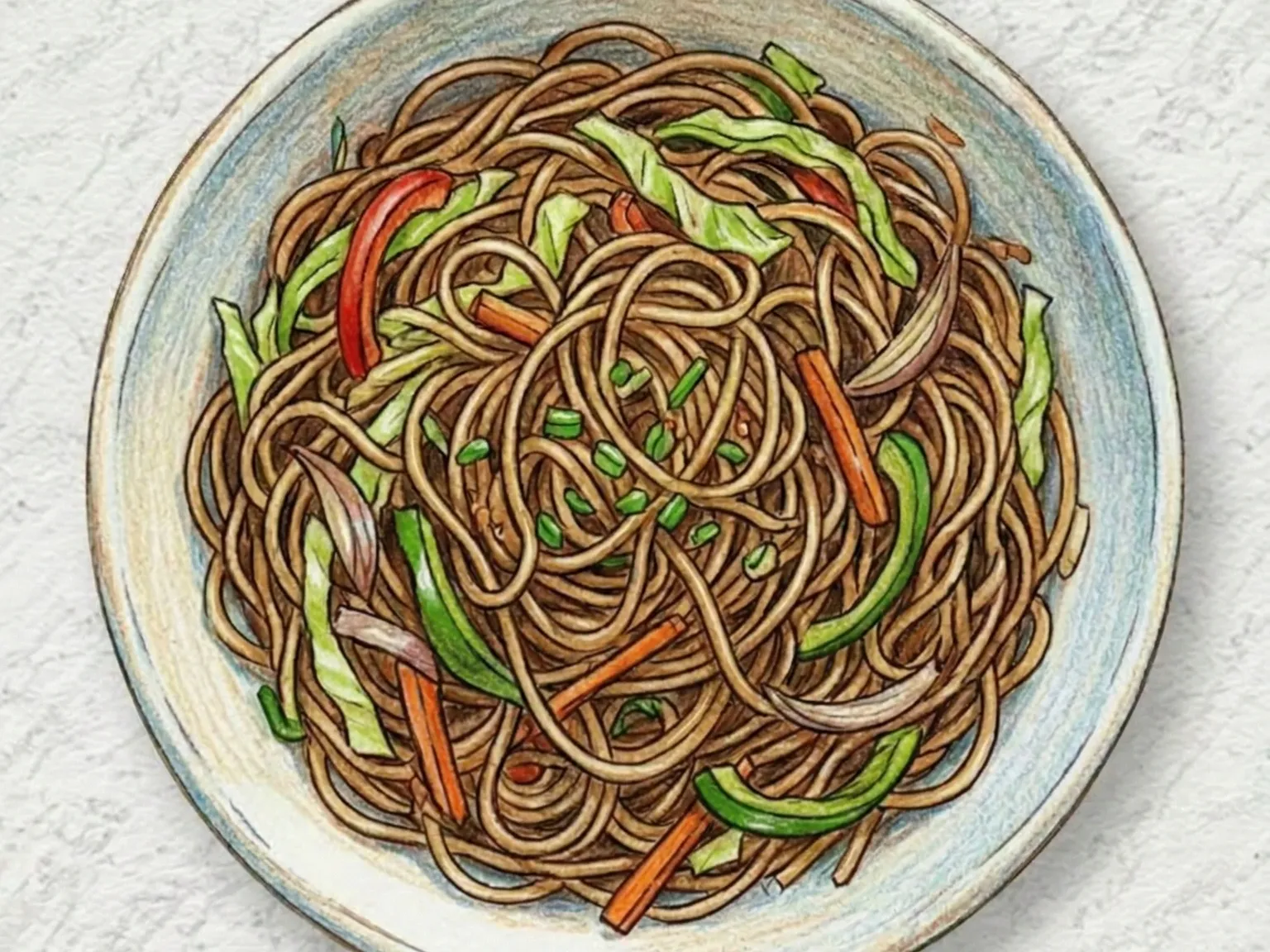
Hakka noodles belong to the Indo-Chinese tradition, a culinary fusion born in Kolkata's Chinese community that has since spread across India. Egg noodles are boiled just short of fully done, rinsed in cold water, and tossed with a little oil so they stay separate during stir-frying. The vegetables, julienned into matchstick-thin strips of cabbage, carrot, and bell pepper, are tossed in a smoking-hot wok for barely two minutes to keep their crunch. Seasoning is deliberately minimal: soy sauce for saltiness, rice vinegar for a faint tang, and black pepper for warmth. The speed of the cooking matters more than the ingredient list; the intense wok heat creates a smoky char on the noodles that no amount of seasoning can replicate at lower temperatures. Spring onions are stirred in only after the heat is off, keeping their bite and fresh aroma intact.
Adjust Servings
Instructions
- 1
Boil noodles, rinse cold, and toss with a little oil.
- 2
Julienne all vegetables finely.
- 3
Heat wok on high and stir-fry vegetables for 1-2 minutes.
- 4
Add noodles with soy sauce, vinegar, and pepper, tossing quickly.
- 5
Turn off heat and finish with spring onion.
As an Amazon Associate, we may earn from qualifying purchases.
Tips
Nutrition (per serving)
More Recipes

Chinese Chow Mein
Chinese chow mein stir-fries boiled noodles with vegetables and protein over fierce wok heat. The noodles are parboiled, lightly oiled, then tossed in a screaming-hot wok until the exterior crisps while the interior stays chewy. A sauce of soy, oyster sauce, and sesame oil lacquers each strand with salty depth and umami, while bean sprouts, cabbage, and carrot contribute crunch. The hallmark smoky flavor, known as wok hei, comes only from sustained high heat, so home cooks achieve the closest result by working in small batches and letting the pan recover between additions. Chicken, shrimp, or beef can replace one another as the main protein, making chow mein endlessly adaptable. A squeeze of lime at the table brightens the overall flavor.

Yangchunmian (Shanghai Clear Soy Broth Noodle Soup)
Yangchunmian is one of the most stripped-down noodle soups in Chinese cuisine, where a clear soy-seasoned broth and fresh wheat noodles are the entire focus. Chicken stock forms the base, seasoned with light soy sauce, a drizzle of sesame oil, and a dusting of white pepper. Chopped scallions float on top and blanched bok choy sits alongside the noodles - there is no meat, no elaborate garnish, nothing to distract from the broth itself. The critical finishing touch is a spoonful of scallion oil ladled over the surface, spreading an aromatic warmth across each bite. It has been a staple breakfast in Shanghai for generations.

Hui Guo Rou (Twice-Cooked Pork)
Hui guo rou, literally 'twice-cooked pork,' is a cornerstone of Sichuan cuisine where pork belly is first simmered whole until cooked through, then cooled and sliced thin before returning to the wok. The initial boiling renders some fat and firms the meat so it can be cut into uniform slices. In the wok, these slices fry until their edges curl and crisp slightly while the fat layers turn chewy rather than flabby. Doubanjiang, the fermented chili bean paste central to Sichuan cooking, goes in next along with fermented black beans, and together they create the dish's signature salty-spicy backbone. Soy sauce and a pinch of sugar round out the seasoning. Diagonally sliced leek and green bell pepper are added only in the final one to two minutes over high heat, keeping their crunch and fresh color against the deeply flavored pork.

Singapore Rice Noodles (Curry-Spiced Stir-Fried Vermicelli with Shrimp)
Singapore rice noodles are a Cantonese-style stir-fry of thin rice vermicelli tossed with curry powder, shrimp, and mixed vegetables over high heat. The curry powder is bloomed in hot oil at the edge of the wok to unlock its full aroma before being mixed into the noodles. Soy sauce adds seasoning depth, and bean sprouts go in during the last thirty seconds to keep their crunch. Soaking the vermicelli for only eight minutes prevents the noodles from breaking apart during stir-frying.

Ants Climbing a Tree (Sichuan Glass Noodles with Minced Pork)
Ants climbing a tree - mayi shang shu - is a Sichuan home dish whose name comes from the way tiny bits of minced pork cling to translucent glass noodles, resembling ants on branches. The noodles are soaked just until pliable, never fully softened, because they finish cooking in the pan where they absorb the braising liquid entirely. Doubanjiang - Sichuan's fermented chili-bean paste - provides a funky, spicy backbone, while soy sauce deepens the color to amber. The final dish should be nearly dry, with every strand of noodle saturated in the sauce and studded with meat. It is an everyday dish in Sichuan households, often made when the kitchen has little more than pantry staples on hand.

Sesame Spicy Tantanmen (Chinese Creamy Sesame Chili Oil Noodle Soup)
Tantanmen is a Chinese-origin noodle soup that combines a creamy sesame-based broth with the heat of chili oil to produce a bowl that is simultaneously nutty, spicy, and deeply savory. The broth begins with chicken stock into which sesame paste is whisked until fully dissolved, creating a thick, tan-colored liquid with a pronounced roasted-nut fragrance. Ground pork is fried separately with garlic, ginger, and doubanjiang-a fermented chili bean paste-until the meat is browned and crumbly, then spooned over the noodles as a rich, salty topping. Blanched bok choy adds a crisp, vegetal note that breaks up the heaviness of the broth, and a final drizzle of chili oil pools on the surface, releasing its fragrance with every sip. The noodles should be cooked just short of fully done so they maintain their chew in the hot liquid. Each component-sesame, chili, fermented bean, and pork-contributes a distinct layer of flavor, and the bowl rewards slow eating as they gradually merge.