Hallabong Lemon Bars (Jeju Citrus Curd on Shortbread)
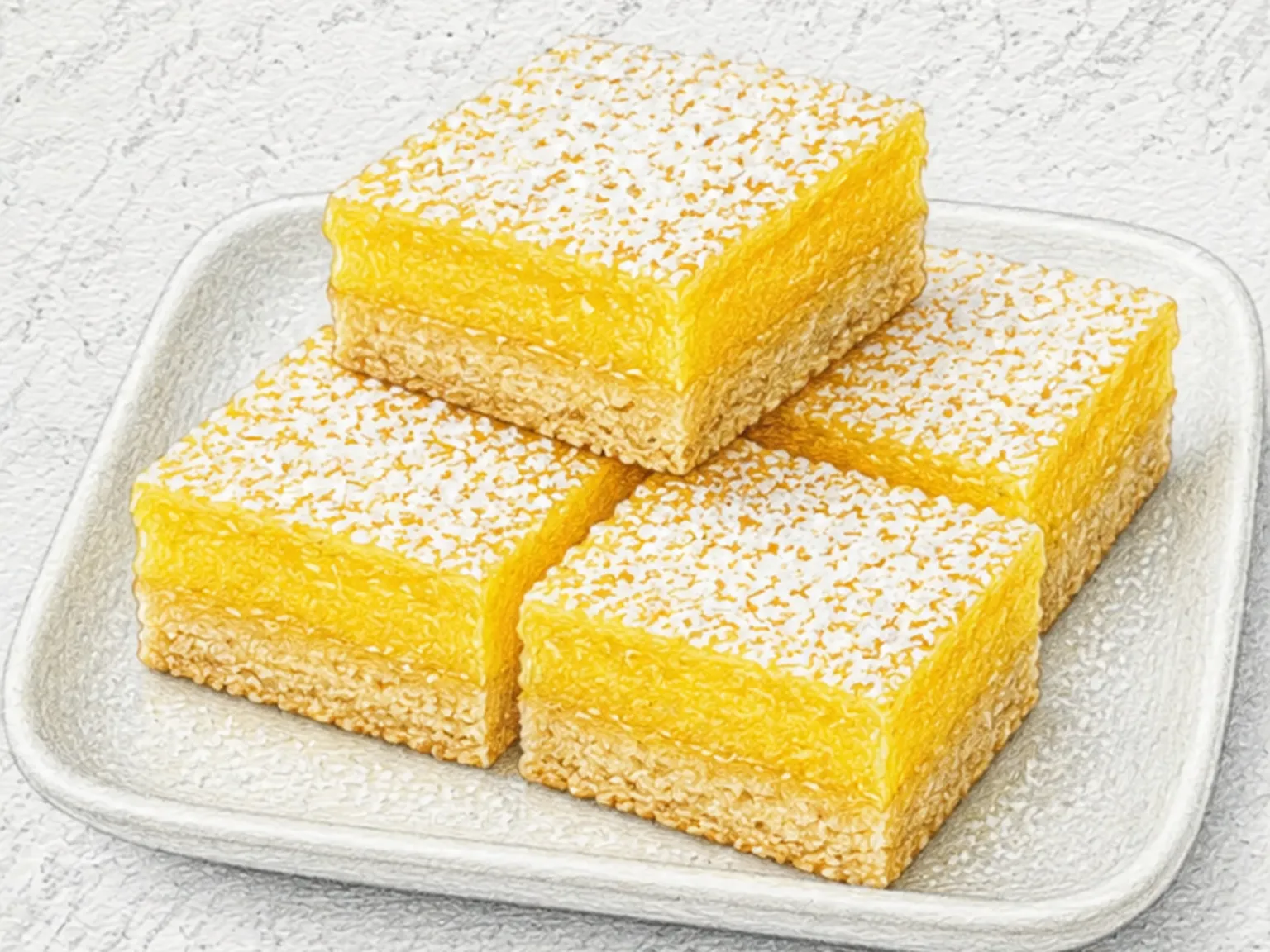
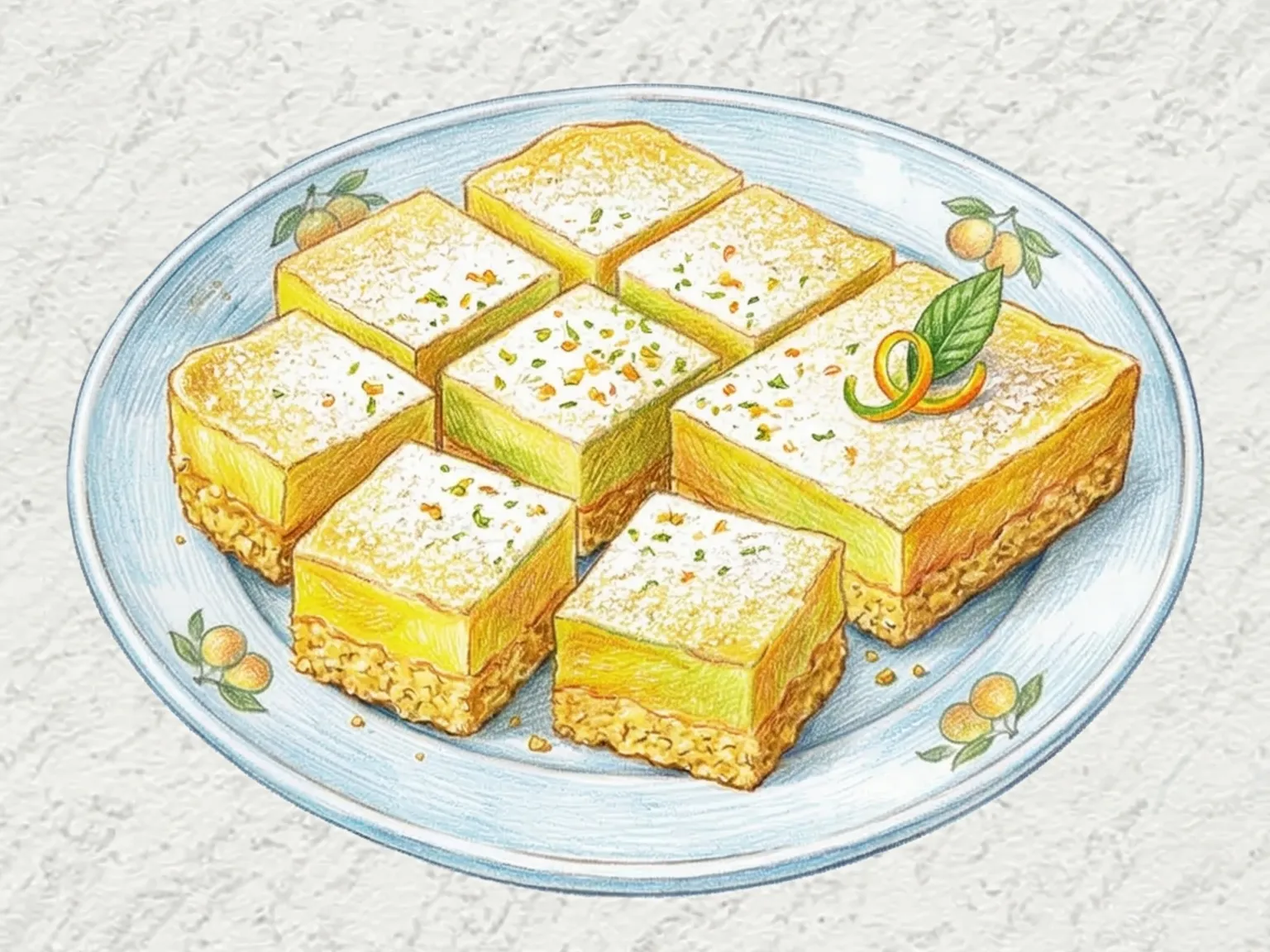
This citrus bar combines Jeju hallabong juice with fresh lemon juice over a crumbly shortbread base. Hallabong, a large and aromatic Korean mandarin, contributes a honeyed depth of citrus that plain lemons cannot match, while the lemon sharpens the curd with bright acidity. The filling sets into a silky, slightly trembling layer that slices cleanly when chilled. A dusting of powdered sugar on top melts on the tongue and softens the tartness just enough. The shortbread crust is buttery and firm, providing a sturdy contrast to the soft curd. These bars are best enjoyed cold from the refrigerator and are especially fitting during the hallabong harvest season from December through February.
Adjust Servings
Instructions
- 1
Preheat oven to 175°C and line a 20 cm square pan with parchment.
- 2
Mix flour, powdered sugar, and butter into crumbs, then press into the pan.
- 3
Pre-bake the crust for 18 minutes until lightly golden, then cool slightly.
- 4
Whisk eggs, sugar, hallabong juice, lemon juice, cornstarch, and zest without foaming.
- 5
Strain filling onto crust and bake 16-18 minutes until edges are set.
- 6
Cool completely, chill for 1 hour, then slice and dust with powdered sugar.
As an Amazon Associate, we may earn from qualifying purchases.
Tips
Nutrition (per serving)
More Recipes

Hallabong Cheesecake Bars (Jeju Citrus)
Tangy cream cheese bars infused with hallabong, a sweet aromatic Jeju Island citrus that tastes like a cross between mandarin and orange. The hallabong contributes a citrus note that is sweeter and more aromatic than lemon, with a floral quality unique to this Jeju-grown mandarin hybrid. Sour cream blended into the filling adds a light tanginess that keeps the richness in check. The zest oils distribute evenly through the batter during baking, ensuring that hallabong fragrance persists in every bite rather than fading. Once chilled, the bars cut cleanly into neat rectangles, making them practical for sharing at gatherings. Made with hallabong brought back from a Jeju trip, they become a meaningful homemade souvenir.

Peach Cobbler
Sliced peaches are tossed with sugar and lemon juice, spread in a baking dish, and covered with spoonfuls of biscuit batter that bakes into a golden, slightly craggy topping. In the oven, the fruit juices bubble up around the edges and seep into the base of the dough, creating a zone where crisp crust meets soft, fruit-soaked interior. The lemon sharpens the peach flavor and prevents it from tasting flat under all the sugar. If the peaches lack sweetness on their own, an extra tablespoon of sugar in the fruit layer compensates without making the topping heavier. Served warm with a scoop of vanilla ice cream, the contrast between hot cobbler and cold cream is as much a part of the experience as the flavor itself.

Classic Lemon Bars
Classic lemon bars layer a tangy lemon curd over a firm shortbread base, baked together and chilled before slicing. The base is made by pressing a mixture of butter, powdered sugar, and flour into the pan and blind-baking it until pale gold and firm enough to support the filling. The curd layer - eggs, sugar, fresh lemon juice, and zest - is poured over the hot crust and returned to the oven until just set, achieving a silky consistency that trembles when tapped but slices cleanly when cold. Lemon zest oils intensify during baking, producing a fragrance more vivid than juice alone. A dusting of powdered sugar across the top provides visual contrast against the bright yellow filling and softens the initial tartness on the tongue.

Chestnut Sweet Potato Muffins
Chestnut sweet potato muffins combine two staple Korean autumn ingredients into a baked format. Steamed and mashed sweet potato mixed directly into the batter lends natural sweetness and moisture that keeps the crumb soft for days. Diced roasted chestnuts folded throughout provide a starchy, crumbly contrast to the tender muffin around them. A touch of cinnamon amplifies the sweet potato's warmth without masking it, and a streusel topping adds a crunchy layer that breaks under the teeth before giving way to the soft interior. The sweet potato acts as a built-in moisturizer, preventing the common muffin problem of drying out after cooling. When made with freshly harvested ingredients in autumn, the natural sugars are concentrated enough to reduce added sweetener.

Black Sesame Brownies
Ultra-fudgy dark chocolate brownies with a nutty roasted black sesame twist that adds earthy depth to every bite. The bitter edge of the chocolate meets the toasted, grain-like aroma of the sesame, producing a depth of flavor absent from standard brownies. The recipe keeps the cake flour ratio low so the center stays fudgy and dense after baking at 175 degrees Celsius for twenty to twenty-five minutes. Because black sesame powder is naturally oily and prone to clumping, it must be sifted together with the flour and salt before folding into the batter to ensure even distribution throughout the crumb.

Clafoutis (French Baked Cherry Custard Dessert)
Clafoutis is a traditional French dessert from the Limousin region, made by pouring a thin batter of eggs, sugar, milk, and flour over fresh cherries arranged in a buttered baking dish. Baking at 180 degrees Celsius for thirty to thirty-five minutes puffs the batter into a texture between a pancake and a baked custard - golden and lightly set at the edges, moist and tender around the fruit. The cherries release their tart juice into the surrounding batter during baking, creating pockets of concentrated fruit flavor. Vanilla extract rounds out the egg-and-milk base. Serving the clafoutis slightly warm rather than fully cooled preserves its soft, custardy consistency.