Korean Doenjang-Grilled Pork Jowl
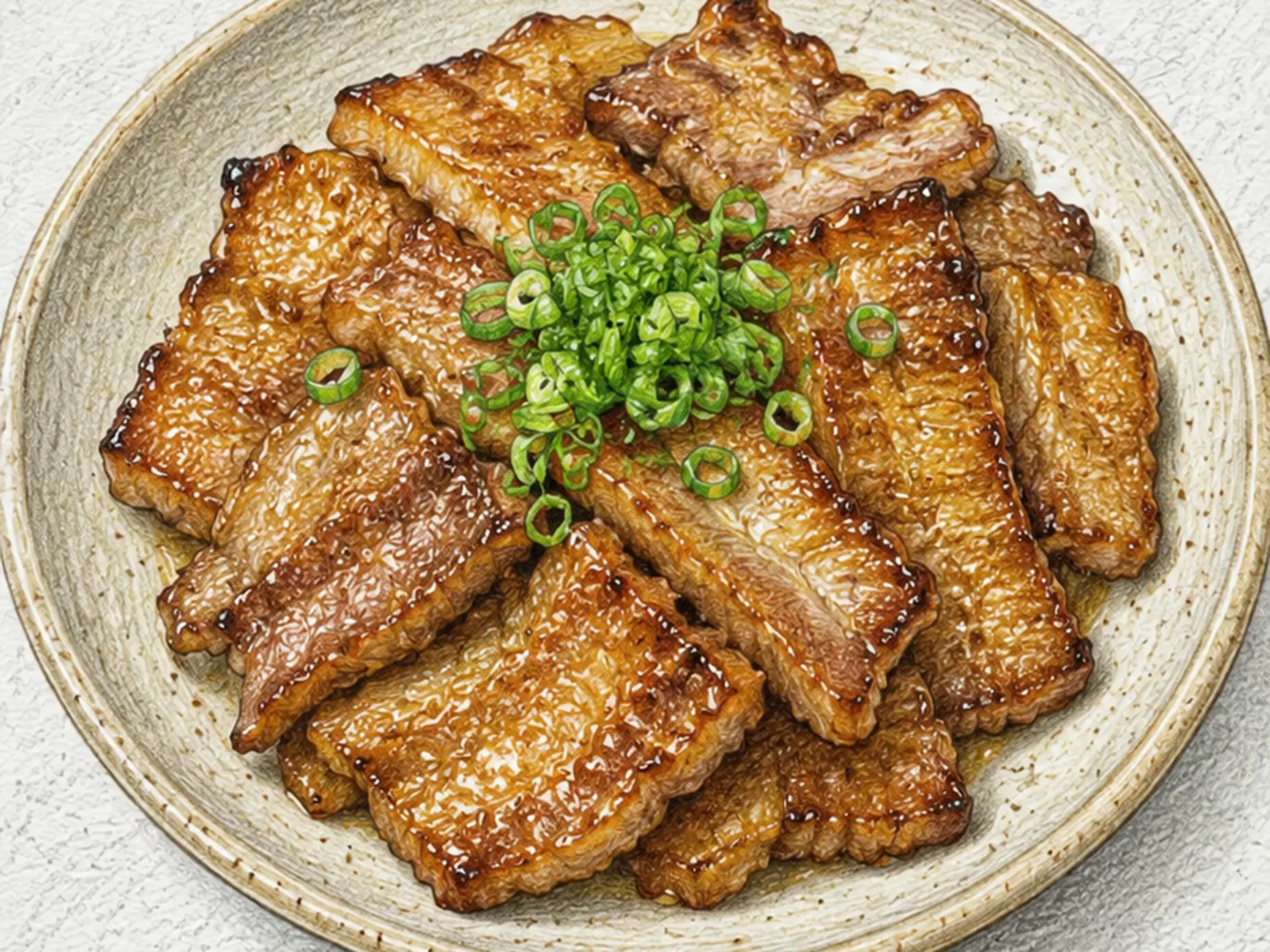
Hangjeongsal doenjang-gui is a Korean doenjang-marinated pork jowl dish where the meat is sliced five millimeters thick, coated in a mixture of doenjang, garlic, sesame oil, cooking wine, honey, and black pepper for fifteen minutes, then grilled three minutes per side over medium-high heat. Pork jowl has enough intramuscular fat to render its own cooking oil, so no additional fat is needed in the pan-and as that fat melts, it absorbs the doenjang's fermented savoriness, amplifying the nutty umami on every surface. Starting with a conservative tablespoon of doenjang and adjusting prevents oversalting, since the paste's sodium concentrates during grilling, and the honey encourages a glossy caramelized crust that balances the salt. After the edges brown, dropping to medium-low for a final two minutes cooks the center through without burning the glaze, and a finish of sliced green onion adds a fresh, sharp contrast.
Adjust Servings
Instructions
- 1
Slice pork jowl to 5mm thickness and pat dry.
- 2
Mix doenjang, garlic, sesame oil, cooking wine, honey, and pepper.
- 3
Coat the pork and marinate for 15 minutes in the fridge.
- 4
Grill on medium-high heat for 3 minutes per side.
- 5
Lower to medium-low and cook 2 more minutes until done.
- 6
Finish with chopped green onion and serve hot.
As an Amazon Associate, we may earn from qualifying purchases.
Tips
Nutrition (per serving)
More Recipes

Korean Grilled Soy-Doenjang Pork
Maekjeok-gui is a traditional Korean grilled pork dish with roots tracing back to the Goguryeo dynasty, made by marinating thick-cut pork neck in a paste of doenjang, soy sauce, rice syrup, minced garlic, ginger powder, sesame oil, and black pepper. The fermented soybean paste fuses with the pork's intramuscular fat during grilling, producing a deep, savory intensity, while the viscous rice syrup transforms into a shiny glaze under heat. Shallow scoring on both sides of the pork allows the marinade to reach the center of each thick slice, and lowering the heat for the final glaze application prevents the doenjang from burning and turning bitter. Resting the meat for two minutes under sliced green onion before cutting lets the juices redistribute evenly.

Korean Soy Scallion Grilled Pork Jowl
Hangjeongsal ganjang-pa-gui is a Korean soy-scallion grilled pork jowl where one-centimeter-thick slices are marinated for fifteen minutes in a blend of soy sauce, cooking wine, garlic, sugar, sesame oil, and pepper, then grilled alongside thick-cut scallion segments over medium-high heat for three to four minutes per side. The technique of reserving a third of the marinade for basting during the final minute is what gives the dish its signature lacquered sheen-the fresh sauce hits the hot surface and caramelizes instantly into a sweet-salty glaze. The scallions are charred at high heat only at the very end, which bursts their internal moisture into steam and concentrates their natural sugar into an almost caramel-like sweetness, with the blackened edges adding a smoky depth to the soy glaze. Keeping the marinating time under twenty minutes is important-any longer and the soy sauce penetrates too deeply, oversalting the meat and masking the jowl's own rich, fatty flavor.

Korean Grilled Pork Neck (Salt-Seasoned Fatty Neck Cut BBQ)
Dwaeji-moksal-gui is Korean salt-grilled pork neck sliced one centimeter thick and seasoned with nothing more than coarse salt and black pepper before searing on a blazing grill. The neck cut is threaded with fine intramuscular fat that renders during cooking, producing a self-basting effect and a rich, porky flavor that needs no marinade-the best pieces have roughly a seven-to-three fat-to-lean ratio. Each side should cook for under two minutes over maximum heat to develop a dark sear while keeping the interior moist; flipping too often drops the surface temperature and produces a steamed, gray result instead of charred grill marks. The standard Korean barbecue way to eat it is in a lettuce wrap with a roasted garlic clove and a dab of ssamjang.

Korean Grilled Pork Skirt Meat
Galmaegisal-gui is grilled pork skirt meat from the diaphragm, lightly seasoned with soy sauce, garlic, and black pepper, then seared fast over charcoal or a screaming-hot pan. Each pig yields only 200 to 300 grams of this cut, making it a rare find that Korean barbecue enthusiasts seek out for its coarse grain, strong chew, and distinctive porky richness similar to beef skirt steak. The meat is thin enough that each side needs less than a minute over maximum heat-just long enough for the surface to caramelize while the center stays slightly pink, since overcooking toughens the fibers and destroys the springy texture. Dipping each piece immediately into a dish of sesame oil mixed with salt layers the smoky char with a warm, nutty richness.

Korean Garlic-Grilled Octopus
Muneo-garlic-gui is a Korean seafood snack made by searing pre-boiled octopus with minced garlic in olive oil over high heat. The octopus is cut into bite-size pieces, seasoned with salt, pepper, and red chili flakes, then rested briefly before hitting a smoking-hot pan. The garlic blooms in the oil first at low heat, and when the octopus goes in, the temperature is cranked up so the surface chars quickly while the interior stays springy and resilient. A squeeze of lemon juice at the end cuts through the richness and sharpens the natural brininess of the octopus.

Korean Brisket Soybean Paste Stew
This version of doenjang jjigae adds thinly sliced beef brisket to the classic soybean paste stew. The marbled brisket renders its fat into the rice-rinsing water base, giving the broth a richer, more full-bodied character than the standard recipe. Potato, zucchini, tofu, and a cheongyang chili round out the pot, making each spoonful a mix of creamy, starchy, and spicy elements.