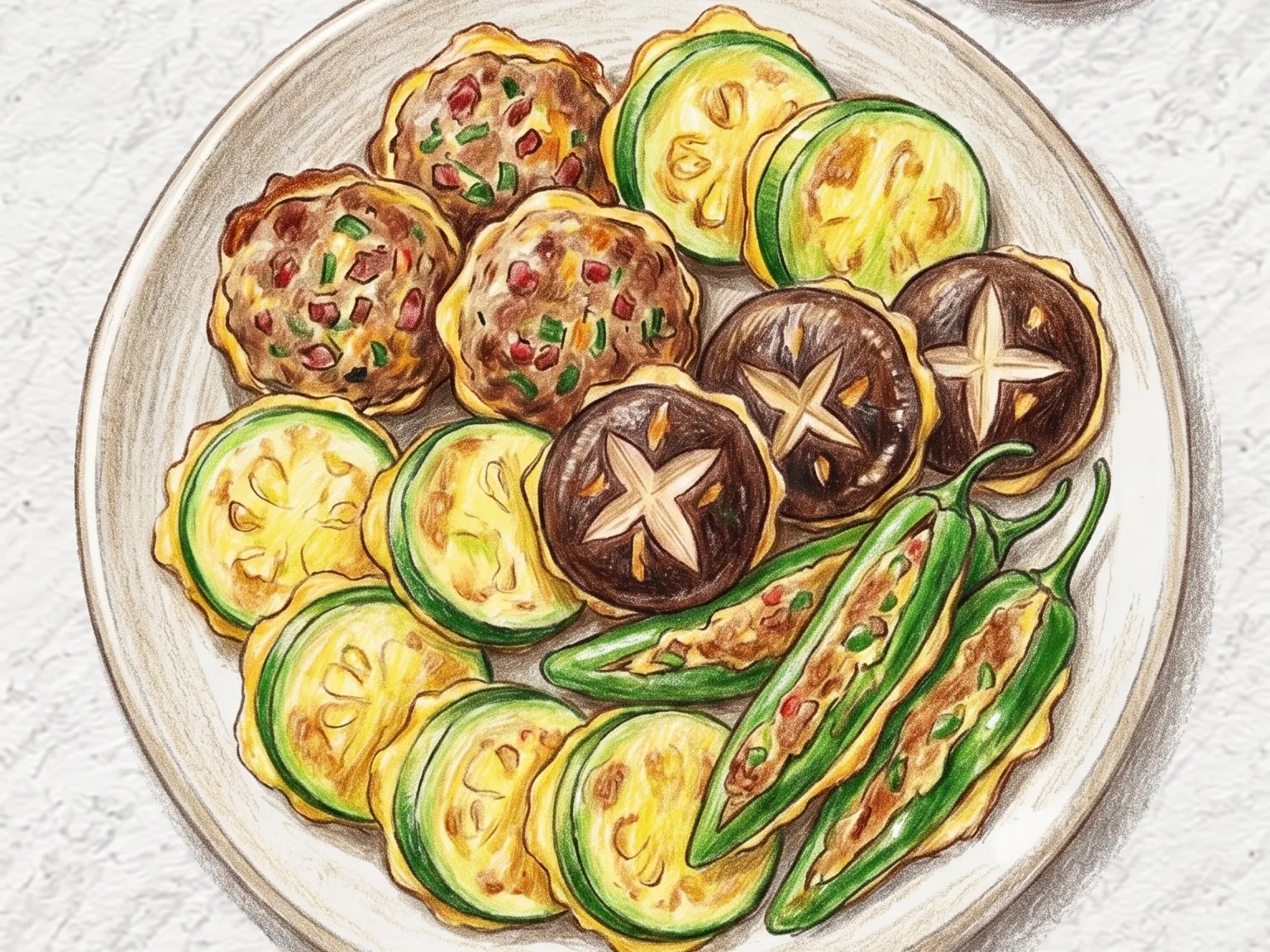
Assorted Korean Pancakes (Holiday Mixed Jeon Platter)
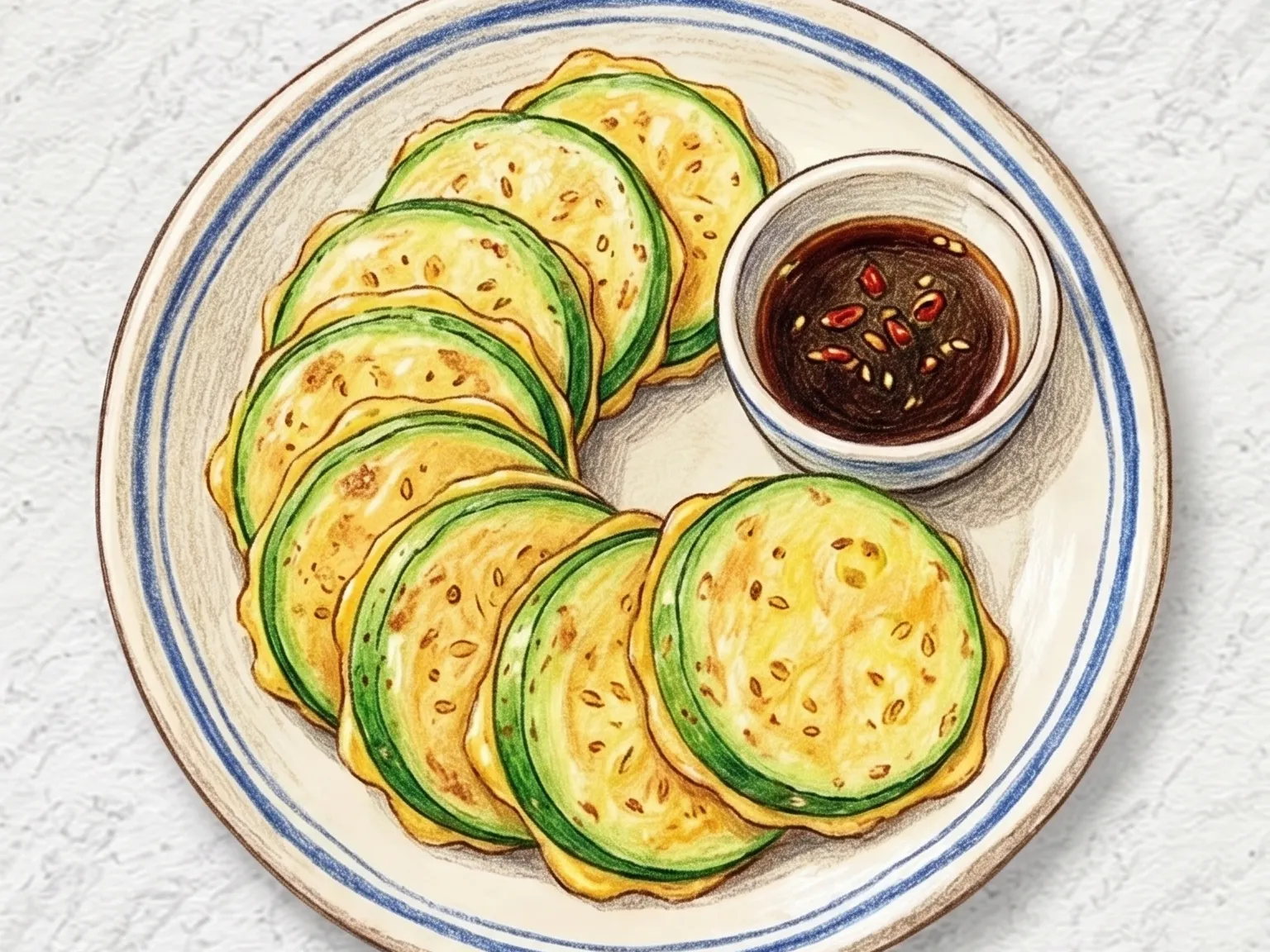
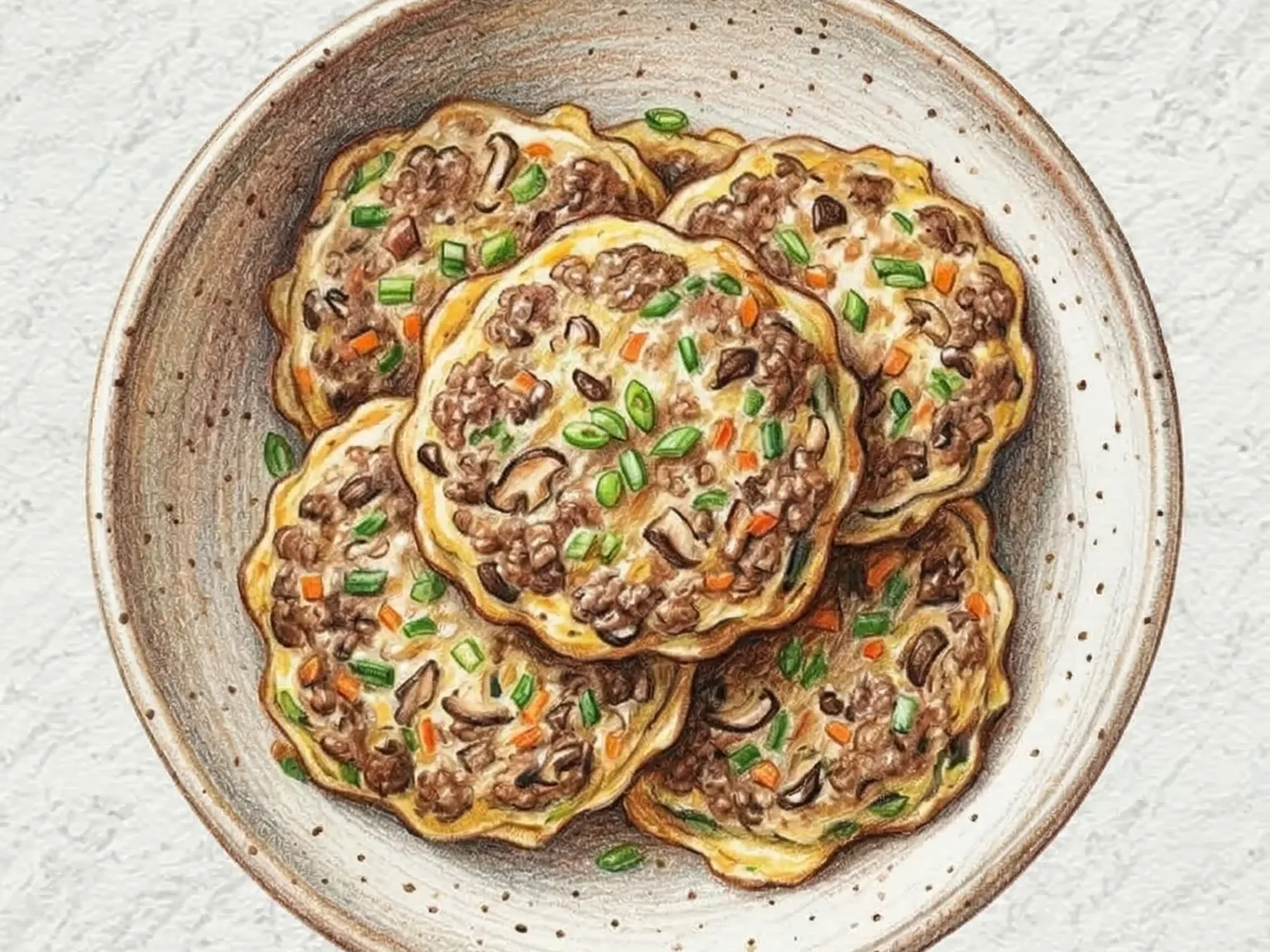
Hanjeongsik jeon-modeum is an assorted Korean pancake platter that gathers meat patties, zucchini jeon, shiitake mushroom jeon, and stuffed chili pepper jeon on a single serving board, making it the centerpiece of Seollal and Chuseok holiday tables. Each ingredient is cut to size, dusted in flour, dipped in beaten egg, and pan-fried over medium heat until golden on both sides, and the critical rule is to fry in small batches of three to four pieces at a time to prevent the pan temperature from dropping. Overcrowding causes the batter to absorb oil instead of crisping, resulting in a greasy, limp texture that undermines the entire platter. Served with cho-ganjang-soy sauce sharpened with a splash of vinegar-the dipping sauce cuts through the oil and highlights the contrast between the meat patties' savory depth, the zucchini's mild sweetness, and the peppers' gentle heat.
Adjust Servings
Instructions
- 1
Cut all ingredients into appropriate sizes.
- 2
Lightly dust each piece in flour, then dip in beaten egg.
- 3
Heat oil in a pan and cook each jeon in batches.
- 4
Cook over medium heat until golden on both sides.
- 5
Serve with soy sauce and vinegar dipping sauce.
As an Amazon Associate, we may earn from qualifying purchases.
Tips
Nutrition (per serving)
More Recipes

Korean Skewered Jeon (Ham and Mushroom Skewer Pancake)
Ham, imitation crab sticks, king oyster mushroom, and scallion are cut to uniform length, threaded onto skewers in alternating order, dusted with flour, dipped in salted beaten egg, and pan-fried slowly over medium-low heat. Keeping the heat gentle prevents the egg coating from browning before the filling cooks through. Each skewer delivers a mix of textures and flavors in a single bite, making this a staple at Korean holiday tables and gatherings.

Korean Perilla Beef Jeon (Perilla-Wrapped Beef Tofu Pancake)
A thin layer of seasoned ground beef mixed with pressed tofu is spread on the underside of each perilla leaf, which is then folded in half, coated in flour, dipped in beaten egg, and pan-fried over medium heat. Keeping the filling thin is essential so the herbal fragrance of the perilla comes through clearly. Squeezing moisture from the tofu beforehand ensures the jeon holds its shape during frying. The result layers the grassy aroma of perilla with soy-seasoned beef in every bite.

Korean Mung Bean Pancake (Traditional Bindaetteok with Pork and Kimchi)
Nokdu-jeon is a traditional Korean mung bean pancake made by soaking dried mung beans for at least six hours, grinding them into a thick, starchy batter, and mixing in ground pork, mung bean sprouts, squeezed kimchi, and scallions before pan-frying in oil. The extended soaking is critical-undersoaked beans leave gritty particles that no amount of blending will smooth out, and the natural starch in the batter holds the pancake together without flour or egg. Kimchi must be thoroughly squeezed of its liquid before chopping fine, or the excess moisture thins the batter and prevents crisping. Cooking over medium heat for three to four minutes per side caramelizes the mung bean starch into a crackly golden crust, while inside the pork juices mingle with kimchi's tang and the earthy, slightly sweet flavor of the bean itself.

Korean Stuffed Chili Pepper Pancake
Gochu-jeon is a Korean holiday pancake made by splitting mild green chili peppers lengthwise, removing the seeds, stuffing them with a filling of ground pork mixed with pressed tofu and garlic, then coating in flour and egg before pan-frying. The pepper's gentle heat wraps around the pork filling's savory richness and the tofu's silky softness, creating a layered contrast in every bite. Filling each pepper to about seventy percent capacity prevents bursting during cooking, and using cucumber peppers instead of regular green chilies eliminates nearly all spiciness for milder palates. This jeon is a fixture on Seollal and Chuseok tables, and it tastes best served warm with a soy-vinegar dipping sauce that brightens the meat filling's umami.

Korean Kimchi Pork Jeon (Fermented Kimchi and Pork Crispy Pancake)
Well-fermented kimchi and pork shoulder are the backbone of this hearty Korean pancake. Kimchi brine is mixed directly into the batter, intensifying both the color and the tangy, fermented depth of flavor. A small amount of sugar balances the acidity, while green onion and onion add texture throughout. Pressing the pancake flat in a generously oiled pan over high heat produces deeply caramelized, crispy edges that contrast with the soft, savory interior.

Korean Eggplant Pancakes (Egg-Battered Pan-Fried Eggplant)
Gaji-jeon belongs to the Korean jeon family - vegetables dipped in egg wash and pan-fried in a thin layer of oil, a technique that appears at ancestral rites (jesa) and holiday tables. Eggplant rounds are sliced about 7mm thick - thin enough to cook through but thick enough to maintain a soft center. A light dusting of flour before the egg wash helps the batter adhere. The egg coating sets into a golden, lacy shell in the pan, while the eggplant inside steams in its own moisture. The result is a contrast between the crisp, slightly eggy exterior and the collapsing, custardy eggplant within. Dipped in a simple soy-vinegar sauce, each piece delivers a clean, understated flavor. Korean families often fry gaji-jeon alongside hobak-jeon and other vegetable jeon for Chuseok.