Crispy Fan-Cut Potatoes (Garlic Butter Accordion Bake)
Quick answer
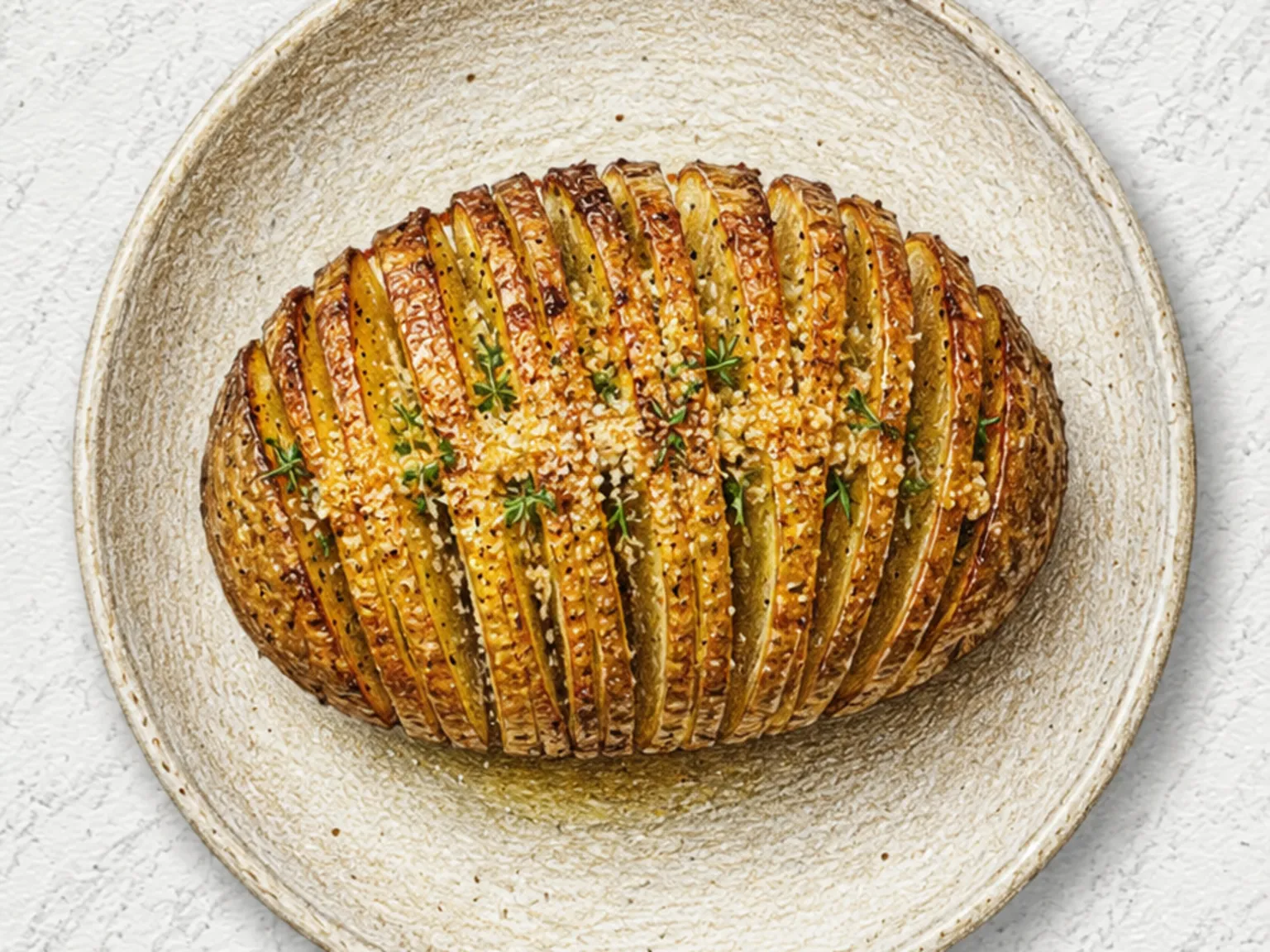
Hasselback potatoes are a Swedish dish where potatoes are sliced thinly at close intervals - leaving the bottom intact - then brushed with garlic butter and roasted until...
What makes this special
- Accordion slits allow garlic butter to penetrate these fan-cut Hasselback potatoes.
- Slits cut to 5mm from the base let heat penetrate and fan the layers open
- Mid-cook butter baste plus breadcrumb and parmesan finish creates chip-like edges
Key ingredients
Core cooking flow
- 1 Preheat the oven to 200C so it is fully hot before the potatoes go in.
- 2 Melt 50 g unsalted butter over low heat, then turn off the heat so the garlic will not burn.
- 3 Set the potatoes on an oven tray and brush the outside with the garlic butter first.
Hasselback potatoes are a Swedish dish where potatoes are sliced thinly at close intervals - leaving the bottom intact - then brushed with garlic butter and roasted until the edges fan out and crisp. Melted butter mixed with minced garlic, fresh thyme, and olive oil is brushed over and between the slices before the potatoes go into a 200-degree oven for forty minutes. Midway through baking, the potatoes are removed so the slices can be gently fanned open and given a second coat of butter. Breadcrumbs and Parmesan cheese scattered on top for the final fifteen minutes create a crunchy golden crust that contrasts with the fluffy interior. Placing chopsticks on either side of the potato while slicing acts as a guide to prevent cutting all the way through.
Instructions
Read the steps as a cooking flow: prep, heat, seasoning, doneness control, and finish.
- 1Prep
Preheat the oven to 200C so it is fully hot before the potatoes go in.
Scrub and dry 800 g Yukon Gold potatoes, place chopsticks along both sides, and make close thin cuts while leaving about 5 mm intact at the bottom.
- 2Control
Melt 50 g unsalted butter over low heat, then turn off the heat so the garlic will not burn.
Stir in 2 minced garlic cloves, 1 tablespoon thyme, 1 tablespoon olive oil, and half the salt until the mixture smells aromatic.
- 3Prep
Set the potatoes on an oven tray and brush the outside with the garlic butter first.
Gently open the cuts with your fingertips so butter reaches between the slices, but do not force them apart or the base may tear.
- 4Heat
Bake at 200C for 40 minutes.
When the edges begin to fan open and the surface looks drier, remove the tray and brush the remaining butter between the cuts for better browning and crisp edges.
- 5Season
Mix 30 g breadcrumbs, 25 g Parmesan, the remaining salt, and the black pepper.
Sprinkle the mixture lightly over the tops and into the opened gaps, then bake 15 more minutes until the crumbs are golden and crisp.
- 6Finish
Remove the potatoes when a chopstick slides into the center easily and the edges are crisp like chips.
Let them rest for 5 minutes so steam settles, then transfer to plates and serve while the crust is still crisp.
After the steps
Pick a recipe that fits this dish.
Continue with shared ingredients, meal pairings, or a similar method.
Recipes That Go Well With This
More Western →Based on shared ingredients and meal pairing
Dauphinoise Potatoes (Creamy Garlic Potato Gratin)
Dauphinoise potatoes are a French gratin made by layering uniformly thin potato slices - cut to two millimeters - in a buttered baking dish, with a warm mixture of heavy cream, milk, minced garlic, and salt poured between each layer. Rinsing and drying the sliced potatoes removes excess surface starch for a cleaner result. Grated Gruyère cheese goes on top before the dish bakes at 170 degrees Celsius for fifty-five to sixty minutes, during which the potatoes absorb the cream and turn meltingly tender beneath a golden crust. Resting the gratin for ten minutes after baking lets the layers firm up enough to hold their shape when sliced. Keeping the potato thickness consistent ensures every slice cooks at the same rate.
Colcannon (Irish Mashed Potatoes with Cabbage and Butter)
Colcannon is a traditional Irish dish of hot mashed potatoes folded together with blanched shredded cabbage and chopped green onion, then brought to a creamy, pillowy consistency with warmed milk and butter. Mashing the potatoes while they are still steaming hot is essential, because the starch granules release cleanly and evenly only at high temperature. Both the milk and butter must be heated before they go in, because cold dairy causes the starch to seize and turn the mash dense and gluey instead of light and smooth. Blanching the cabbage for three minutes in salted water leaves just enough resistance in each shred to contrast with the yielding potato. Green onion disperses a mild, fresh allium fragrance throughout the dish without overpowering it. A knob of butter placed on top just before serving melts into a shallow pool that deepens the richness of every spoonful. In Ireland, colcannon was traditionally eaten on Halloween, sometimes with a coin hidden inside the mash to bring good luck. Kale or spring onion can stand in for cabbage, and using a floury variety of potato produces the dish's characteristic light yet dense texture.
Korean Crispy Potato Pancake
Gamja-jeon is a Korean potato pancake made by finely grating raw potatoes, letting the starch settle out of the liquid for at least ten minutes, discarding the water, and folding the settled starch back into the pulp to improve binding. Waiting long enough for full starch separation is what gives the batter enough cohesion to hold together when the pancake hits the hot pan. Spreading the batter as thinly as possible produces glass-crisp edges while the center retains a chewy, starchy bite characteristic of potato starch. The first side must cook all the way through and the underside must firm up completely before any attempt to flip, and using two spatulas simultaneously makes the turn fast enough to keep the pancake intact. Frying both sides over medium heat until evenly golden delivers a crust that is crisp on the outside while the center stays moist. A dipping sauce of soy sauce, vinegar, and minced cheongyang green chili cuts through the oily richness with sharpness and heat.
Loaded Baked Potato
Loaded baked potato starts with a russet potato baked whole at 200 degrees Celsius for about 50 minutes until the inside is fluffy and the skin is crisp. Rubbing the skin with salt and butter before baking and poking holes with a fork ensures even heat penetration and a thin, crunchy shell. The hot potato is split open, the flesh is fluffed with a fork, then piled with shredded cheddar cheese - which melts on contact - crumbled crispy bacon, cold sour cream, and chopped chives. The sour cream's cool tang balances the salty bacon and rich cheese, while the chives add a mild onion freshness. No additional cooking is needed beyond the bake itself, making it equally suited as a side dish or a full meal.
Serve with this
Gotgam Cream Cheese Roll (Dried Persimmon Rolls)
Gotgam cream cheese roll is a no-cook Korean dessert that requires nothing more than a knife, a bowl, and a refrigerator. Dried persimmons are slit open and flattened into thin sheets, each one acting as the outer wrapper. The filling is cream cheese mixed with honey and fresh lemon juice to balance its natural richness with acidity, and finely chopped walnuts are folded in throughout to add a crunchy, nutty element to every bite. The filling is spread across the opened persimmon, which is then rolled tightly and wrapped in plastic wrap. Twenty minutes in the refrigerator firms the roll enough to slice cleanly. Dipping the knife in warm water and wiping it dry before each cut produces the smoothest cross-sections. The finished slices reveal clearly defined layers: the chewy, caramel-sweet dried persimmon on the outside, the tangy cream cheese in the middle, and flecks of walnut distributed throughout. The combination makes it a natural pairing with wine or a polished addition to a traditional holiday table.
Blue Crab Lemon Garlic Pasta
Blue crab lemon garlic spaghetti starts by slowly warming thinly sliced garlic in olive oil over low heat until fragrant - pale gold, not browned. Crab meat and a splash of rice wine go in next to cook off any raw marine smell before butter is added and stirred until it melts into the oil. Starchy pasta water emulsifies the fat into a thin, glossy sauce that coats each strand of spaghetti evenly without heaviness, carrying a clean, oceanic flavor throughout. Lemon zest and juice are added only after the heat is turned off - adding them while the pan is still hot drives off the volatile citrus aroma before it reaches the plate. Keeping the garlic just short of golden, pale and softened rather than browned, is what separates a clean, nutty depth from an acrid bitterness that would overpower the crab. Fresh crab meat, picked directly from a live blue crab, delivers a noticeably sweeter flavor than thawed frozen product and is worth the extra effort when in season.
Roasted Eggplant Pomegranate Salad
Eggplant is halved and roasted until the flesh turns silky-sweet and almost cream-like. Pomegranate seeds burst with tart juice that cuts through the eggplant's rich depth. Arugula adds peppery bitterness preventing sweetness from dominating, and red onion contributes a sharp, lingering bite. A vinaigrette of red wine vinegar and honey layers sweet-acid notes across the plate, while the contrast of ruby pomegranate, purple onion, and green arugula makes the dish visually striking. It can be served as a light side dish, with simple accompaniments chosen to match the sauce, broth, or topping.
Similar recipes
Bubble and Squeak (Pan-Fried Mashed Potato and Cabbage Cake)
Bubble and squeak is a traditional British household dish made by combining mashed boiled potatoes with blanched, chopped cabbage, pressing the mixture flat in a well-oiled hot pan, and frying each side until a deep golden-brown crust forms across the entire surface. The name refers to the noise the dish makes during cooking - moisture from the cabbage hits the hot fat and sends up bubbles and a squeaking hiss. Frying diced onion in butter until soft and lightly caramelized before folding it into the potato-cabbage mixture adds a quiet sweetness that elevates the otherwise modest base ingredients considerably. Pressing the mixture firmly and evenly with a spatula throughout cooking is what creates the crust, and holding back the urge to move or flip it prematurely is the main technique. If the potatoes are particularly wet, a tablespoon or two of plain flour helps the mixture bind and hold its shape in the pan. The dish has been a fixture of British home cooking for generations, rooted in the tradition of using leftover Sunday roast vegetables the following day, and is commonly topped with a fried egg to make a complete one-plate meal.
Korean Spicy Gochujang Potatoes
Gamja gochujang bokkeum is a simple Korean banchan of cubed potatoes stir-fried and simmered in a gochujang-based sauce until each piece is coated in a glossy, spicy-sweet glaze. Soaking the potatoes in cold water before cooking draws out excess starch, which prevents sticking and allows the sauce to adhere evenly across the surface rather than pooling at the bottom of the pan. The balance of gochujang heat and sugar sweetness is the flavor backbone, and the sauce is considered ready when it has reduced enough to form a shiny film on the potatoes - a visual cue that means the sugars have caramelized slightly and the flavors have concentrated. Because the sauce contains no additional liquid, it clings deeply to each cube rather than sitting separately, delivering full seasoning in every bite. This is a reliable everyday banchan that takes around twenty-five minutes with pantry staples and appeals to a wide range of palates, including children who find the sweetness more prominent than the heat.
Korean Soy Steamed Potatoes
Gamja-jjim is a Korean braised potato banchan made by simmering potato pieces in a sauce of soy sauce, sugar, and minced garlic until the liquid reduces to a thick, glossy glaze. As the sauce concentrates, it coats every cut surface of the potato with a lacquered sheen while the seasoning penetrates through to the center, so the flavor is consistent from the outside in. The sugar caramelizes slightly during the final minutes of reduction, adding a faint toffee-like sweetness to the soy's deeper, saltier notes. Minced garlic breaks down in the heat and melds into the sauce, providing an umami backbone that rounds out the simpler flavors. Finishing with sesame oil and a generous scatter of sliced chives introduces a toasted, nutty aroma and a fresh herbal brightness. The potato itself holds its shape but is cooked through to a fluffy, yielding interior beneath the sticky exterior. Simple to make and requiring few ingredients, it is the kind of side dish that disappears from the table without much fanfare, pairing effortlessly with a bowl of rice.