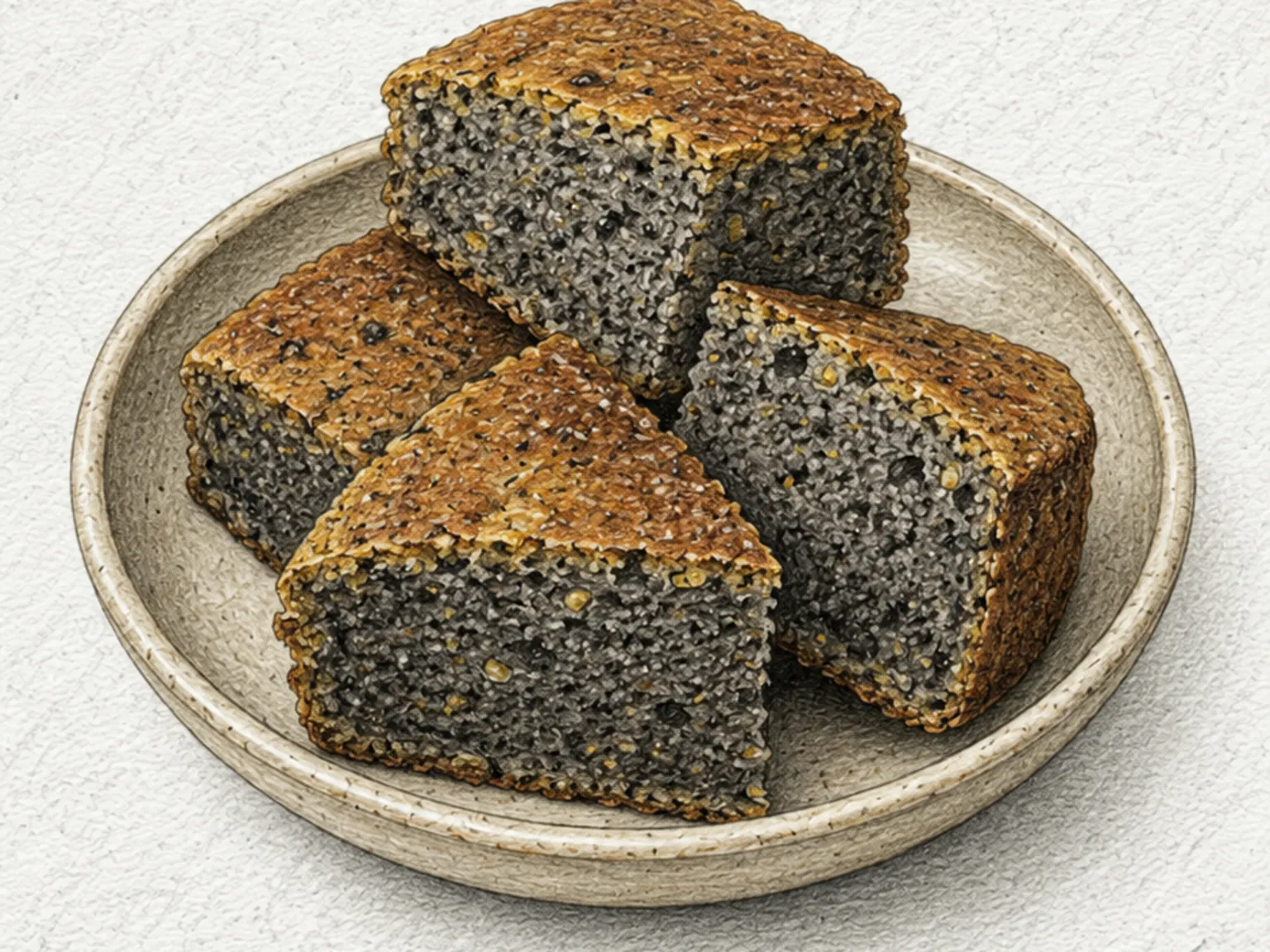
Black Sesame Miso Cornbread
This fusion cornbread weaves roasted black sesame and doenjang into a classic American quick bread. Folding ground heukimja into the cornmeal batter tints it a striking grey and contributes a deep, toasted-nut richness that ordinary cornbread lacks. A small measure of doenjang dissolved into the wet ingredients spreads a subtle fermented savoriness throughout, adding complexity without making the bread taste overtly like soybean paste. The coarse cornmeal preserves a grainy chew, while butter and buttermilk keep the crumb moist. Doenjang's salt tempers the sugar, landing the flavor in an ambiguous zone between sweet and savory that invites another bite. A drizzle of honey or a pat of butter on a warm slice amplifies the nuttiness. The bread pairs well with soups, stews, and even Korean jjigae, serving as an unexpected but harmonious side.
Adjust Servings
Instructions
- 1
Preheat the oven to 190C and line an 18 cm square pan with parchment.
- 2
Mix cornmeal, flour, sugar, baking powder, and salt in a bowl.
- 3
In another bowl, whisk egg, milk, melted butter, black sesame paste, and doenjang until smooth.
- 4
Pour the wet mix into the dry mix and fold gently to make a batter.
- 5
Spread into the pan evenly and bake for 25-28 minutes.
- 6
When a skewer comes out clean, cool for 10 minutes and slice.
As an Amazon Associate, we may earn from qualifying purchases.
Tips
Nutrition (per serving)
More Recipes

Kimchi Cheddar Savory Scone
Cold butter rubbed into flour creates the flaky, crumbly layers of a classic scone, but here the dough takes a savory turn with the addition of squeezed kimchi and sharp cheddar cheese. As the butter melts in the oven, it releases steam that puffs the layers apart, and between those layers the kimchi's spicy acidity and the cheddar's salty richness emerge in alternating waves. Removing moisture from the kimchi before mixing is critical; wet kimchi produces a dense, heavy dough instead of the light texture that defines a good scone. Overworking the dough develops gluten and sacrifices that crumbly snap, so the ingredients are combined just until they hold together. A brief bake at 200 degrees Celsius sets the crust golden while the interior stays tender. Eaten warm with a pat of butter, the scone delivers a pronounced sweet-salty-tangy interplay that works as well at breakfast as it does alongside a bowl of soup.

Doenjang Maple Pull-Apart Bread
Enriched yeast dough is rolled thin, spread with a mixture of doenjang and maple syrup, then stacked and packed into a loaf pan so that each layer bakes into a tearable, fluffy sheet loaded with flavor. The doenjang contributes a fermented saltiness that deepens the bread's own yeast character, while the maple syrup caramelizes during baking and pools at the bottom of the pan, forming a sticky glaze that coats the loaf when inverted. Butter in the dough provides a rich, tender crumb that pulls apart in long, soft strands. The interplay between salty fermented paste and sweet caramel sits in a zone that is neither strictly dessert nor savory bread, making it versatile enough to accompany a meal or stand on its own as an afternoon snack. Eating it warm, when the layers separate most easily, is the best way to experience the full range of textures.

Black Sesame Pudding
Heukimja pudding is a chilled dessert made by warming milk and heavy cream on low heat with black sesame powder to extract its flavor, then setting the mixture with gelatin. The key to a silky consistency is stopping the heat when tiny bubbles appear at the edge of the pan, well before a full boil, which would cause the fat to separate. After seasoning with sugar and salt and straining once to remove any gritty particles, the liquid is divided into cups and refrigerated for at least two hours until set. A light dusting of black sesame powder on top before serving adds a visual accent and an extra layer of roasted, nutty fragrance.

Hobak-bokkeum Savory Galette (Korean Zucchini Galette)
This savory galette fills a free-form butter pastry shell with Korean-style stir-fried zucchini, bridging French rustic baking and Korean home cooking. The dough is a simple mixture of flour and cold butter rubbed together until shaggy, then folded loosely around the filling with no need for a precise edge. The zucchini is sauteed in sesame oil until it softens and releases its moisture, concentrating its natural sweetness. Spread across the dough and baked, the filling melds with the buttery, flaky crust in a combination that is both earthy and rich. Seasoning is kept minimal, with just garlic and salt, so the zucchini flavor stays at the forefront. A sprinkle of sesame seeds before baking adds a Korean accent. Served for brunch alongside a fried egg, the galette becomes a full meal, and it pairs just as well with a glass of wine as an appetizer.

Black Sesame Tea Cookies (No-Bake Korean Pressed Cookies)
Heukimja dasik is a traditional Korean pressed tea cookie made by binding roasted black sesame powder and almond flour with honey and rice syrup, then pressing the mixture into a decorative wooden mold. It requires no heat at all: the rich, toasty flavor of the sesame and the fatty depth of the almond combine within the sticky honey base to create a crumbly, melt-in-the-mouth texture. A small amount of sesame oil improves the binding, and dusting the mold with pine nut powder before pressing yields a sharply defined surface pattern. After shaping, the cookies are rested in an airtight container for thirty minutes to firm up, resulting in bite-sized confections traditionally served alongside tea.

Red Bean Pastry (Korean Gyeongju Soft Bun with Anko)
Gyeongju-ppang is a baked Korean pastry made from a yeast-leavened dough enriched with milk and butter, wrapped around a generous filling of sweet red bean paste. The dough is rolled thin, sealed around the paste with the seam facing down, and baked at 180 degrees Celsius until the top puffs up with a smooth, light golden surface. Because the filling-to-dough ratio is high, the first flavor in each bite is the dense, sweet red bean, followed by the mild dairy aroma of the thin bread shell. Rooted in the baking traditions of Gyeongju and its famous hwangnam-ppang, this pastry stays moist even after cooling, making it suitable as a packaged gift or an everyday snack.