Charim

2686 Korean & World Recipes

2686+ Korean recipes, clean and organized. Ingredients to instructions, all at a glance.

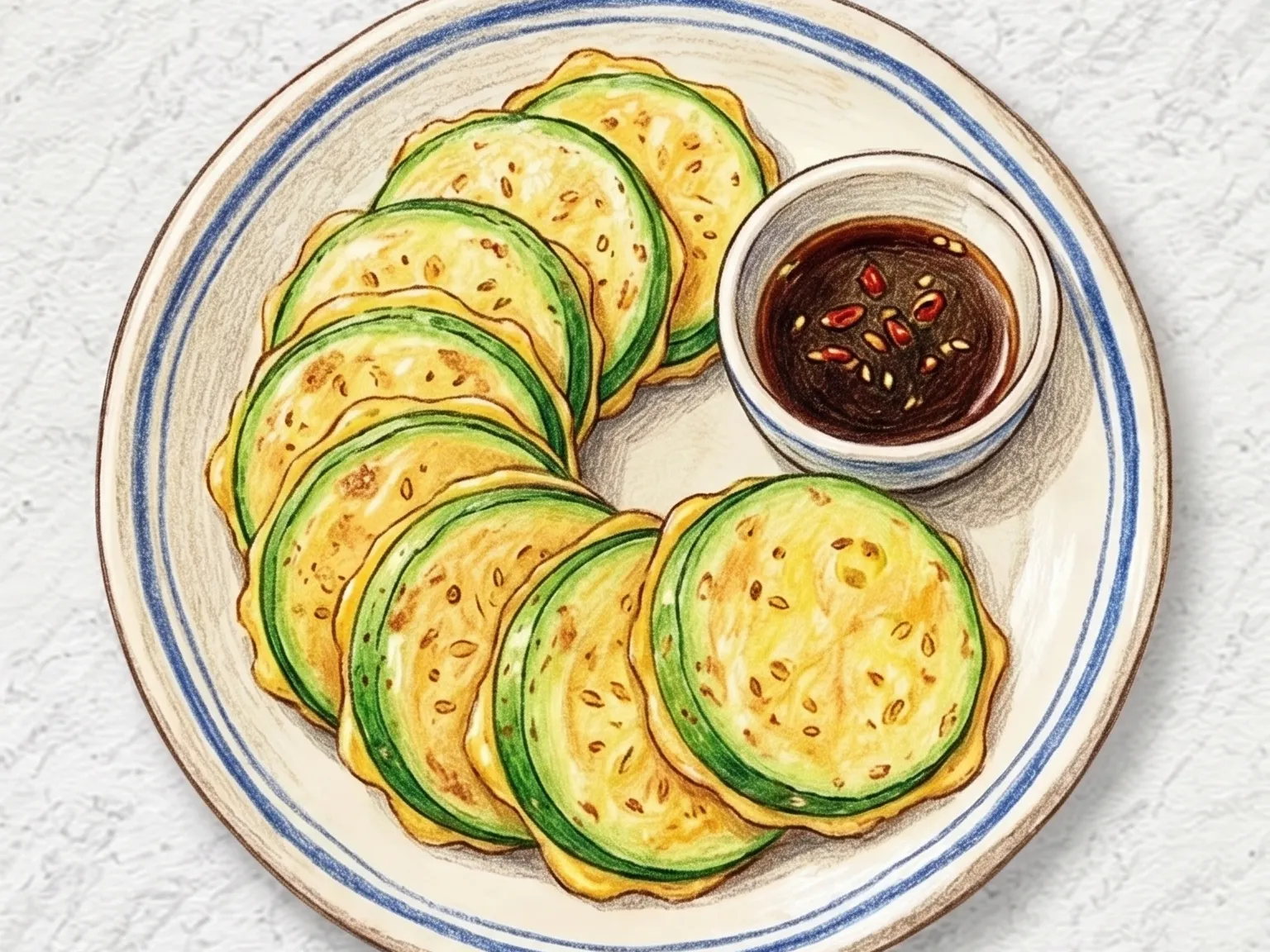
Korean Pan-fried Zucchini Jeon

Korean Pan-fried Zucchini Jeon

Hobak-jeon is a Korean pan-fried zucchini pancake made by slicing Korean zucchini into even half-centimeter rounds, salting them for five minutes to draw out excess moisture, then dusting in flour, dipping in beaten egg, and frying over medium heat for two to three minutes per side. The salting step is essential-it removes water that would otherwise make the jeon soggy, and it simultaneously concentrates the zucchini's mild natural sweetness into a more pronounced flavor. The egg coating acts as a gentle heat buffer, keeping the interior soft and moist while the exterior develops a pale golden crust with a subtle nuttiness from the cooked egg. It is one of the most versatile banchan in Korean cooking, equally at home in a child's lunchbox, on an everyday dinner table alongside soup or stew, or stacked on a holiday platter.

Prep 10minCook 12min2 servings

Adjust Servings

2servings
servings

Instructions

  1. 1

    Slice zucchini to 0.5 cm, sprinkle salt, and rest for 5 minutes.

  2. 2

    Pat away moisture and season with black pepper.

  3. 3

    Lightly coat each slice with flour.

  4. 4

    Dip in beaten egg and place on a heated pan.

  5. 5

    Pan-fry both sides over medium heat for 2–3 minutes until golden.

🛒Shop Ingredients on Amazon

As an Amazon Associate, we may earn from qualifying purchases.

Tips

Removing moisture after salting keeps the jeon from getting soggy.

Nutrition (per serving)

Calories
210
kcal
Protein
7
g
Carbs
17
g
Fat
13
g

More Recipes

Korean Tofu Jeon (Golden Egg-Coated Pan-Fried Tofu)
GrilledEasy

Korean Tofu Jeon (Golden Egg-Coated Pan-Fried Tofu)

Dubu-jeon is a Korean pan-fried tofu dish where firm tofu is sliced into 1 cm thick pieces, seasoned with salt and pepper, dusted in flour, dipped in beaten egg, and fried until golden. Pressing the tofu for at least fifteen minutes under a heavy weight wrapped in paper towels is the most important step-excess moisture causes oil to splatter and prevents the egg coating from adhering properly. Each side needs three to four uninterrupted minutes over medium heat to develop an even golden crust; flipping too often strips the egg batter away. A dipping sauce of soy sauce, vinegar, and chili flakes transforms the mild, nutty tofu into something more complex, adding salt, acidity, and heat that complement the plain simplicity of the base.

🍺 Bar Snacks🏠 Everyday
Prep 12minCook 8min2 servings
Korean Stir-Fried Kimchi (Caramelized Aged Kimchi Banchan)
Side dishesEasy

Korean Stir-Fried Kimchi (Caramelized Aged Kimchi Banchan)

Kimchi-bokkeum is the default way Korean households use up kimchi that has fermented past its fresh prime. Stir-frying tempers the sharp lactic acidity that over-ripe kimchi develops - the heat transforms the sourness into something mellower, sweeter, and more rounded. Onion goes in first and cooks until translucent, laying a sweet foundation before the kimchi and garlic join. Medium heat is essential: it drives off moisture gradually, yielding a thick, concentrated sauce rather than a watery stew. A small addition of gochugaru brightens the color, and a pinch of sugar balances the fermented tang. One tablespoon of kimchi brine amplifies the umami from the lactobacillus culture itself. The finished banchan is versatile enough to eat straight over rice, fold into fried rice, or pile on top of ramyeon.

🏠 Everyday🍱 Lunchbox
Prep 8minCook 10min4 servings
Korean Pan-fried Radish Pancakes
Side dishesEasy

Korean Pan-fried Radish Pancakes

Mu-jeon is a Korean pan-fried radish pancake belonging to the same vegetable-jeon family as hobak-jeon and gaji-jeon, though daikon radish brings a textural character distinctly its own. Slicing to an even 3mm thickness is critical - the radish must cook through until soft and sweet inside while the egg coating crisps golden outside. Too thick and the raw center retains an acrid bite; too thin and the slices collapse. Five minutes of salting draws surface moisture so the flour adheres properly and the oil does not splatter during frying. Slow cooking over low heat is essential: the egg batter sets gradually into a golden shell while the heat converts the radish's starch into sugars, replacing the raw spiciness with a gentle sweetness completely unlike the uncooked root. Dipped in cho-ganjang (soy-vinegar sauce), the acidity cuts through the pan-fried richness. Mu-jeon appears on Korean holiday tables during Chuseok and Seollal alongside other vegetable jeon as part of the traditional jeon platter.

🏠 Everyday🍱 Lunchbox
Prep 15minCook 12min2 servings
Korean Paengi Beoseot Jeon (Enoki Pancake)
Side dishesEasy

Korean Paengi Beoseot Jeon (Enoki Pancake)

Paengibeoseot-jeon is a thin Korean pancake built around 200 grams of enoki mushrooms separated into loose strands and coated in a light batter of pancake mix, egg, and water. Cooked over medium-low heat, the batter spreads thin enough that the edges turn golden and crisp while the mushroom clusters in the center stay moist and chewy. Chopped scallions add color and a mild onion fragrance throughout. The pancake is served with a dipping sauce of soy sauce, vinegar, and a pinch of chili flakes, whose acidity and salt lift the subtle earthiness of the mushrooms. Keeping the heat moderate is essential - too high and the outside burns before the interior sets.

🍺 Bar Snacks🏠 Everyday
Prep 15minCook 12min2 servings
Korean Pan-Fried Tofu with Seasoned Soy Sauce
Side dishesEasy

Korean Pan-Fried Tofu with Seasoned Soy Sauce

Dubu buchim yangnyeom is one of the most common Korean home-cooked banchan - a dish that every Korean learns to make early because the technique is forgiving and the ingredients are always on hand. Firm tofu is sliced thick, salted briefly to draw moisture from the surface, then pan-fried in a thin film of oil until both faces develop a golden crust that crackles against the still-soft interior. The seasoned soy sauce - yangnyeom-jang - is made tableside by mixing soy sauce with gochugaru, chopped scallion, garlic, and sesame oil, then spooned directly over the hot tofu. The residual heat of the tofu slightly wilts the raw scallion and blooms the sesame oil, releasing its fragrance. This banchan has been part of Korean temple cuisine for centuries, where it serves as a primary protein source in meat-free meals.

🏠 Everyday🍱 Lunchbox
Prep 10minCook 12min2 servings
Korean Garlic Chive Pancake
GrilledEasy

Korean Garlic Chive Pancake

Buchu-jeon is a Korean garlic chive pancake where a generous amount of chives is bound in a thin batter with julienned carrot and onion, then pan-fried until the edges are crisp and golden. The chives carry a distinctly pungent, slightly spicy aroma that intensifies with heat, and cutting them to five centimeters keeps the pancake manageable to flip. A deliberately thin, runny batter is the key to achieving crispness-thick batter results in a doughy center that masks the chive flavor. Smaller individual pancakes hold their crunch far better than one large one, and they are best eaten warm right off the pan, dipped in soy sauce spiked with a little vinegar.

🍺 Bar Snacks
Prep 12minCook 10min2 servings
More Grilled