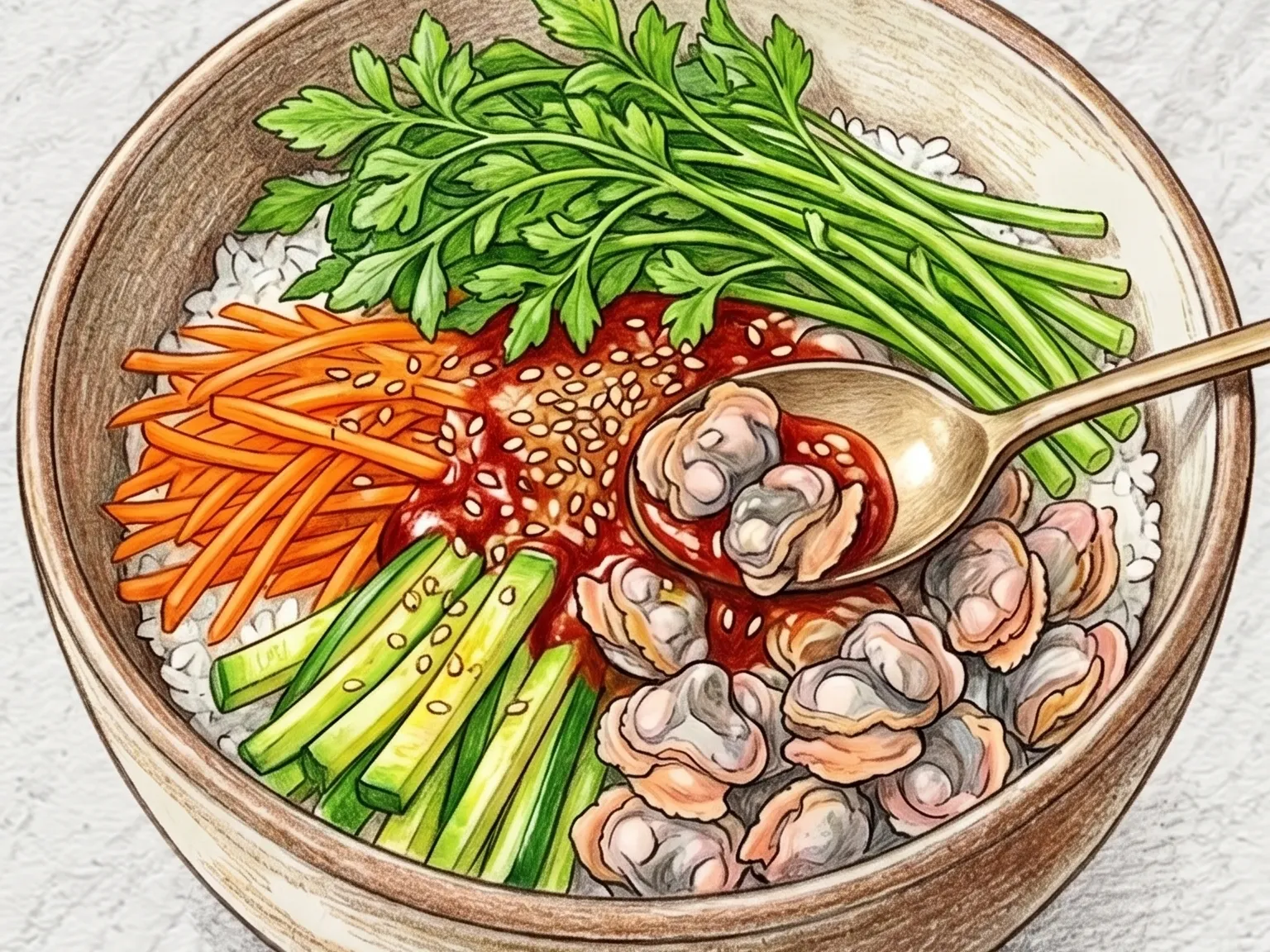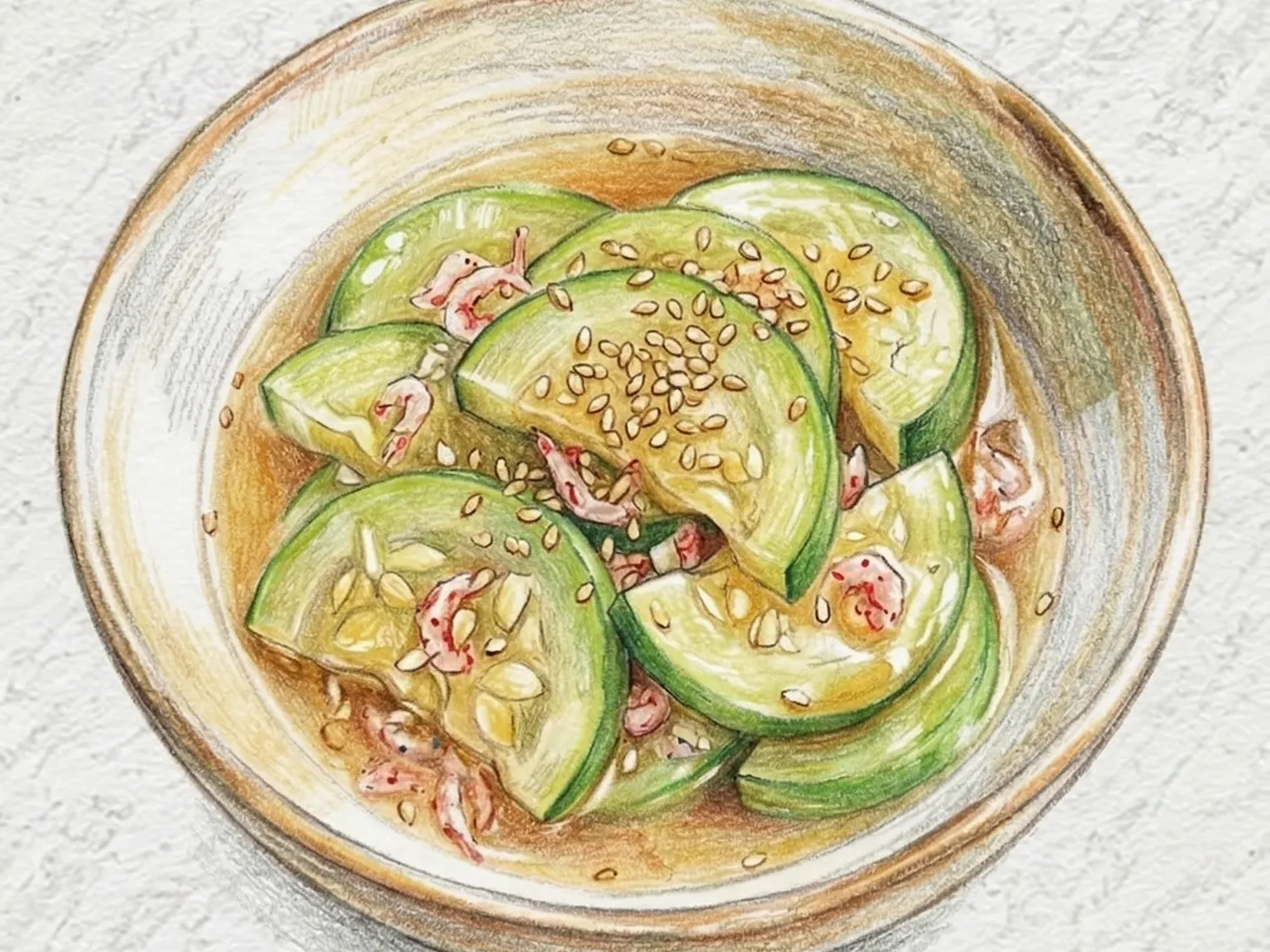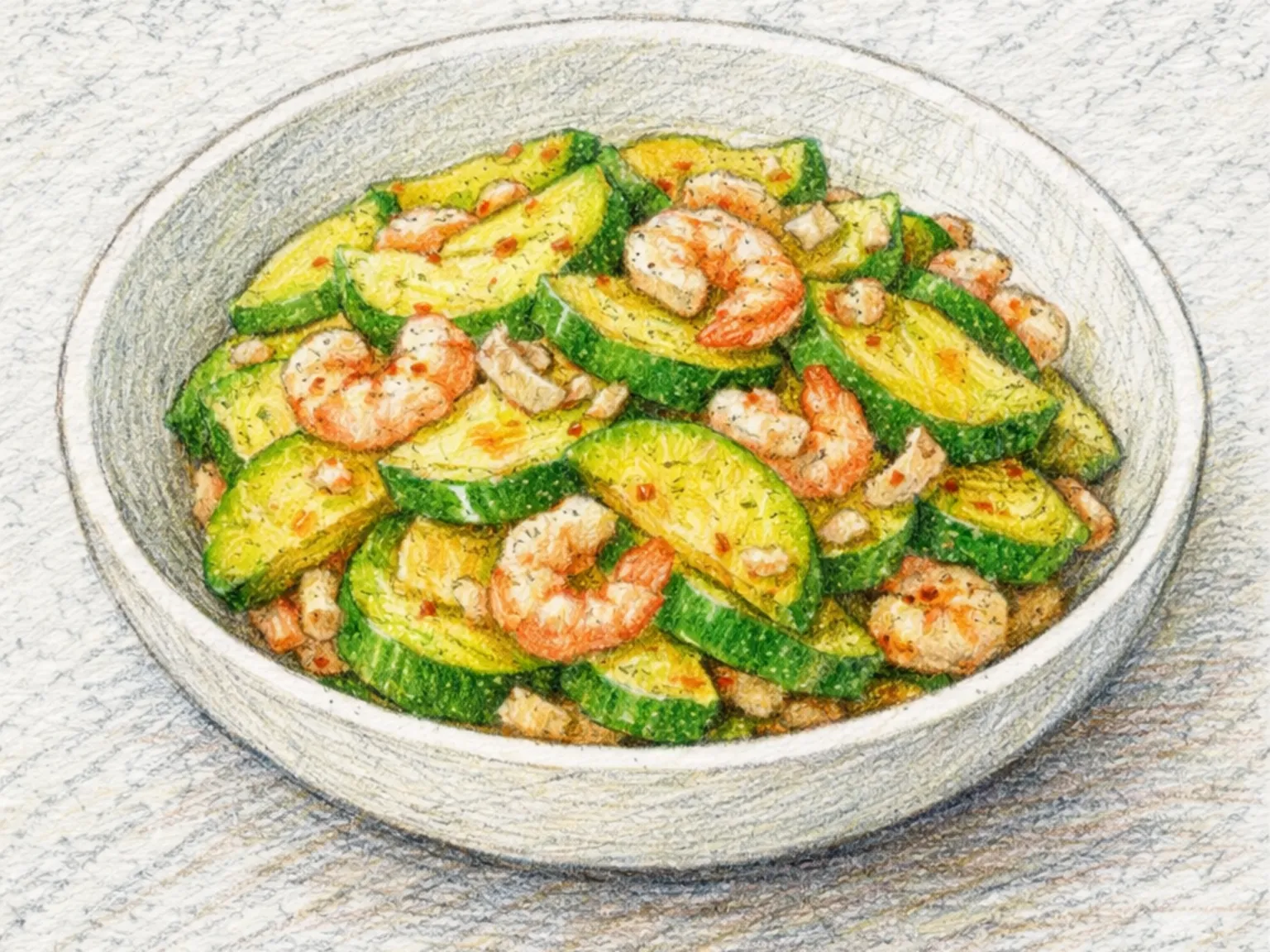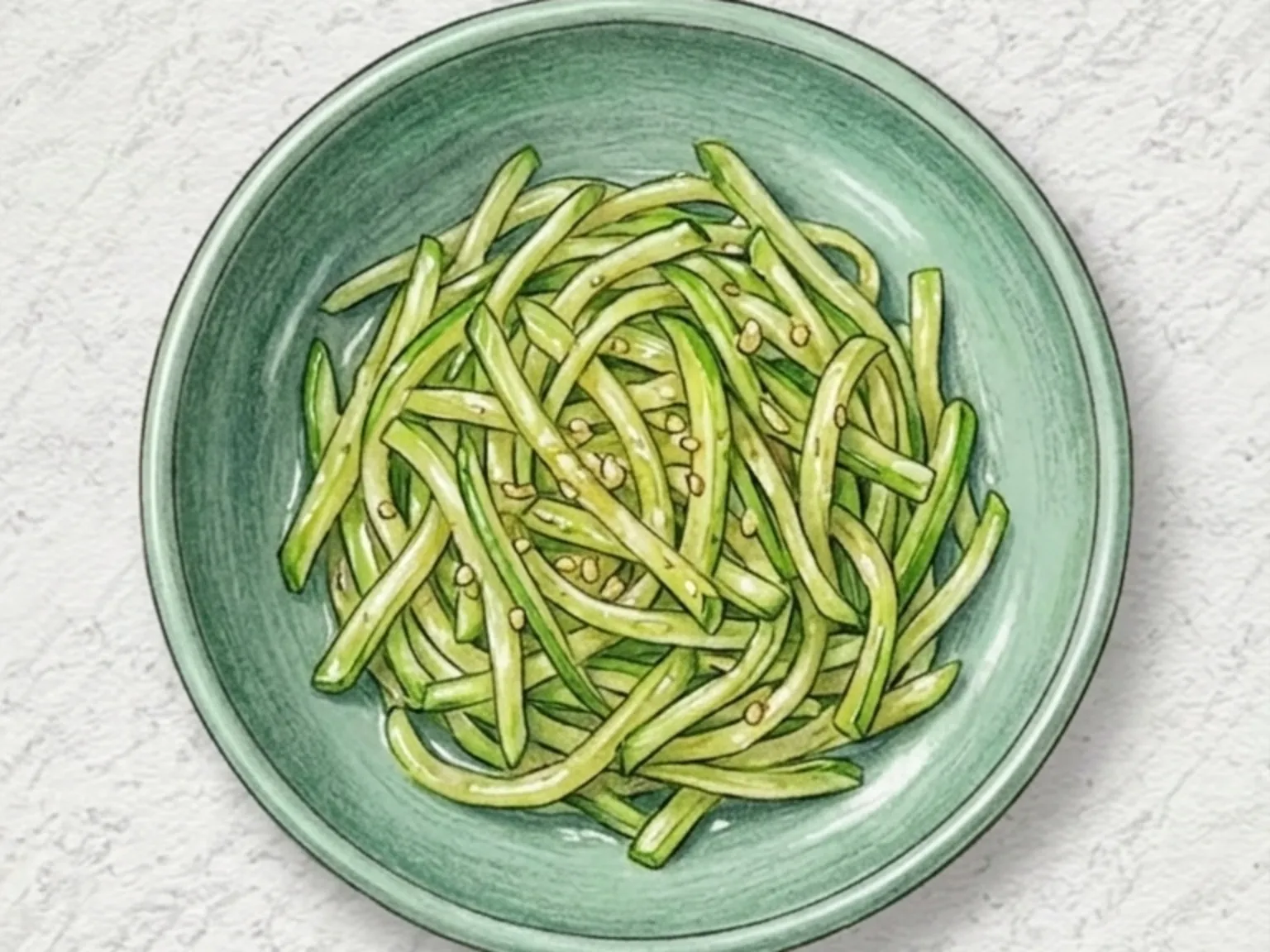
Korean Zucchini Namul (Sesame-Dressed Bibimbap Topping)
Hobak namul is julienned zucchini stir-fried with sesame oil and garlic - a foundational Korean namul that appears as one of the five-color toppings in bibimbap. Though it looks similar to hobak-bokkeum, the cut makes the difference: namul uses thin julienne strips rather than half-moons, so the strands integrate seamlessly with rice grains when mixed. Salting and thoroughly squeezing out moisture is essential; leftover water makes the pan soggy and turns bibimbap rice gummy. Seasoning stays minimal - salt and sesame oil - with garlic gently sauteed first to lay down an aromatic base without burning. Three minutes over medium heat is enough, and the cooked strands hold their shape well even after cooling, which makes this a reliable lunchbox option.
Adjust Servings
Instructions
- 1
Julienne zucchini, salt 5 minutes, then squeeze dry.
- 2
Sauté garlic in oil in a pan.
- 3
Add zucchini and stir-fry on medium heat 3 minutes.
- 4
Finish with sesame oil and sesame seeds.
As an Amazon Associate, we may earn from qualifying purchases.
Tips
Nutrition (per serving)
More Recipes

Korean Potato Salad (Creamy Mashed Potato Ham Cucumber)
Korean potato salad (gamja salad) arrived via Japan's yoshoku tradition but evolved its own identity in Korean home kitchens. Potatoes are boiled and mashed while hot, leaving some lumps for textural contrast - uniformly smooth is not the goal. Diced ham is pan-seared to render excess fat, then mixed with salt-drained cucumber and boiled carrot. The dressing is simply mayonnaise adjusted with sugar and salt, producing the distinctly sweet-creamy profile that separates Korean potato salad from Western versions. Chilling for at least an hour before serving lets the seasoning equalize throughout the mixture.

Korean Stir-fried Zucchini
Hobak-bokkeum is one of the quickest banchan in the Korean home-cooking repertoire. Thinly sliced Korean zucchini (aehobak) is salted for five minutes to draw out moisture - skipping this step floods the pan and produces a steamed rather than stir-fried result. Seasoning with saeujeot (salted fermented shrimp) instead of plain salt introduces a deeper marine umami that plain sodium cannot replicate; the paste is salty enough that additional salt is rarely needed. High heat and brief cooking time allow the surface of each slice to lightly caramelize, building a nutty aroma while the interior stays tender. Finished with sliced green onion, sesame oil, and toasted sesame seeds, the dish is clean and simple. All you need is one zucchini and a few pantry staples.

Korean Seasoned Carrot Namul
Carrot namul is one of the five-color banchan Koreans prepare for ancestral rites, where orange represents fire. Julienned thin, the carrots are salted briefly to shed water, then stir-fried with garlic for two to three minutes - just enough to soften the raw edge while keeping an audible crunch. No soy sauce or chili enters the pan; seasoning stays minimal to preserve natural sweetness. A final toss with sesame oil and seeds rounds out this clean, single-ingredient side.

Korean Steamed Eggplant Namul
Gaji namul strips eggplant down to its quietest expression - steamed until completely soft, then dressed with just soy sauce, garlic, and sesame oil. No chili, no vinegar, no fermented paste. The eggplant is halved and steamed for seven minutes until the flesh is uniformly tender, then torn into long shreds by hand along its natural fibers. This tearing technique creates rough surfaces that grip the minimal seasoning better than knife-cut pieces would. The dressed namul has a glossy, dark sheen from the sesame oil and soy sauce soaking into the porous flesh. Among Korean namul dishes, gaji namul stands out for its exceptionally soft, almost melting texture - it practically dissolves when mixed into warm rice. A traditional banchan in Korean Buddhist temple cuisine, where simplicity is a principle rather than a limitation.

Korean Zucchini Kimchi (Summer Fresh Gochugaru Quick)
Hobak kimchi is a Korean summer zucchini kimchi where half-moon or thin-cut slices are lightly salted, then tossed with gochugaru, fish sauce, garlic, garlic chives, and plum extract. Minimal salting preserves the zucchini's natural crunch and gentle sweetness, and plum extract provides a rounded sweetness without added sugar. Garlic chives tie the flavors together with their aromatic, grassy note, and onion adds an extra layer of savory depth. This is a no-fermentation kimchi meant to be eaten immediately after preparation, making it an efficient seasonal banchan when fresh summer zucchini is at its peak.

Korean Pan-fried Zucchini Jeon
Hobak-jeon is a Korean pan-fried zucchini pancake made by slicing Korean zucchini into even half-centimeter rounds, salting them for five minutes to draw out excess moisture, then dusting in flour, dipping in beaten egg, and frying over medium heat for two to three minutes per side. The salting step is essential-it removes water that would otherwise make the jeon soggy, and it simultaneously concentrates the zucchini's mild natural sweetness into a more pronounced flavor. The egg coating acts as a gentle heat buffer, keeping the interior soft and moist while the exterior develops a pale golden crust with a subtle nuttiness from the cooked egg. It is one of the most versatile banchan in Korean cooking, equally at home in a child's lunchbox, on an everyday dinner table alongside soup or stew, or stacked on a holiday platter.