Korean Zucchini Shrimp Stir-fry
Quick answer
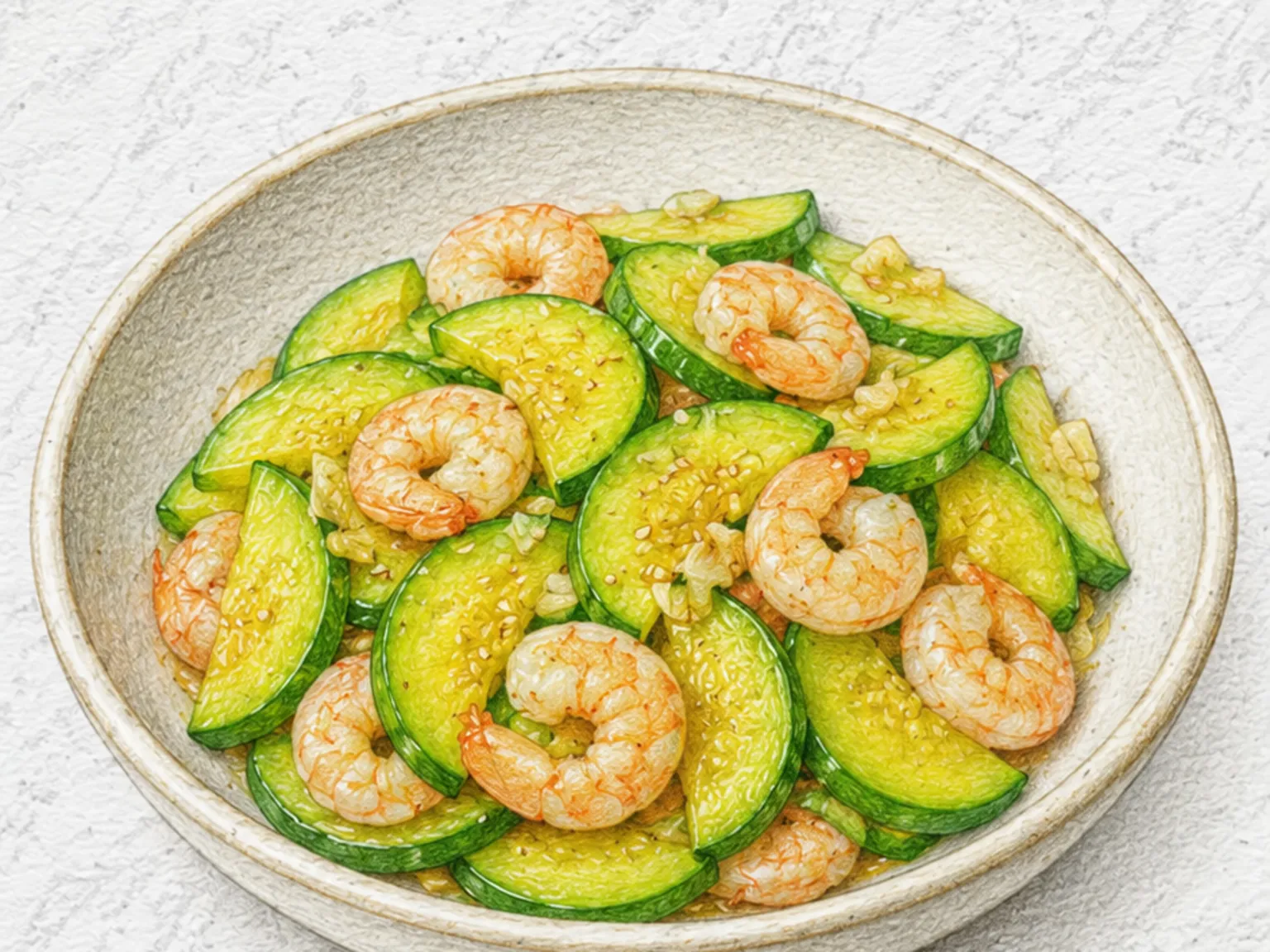
Hobak-saeu-bokkeum is a light Korean stir-fry of thinly sliced zucchini and shrimp seasoned with soy sauce, cooking wine, and garlic.
What makes this special
- Lightly seasoned zucchini and seared shrimp create a delicate, clean-tasting Korean stir-fry.
- Two-step cook: shrimp seared first and removed prevents overcooking
- Light soy sauce keeps the color pale and the seasoning clean
Key ingredients
Core cooking flow
- 1 Slice 1 zucchini into half-moons that are not paper-thin, and cut 1/4 onion into thin strips.
- 2 Pat 180 g peeled shrimp very dry with paper towels, then coat with 1 tablesp...
- 3 Preheat the pan well over high heat, then add 1 tablespoon cooking oil and 1 teaspoon minced garlic.
Hobak-saeu-bokkeum is a light Korean stir-fry of thinly sliced zucchini and shrimp seasoned with soy sauce, cooking wine, and garlic. The dish relies on the inherent flavors of its ingredients rather than heavy seasoning, keeping the final result mild, clean, and free of excess grease. Zucchini softens as it cooks and releases its natural sweetness, but the heat must be managed carefully. Overcooking draws out too much moisture and turns the slices limp and watery, eliminating the slight crispness at the center that defines the ideal texture. A well-preheated pan and high heat are needed to sear the surface quickly before the interior softens all the way through. Shrimp are cooked only until they turn pink and curl into a gentle arc. At that moment the proteins have set just enough to give a plump, springy bite; cooking beyond that point tightens the muscle fibers further and makes them rubbery. Using soup soy sauce rather than dark soy sauce keeps the color light and the seasoning clean. A sliced green chili adds a sharp kick without changing the fundamental character of the dish. The entire stir-fry comes together in around ten minutes, making it one of the more practical banchan options when time is limited. It holds its flavor and texture at room temperature without deteriorating, which makes it a reliable choice for a packed lunchbox as well as a fresh dinner side. Lightly salting the shrimp and splashing on a small amount of cooking wine before cooking helps draw out any residual fishiness. Yellow squash or zucchini varieties can substitute freely for the Korean hobak, and adding squid alongside the shrimp introduces an additional layer of oceanic character to the finished dish.
Instructions
Read the steps as a cooking flow: prep, heat, seasoning, doneness control, and finish.
- 1Heat
Slice 1 zucchini into half-moons that are not paper-thin, and cut 1/4 onion into thin strips.
Shake off surface moisture before cooking so the vegetables sear quickly instead of steaming.
- 2Heat
Pat 180 g peeled shrimp very dry with paper towels, then coat with 1 tablespoon cooking wine and let stand for 5 minutes.
If they go into the pan wet, they release steam and toughen quickly.
- 3Control
Preheat the pan well over high heat, then add 1 tablespoon cooking oil and 1 teaspoon minced garlic.
Stir for about 20 seconds, just until fragrant, and add the shrimp before the garlic browns.
- 4Finish
Stir-fry the shrimp for about 1 minute, only until the outside turns pink and curls slightly, then remove them to a plate.
Do not cook them fully now, because they will finish with the vegetables later.
- 5Control
Add the zucchini and onion to the same pan and stir-fry over high heat for about 2 minutes.
Keep the slices moving; the zucchini edges should look slightly translucent while the centers still feel a little firm.
- 6Season
Return the shrimp, pour 1 tablespoon soy sauce around the edge of the pan, and stir-fry for 1 minute so the seasoning coats everything evenly. Turn off the heat and toss with 1 teaspoon sesame oil.
After the steps
Pick a recipe that fits this dish.
Continue with shared ingredients, meal pairings, or a similar method.
Recipes That Go Well With This
More Stir-fry →Based on shared ingredients and meal pairing
Korean Stir-Fried Zucchini and Beef Brisket with Doenjang
Three ingredients divide the labor in this stir-fry: beef brisket renders the fat, doenjang provides the fermented backbone, and zucchini supplies the body of the dish. The brisket goes into a dry pan first, no added oil, so its own fat melts out and becomes the cooking medium. Doenjang added directly to that rendered fat fries for thirty seconds until the raw paste smell cooks off and a deeper fragrance develops. Then the zucchini, sliced into half-moons, goes in with a dash of soup soy sauce over high heat. Total cooking time from pan to plate runs about five minutes - push past that and the zucchini releases too much water and turns limp. Sliced cheongyang chili at the end keeps a sharp heat in the background. A drizzle of perilla oil with the heat off gives a clean, herbal finish. Works as a banchan alongside rice, or spooned over a full bowl of steamed rice as a quick one-dish meal.
Korean Oi Dubu Bokkeum (Cucumber Tofu Stir-fry)
Oi-dubu-bokkeum stir-fries half-moon cucumber slices and cubed firm tofu with soup soy sauce, garlic, and a light touch of Korean chili flakes. The tofu is pan-fried to golden first to prevent crumbling, then set aside while garlic and onion build flavor in the same pan. Cucumber goes in for just 90 seconds - long enough to warm through but short enough to stay crisp and juicy. The tofu returns for a final toss with sesame oil, creating a dish defined by the contrast between cool, crunchy cucumber and warm, soft tofu under a clean soy-based seasoning.
Korean Seasoned Sea Grapes Salad
Kkosiraegi-muchim is a tangy, low-calorie banchan made from kkosiraegi, a red algae seaweed whose thin, noodle-like strands snap with a distinctive crunch that no other seaweed can replicate. Blanching must not exceed twenty seconds, as anything longer collapses the characteristic texture, so a timer is essential. The seaweed goes straight from the boiling water into cold water to stop the heat and lock in elasticity. The dressing brings together gochugaru, soup soy sauce, vinegar, maesil-cheong, garlic, and sesame oil; the green plum extract layering in a fruity acidity that lifts the dish beyond simple sour-spicy flavoring. Julienned cucumber threaded through the seaweed strands provides a crisp, garden counterpoint to the oceanic depth. At roughly 72 kilocalories per serving with high dietary fiber content, this banchan appears frequently in Korean diet meal plans because it satisfies without adding much to the calorie count. Eating it promptly after seasoning prevents the cucumber from releasing water and diluting the dressing. Served cold in summer, it doubles as a refreshing side that pairs well with grilled meat or plain rice.
Korean Beurokolli Saeu Bokkeum (Broccoli Shrimp Stir-fry)
Peeled and deveined shrimp are seasoned with cooking wine and pepper, then stir-fried over high heat alongside blanched broccoli. The shrimp reach their ideal texture the instant they turn pink; cooking any further causes the proteins to contract and the flesh to toughen. Blanching the broccoli briefly beforehand means it releases less water once it hits the pan, keeping the sauce concentrated and clinging to the ingredients rather than pooling at the bottom. Soy sauce and oyster sauce form the savory backbone, while sliced garlic infused into the oil at the start builds a fragrant base that runs through every mouthful. Bell pepper adds a crisp snap and a vivid color. The whole dish takes under fifteen minutes and delivers a full plate of protein and vitamin C in a light, satisfying format. Served over steamed rice, it works just as well as a rice bowl.
Serve with this
Korean Beef Fried Rice (Soy-Marinated Ground Beef Stir-fried Rice)
Sogogi bokkeumbap stir-fries soy-marinated ground beef with diced vegetables and day-old rice over high heat for a deeply savory fried rice. The beef goes in first, rendering its fat and leaving behind a flavorful fond that coats the pan. Onion, carrot, and zucchini follow, cooking just until their edges soften and their natural sugars begin to caramelize. Cold rice is added and tossed vigorously to break up clumps, picking up the soy seasoning and meat juices as it fries. A final drizzle of sesame oil right before plating adds a fragrant, nutty finish. The beef infuses the rice with a meaty depth while the vegetables keep the dish from feeling heavy, making it a quick, satisfying meal from everyday pantry ingredients.
Kongnamul-guk (Bean Sprout Anchovy Soup)
Kongnamul-guk is a clear Korean soup built on bean sprouts, water, soup soy sauce, and garlic, and its central technique is boiling the sprouts with the lid firmly closed for seven minutes. The reason behind the closed lid is a long-standing Korean kitchen belief: the compounds responsible for the raw, beany smell in soybean sprouts are volatile, and if the lid is left open, they do not escape with the steam but instead condense back into the pot. Whether the chemistry fully supports this, keeping the lid closed has been the standard method for generations and consistently produces a clean-tasting broth. Green onion goes in at the very end to keep its bright, mild bite without overcooking. Trimming the fine root tails from each sprout improves the texture and presentation, though it does not change the flavor and is often skipped on weekdays. Adding chili flakes and a cracked egg transforms the soup into a spicy, restorative hangover version, and a handful of clams deepens the broth with extra umami. From start to finish the soup takes about fifteen minutes, which makes it one of the fastest soups in the Korean repertoire, and the directness of its flavor -- clean, cool, and vegetal -- is exactly what makes it worth returning to.
Korean Hot Chili Anchovy Tofu Stew
Dried anchovies and cheongyang chilies go into the pot together from the start so the broth itself absorbs the deep, pungent heat rather than the chilies simply floating on top. The anchovies are dry-roasted first to drive off any fishiness before water is added. Two whole cheongyang chilies, left uncut, release a sharp, penetrating spice that builds gradually through the simmer. Gochugaru adds color and layers the heat further, soup soy sauce keeps the seasoning clean, and tofu goes in only after the broth reaches a full boil so the cubes stay firm. The combination of anchovy-based richness and the chilies distinctive biting heat produces a broth that clears the palate without becoming salty.
Similar recipes
Korean Napa Cabbage Shrimp Stir-fry
Baechu saeu bokkeum is a Korean stir-fry of napa cabbage and medium shrimp seasoned with soy sauce and fish sauce. The shrimp are deveined and scored along the back so they curl attractively and absorb seasoning more readily. They go into a hot oiled pan first for thirty seconds to sear the surface, then are removed while the cabbage stems are stir-fried until slightly wilted. Soy sauce, fish sauce, and minced garlic are added along with the cabbage leaves, and the shrimp return to the pan for a final thirty-second toss so everything seasons evenly. Sliced cheongyang chili and scallion go in last for a hit of heat and freshness. The entire stir-fry stays under three to four minutes of active cooking, which preserves the crunch of the cabbage stems and the firm bite of the shrimp. The combination of soy sauce and fish sauce provides a layered saltiness that brings out the natural sweetness of both the cabbage and the shrimp.
Yuja Shrimp Basil Linguine
Yuja shrimp basil linguine is a light oil-based pasta that keeps shrimp at the center of attention by handling them quickly and carefully. After deveining and thoroughly patting dry, the shrimp are seared in olive oil just until both sides turn pink, pulling them from the pan within three minutes total to preserve their springy, snapping bite. Prolonged heat is the enemy of shrimp texture, so they are removed and returned only when the pasta is nearly ready. The aromatic base begins with garlic and red pepper flakes sauteed over low heat in olive oil until fragrant but not colored, a process that infuses the fat with a gentle heat and a savory depth. A splash of white wine goes in next and cooks off quickly, adding a clean acidity and lifting the browned bits from the pan. Yuja marmalade contributes a distinct citrus sweetness, but the sugar content varies considerably between brands, so it is added incrementally and tasted as it goes. Three tablespoons of starchy pasta cooking water emulsify the oil and marmalade into a light sauce that clings to every strand of linguine without feeling heavy. Basil leaves are folded in off the heat to protect their volatile aromatic oils, so their fresh herbal fragrance layers over the yuja's bright citrus without any loss.
Korean Pan-fried Zucchini Jeon
Hobak-jeon is a Korean pan-fried zucchini pancake made by slicing Korean zucchini into uniform half-centimeter rounds, salting them for five minutes, then dusting in flour, dipping in beaten egg, and frying over medium heat for two to three minutes per side. The salting step does two things at once: it pulls out the moisture that would otherwise make the pancakes soggy, and it concentrates the zucchini's mild sweetness into a more distinct flavor. The egg coating acts as a gentle heat buffer, keeping the interior soft and moist while the exterior develops an even, pale golden color with a subtle nuttiness from the cooked egg. The yellow hue adds color to the table, and the jeon pairs naturally with soy sauce or a vinegared soy dipping sauce. It is one of the most versatile banchan in Korean cooking, suitable for a child's lunchbox, an everyday dinner table beside soup or stew, or stacked on a holiday platter for ancestral rites and guests alike. The simplicity of the method and the availability of the ingredients mean it appears on Korean tables year-round.