Charim

2686 Korean & World Recipes

2686+ Korean recipes, clean and organized. Ingredients to instructions, all at a glance.

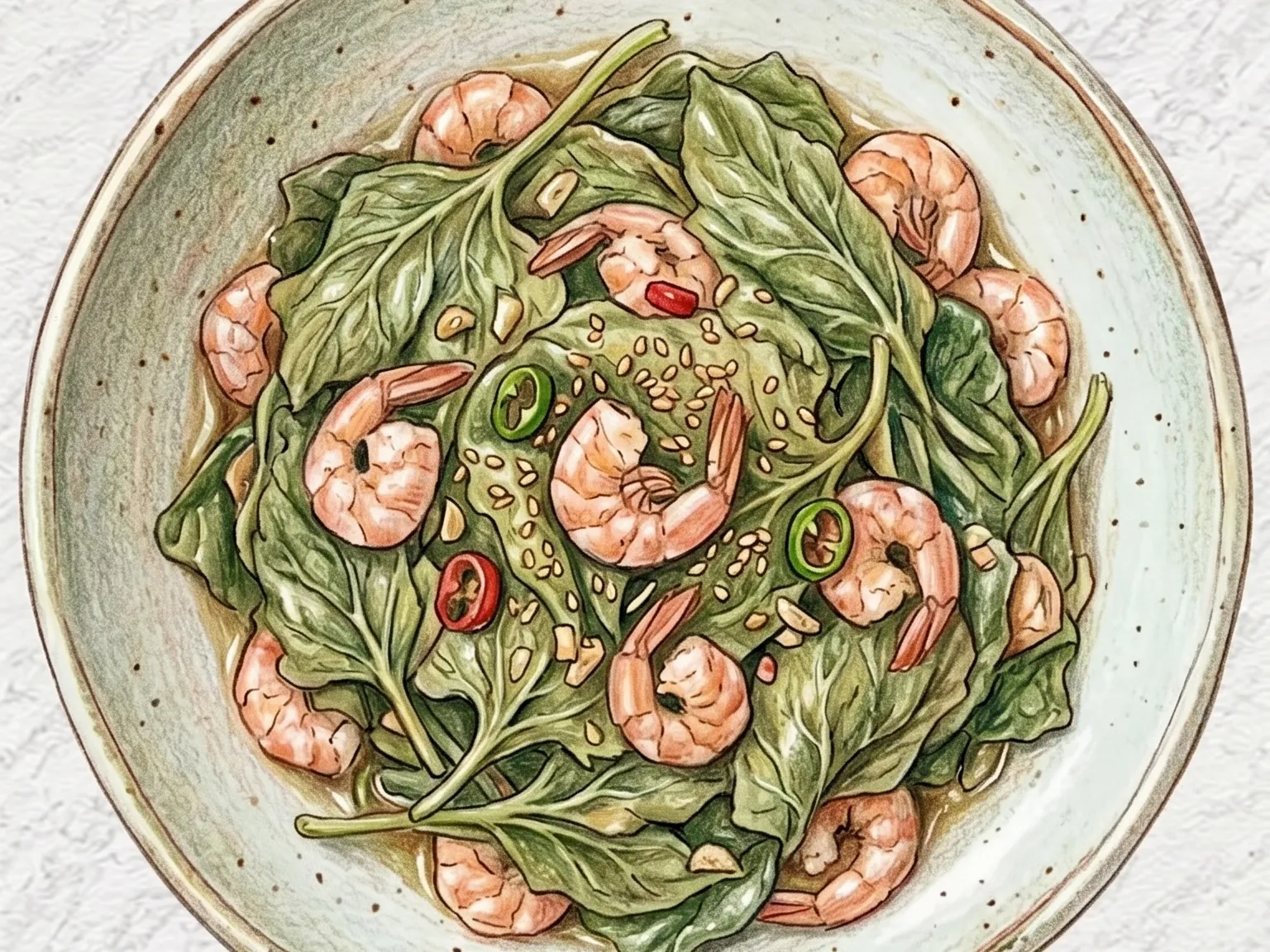
Korean Stir-fried Pumpkin Leaves and Shrimp
Stir-fry Medium

Korean Stir-fried Pumpkin Leaves and Shrimp

Hobakip-saeu-bokkeum is a Korean stir-fry of blanched pumpkin leaves and shrimp cooked in perilla oil with light soy sauce. Blanching softens the leaves' rough texture while preserving their mild, grassy aroma, and the shrimp bring a savory ocean note. A touch of cheongyang chili pepper adds gentle heat that ties the flavors together. This seasonal dish is best enjoyed in summer when pumpkin leaves are at their freshest, and it pairs especially well mixed into a bowl of hot rice.

Prep 18min Cook 9min 2 servings

Adjust Servings

2servings
servings

Instructions

  1. 1

    Peel tough fibers from pumpkin leaf stems, chop, and blanch for 40 seconds.

  2. 2

    Peel and devein shrimp, then pat dry thoroughly.

  3. 3

    Heat oil and sauté garlic with onion for 1 minute.

  4. 4

    Add shrimp and stir-fry on high heat for 2 minutes until firm outside.

  5. 5

    Add blanched leaves, soup soy sauce, and salt, then stir-fry for 2 minutes.

  6. 6

    Add chili and perilla oil, stir-fry 30 seconds, and turn off heat immediately.

🛒Shop Ingredients on Amazon

As an Amazon Associate, we may earn from qualifying purchases.

Tips

Pre-blanching pumpkin leaves reduces raw flavor and toughness.
Avoid overcooking shrimp to keep them tender.

Nutrition (per serving)

Calories
244
kcal
Protein
24
g
Carbs
8
g
Fat
12
g

More Recipes

Korean Stir-fried Potato and Shrimp
Side dishesMedium

Korean Stir-fried Potato and Shrimp

Gamja-saeu-bokkeum pairs julienned potatoes with shell-on medium shrimp in a clean, garlic-forward stir-fry. The potatoes are soaked in cold water first to remove surface starch - skipping this step leads to clumping in the pan. Garlic sizzles in oil to build an aromatic base before the shrimp go in, cooking until half-done so their natural sweetness transfers to the potato strips when combined. Seasoned with nothing more than salt, pepper, and a finish of sesame oil, this banchan lets the contrast between the potato's floury bite and the shrimp's springy snap carry the dish.

🏠 Everyday🍱 Lunchbox
Prep 15minCook 10min4 servings
Korean Stir-fried Aged Kimchi and Tofu
Stir-fryEasy

Korean Stir-fried Aged Kimchi and Tofu

Mukeunji-dubu-bokkeum brings together aged kimchi's deep sourness and firm tofu's neutral mildness in a single pan. The tofu is pan-fried to golden first, building a crust that prevents breakage and absorbs sauce more effectively. Meanwhile, onion and aged kimchi are stir-fried with gochugaru until the kimchi's moisture evaporates and its flavor concentrates, then soy sauce and sugar balance the acidity. The tofu returns to the pan to soak up the seasoning, and a final addition of perilla oil softens the kimchi's sharpness while green onion lifts the aroma.

🏠 Everyday🍱 Lunchbox
Prep 12minCook 14min2 servings
Korean Napa Cabbage Shrimp Stir-fry
Stir-fryEasy

Korean Napa Cabbage Shrimp Stir-fry

Baechu saeu bokkeum is a Korean stir-fry of napa cabbage and medium shrimp seasoned with soy sauce and fish sauce. The shrimp are deveined and scored along the back so they curl attractively and absorb seasoning more readily. They go into a hot oiled pan first for thirty seconds to sear the surface, then are removed while the cabbage stems are stir-fried until slightly wilted. Soy sauce, fish sauce, and minced garlic are added along with the cabbage leaves, and the shrimp return to the pan for a final thirty-second toss so everything seasons evenly. Sliced cheongyang chili and scallion go in last for a hit of heat and freshness. The entire stir-fry stays under three to four minutes of active cooking, which preserves the crunch of the cabbage stems and the firm bite of the shrimp. The combination of soy sauce and fish sauce provides a layered saltiness that brings out the natural sweetness of both the cabbage and the shrimp.

🏠 Everyday🍱 Lunchbox
Prep 14minCook 8min2 servings
Korean Lotus Root and Shrimp Stir-fry
Stir-fryEasy

Korean Lotus Root and Shrimp Stir-fry

Yeongeun-saeu-bokkeum stir-fries vinegar-soaked lotus root and cleaned shrimp in a soy sauce and oligosaccharide glaze. The lotus root goes in the pan first for two minutes to start cooking, then shrimp are added and the soy-syrup seasoning goes in over high heat to build a glossy coating. The crunchy, starchy bite of the lotus root contrasts with the bouncy firmness of the shrimp in each mouthful, while the soy and syrup provide a simple salty-sweet balance. Finished with sesame oil, the dish holds its texture well even after cooling, making it well-suited for packed lunches.

🏠 Everyday🍱 Lunchbox
Prep 15minCook 10min2 servings
Korean Seaweed, Perilla & Shrimp Stir-fry
Stir-fryEasy

Korean Seaweed, Perilla & Shrimp Stir-fry

Tot-deulkkae-saeu-bokkeum stir-fries briefly blanched tot seaweed and shrimp in perilla oil, finished with ground perilla seeds. The tot is blanched for only 30 seconds to preserve its distinctive pop-and-chew texture, and the shrimp are pre-seasoned with cooking wine to remove any fishiness before being cooked to a springy doneness. Perilla oil and ground perilla seeds merge with the oceanic salinity of the seaweed and shrimp, building a nutty-briny flavor. Seasoned lightly with soup soy sauce and green onion, it is a low-carbohydrate side dish anchored in seafood and sea vegetables.

🥗 Light & Healthy🏠 Everyday
Prep 15minCook 10min2 servings
Korean Stir-fried Julienne Potatoes
Side dishesEasy

Korean Stir-fried Julienne Potatoes

Gamja-chae-bokkeum - stir-fried julienned potatoes - is a deceptively simple banchan where the cutting technique determines the outcome. Potatoes are julienned into matchstick-thin strips, then soaked in cold water to wash away surface starch - this is the critical step that prevents the strips from clumping into a sticky mass in the pan. After draining completely, they hit a hot, lightly oiled pan and cook for just three to four minutes, tossed frequently. The goal is a strip that is cooked through but still has an audible crunch when bitten - not soft, not raw. Salt and a splash of vinegar are the only seasonings, keeping the focus on the potato's clean, starchy sweetness. This banchan has been a staple of Korean school lunches and company cafeterias for decades, valued for being vegetarian, cheap, and universally inoffensive.

🏠 Everyday🍱 Lunchbox
Prep 12minCook 8min4 servings
More Stir-fry →