
Sweet Pumpkin Porridge (Korean Kabocha Glutinous Rice Porridge)
Quick answer
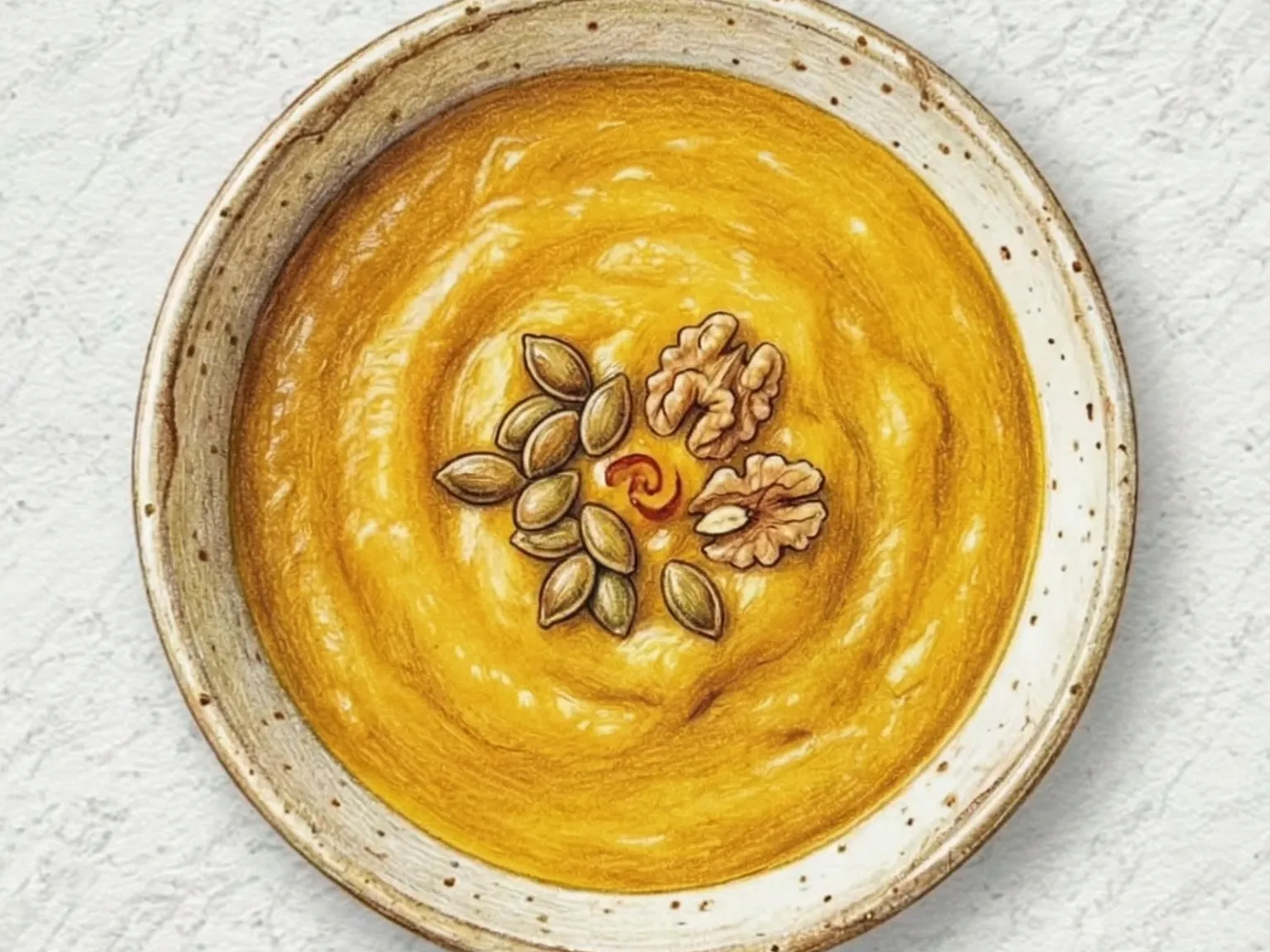
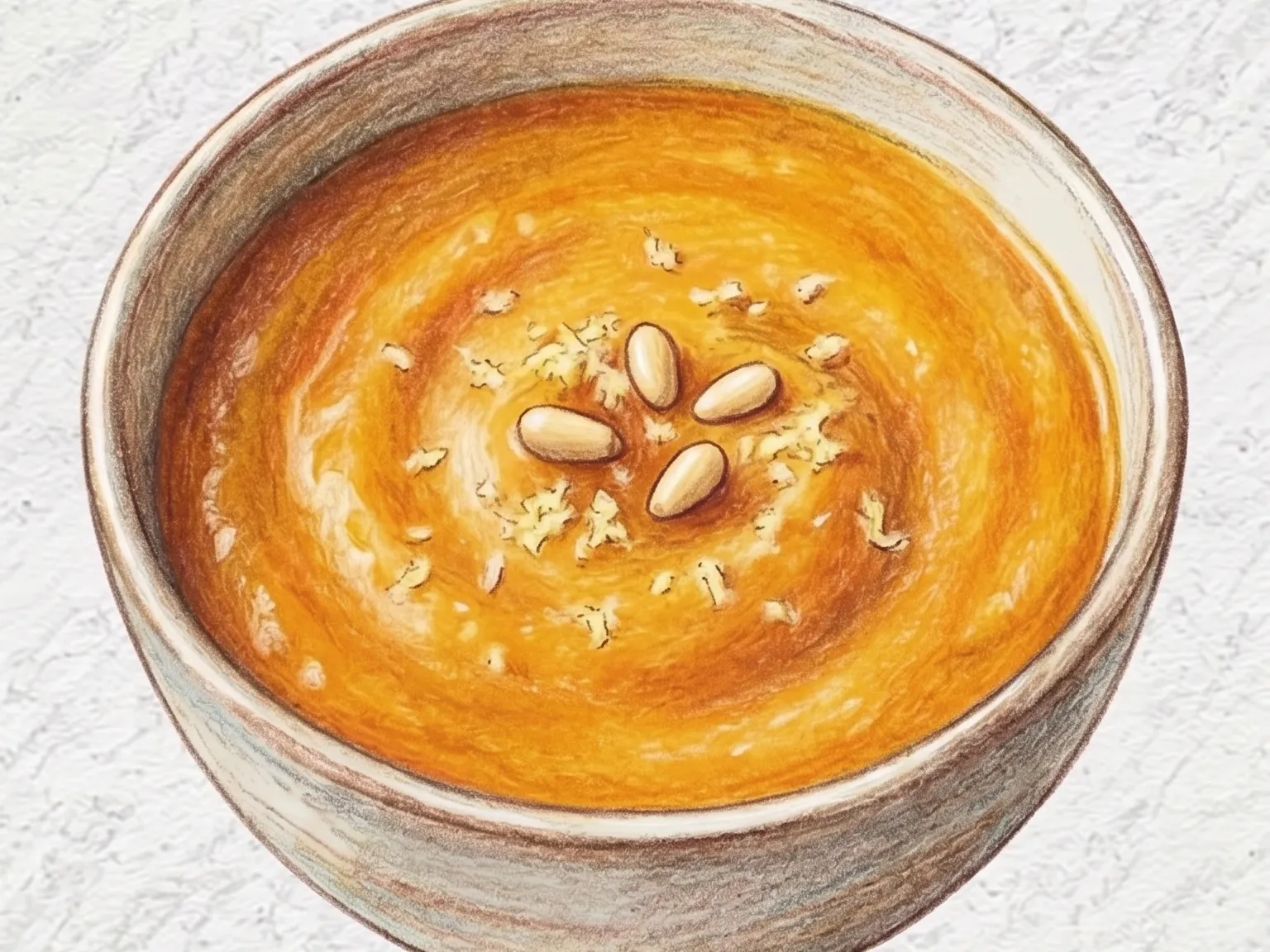
Hobakjuk is a Korean sweet pumpkin porridge made by steaming kabocha squash, blending it smooth with water, and simmering the puree with a glutinous rice flour slurry ove...
What makes this special
- Hobakjuk sweet pumpkin porridge uses steamed kabocha with skin on to concentrate natural sugars.
- Steaming kabocha with skin on concentrates sugar for deep natural sweetness
- Glutinous rice slurry thickens the base as it cooks; milk adds a creamy body
Key ingredients
Core cooking flow
- 1 Wash 500 g kabocha squash, scrape out the seeds, and place it in the steamer with the skin on.
- 2 Let the squash cool just until it can be handled, then remove the skin.
- 3 Pour the squash puree into a pot and set it over medium-low heat.
Hobakjuk is a Korean sweet pumpkin porridge made by steaming kabocha squash, blending it smooth with water, and simmering the puree with a glutinous rice flour slurry over medium-low heat until thick and velvety. Steaming the squash with the skin on concentrates its natural sugars, and blending with 300 ml of water creates a uniform, smooth base. The rice flour slurry gelatinizes as it heats, giving the porridge its characteristic viscosity, while a pour of milk rounds out the texture with a creamy richness. Pine nuts scattered on top add a fatty, resinous aroma over the squash, and sweetness is best adjusted at the very end to account for natural variation in pumpkin sugar content.
Instructions
Read the steps as a cooking flow: prep, heat, seasoning, doneness control, and finish.
- 1Control
Wash 500 g kabocha squash, scrape out the seeds, and place it in the steamer with the skin on.
Once the water is boiling, steam over high heat for about 15 minutes, until a chopstick slides in easily.
- 2Step
Let the squash cool just until it can be handled, then remove the skin.
Add it to a blender with 300 ml water and blend until the puree looks completely smooth, with no visible bits of squash.
- 3Control
Pour the squash puree into a pot and set it over medium-low heat.
When small bubbles appear around the edges, stir while scraping the bottom of the pot so the dense puree does not scorch.
- 4Control
Whisk 35 g glutinous rice flour into 150 ml water, then strain the slurry to remove lumps.
Pour it gradually into the simmering puree while stirring constantly, so the porridge thickens evenly.
- 5Season
Add 120 ml milk and keep the heat at medium-low.
Stir in 25 g sugar and 1 g salt, then cook for 5 to 7 minutes, stirring, until the porridge falls slowly from a spoon in a thick ribbon.
- 6Finish
Taste before turning off the heat and adjust the sweetness at the end, since squash varies naturally.
Ladle the porridge into bowls, place 10 g pine nuts in the center, and serve warm before it cools too much.
After the steps
Pick a recipe that fits this dish.
Continue with shared ingredients, meal pairings, or a similar method.
Recipes That Go Well With This
More Desserts →Based on shared ingredients and meal pairing
Korean Milk Rice Porridge
Tarakjuk is a traditional Korean milk rice porridge made by coarsely grinding soaked rice, simmering it in water first to initiate gelatinization, then gradually incorporating milk over sustained stirring. Grinding the rice coarsely rather than to a fine paste preserves some texture in the finished porridge, preventing it from becoming uniformly smooth. Once the rice has been simmered in plain water and the starch begins to thicken the base, milk is added in two or three separate additions over ten minutes of constant stirring. Pouring all the milk in at once risks splitting due to the temperature differential between the cold dairy and the hot starch base. Each addition is stirred in fully before the next portion goes in, allowing the proteins and fats in the milk to incorporate evenly without curdling. A small pinch of salt and a measured amount of sugar are added to tie together the toasty, nutty character of the grain and the mild sweetness of the dairy -- neither should dominate. A final three minutes of simmering brings the porridge to a consistency that flows slowly off the back of a spoon. Pine nuts on top contribute a richly oily nuttiness, and a pinch of ground cinnamon adds a warm, aromatic finish. Historical records from the Joseon period note tarakjuk as a medicinal restorative prepared in the royal court.
Pan-Fried Sweet Rice Cake
Bukkumi is a traditional Korean pan-fried rice cake made from glutinous rice flour dough filled with sweet red bean paste seasoned with cinnamon and sugar. Using hot water to form the dough partially gelatinizes the starch, creating a pliable skin that stretches without cracking - though the dough must stay covered with a damp cloth throughout assembly to prevent the surface from drying out. Folding the dough into half-moon shapes seals in a cinnamon-laced bean paste filling that lifts the dense sweetness of the red bean with a warm spice note. Pan-frying on low heat builds a golden crust on each side while keeping the filling warm and molten at the center. A light drizzle of honey or a pinch of sugar right after frying adds a final layer of sweetness.
Korean Sweet Corn Latte (Butter Sauteed Corn Milk Drink)
Sweet corn latte begins by sauteing cooked corn kernels in butter until fragrant, then simmering them in milk to draw out the corn's natural sugars before blending everything smooth. The butter amplifies the starchy, roasted aroma during the initial saute, coating each kernel so that the fat-soluble flavor compounds dissolve fully into the milk during the five-minute simmer. Blending the mixture until completely smooth and then straining it through a fine sieve removes any remaining hull pieces, producing a texture as silky as a custard sauce. This straining step makes a noticeable difference in the final quality. Condensed milk adds a rounded sweetness, and a small amount of white pepper introduces a faint spiced warmth that gives the drink depth beneath the sweetness. It works equally well served hot in a ceramic mug or chilled and poured over ice; the corn aroma remains vivid in both versions.
Three-Color Sweet Rice Balls
Samsek gyeongdan are traditional Korean rice cake balls made from glutinous rice flour dough divided into three colors: plain white, green from mugwort powder, and pink from prickly pear powder, then rolled into small spheres and boiled. The dough must be kneaded with hot water to fully activate the starch's sticky quality; water that is too cool makes the dough prone to cracking when shaped. The balls need one extra minute of cooking after they float to ensure the centers turn fully translucent, and pulling them out immediately after floating often leaves a dense, undercooked core. The mugwort batch carries an herbal, grassy note, and the prickly pear version offers a faint fruity tang, so three distinct flavors emerge from the same base recipe. Transferring the cooked balls immediately to cold water stops carryover cooking and preserves the springy, bouncy texture. Rolling them in a mixture of roasted soybean powder or black sesame powder with sugar coats each ball in nuttiness, and a light brush of sesame oil prevents the balls from sticking together while giving the surface a subtle sheen.
Serve with this
Yaksik (Korean Royal Sweet Glutinous Rice with Jujube)
Yaksik is a traditional Korean sweet rice dish with roots in royal court cuisine. Glutinous rice is mixed with soy sauce, honey, and sesame oil, then steamed with jujubes and chestnuts until each grain absorbs a deep caramel-brown color and a sweet-salty seasoning. The soy sauce provides savory depth while the honey glazes the rice with a gentle sheen and lingering sweetness. Jujubes burst with natural fruity sweetness when bitten, and chestnuts contribute a crumbly, starchy contrast to the chewy rice. A pinch of cinnamon adds warm spice that ties the elements together. Yaksik holds its texture well at room temperature, making it equally suited for packed lunches or make-ahead desserts.
Korean Oil Tteokbokki (Dry-Stir-Fried Rice Cakes in Chili Soy Glaze)
Gireum-tteokbokki is a dry-style tteokbokki where rice cakes are stir-fried in oil and coated with a concentrated paste of gochugaru, soy sauce, sugar, and garlic - no broth involved. Blooming the chili flakes briefly in oil draws out their nutty, toasted aroma rather than raw heat, and the soy sauce and sugar build layered sweetness and umami on top of that base. Without liquid, the seasoning clings tightly to each rice cake's surface. The key technique is restraint with stirring: letting each rice cake sit undisturbed long enough to develop a lightly crisped exterior while the inside stays chewy creates a dual texture that broth-based versions cannot replicate. Green onion and sesame seeds added at the end provide fresh fragrance and textural contrast against the rich coating. The seasoning should be applied generously so the flavors penetrate past the surface rather than sitting only on the outside. Believed to have originated in school-front snack shops in 1970s and 1980s Seoul, gireum-tteokbokki is milder than gochujang versions and accessible to those who find the spicier style too intense.
Ground Beef Tacos
Beef tacos season ground beef with chili powder, cumin, garlic powder, and smoked paprika, then cook it in a skillet until the moisture cooks off and every granule of meat is coated in a concentrated spice crust. Spooned into crispy taco shells, the filling creates an immediate textural contrast as the shell cracks and the seasoned meat gives a dense, juicy resistance underneath. Salsa adds tomato acidity and chili heat on top, while avocado slices provide a cooling, fatty layer that moderates the spice without neutralizing it. Sour cream contributes a mild dairy tang, and a squeeze of lime over everything sharpens all the other flavors at once. The handheld format makes it easy to eat a second and third shell, since each one delivers the full range of spicy, tangy, creamy, and savory in a few bites.
Similar recipes
Korean Sweet Glutinous Rice
Glutinous rice is soaked, steamed, and dressed with a mixture of soy sauce, sesame oil, and honey, then studded with jujubes, chestnuts, and pine nuts before a second steaming. The double-steaming process gives the rice a dense, chewy stickiness while the soy sauce penetrates each grain and tints it a deep amber. Jujubes lend a natural caramel-like sweetness, chestnuts add a crumbly, starchy contrast, and pine nuts contribute a subtle oiliness that enriches the overall taste. Traditionally prepared for the first full moon festival, yakbap is equally enjoyable as an everyday snack or packed lunch.
Sweet Rice Honey Muffins
Yakbap muffins bake soaked glutinous rice that has been marinated for 20 minutes in a seasoning of soy sauce, dark brown sugar, honey, and sesame oil, then portioned into muffin cups with sliced jujubes and diced chestnuts before going into a 180-degree oven. The soy sauce provides a savory depth that folds into the brown sugar and honey to produce the dark, caramel-like sweetness that distinguishes traditional yakbap, while sesame oil amplifies the grain aroma throughout. Jujubes are sliced thin so their juices seep between the rice grains during baking, and the chestnut cubes provide a starchy, crumbly resistance against the sticky glutinous rice. Pine nuts placed on top release their oils as they roast, filling the oven with a nutty fragrance that deepens as the muffins brown. A 10-minute rest after removing them from the oven allows the residual heat to distribute evenly, so the glutinous rice firms into a clean shape that separates easily from the mold. The recipe reinterprets traditional yakshik as individual servings suited to a modern table.
Gyeongdan (Chewy Rice Balls with Sweet Coating)
Gyeongdan are Korean glutinous rice balls, each one shaped by hand into a small sphere, boiled until it floats, then rolled in a dry coating while still warm. The dough is made by kneading glutinous rice flour with hot water rather than cold, a technique that partially gelatinizes the starch and gives the finished rice ball its characteristic chewy spring. Rinsing the cooked balls immediately in cold water stops them from sticking together and firms the surface enough for the coating to cling evenly. Traditional coatings include roasted soybean powder, which is mild and nutty, ground black sesame, which adds deep toasted bitterness, and sweetened red bean crumbles. Some versions are filled with sweet red bean paste before shaping, so the filling bursts as you bite through. Gyeongdan appear on ceremonial tables at seasonal holidays and as everyday snacks, often presented as a trio of colors arranged side by side on a single plate.