Sweet Chestnut Confection
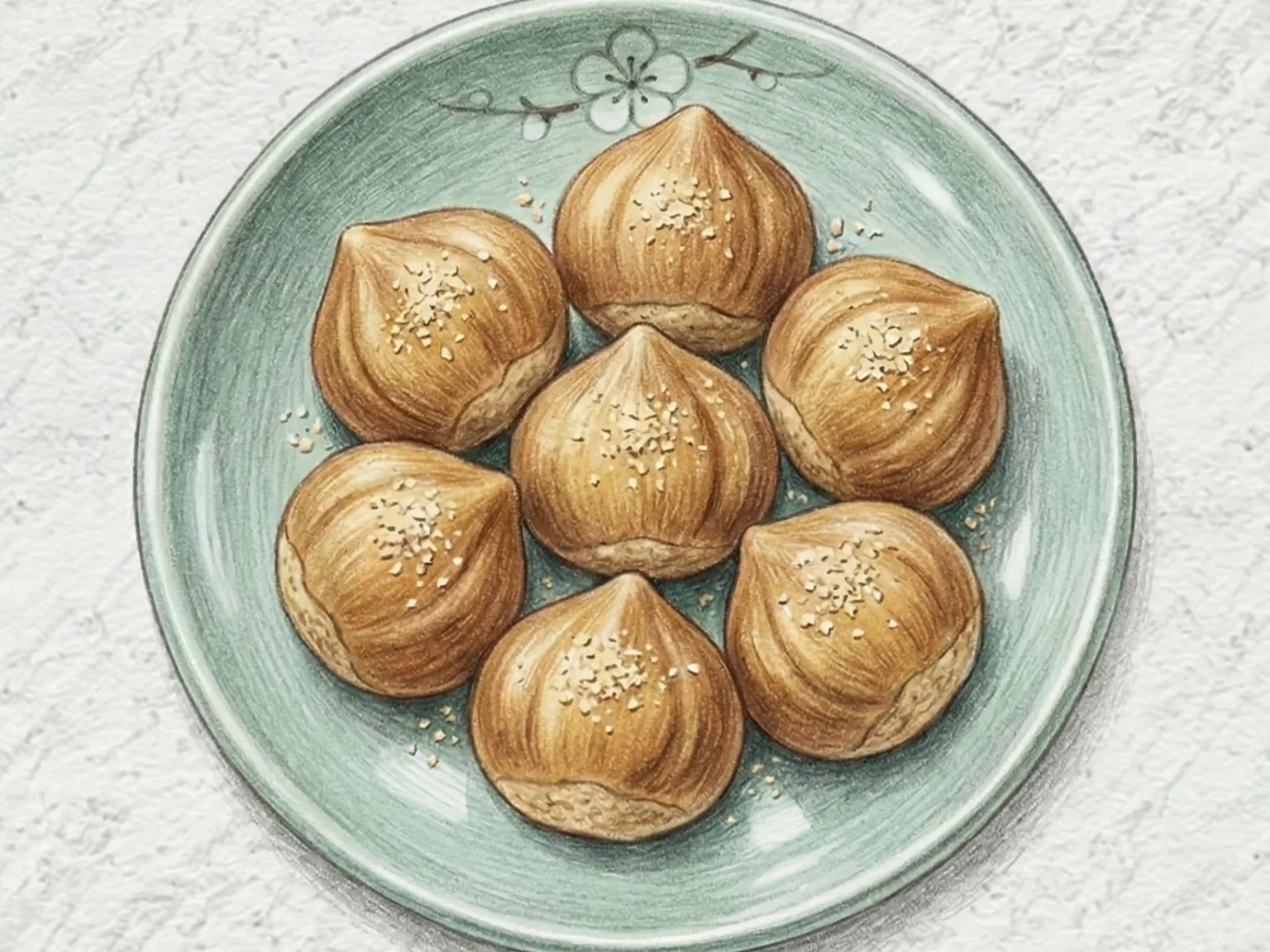
Yulran is a traditional Korean chestnut confection made by boiling chestnuts for 20 minutes, sieving the flesh until perfectly smooth, then kneading it with honey and ground cinnamon before shaping into bite-sized rounds. Pressing the boiled chestnut through a fine sieve eliminates any grainy bits, and the honey provides both moisture and binding strength so the confection holds its molded shape. Cinnamon adds a warm, aromatic dimension to the starchy, earthy sweetness of the chestnut, and a coating of ground pine nuts wraps each piece in an additional layer of mild nuttiness. Thin jujube slices placed on top as garnish contribute a pop of red color, and 15 minutes of chilling in the refrigerator firms the surface just enough that the confection can be picked up cleanly without sticking to the fingers.
Adjust Servings
Instructions
- 1
Score chestnuts, boil for 20 minutes, and remove the inner flesh.
- 2
Press through a sieve and mix with honey, salt, and cinnamon.
- 3
Shape into bite-size balls and gently flatten for a neat form.
- 4
Coat each piece evenly with ground pine nuts.
- 5
Top with thin jujube slices as garnish.
- 6
Chill for 15 minutes in the fridge and serve cool.
As an Amazon Associate, we may earn from qualifying purchases.
Tips
Nutrition (per serving)
More Recipes

Dasik (Korean Honey-Pressed Roasted Grain Confection)
Dasik is a traditional Korean pressed confection made by kneading roasted grain or nut powders with honey and pressing the mixture into carved wooden molds. Unlike baked goods, dasik holds its shape through the binding power of honey alone, which gives it a distinctive texture - slightly sticky on the teeth at first, then dissolving softly at body temperature. Roasted soybean powder produces a nutty version, black sesame yields a deeply aromatic one, and additions of pine nut powder or cinnamon deepen the flavor further. The wooden molds imprint decorative patterns onto the surface, making each piece as visually refined as it is flavorful. Dasik has been a staple of Korean tea ceremonies for centuries.

Black Sesame Tea Cookies (No-Bake Korean Pressed Cookies)
Heukimja dasik is a traditional Korean pressed tea cookie made by binding roasted black sesame powder and almond flour with honey and rice syrup, then pressing the mixture into a decorative wooden mold. It requires no heat at all: the rich, toasty flavor of the sesame and the fatty depth of the almond combine within the sticky honey base to create a crumbly, melt-in-the-mouth texture. A small amount of sesame oil improves the binding, and dusting the mold with pine nut powder before pressing yields a sharply defined surface pattern. After shaping, the cookies are rested in an airtight container for thirty minutes to firm up, resulting in bite-sized confections traditionally served alongside tea.

Black Sesame Pudding
Heukimja pudding is a chilled dessert made by warming milk and heavy cream on low heat with black sesame powder to extract its flavor, then setting the mixture with gelatin. The key to a silky consistency is stopping the heat when tiny bubbles appear at the edge of the pan, well before a full boil, which would cause the fat to separate. After seasoning with sugar and salt and straining once to remove any gritty particles, the liquid is divided into cups and refrigerated for at least two hours until set. A light dusting of black sesame powder on top before serving adds a visual accent and an extra layer of roasted, nutty fragrance.

Korean Black Raspberry Jelly
Bokbunja jelly cups are a chilled Korean dessert made by setting bokbunja (black raspberry) juice with gelatin sheets and a touch of lemon juice for balanced acidity. The gelatin must be dissolved off the heat after sugar water has fully cooled from a boil; adding it to boiling liquid breaks down its setting power. Straining the mixture once removes air bubbles and sediment, producing a glass-smooth surface that shows off the deep purple color of the bokbunja. Topping each cup with fresh blueberries and a mint leaf reinforces the berry flavor while creating a vivid visual contrast against the dark jelly.

Chestnut Sweet Jelly (Korean Agar-Set Chestnut White Bean Confection)
Bam yanggaeng is a Korean jelly confection that combines chestnut puree with white bean paste, set firm using agar powder. Boiled chestnuts are mashed until fine and mixed with the bean paste base, then dissolved agar, sugar, and honey are stirred in before the mixture is brought to a brief boil. Once poured into a mold and left to cool at room temperature, the agar solidifies the mixture into a sliceable block with a clean, firm bite distinct from gelatin-based desserts. The starchy quality of chestnuts gives the jelly a smoother, denser grain than plain bean-paste yanggaeng. A tiny amount of salt sharpens the overall sweetness. The finished confection stores well in the refrigerator for about a week and is often prepared as a holiday gift.

Korean Rice Puff Confection
Gangjeong is a traditional Korean confection made by coating puffed glutinous rice in warm rice syrup, then pressing the mixture into molds and allowing it to set. The process begins with soaking and steaming glutinous rice, drying it thoroughly, and deep-frying the grains until they puff into white, airy clusters. Working quickly, the hot syrup is folded through the puffs so that it bonds every piece together without making them soggy. Once cooled, the confection firms into a block that shatters satisfyingly when bitten. The rice syrup provides a gentle, caramel-like sweetness that never overwhelms. Black sesame seeds, pine nuts, or peanuts mixed in before setting add nutty richness and visual contrast. In Korean tradition, brightly colored versions appear on holiday tables, dyed with natural food colorings. Stored in an airtight container, gangjeong keeps its crunch for several days.