Cinnamon Persimmon Ice (Korean Spiced Punch Scraped Ice Dessert)
Quick answer
Sujeonggwa granita converts the traditional Korean cinnamon-ginger punch into a flaky frozen dessert by sweetening the steeped liquid with dark brown sugar and then break...
What makes this special
- Sujeonggwa granita turns traditional cinnamon punch into flaky crystals through repeated scraping.
- Traditional cinnamon-ginger sikhye base frozen then fork-scraped into granita
- Scraping every hour for 3-4 rounds creates the coarse icy texture
Key ingredients
Core cooking flow
- 1 Slice 35g fresh ginger into thin coins so it releases flavor quickly.
- 2 Put 900ml water, 12g cinnamon sticks, and the sliced ginger in a pot over medium heat.
- 3 Simmer for at least 20 minutes, until the liquid darkens and the cinnamon and ginger smell clear.
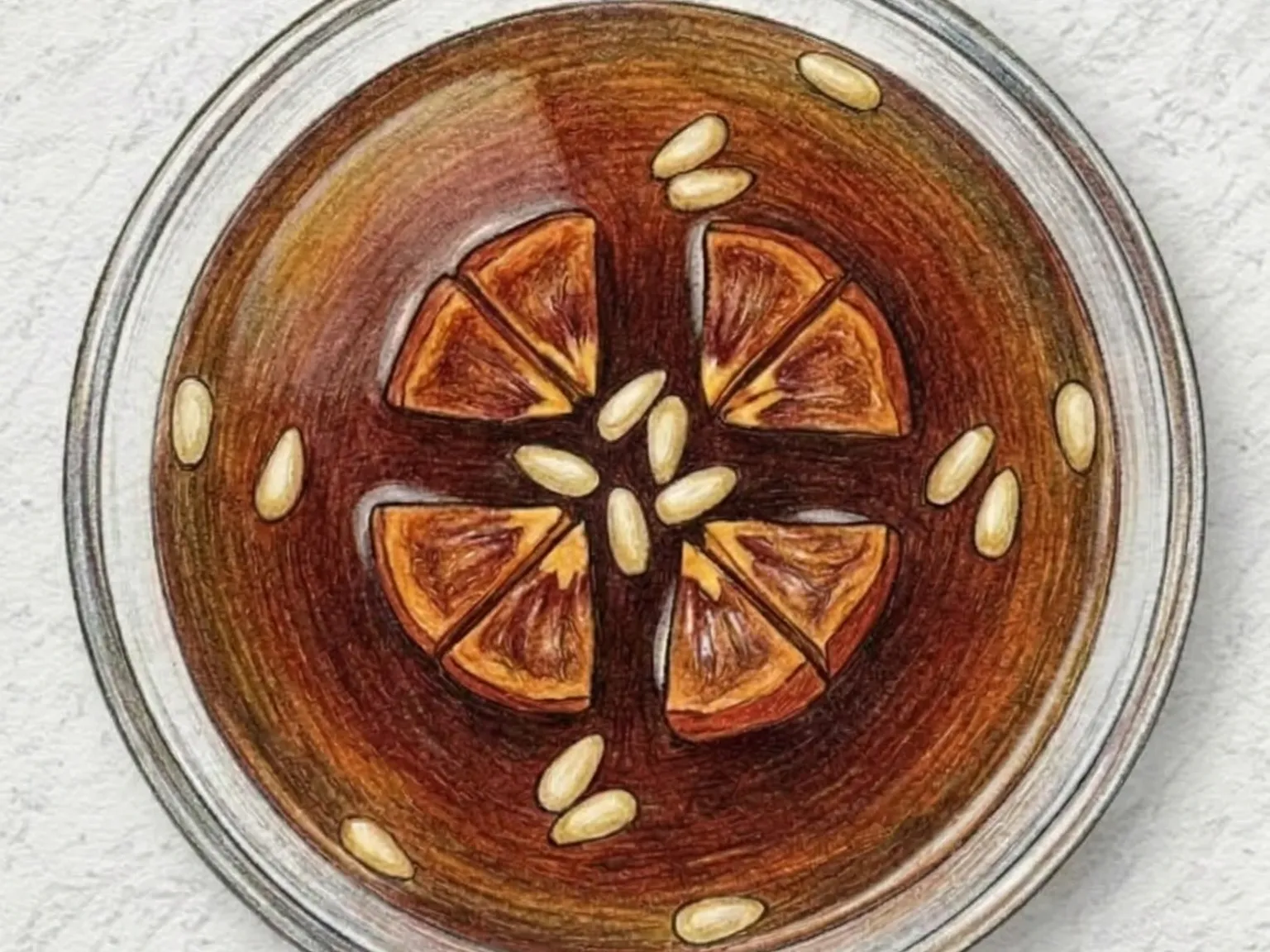
Sujeonggwa granita converts the traditional Korean cinnamon-ginger punch into a flaky frozen dessert by sweetening the steeped liquid with dark brown sugar and then breaking it into coarse crystals through repeated scraping. Cinnamon sticks and fresh ginger are simmered in water for at least twenty minutes to draw out the full depth of both spices before being strained. The sweetened liquid is poured into a shallow metal tray, which chills more quickly and freezes more evenly than deep containers. Every hour for three to four rounds a fork is dragged through the solidifying surface, breaking up any sheets of ice and encouraging the formation of separate, granular crystals. Scraping more frequently and starting promptly after the first hour produces a finer, more uniform texture, while leaving it too long between sessions allows solid blocks to form that are harder to break up. The spice compounds concentrate into each ice shard as the water freezes around them, so the granita delivers a cold but intensely flavored mouthful at every bite. Thin strips of dried persimmon and pine nuts placed on top before serving add the same garnishes used in traditional sujeonggwa: the persimmon brings a sticky chewiness and concentrated sweetness, while the pine nuts contribute a mild, buttery richness that contrasts with the crunchy, crystalline ice beneath.
Instructions
Read the steps as a cooking flow: prep, heat, seasoning, doneness control, and finish.
- 1Control
Slice 35g fresh ginger into thin coins so it releases flavor quickly.
Remove the stems and seeds from 2 dried persimmons, cut them into thin strips, and keep them covered so they do not dry out before serving.
- 2Control
Put 900ml water, 12g cinnamon sticks, and the sliced ginger in a pot over medium heat.
Once it starts boiling, adjust the heat so the liquid simmers gently instead of reducing too fast.
- 3Control
Simmer for at least 20 minutes, until the liquid darkens and the cinnamon and ginger smell clear.
Keep the lid slightly ajar to control evaporation while still letting the spices infuse fully.
- 4Control
Lower the heat, add 90g dark brown sugar, and stir until no grains remain on the bottom.
Turn off the heat, cover the pot, and steep for 10 minutes to deepen the spice flavor.
- 5Step
Strain out the cinnamon and ginger, then cool the liquid completely before freezing.
Pour it in a shallow metal tray in a thin layer so it freezes evenly and scrapes into crystals more easily.
- 6Finish
After 1 hour in the freezer, scrape the whole surface with a fork, then repeat every 30 minutes for 3 more rounds.
Spoon into cups, top with persimmon strips and 10g pine nuts, and serve immediately.
After the steps
Pick a recipe that fits this dish.
Continue with shared ingredients, meal pairings, or a similar method.
Recipes That Go Well With This
More Desserts →Based on shared ingredients and meal pairing
Korean Cinnamon Persimmon Punch
Sujeonggwa is a Korean cinnamon-ginger punch made by simmering cinnamon sticks and sliced ginger in water for 25 minutes, then straining and sweetening the clear liquid with dark brown sugar. The warm, slightly sweet spice of cinnamon and the sharp rising heat of ginger meet the molasses-toned depth of the sugar, building a flavor that is spicy, sweet, and aromatic in equal measure. Quartered dried persimmon slices are added to the chilled punch, where they slowly absorb the liquid and soften into a jam-like texture over time, while floating pine nuts contribute a gentle nuttiness to each sip. Overnight refrigeration in a sealed container melds the individual flavors into something more unified, making the punch cleaner and more rounded when served cold. Sujeonggwa has long been served at Korean holiday tables during Lunar New Year and ancestral rite ceremonies, and its spiced warmth is also considered a natural digestive aid after heavy meals.
Korean Dried Persimmon Cinnamon Tea
Gotgam-gyepi-cha is a traditional Korean winter tea made by slowly simmering dried persimmon, a cinnamon stick, fresh ginger, and jujubes in water for close to thirty minutes. Cinnamon, ginger, and jujube are added first and simmered for twenty minutes to establish the spiced backbone of the drink, building a deeply aromatic and gently sweet base before the persimmon is introduced. Quartered dried persimmons and dark brown sugar are then added for another eight to ten minutes, during which the fruit softens and its dense, concentrated fructose dissolves into the broth, giving the liquid a slight viscosity along with a rich, jammy sweetness. Because dried persimmons vary considerably in sugar content, the amount of dark brown sugar should be adjusted or omitted entirely when the fruit is particularly sweet, to prevent the drink from becoming cloying. Once strained through a fine mesh and poured into cups, the tea is a clear, reddish-amber color. A whole walnut is placed on top -- its firm crunch and toasted nuttiness contrast sharply with the warm, fragrant liquid and serve as a visual as well as textural counterpoint. The warming combination of ginger and cinnamon makes this tea well suited to cold weather, and it often appears alongside sikhye and sujeonggwa on holiday tables.
Korean Dalgona Coffee (Whipped Instant Coffee Foam Milk)
Dalgona coffee is made by whipping equal parts instant coffee, sugar, and hot water with a hand mixer for three to five minutes until stiff, caramel-colored peaks form, then spooning the foam over iced milk. The whipped layer carries a concentrated, bittersweet coffee flavor that gradually blends into the cold, neutral milk below as you stir. A light dusting of cocoa powder on top introduces a faint chocolate note, and increasing the sugar slightly helps the whipped cream hold its stiff structure longer.
Watermelon Punch
Subak hwachae is a Korean summer punch that uses half its watermelon blended and strained into a smooth juice base, with the other half scooped into balls as garnish. Mixing the watermelon juice with milk creates a pink, creamy foundation, and lemon-lime soda is stirred in just before serving to preserve its fizz. Adding strawberries and blueberries introduces an acidic brightness and color contrast that watermelon alone lacks, and generous ice keeps the drink cold enough for the fruit aromas to stay sharp. Chilling the watermelon juice thoroughly before combining it with milk is essential to prevent the two liquids from separating. The layered colors of red watermelon, deep blueberries, and vivid strawberries in a single bowl make it as visually striking as it is refreshing, turning a straightforward summer drink into something worth presenting at the table.
Serve with this
Omija Cream Cheese Muffins (Korean Schisandra Muffins)
Soft muffin batter is dotted with cubes of cream cheese and swirled with omija syrup, then baked until the tops dome and crack. The cream cheese melts partially in the oven, creating dense, tangy pockets that contrast with the airy crumb around them. Omija - the Korean five-flavor berry - adds a layered tartness that goes beyond simple fruit sourness, carrying faint bitter, peppery, and salty undertones that make each bite more complex than a typical fruit muffin. The cream cheese smooths out the omija's sharper edges, acting as a rich buffer between the berry's intensity and the sweet batter. A final brush of omija syrup over the warm muffin tops deepens the pink color and reinforces the berry flavor on the crust, where it concentrates into a thin, tacky glaze.
Korean Grilled Patty Skewers
Tteokgalbi-kkochi are skewered patties made from a thoroughly kneaded mixture of ground beef, ground pork, soy sauce, sugar, garlic, and sesame oil, shaped into ovals and threaded onto wooden skewers before grilling. A small amount of starch mixed into the meat and at least three full minutes of kneading are what give the mixture enough tackiness to stay firmly anchored to the skewer throughout cooking; skip either step and the patties slide or crack apart on the grill. Moistening your hands with water while shaping prevents the mixture from sticking and helps produce smooth, even ovals. Grilling over medium heat first develops a golden Maillard crust on both sides, then lowering the heat and continuing to cook allows the interior to reach the center without the outside drying out, concentrating the meaty flavor at the core. A thin brushing of soy-and-corn-syrup glaze applied just before flipping and again right before removing from the heat builds a glossy, sweet-salty lacquer on the exterior. Served alongside tteokbokki sauce or ketchup, the skewers carry the unmistakable energy of Korean street food stalls.
Margherita Pizza
Margherita pizza uses just three core toppings - tomato sauce, mozzarella, and fresh basil - making ingredient quality the deciding factor. The dough is stretched to a 25-centimeter round with a thicker rim that puffs up into an airy crust during baking. The sauce must be spread thinly and evenly; too much makes the base soggy. Tearing the mozzarella by hand rather than slicing it creates uneven thickness, so some spots brown and crisp while others stay soft and melted - draining the cheese beforehand is essential for proper browning. The pizza bakes at 250 degrees Celsius for 10 to 12 minutes until the edges are golden and blistered. Basil, grated Parmesan, and a drizzle of olive oil are added only after the pizza comes out of the oven to preserve their fresh aroma.
Similar recipes
Misugaru Grain Ice Cream
Misugaru Grain Ice Cream is a frozen dessert made by blending roasted multi-grain powder with milk and heavy cream. The misugaru is whisked into milk to dissolve any lumps before honey, condensed milk, and a pinch of salt are added to establish a sweet, nutty base. Separately, heavy cream is whipped to soft peaks and gently folded into the mixture using J-shaped strokes to maintain aeration. The mixture is placed in a shallow container to freeze. To achieve a smooth texture, the surface is scraped with a fork every hour for three hours, breaking up ice crystals. Using black bean grain powder provides a richer taste, and topping the ice cream with chopped nuts adds a crunchy contrast to the creamy texture.
Gotgam Cream Cheese Roll (Dried Persimmon Rolls)
Gotgam cream cheese roll is a no-cook Korean dessert that requires nothing more than a knife, a bowl, and a refrigerator. Dried persimmons are slit open and flattened into thin sheets, each one acting as the outer wrapper. The filling is cream cheese mixed with honey and fresh lemon juice to balance its natural richness with acidity, and finely chopped walnuts are folded in throughout to add a crunchy, nutty element to every bite. The filling is spread across the opened persimmon, which is then rolled tightly and wrapped in plastic wrap. Twenty minutes in the refrigerator firms the roll enough to slice cleanly. Dipping the knife in warm water and wiping it dry before each cut produces the smoothest cross-sections. The finished slices reveal clearly defined layers: the chewy, caramel-sweet dried persimmon on the outside, the tangy cream cheese in the middle, and flecks of walnut distributed throughout. The combination makes it a natural pairing with wine or a polished addition to a traditional holiday table.
Milk Shaved Ice with Red Beans
Uyu patbingsu is a traditional Korean cold dessert centered around milk that has been frozen solid and then shaved into a very fine, light texture resembling freshly fallen snow. This specific preparation method differs from versions using plain water ice because the fat and protein content in the milk create a texture that is notably smoother, creamier, and more opaque as it melts. To build the dish, the shaved milk is gathered into a tall mound and layered with several distinct components, primarily a portion of red beans that have been boiled with sugar until they achieve a soft, starchy consistency. Small, bite-sized rice cakes are distributed across the ice to provide a dense and chewy element that contrasts with the temperature of the milk. A fine dusting of multigrain powder and roasted soybean flour adds an earthy, toasty flavor profile to the base, which helps to balance the sweetness of the other toppings. For additional texture and flavor, sliced almonds are included to provide a consistent crunch, while pieces of fresh strawberry are added to introduce a sharp, acidic fruit brightness. The overall richness of the assembly is typically increased by drizzling condensed milk over the surface, allowing the thick liquid to seep down into the porous layers of ice. Historical documentation from the Joseon dynasty indicates that the practice of serving ice with red beans during the summer months was already established by the 19th century, with palace records showing that ice was retrieved from stone-lined underground icehouses for royal consumption. While the combination of milk and sweetened beans remains the traditional standard, contemporary versions of the dessert frequently incorporate a wide variety of other ingredients including mango, matcha, and injeolmi.