Hokkien Prawn Mee (Spicy Prawn Noodle Soup)
Asian Medium

Hokkien Prawn Mee (Spicy Prawn Noodle Soup)

Quick answer

Hokkien prawn mee is one of the defining noodle dishes of Singapore's hawker culture, built on a dual stock of roasted shrimp shells and slow-simmered pork bones.

What makes this special

  • Hokkien Prawn Mee soup combines a roasted shrimp shell stock with slow-simmered pork bone broth.
  • Prawn shells and garlic are fried until fragrant, then combined with pork broth for a layered 20-minute stock
  • Sambal chili dissolves slowly into the broth, building heat with each sip
Total time
60 min
Level
Medium
Servings
2 servings
Ingredients
8
Calories
500 kcal
Protein
30 g

Key ingredients

shrimppork stockegg noodlessambal chili pastegarlic

Core cooking flow

  1. 1 Peel 250g shrimp, keeping the shells separate from the meat.
  2. 2 Heat 1 tbsp cooking oil in a pot over medium-high heat.
  3. 3 Pour in 900ml pork stock and scrape the browned flavor from the bottom into the liquid.

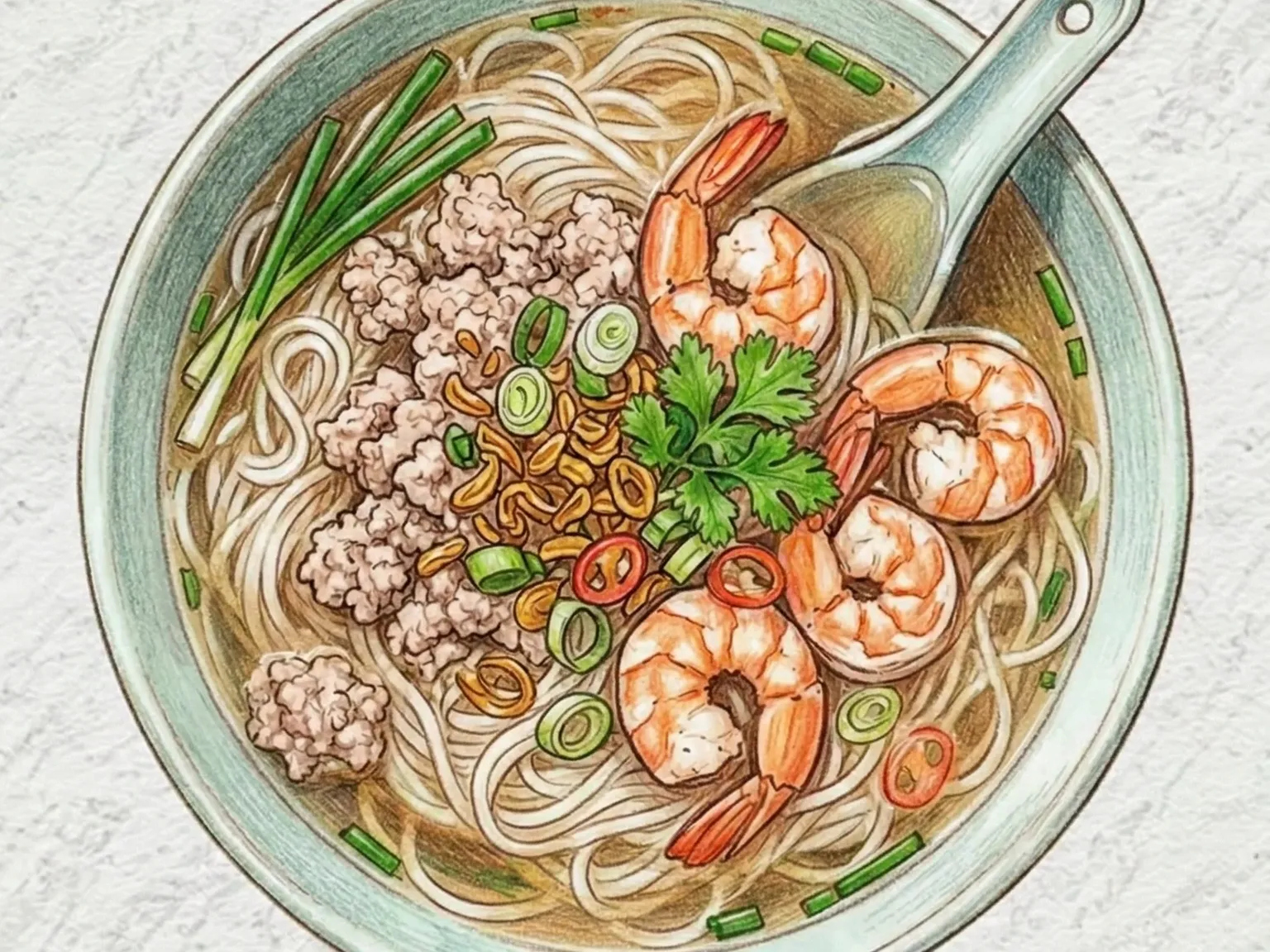
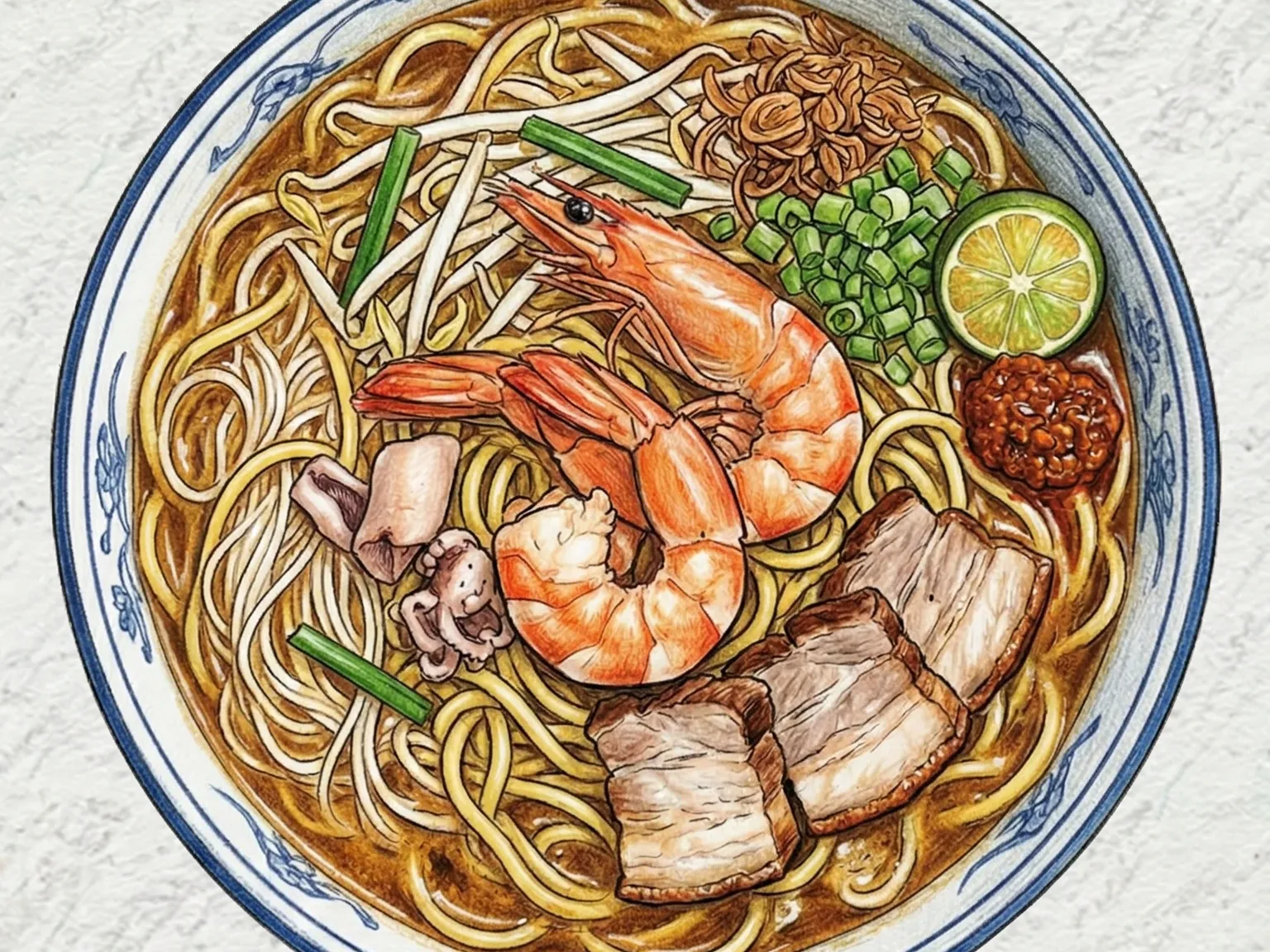
Hokkien prawn mee is one of the defining noodle dishes of Singapore's hawker culture, built on a dual stock of roasted shrimp shells and slow-simmered pork bones. The shrimp are broken down into shells and meat before cooking begins - the shells are fried in oil with garlic until deeply browned and fragrant, and this step alone sets the ceiling of flavor the final broth can reach. Pork stock is added to the pan and the combined liquid simmers for twenty minutes before being strained, producing a broth that appears almost clear but carries a concentrated marine and pork depth. Egg noodles and the reserved shrimp meat are cooked directly in this strained liquid, and fish sauce is stirred in to reinforce the ocean character. A spoonful of sambal chili paste rests on the surface and gradually dissolves into the soup as the bowl is eaten, intensifying with each sip. Chopped scallion adds a fresh green note against the rich, amber broth.

Prep 25min Cook 35min 2 servings

Instructions

Read the steps as a cooking flow: prep, heat, seasoning, doneness control, and finish.

6 steps
  1. 1
    Heat

    Peel 250g shrimp, keeping the shells separate from the meat.

    Refrigerate the shrimp meat until the broth is ready, slice 20g scallion, and prepare 15g garlic so it can fry evenly with the shells.

  2. 2
    Control

    Heat 1 tbsp cooking oil in a pot over medium-high heat.

    Add the shrimp shells and garlic, then fry for 2 to 3 minutes, stirring often, until the shells turn red and smell deeply toasted.

  3. 3
    Control

    Pour in 900ml pork stock and scrape the browned flavor from the bottom into the liquid.

    Simmer over medium heat for 20 minutes, keeping it gently bubbling so the shrimp flavor infuses without reducing too aggressively.

  4. 4
    Control

    Strain the broth through a fine sieve and discard the shells and garlic.

    Return the clear broth to the pot, bring it back to medium heat, and cook 220g egg noodles for 3 to 4 minutes.

  5. 5
    Finish

    When the noodles are tender but still springy, add the reserved shrimp meat and simmer for 2 more minutes.

    Once the shrimp turns opaque, stir in 1 tbsp fish sauce and taste the broth for balance.

  6. 6
    Prep

    Divide the noodles and shrimp into bowls first, then ladle the hot broth over them.

    Top with 1 tbsp sambal and the sliced scallion, letting the chili paste dissolve gradually as the soup is eaten.

After the steps

Pick a recipe that fits this dish.

Continue with shared ingredients, meal pairings, or a similar method.

Recipes That Go Well With This

More Asian →

Based on shared ingredients and meal pairing

Mee Siam (Singaporean Tangy Tamarind Shrimp Rice Vermicelli)
Shared ingredient: shrimp Asian

Mee Siam (Singaporean Tangy Tamarind Shrimp Rice Vermicelli)

Mee siam is a rice vermicelli dish from Singapore and Malaysia defined by a tamarind-based sauce that balances sour, sweet, and spicy in one bowl. Thin rice noodles are stir-fried with a rempah, a pounded paste of dried shrimp, shallots, and chili, then finished with tamarind water, fish sauce, and sugar, with bean sprouts and tofu added near the end. A squeeze of fresh lime over the top introduces a bright acidity that cuts through the richness of the stir-fry. Despite the name referencing Siam, the dish is a distinctly Malay-Singaporean creation rather than Thai, most commonly eaten at breakfast or as a light meal at hawker centers. Soft-boiled eggs and whole shrimp are the standard toppings when the dish is served, and the heat level can be adjusted by varying the amount of chili in the rempah. Soaking the dried shrimp and pounding them finely before cooking deepens the umami in the rempah and spreads a consistent seafood richness throughout the sauce that whole or coarsely ground shrimp cannot achieve.

Coconut Shrimp Laksa (Spiced Coconut Broth Noodle Soup with Shrimp)
Shared ingredient: shrimp Asian

Coconut Shrimp Laksa (Spiced Coconut Broth Noodle Soup with Shrimp)

Coconut shrimp laksa is a Southeast Asian noodle soup built on a broth of coconut milk, spice paste, and chicken stock that manages to be simultaneously rich, spicy, and aromatic. The laksa paste - a pounded blend of lemongrass, galangal, turmeric, dried shrimp, dried chilies, and shrimp paste - is fried in oil until deeply fragrant before coconut milk and stock are poured in. The resulting broth is thick and creamy with visible pools of chili oil floating on the surface. Shrimp are cooked shell-on in the broth to extract maximum flavor, then peeled and placed back on top. Rice noodles form the base of each bowl, topped with bean sprouts, halved hard-boiled egg, and cubes of fried tofu puff that soak up the broth like sponges. A squeeze of lime and a drizzle of fish sauce finish the bowl, adding acid and salt that sharpen the richness of the coconut. In Singapore and Malaysia, laksa is eaten from early morning through late night, served at hawker stalls that often specialize in this single dish.

Pasta Bolognese
Serve together Noodles

Pasta Bolognese

Pasta Bolognese is a slow-simmered meat ragu from Bologna in Emilia-Romagna, built on a soffritto of onion, carrot, and celery cooked down with a mixture of ground beef and ground pork. Browning the meat properly in a hot pan before any liquid is added creates a Maillard crust that contributes a depth of flavor that no amount of simmering can replicate. Red wine deglazes the pan, lifting every bit of browned fond from the bottom. Whole milk is then stirred in to soften the acidity and tenderize the proteins, which is the detail that separates a true Bolognese from a generic meat sauce. The ragu requires at least one hour of low, uncovered simmering for the fat to separate, the liquid to reduce, and the meat to break down into a cohesive sauce. Tagliatelle is the canonical pairing in the region, with the wide, egg-enriched ribbons catching the chunky sauce in every fold. Freshly grated Parmigiano-Reggiano finishes the dish. Cooking the tomato paste directly in the pan after the soffritto for two minutes caramelizes its natural sugars and removes raw bitterness before any liquid goes in.

Hokkien Mee (Prawn Broth Stir-Fried Noodles)
Similar recipe Asian

Hokkien Mee (Prawn Broth Stir-Fried Noodles)

Hokkien mee is a Singaporean stir-fried noodle dish that uses two types of noodles, yellow egg noodles and thin rice vermicelli, cooked together in rich prawn stock. The stock, made by roasting shrimp heads and shells until deeply fragrant, is what separates this dish from ordinary stir-fried noodles. High wok heat is non-negotiable; insufficient heat leaves excess moisture and mutes the flavors. Shrimp and squid are seared quickly over maximum flame to avoid overcooking, then both noodle types are tossed in and drenched with the prawn stock and soy sauce, cooking until the liquid is nearly absorbed into the strands. Bean sprouts go in for the final thirty seconds to preserve their snap. A squeeze of lime just before eating brings acidity that lifts the rich, marine-heavy flavors.

Serve with this

Korean Sea Squirt Mixed Rice
Rice Medium

Korean Sea Squirt Mixed Rice

Fresh sea squirt is tossed with vinegared gochujang and sesame oil over warm rice for a bold seafood bibimbap. The sea squirt carries an intense, distinctive ocean flavor that fills the palate, tempered by the tangy sweetness of the sauce. Julienned cucumber and torn lettuce provide crisp contrast, while roasted seaweed flakes and sesame seeds add a nutty undertone. Mixing should happen right before eating to preserve the sea squirt's volatile aroma. Serving it soon after cooking keeps the intended texture clearer, while brief resting lets the sauce or broth settle into the dish.

🎉 Special Occasion 🏠 Everyday
Prep 20min Cook 8min 2 servings
Bellflower Root, Chestnut & Perilla Salad
Salads Medium

Bellflower Root, Chestnut & Perilla Salad

Doraji chestnut perilla salad brings together blanched bellflower root, boiled chestnuts, and Korean pear in a combination that captures the flavors of Korean autumn. Blanching doraji tempers its raw bitterness to a clean, gentle edge and softens its crunch just enough to make it pleasant to eat without cooking out its character entirely. Boiled chestnut contributes a starchy warmth and sweetness that is entirely different from fruit sugars - it is dense and slightly powdery, more comforting than bright. Korean pear introduces cool juice and a delicate crunch that refreshes the palate between bites of root and nut. Ground perilla seeds tie the ingredients together with a nutty, faintly grassy aroma rooted in their omega-3 fatty acid content, a flavor profile that cannot be replicated by sesame alone. The dressing is built from apple cider vinegar for fruit acidity, honey for sweetness, and olive oil to emulsify and smooth the transitions between components. Both bellflower root and chestnuts peak in autumn, so the salad is at its most rewarding when made with freshly harvested seasonal ingredients. The color combination of ivory doraji, cream-colored chestnut, and pale pear gives the bowl a quiet, autumnal visual quality.

🥗 Light & Healthy 🎉 Special Occasion
Prep 25min Cook 5min 4 servings
Korean Ssanghwa Herbal Tea
Drinks Hard

Korean Ssanghwa Herbal Tea

Ssanghwa-cha is a traditional Korean tonic tea made by slow-simmering astragalus root, angelica root, cinnamon bark, licorice, and jujube in approximately 1800 ml of water over low heat for more than fifty minutes. The prolonged extraction coaxes layered complexity from each herb, producing a brew that is simultaneously bitter, sweet, and warmly aromatic with cinnamon woven through every sip. Jujubes added during the simmer soften the sharpest herbal edges while contributing a mild natural sweetness that rounds the overall profile. Honey is stirred in after straining to let each person adjust the sweetness to taste. The tea is poured hot into a ceramic cup and finished with a small cluster of pine nuts whose oil blooms on contact with the steaming surface, releasing a gentle, nutty fragrance. The deep medicinal warmth lingers in the throat long after each sip, making the drink a reliable remedy for fatigue and cold weather.

🍺 Bar Snacks 🎉 Special Occasion
Prep 10min Cook 60min 4 servings

Similar recipes

Hokkien Lor Mee (Braised Gravy Noodles)
Asian Medium

Hokkien Lor Mee (Braised Gravy Noodles)

Hokkien lor mee is a thick-gravy noodle dish from the Chinese communities of Singapore and Malaysia, built on chicken stock seasoned with dark soy sauce and five-spice powder. The dark soy gives the broth its deep mahogany color and intense saltiness, while five-spice, with its blend of star anise and cinnamon, layers in aromatic complexity. A cornstarch slurry is added gradually to thicken the broth to a glossy, almost sauce-like consistency that coats the yellow noodles completely. Bean sprouts are blanched for just one minute to retain their crunch, and halved boiled eggs provide a creamy element. The traditional finishing touch is raw minced garlic and a splash of black vinegar, both of which cut through the heavy gravy and keep each spoonful from becoming monotonous.

🎉 Special Occasion 🌙 Late Night
Prep 20min Cook 25min 2 servings
Korean Anchovy Broth Thin Noodle Soup
Noodles Easy

Korean Anchovy Broth Thin Noodle Soup

Anchovy somyeon is the noodle soup Korean families fall back on when the kitchen offers little to work with - dried anchovies, a strip of dashima kelp, and a bundle of thin wheat noodles are enough. The broth starts with dried anchovies soaked briefly to cut any bitterness, then simmered with dashima for fifteen minutes before being strained to produce a clear liquid with a faint oceanic sweetness and deep umami. Somyeon - hair-thin wheat noodles - are cooked in a separate pot to keep their starch from clouding the broth, then rinsed repeatedly under cold water until every strand separates cleanly. The noodles go into a bowl of hot broth and are finished with sliced scallion, a small drop of sesame oil, and often a sheet of toasted gim. A few drops of soy sauce tune the salt level, and a soft-boiled egg or a few slices of tofu can round it into a full meal. The appeal of the dish is its restraint: no chili paste, no fermented base, just the clean savor of anchovy stock meeting springy noodles. Korean mothers have served this as a quick midday meal for generations, and it endures as comfort food in its most unadorned form.

🏠 Everyday ⚡ Quick
Prep 10min Cook 15min 2 servings
Korean Doenjang Mushroom Udon
Noodles Medium

Korean Doenjang Mushroom Udon

Doenjang mushroom udon is a Korean noodle soup where thick-cut shiitake mushrooms simmer in an anchovy-kelp broth with dissolved soybean paste, building layered depth from two distinct fermented and dried umami sources. The shiitake's aromatic depth stacks on top of the doenjang's fermented, mellow character, while onion adds a quiet sweetness that prevents the broth from tasting one-dimensionally salty. Passing the doenjang through a fine sieve before stirring it into the broth ensures no lumps remain and the paste disperses evenly. Parboiling the udon noodles separately in plain water and rinsing briefly strips away surface starch, keeping the broth clear and clean to the last spoonful. A pinch of gochugaru added during the seasoning stage introduces a faint warmth at the finish that sharpens the overall flavor, and a few thin slices of cheongyang chili on top add color and a sharper bite. Adding silken tofu or sliced zucchini makes the bowl substantial enough to serve as a full meal.

🏠 Everyday 🌙 Late Night
Prep 12min Cook 18min 2 servings

Tips

Well-roasted shrimp shells make the broth much deeper.

Nutrition (per serving)

Calories
500
kcal
Protein
30
g
Carbs
58
g
Fat
16
g