Korean Butter-Grilled Mussels
Quick answer
Mussels are steamed open with white wine, then tossed in melted garlic butter for a second round of cooking.
What makes this special
- Honghap Butter-gui features mussels steamed in white wine and tossed in nutty, melted garlic butter.
- White wine steam opens shells while lifting the briny sea aroma
- Mussel juices inside the shell blend with garlic butter as a sauce
Key ingredients
Core cooking flow
- 1 Pull off the beards from 700 g mussels and scrub the shells under cold water.
- 2 Heat a wide pan over medium heat, then add the mussels and 2 tablespoons white wine.
- 3 Lift out the opened mussels and discard any that remain firmly closed.
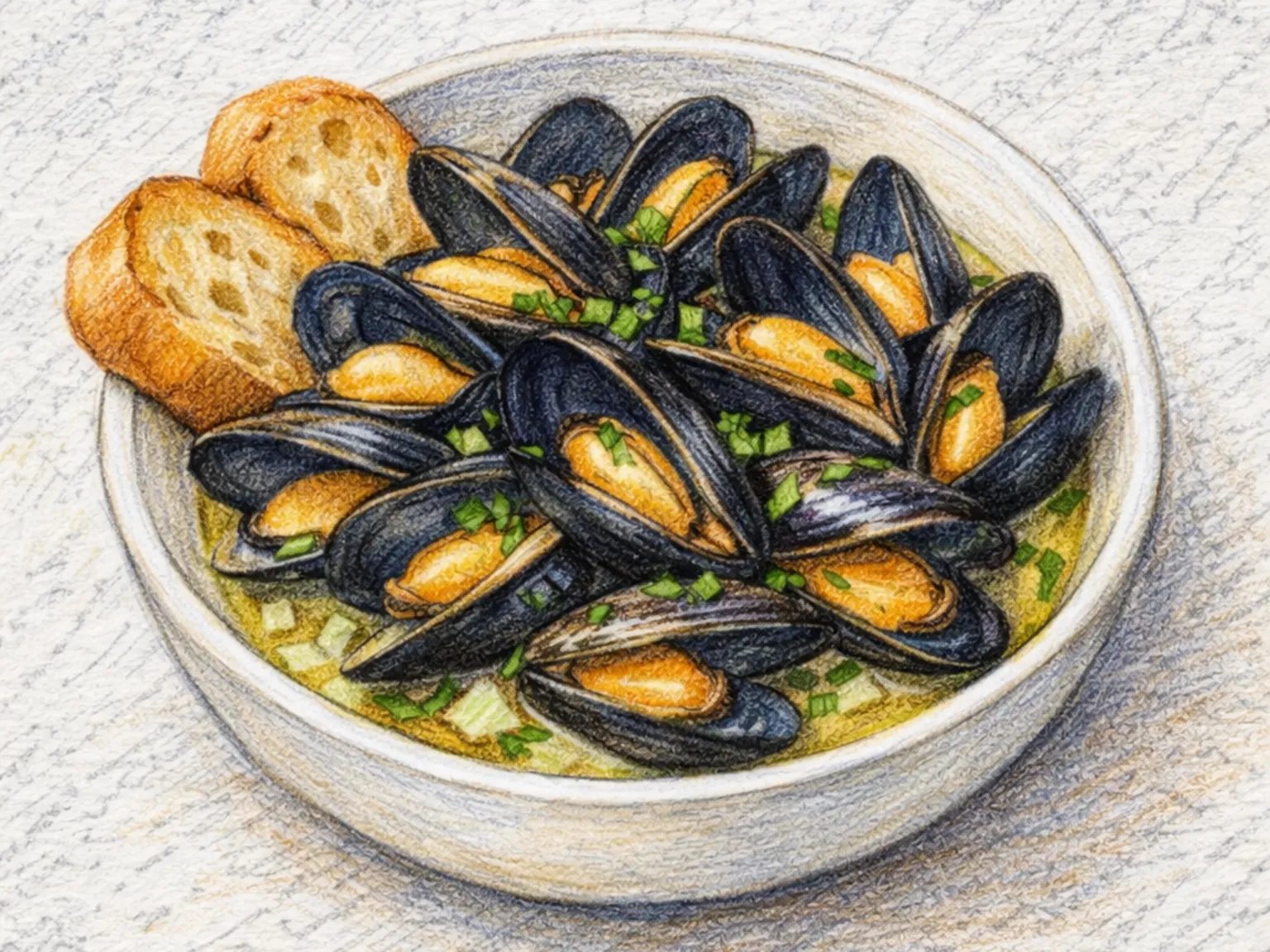
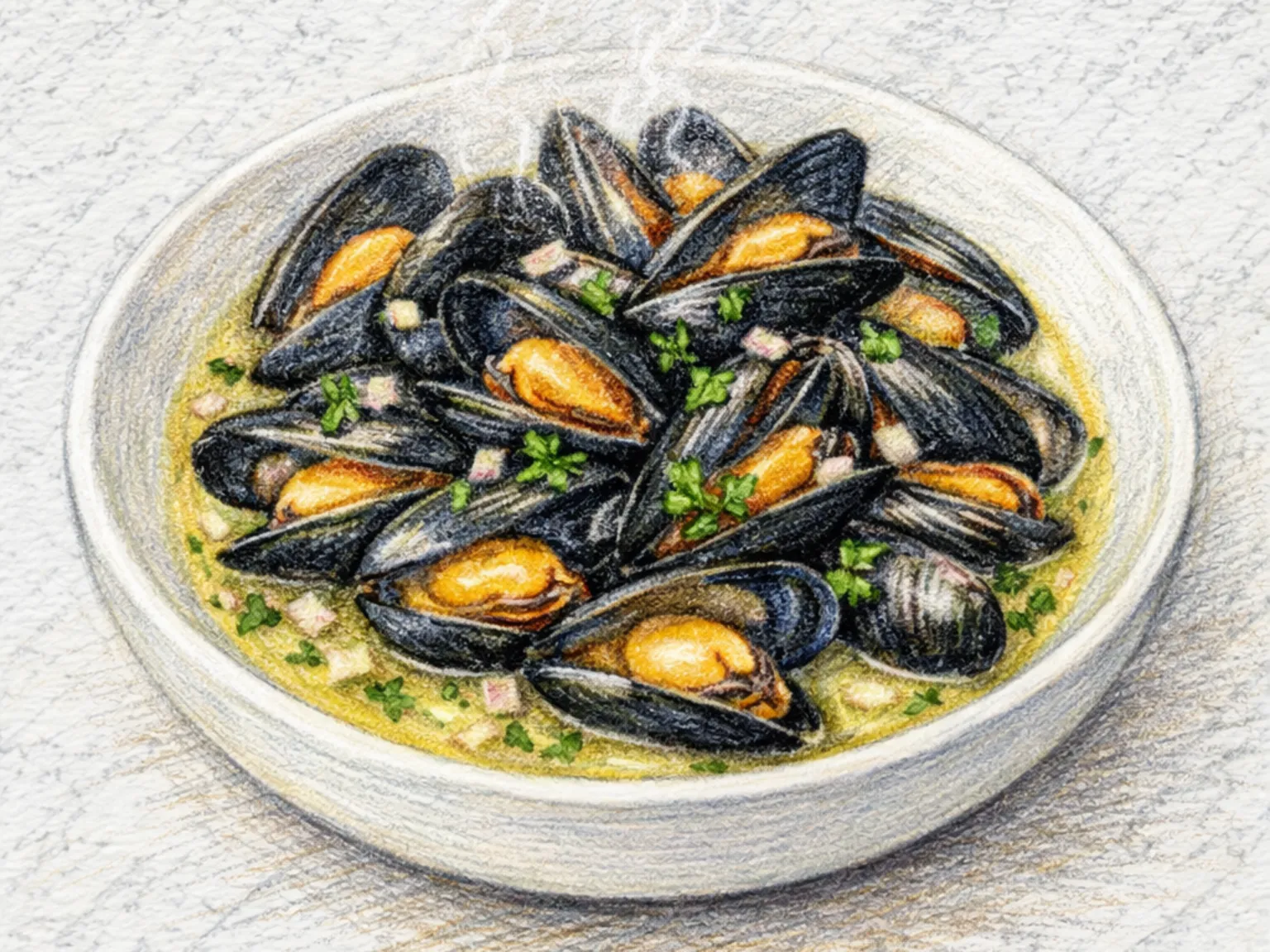
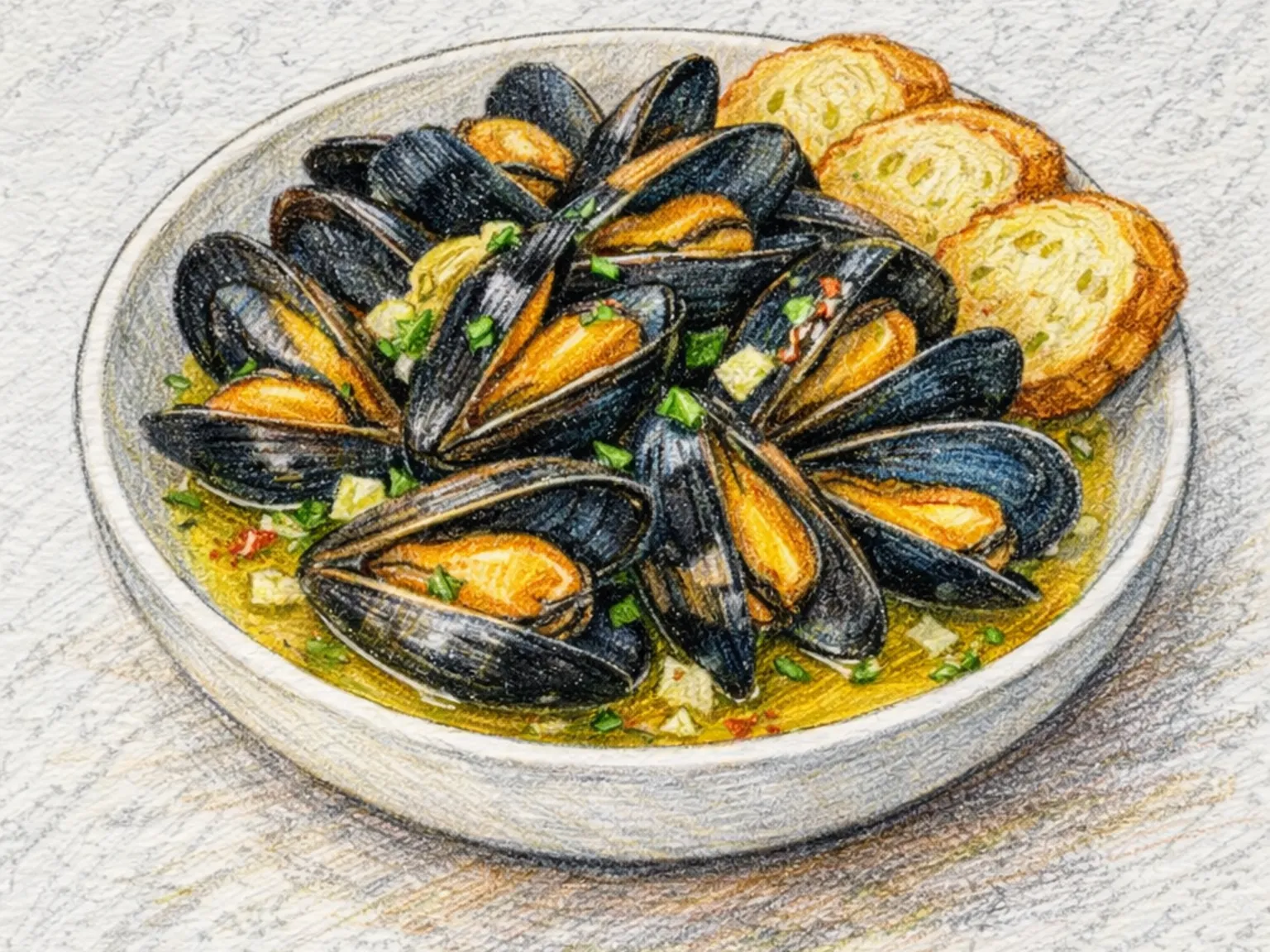
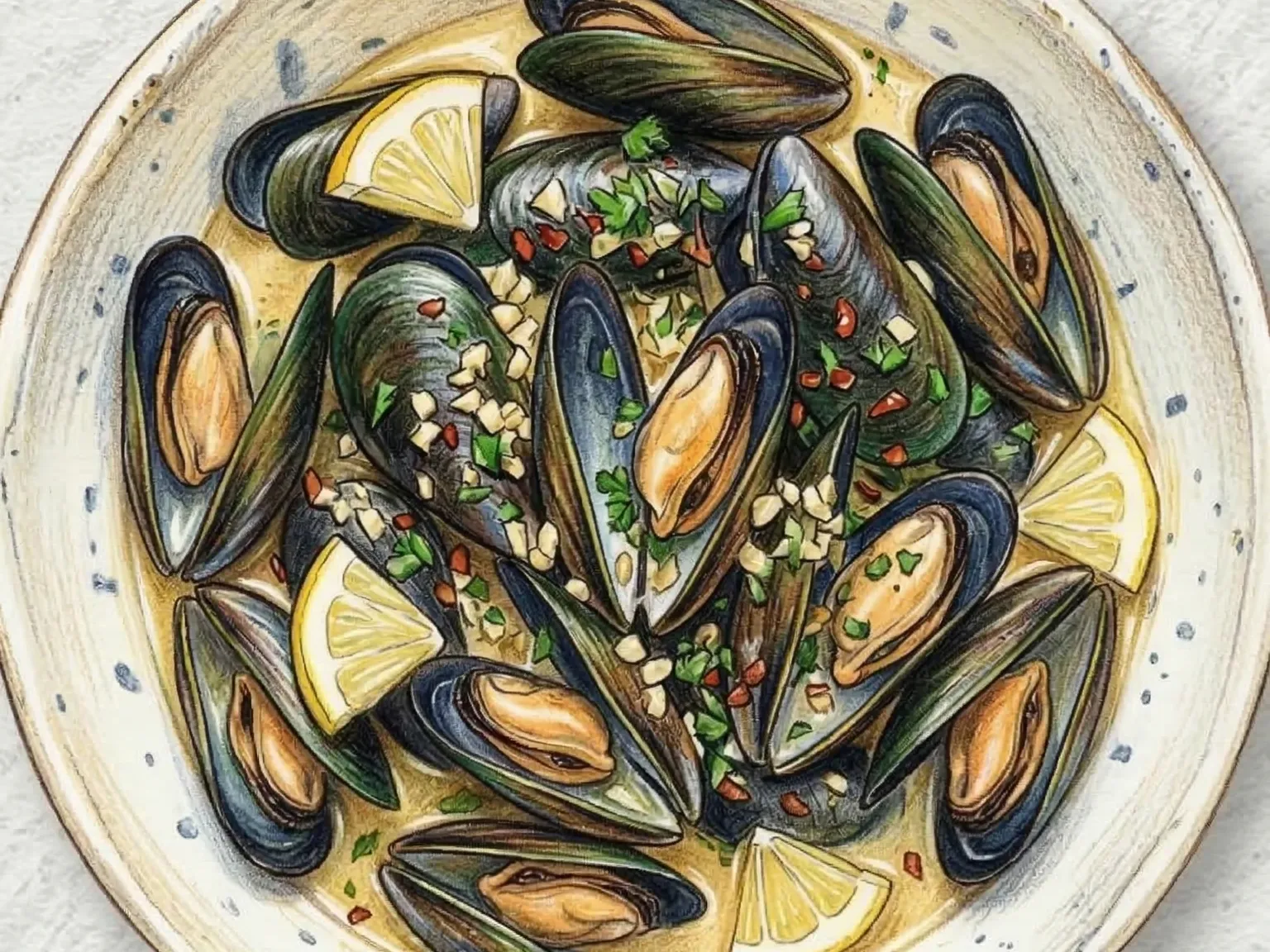
Mussels are steamed open with white wine, then tossed in melted garlic butter for a second round of cooking. The wine lifts the brininess while the butter adds a nutty depth that clings to each shell. A squeeze of lemon at the end cuts through the richness, keeping the finish clean. Scattered chives bring color and a mild onion note. Serving with crusty bread alongside to soak up the buttery broth rounds out the dish into a satisfying starter or bar snack. It can be served as a grilled side dish or drinking food, with simple accompaniments chosen to match the sauce, broth, or topping.
Instructions
Read the steps as a cooking flow: prep, heat, seasoning, doneness control, and finish.
- 1Heat
Pull off the beards from 700 g mussels and scrub the shells under cold water.
Discard cracked mussels or any that smell unpleasant before cooking.
- 2Control
Heat a wide pan over medium heat, then add the mussels and 2 tablespoons white wine.
Cover and steam for about 2 minutes, just until the shells begin opening.
- 3Season
Lift out the opened mussels and discard any that remain firmly closed.
Leave a small amount of the pan liquid behind so it can form the base of the butter sauce.
- 4Control
Add 25 g butter and 1 tablespoon minced garlic to the remaining liquid.
Melt over medium-low heat, stirring so the garlic becomes fragrant without browning or burning.
- 5Season
Return the mussels to the pan and season with 0.3 teaspoon salt and 0.3 teaspoon black pepper.
Toss for only 2-3 minutes, coating the inside of the shells with butter.
- 6Finish
Turn off the heat and squeeze in the juice from 1/2 lemon to balance the rich butter.
Scatter 1 tablespoon chives over the mussels and serve while hot, with bread if desired.
After the steps
Pick a recipe that fits this dish.
Continue with shared ingredients, meal pairings, or a similar method.
Recipes That Go Well With This
More Grilled →Based on shared ingredients and meal pairing
Garlic Butter Mussels
Garlic butter mussels are steamed in a fragrant broth of sauteed garlic, melted butter, and white wine. Onion and garlic are cooked in butter and olive oil until softened, then white wine is added and boiled briefly to drive off the alcohol while keeping the acidity and fruit notes intact. Once the mussels go in and the lid is sealed, the shells open within four to five minutes, releasing briny juices that meld with the butter-wine base into a rich, savory broth. Mussels that remain closed after cooking must be discarded. Finishing with chopped parsley and black pepper adds color and a mild sharpness, and tearing crusty baguette into the bowl to soak up the broth is the traditional way to enjoy every drop.
Korean Butter-Grilled Abalone
Scored abalone is seared quickly in garlic butter, with the cooking time kept to two or three minutes so the flesh stays springy and firm rather than contracting into a tough, rubbery state. Minced garlic is added to the melted butter first, allowing its fragrance to bloom before the abalone goes in, so the shellfish absorbs the full depth of the butter. A small addition of soy sauce to the pan deepens the umami without masking the delicate sweetness of the abalone itself. For an extra layer of oceanic richness, the abalone liver can be minced and stirred directly into the butter sauce as it finishes; the liver melts in, contributing a briny, mineral depth that amplifies the sea flavor of the dish. The finished abalone is best served in the cleaned shells, which both keep the butter sauce pooled around the meat and make for an appealing natural presentation. A light squeeze of lemon juice just before serving cuts through the richness of the butter and brings out the natural sweetness of the shellfish.
Korean Spicy Stir-Fried Anchovies
Spicy stir-fried anchovies (maeun myeolchi-bokkeum) toss medium-sized dried anchovies in a gochujang-gochugaru glaze, occupying the opposite end of the flavor spectrum from the sweet jiri-myeolchi version and targeting adult palates. Medium anchovies are larger and thicker than the tiny variety, requiring individual head-and-gut removal to eliminate bitterness - a tedious prep step that nonetheless determines the dish's clean finish. After dry-toasting to drive off moisture, the anchovies simmer in a sauce of gochujang, gochugaru, soy sauce, oligosaccharide, and minced garlic until each piece is coated in a rust-colored glaze. The gochujang's fermented heat combines with gochugaru's vivid red to create both flavor depth and visual appeal. The larger anchovy size delivers a satisfying crunch that lingers alongside a lasting savory umami. Heat intensity is adjustable via gochugaru quantity - adding chopped cheongyang chili ratchets it up another notch. This banchan doubles as a soju drinking snack, appearing as frequently on bar tables as on dinner tables.
Korean Grilled Clams (Butter Garlic Mixed Shellfish Grill)
Mixed clams are submerged in salt water for at least one hour so they expel any sand and grit naturally, then placed shell-side down on a hot grill or pan. As the shells gradually crack open from the heat, a knob of butter, minced garlic, and a splash of rice wine are dropped into each opened shell for one to two more minutes of cooking. The briny liquid that the clams release mingles with the melting butter, building a concentrated natural sauce inside every shell without any additional stock or seasoning needed. Because clams vary in size, they open at different times, so pulling each one as soon as it opens rather than waiting for the whole batch prevents overcooking. Any clam that stays firmly shut after the others have opened should be discarded as unsafe. Chopped fresh parsley scattered over the finished clams cuts through any residual fishiness with a clean herbal note.
Serve with this
Korean Egg Fried Rice (Quick Wok-Tossed Grain Bowl)
Gyeran-bokkeumbap is the most fundamental Korean fried rice, built from two beaten eggs and one bowl of cooked rice and finished in under ten minutes. The eggs go into a smoking-hot oiled pan, and the rice is added the moment they are half-set, then tossed rapidly so every grain picks up an individual egg coating that makes the rice fluffy and lightly glossy rather than clumped. Cold leftover rice performs best because its lower moisture lets the grains separate cleanly during stir-frying, but freshly cooked rice spread out and briefly cooled reduces sticking enough to be workable. A thin line of soy sauce poured along the rim of the pan caramelizes on contact and carries a trace of smokiness through the rice. A finishing drizzle of sesame oil and a scattering of sliced green onion add a toasty fragrance that completes this simple but satisfying base. The ratio of egg to rice is sturdy enough that a handful of kimchi, diced ham, or refrigerator scraps can be stirred in without changing the essential character of the dish.
Chicken Mu (Korean Fried Chicken Radish Pickle)
The crunchy, sweet-sour radish pickle served with every order of Korean fried chicken - now easy to make at home in under 15 minutes. Cubed radish is submerged in a cooled brine of vinegar, sugar, salt, and whole black peppercorns. Using fully cooled brine rather than hot is critical for maintaining the radish's firm, snapping crunch. Ready to eat after one day of refrigeration, its bright acidity cleanses the palate between bites of crispy chicken. Stored in a glass jar, this pickle keeps for over a week.
Korean Namhae-Style Clam Broth
Namhae-jogae-tang is a southern coastal Korean clam soup that relies on an abundance of clams and minimal interference to produce a broth of startling clarity and depth. The clams are purged in salted water, then cooked in water spiked with rice wine, which tempers any raw ocean smell. As the shells pop open, they release their natural liquor - briny, faintly sweet, and concentrated - which becomes the soup's defining flavor. Sliced green and red chilies add gentle heat and color without overwhelming the shellfish, while garlic and green onion contribute a quiet aromatic layer. Salt is added cautiously, since the clams themselves bring significant salinity. The result is a transparent, intensely flavored bowl that tastes like the sea distilled into its purest form, and it is traditionally enjoyed as both a drinking companion and a light meal.
Similar recipes
Korean Steamed Mussels (Mussels Steamed in Rice Wine Broth)
Honghap-jjim is Korean steamed mussels cooked in a combination of rice wine and garlic, with green onion and cheongyang chili peppers added near the end to layer in fragrance and heat. The mussels steam open in under five minutes over high heat, releasing their briny, oceanic juices into the wine-garlic liquid pooling at the bottom of the pot. This self-generated broth is one of the dish's great pleasures, deeply flavored without the addition of stock or seasoning paste. The cheongyang chili delivers a clean, direct heat that does not muddy the mussels' freshness; instead, its capsaicin sharpens the perception of the seafood's brine, making the flavor more vivid on the palate. Total cooking time runs under ten minutes, and the only real preparation is debearding and scrubbing the shells, which means the dish can move from cold pantry to hot table with minimal effort. Watching the lid come off to reveal the fully opened shells rising from a cloud of fragrant steam is part of the experience, making this as visually satisfying as it is easy. Leftover broth, if any remains, is exceptional as a base for kalguksu or instant ramen.
Korean Salt-Grilled King Prawns
Daeha-sogeum-gui is a Korean salt-grilled king prawn preparation where whole shell-on prawns are placed directly on a bed of coarse sea salt and cooked over indirect heat. The salt draws out surface moisture while conducting steady, even heat beneath the shells, so the prawns essentially steam inside their own carapace and keep their flesh springy rather than contracted. Scoring the back with kitchen scissors and removing the intestinal tract before cooking eliminates any off-note from the gut, leaving only the clean, natural sweetness of the prawn. The precise moment to pull them from the heat is when the shells turn a solid bright orange, as any longer drives off the moisture that keeps the flesh tender. A squeeze of fresh lemon adds acidity that sharpens the natural umami without masking it, and the dish works well with no additional seasoning at all.
Korean Gapojingeo Beoteo Maneul Gui (Butter Garlic Cuttlefish Grill)
Gapojingeo beoteo-maneul-gui is butter-garlic grilled cuttlefish in which the thick body of the cuttlefish is scored in a crosshatch pattern and cooked in a pan with foaming butter and minced garlic. Cuttlefish flesh is substantially thicker and denser than regular squid, which means scoring is not optional for even cooking. Without it, the outside would overcook before heat reaches the center. The cuts also create channels that the melted butter and garlic flow into as the cuttlefish sears, infusing each section with concentrated fat and aromatics rather than just coating the surface. The timing of when to add the cuttlefish matters. The butter should be on medium heat and just beginning to foam at the edges when the cuttlefish goes in. At that temperature, the garlic releases its fragrance into the oil without burning, and the cuttlefish develops a golden crust before it has time to toughen. Two minutes per side is typically enough. The crosshatch pattern spreads open as the flesh cooks, and the surface takes on a lightly charred color that signals the Maillard reaction has done its work. Leaving it longer makes the flesh rubbery. A squeeze of lemon juice at the end cuts the richness of the butter and lifts the whole dish with a clean, acidic finish.