Korean Mussel Stew
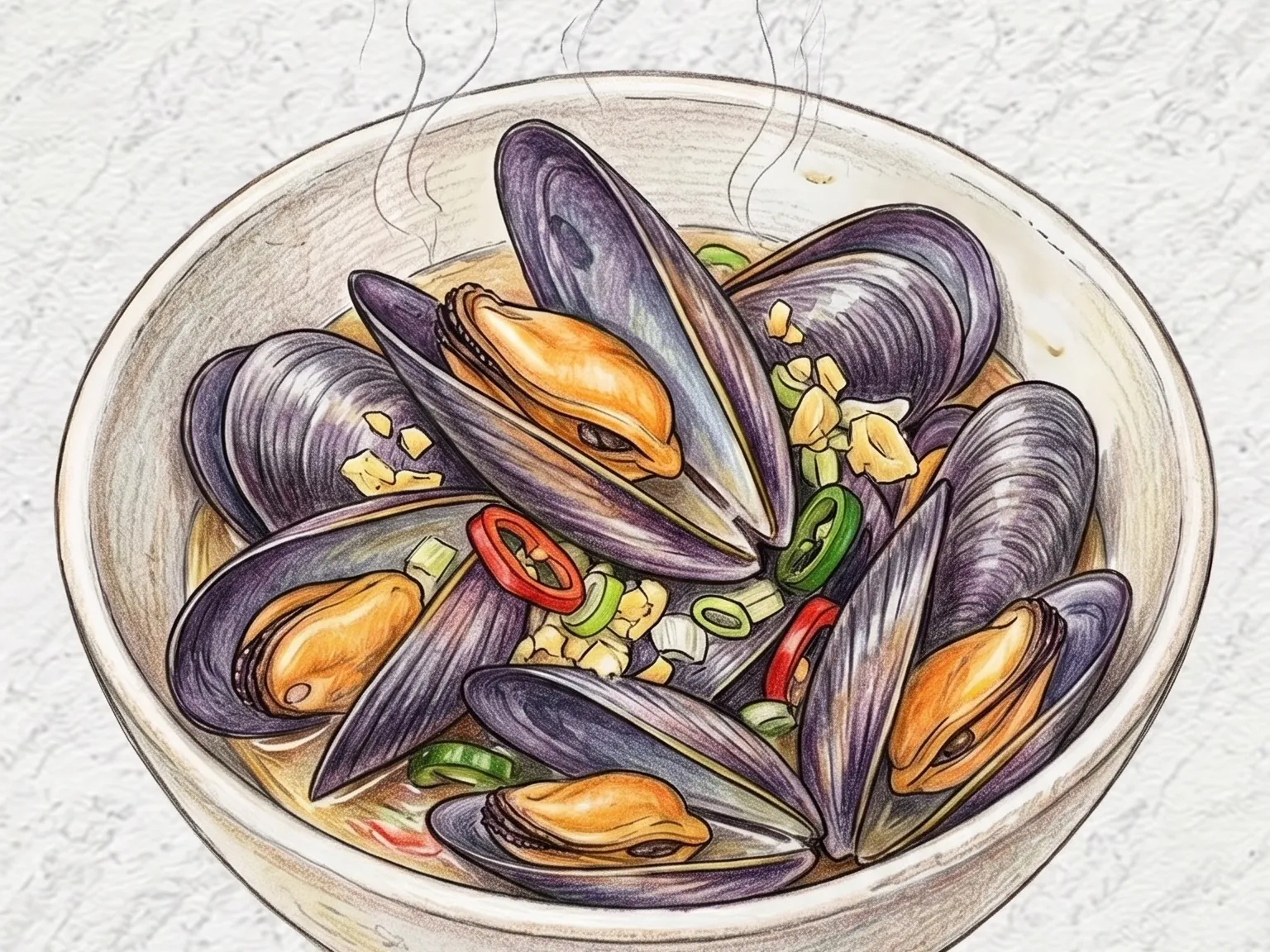
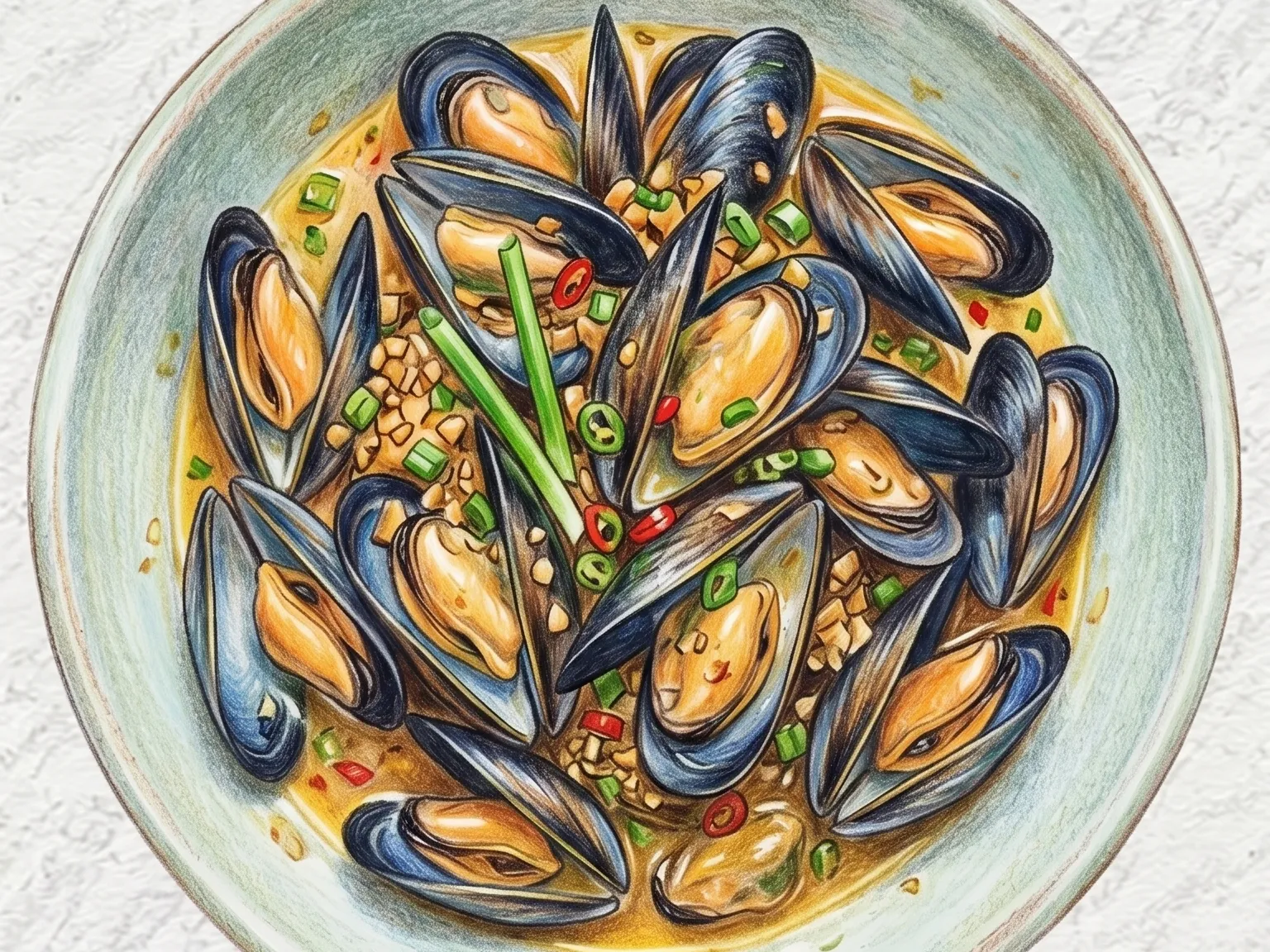
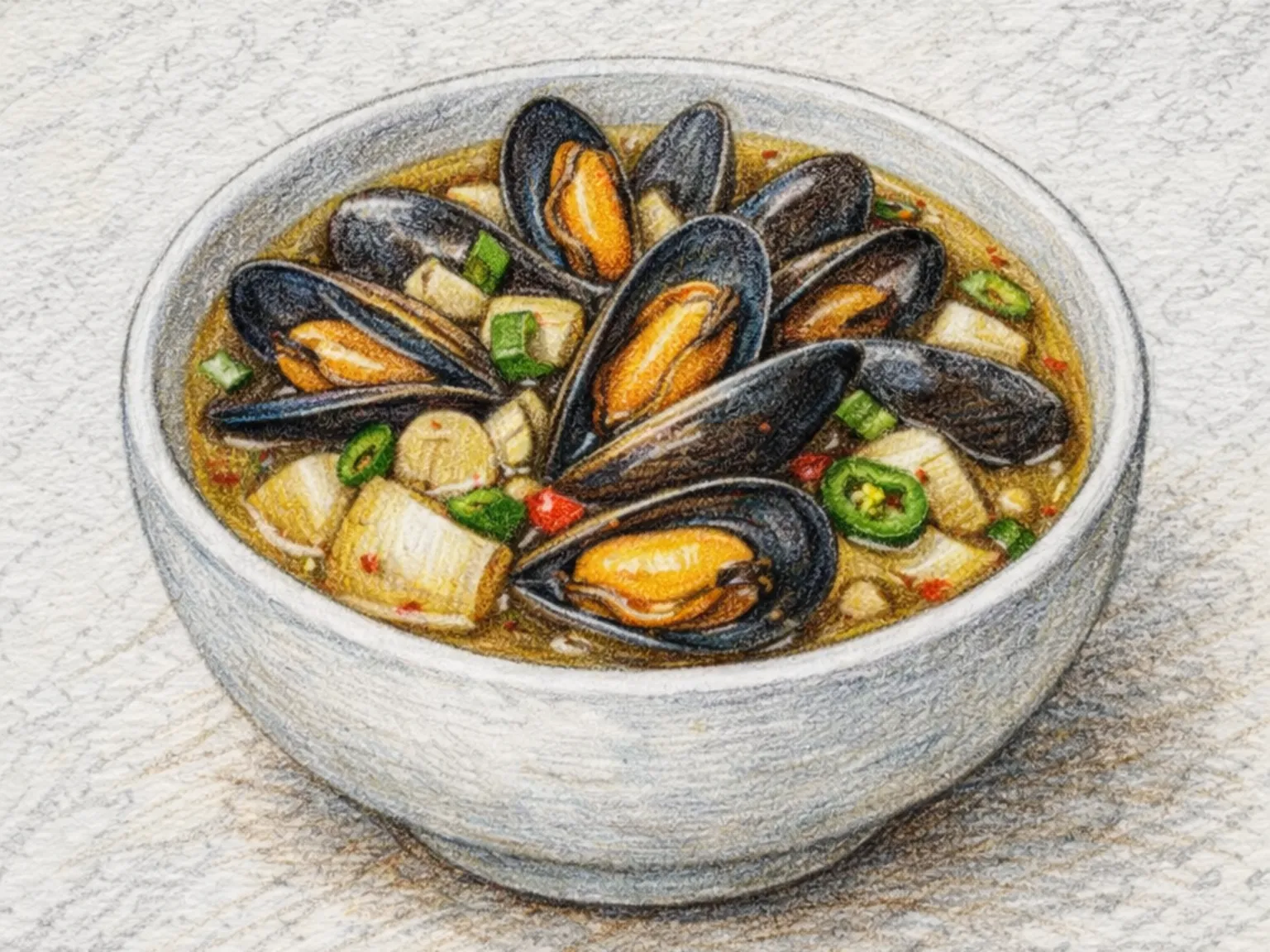
Honghap jjigae uses a generous 900g of mussels to create an intensely briny, clean-tasting broth that defines this stew. Korean radish simmers alongside the shellfish, absorbing the ocean-flavored liquid and contributing a mild sweetness. Cheongyang chili and gochugaru add a moderate kick, while soup soy sauce and cooking wine round out the seasoning without overpowering the seafood. Finished with sliced green onion, the result is a light yet deeply flavorful stew.
Adjust Servings
Instructions
- 1
Debeard and scrub mussels thoroughly, then rinse well.
- 2
Thinly slice radish; diagonally slice green onion and chili.
- 3
Boil water with radish, garlic, and cooking wine for 7 minutes.
- 4
Add mussels and cook over medium-high heat for 4-5 minutes until opened.
- 5
Season with chili flakes and soup soy sauce; simmer 3 minutes.
- 6
Finish with green onion and chili for 1 minute, then serve immediately.
As an Amazon Associate, we may earn from qualifying purchases.
Tips
Nutrition (per serving)
More Recipes

Korean Sea Squirt Stew (Pop-and-Burst Seafood Broth)
Mideodeok (sea squirt) jjigae features the distinctive pop-in-your-mouth texture of sea squirts, which burst with briny ocean flavor when bitten. Korean radish, zucchini, and onion simmer alongside in an anchovy stock base seasoned with gochugaru and soup soy sauce. The sea squirts release their marine essence into the broth, creating a clean yet deeply savory soup with a gentle kick of heat.

Korean Silken Tofu Seafood Stew
This seafood soft tofu stew combines silken tofu with shrimp and Manila clams in an anchovy stock seasoned with gochujang and Korean chili flakes. The aromatics are first sauteed in sesame oil to build flavor before the stock is added. The shellfish release their briny juices into the spicy broth, and a cracked egg stirred in at the end adds richness. It is a widely loved Korean stew that delivers both oceanic depth and bold spice.

Korean Clear Broth Tofu Stew
Tofu simmers in a deep beef stock alongside shiitake mushrooms and zucchini in this clean-flavored stew. The quality of the beef stock drives the entire dish, with shiitake mushrooms reinforcing the umami depth. Soft tofu cubes absorb the rich broth, while zucchini contributes a mild sweetness. Seasoned only with soup soy sauce and salt, this stew showcases a restrained, elegant approach to Korean jjigae without any chili heat.

Korean White Chili Clam Stew
Baekgochu bajirak jjigae is a clear Korean clam stew where manila clams and daikon radish provide all the broth flavor without additional stock. The clams are purged thoroughly in salted water, then placed in cold water with the radish and brought to a boil. As the water heats, the clams open and release their liquor into the broth; any that remain closed are discarded. Seasoning stays light with minced garlic and guk-ganjang, while diagonally sliced red chili and cheongyang chili add color and layered heat. Scallion goes in at the end for freshness. The radish contributes a cool sweetness that melds with the briny clam liquor, producing a broth that tastes more complex than its simple ingredient list suggests. White chili peppers (baekgochu), milder than standard green ones, lend a soft peppery fragrance rather than sharp heat. The stew's strength is its restraint: clams and radish alone generate the depth that many stews need stock packets to achieve.

Korean Mussel Seaweed Soup
Honghap-maesaengi-guk is a winter specialty from Korea's southern coast that pairs fresh mussels with maesaengi, a hair-thin green seaweed harvested in cold water. The seaweed is briefly sautéed in sesame oil before water and mussels are added, and as the pot simmers, the broth turns a deep green with a mineral-rich ocean fragrance. Soup soy sauce and garlic provide just enough seasoning to frame the natural salinity without masking it. The textural contrast is central to the experience: maesaengi slides across the palate in silky strands while the mussels offer a firm, meaty chew. Each spoonful delivers both the vegetal depth of seaweed and the concentrated brininess of shellfish, making it a dish greater than the sum of its two main ingredients.

Korean Mussel Soup Noodles
Honghap tangmyeon is a mussel noodle soup where a generous amount of mussels is simmered to produce a deeply briny, clear broth. Korean radish cooks alongside the mussels, lending the liquid a natural sweetness and a clean finish. Soup soy sauce and cooking wine adjust the seasoning, while minced garlic and green onion build an aromatic layer that keeps any fishiness at bay. A light dusting of black pepper over the steaming bowl sharpens the broth's marine character and warms the palate.