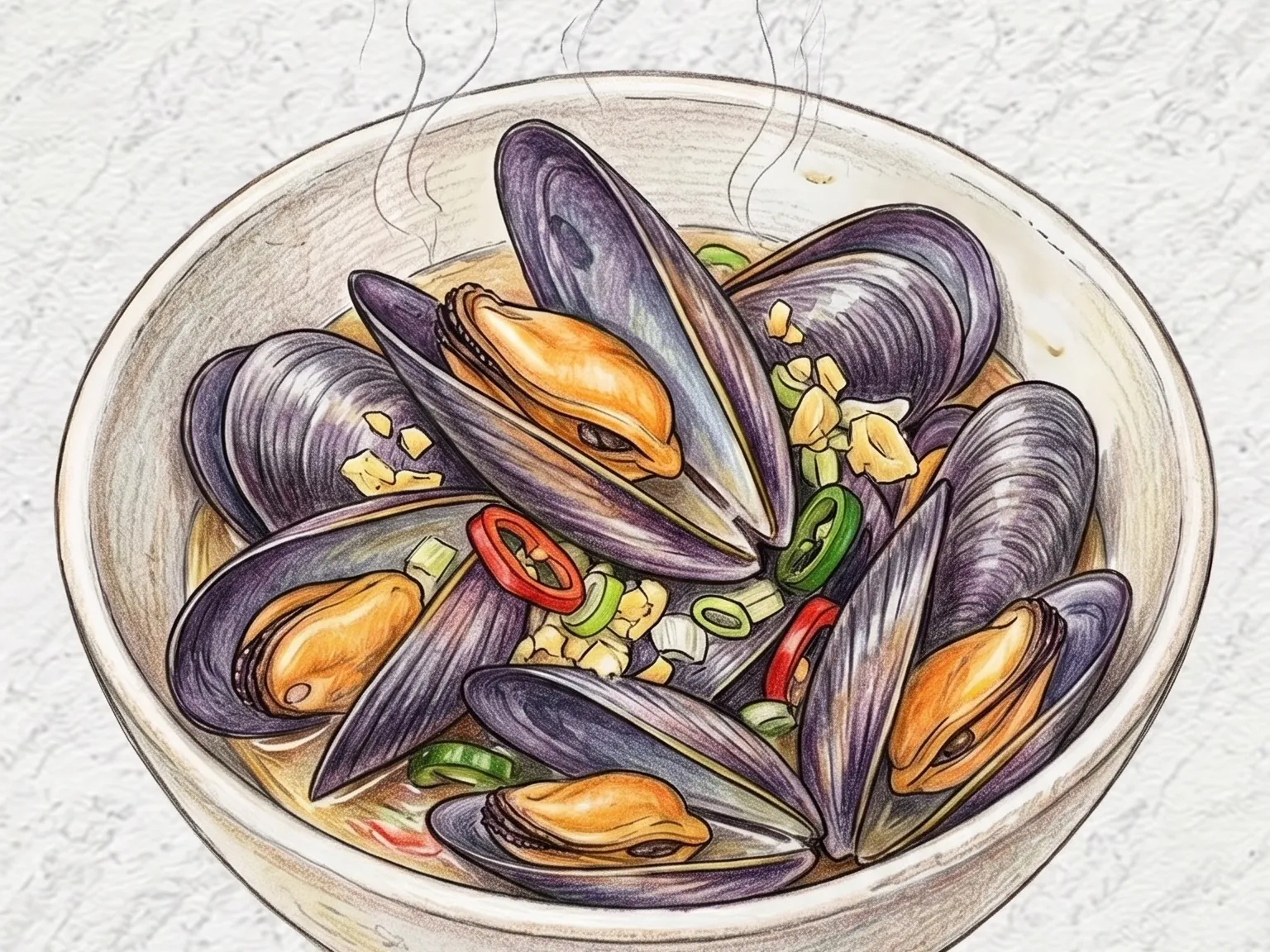
Korean Steamed Mussels (Mussels Steamed in Rice Wine Broth)
Quick answer
- Total time
- 30 min
- Level
- Easy
- Servings
- 2 servings
- Ingredients
- 6
About this dish
There is no stock in this pot: the mussels open over a splash of rice wine and garlic, and their own juices become the broth.
Read more
Everything happens fast over high heat, and the main mistake is letting it go on, since the meat shrinks and toughens within minutes. Green onion and cheongyang chili (a hot Korean green pepper) go in only once most shells have opened, adding fragrance and a clean bite. Any broth left at the bottom is worth saving for kalguksu noodles or a pack of ramen.
Ingredients
Instructions
- 1
Prepare 900 g mussels by pulling each beard downward, then scrub the shells well under cold water.
Rinse several times until the water runs mostly clear, removing grit, loose shell flakes, and any debris before cooking.
- 2
Slice 0.5 green onion thinly and cut 1 green chili into small rounds.
If the chili smells very sharp or you want cleaner heat, shake out some seeds before adding it to the pot.
- 3
Put 2 tbsp rice wine, 120 ml water, and 1 tbsp minced garlic in a wide pot.
Bring it to a strong boil over high heat for about 1 minute, until the harsh alcohol smell softens and garlic aroma rises.
- 4
Add the mussels and cover the pot immediately, keeping the heat high.
Steam for about 3 minutes, shaking the covered pot once so the upper and lower mussels trade places and open more evenly.
- 5
When most shells have opened, add the sliced green onion and green chili.
Steam for 2 more minutes only, just long enough for their aroma and heat to enter the broth, because overcooking makes the mussels tough.
- 6
Turn off the heat and discard any mussels that remain tightly closed after cooking.
Transfer the opened mussels to a bowl, spoon the hot wine-garlic broth from the bottom over them, and serve at once.
Use-up ingredient planner
Turn these ingredients into two more meals
The overlap excludes basic seasonings. Open the next recipe and your selected dishes will stay with you.
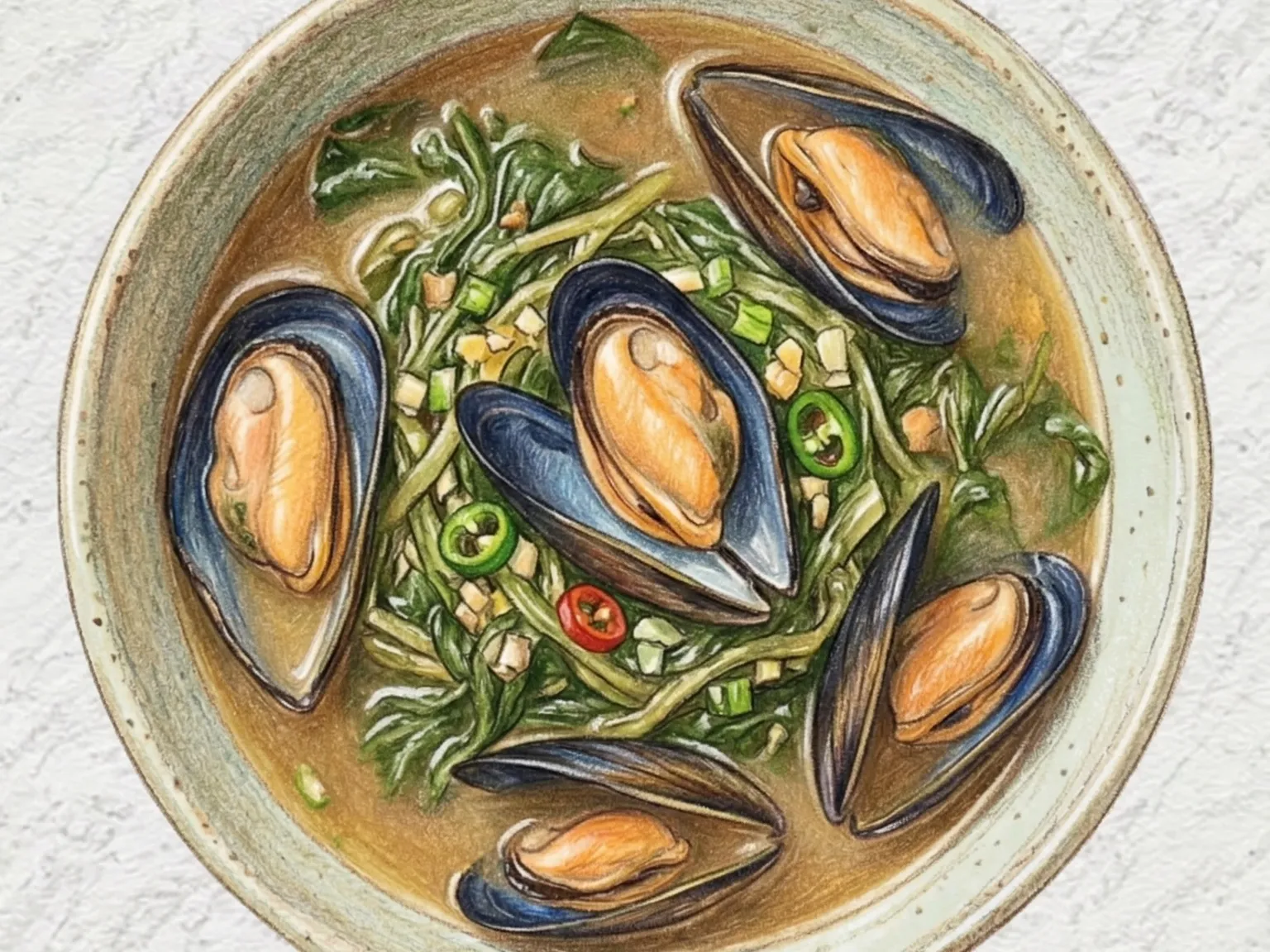
Korean Radish Greens Mussel Soup
mussels, green onion
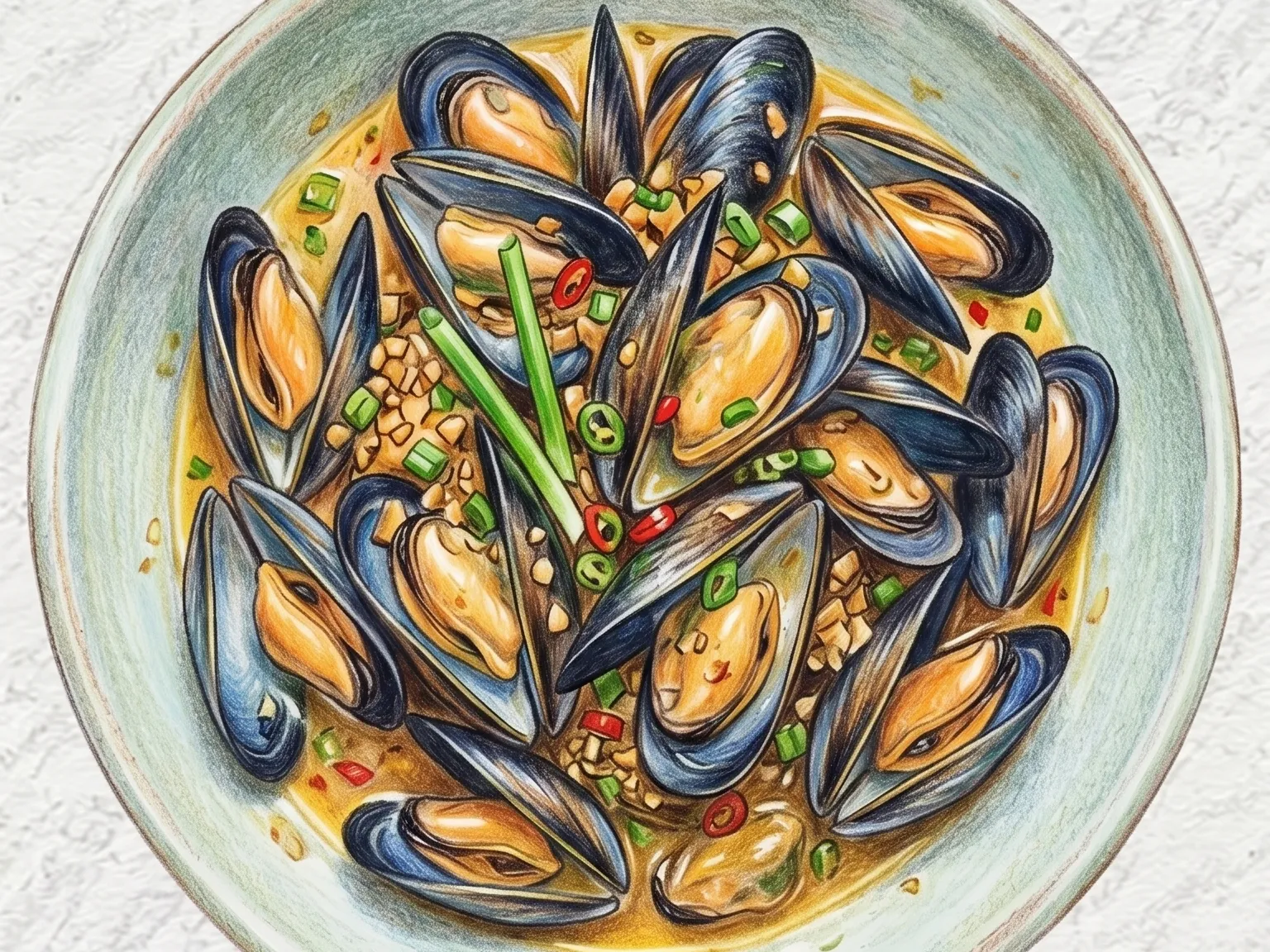
Korean Mussel Stir-Fry (Plump Mussels with Butter, Garlic and Chili)
mussels, green onion
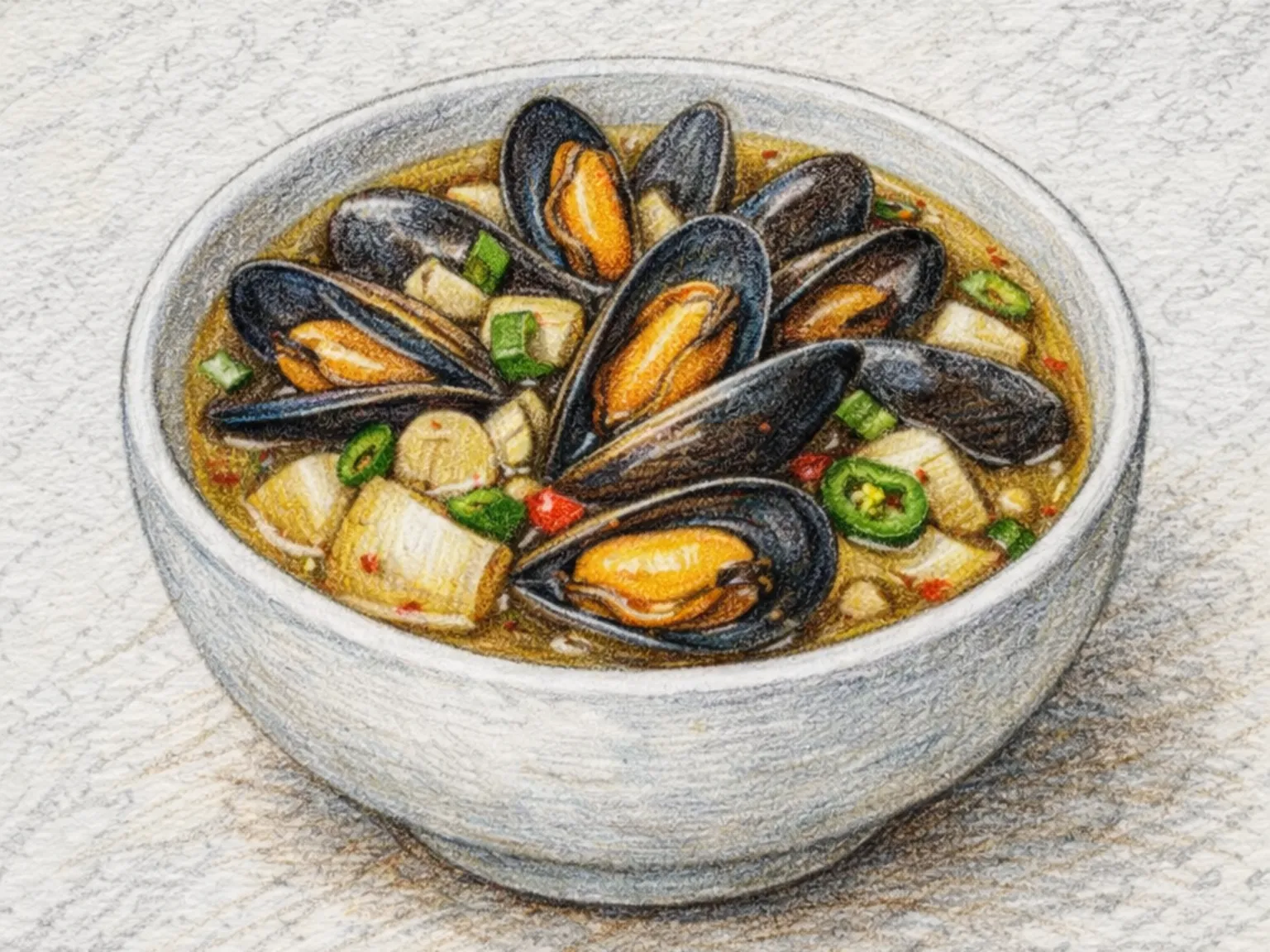
Korean Mussel Stew
mussels, green onion