Korean Mussel Soup Noodles

Korean Mussel Soup Noodles

Quick answer

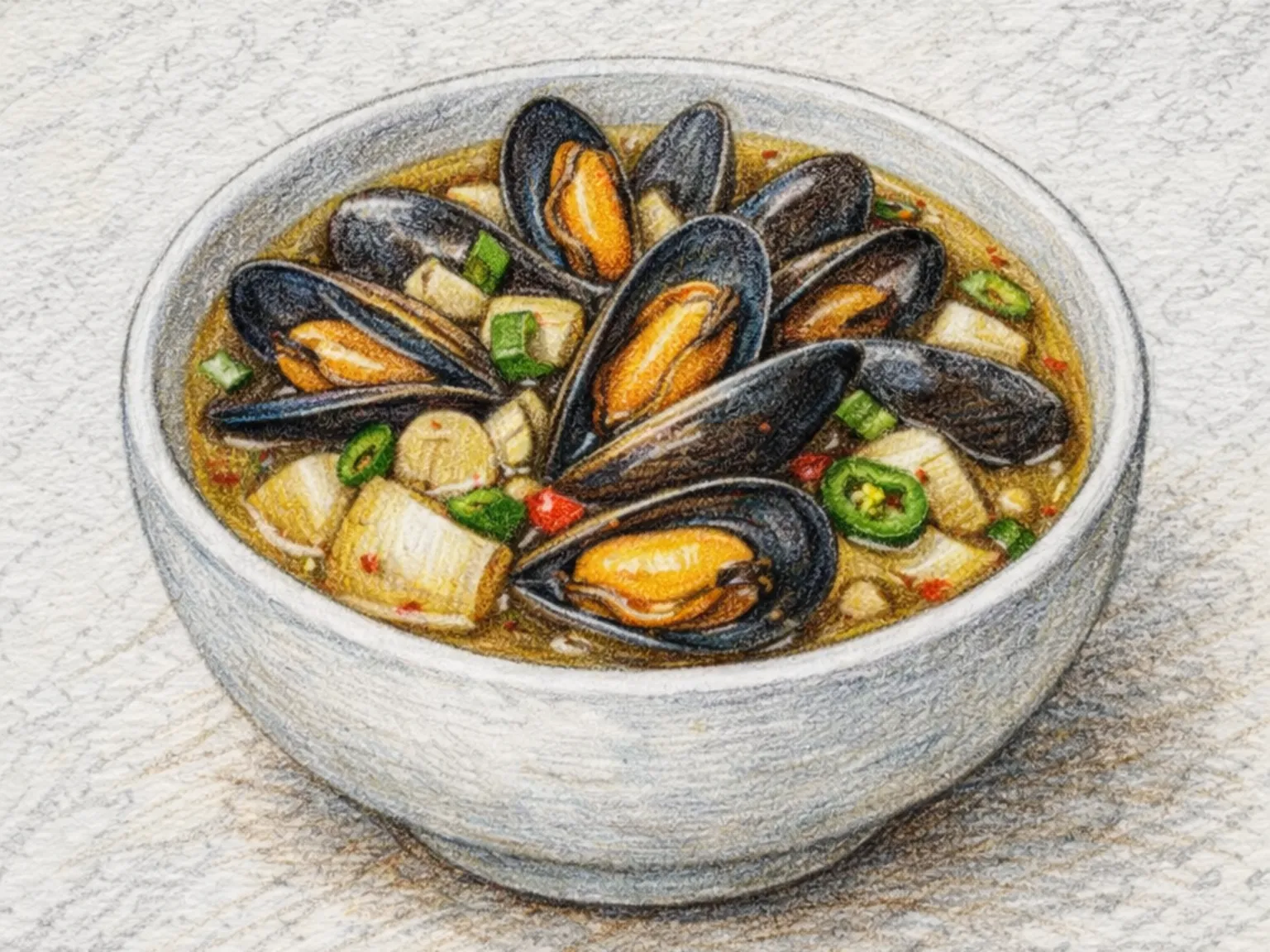
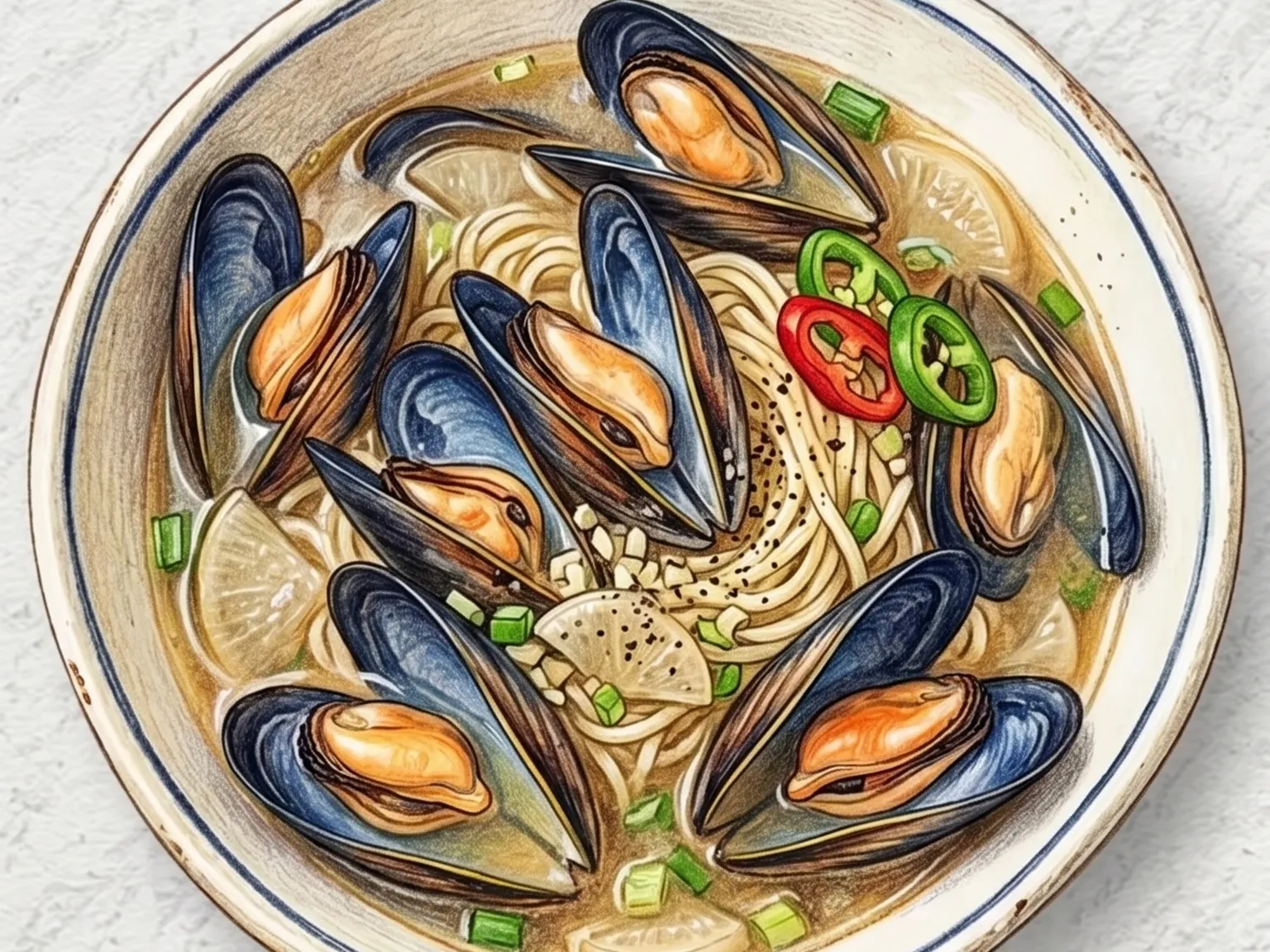
Honghap tangmyeon is a mussel noodle soup where a generous quantity of mussels is simmered to produce a deeply briny, clear broth that serves as the foundation of the ent...

What makes this special

  • Honghap tangmyeon relies on pure mussel simmer for its deeply briny and clear ocean broth.
  • No separate stock; mussel broth alone provides deep ocean umami
  • Simmered daikon sweetens the broth and tames mussel saltiness
Total time
38 min
Level
Easy
Servings
2 servings
Ingredients
9
Calories
470 kcal
Protein
28 g

Key ingredients

fresh wheat noodlesmusselswaterKorean radishgreen onion

Core cooking flow

  1. 1 Scrub 500 g mussels well with a brush, pulling off the beards by hand.
  2. 2 Put 1000 ml water, 120 g Korean radish, half the green onion, and 1 tbsp cooking wine in a pot.
  3. 3 Add the cleaned mussels to the boiling broth and cook over medium heat for 3 to 5 minutes.

Honghap tangmyeon is a mussel noodle soup where a generous quantity of mussels is simmered to produce a deeply briny, clear broth that serves as the foundation of the entire dish without the use of prepared stock. The mussels release their concentrated sea flavor directly into the pot, and this self-made broth is what distinguishes the dish from simpler seafood noodle soups. Korean radish is cooked alongside from the start, lending a natural sweetness and a refreshing clarity to the liquid as it breaks down gently. Soup soy sauce and cooking wine adjust the seasoning and temper the salt that the mussels contribute, pulling the flavor into balance. Minced garlic and green onion build an aromatic layer that keeps any fishiness in check, leaving only a clean, deep savoriness in its place. A generous crack of black pepper over the steaming bowl sharpens the marine character of the broth and warms the palate. The noodles should not be overcooked; they need enough bite to hold up against the rich, hot liquid. A few slices of cheongyang chili on top add a brisk heat that makes the broth feel simultaneously cool and fiery, the defining sensation of good Korean seafood soup.

Prep 18min Cook 20min 2 servings

Instructions

Read the steps as a cooking flow: prep, heat, seasoning, doneness control, and finish.

6 steps
  1. 1
    Step

    Scrub 500 g mussels well with a brush, pulling off the beards by hand.

    Rinse them in cold water 2 to 3 times, lifting them out each time so grit does not settle back onto the shells.

  2. 2
    Heat

    Put 1000 ml water, 120 g Korean radish, half the green onion, and 1 tbsp cooking wine in a pot.

    Bring it to a strong boil, then let the radish turn slightly translucent before adding seafood.

  3. 3
    Control

    Add the cleaned mussels to the boiling broth and cook over medium heat for 3 to 5 minutes.

    Remove them as soon as the shells open, and discard any that stay closed after cooking.

  4. 4
    Step

    Let the mussels cool just enough to handle, then separate the meat from the shells.

    Strain the broth slowly through a fine sieve to catch grit and shell fragments, keeping the liquid clear.

  5. 5
    Control

    Return the strained broth to the pot and add 1 tbsp minced garlic, 1 tbsp soup soy sauce, and black pepper.

    Boil over medium heat for 5 minutes, letting harsh aromas fade while the seasoning settles.

  6. 6
    Finish

    Boil 220 g fresh wheat noodles only until they keep some bite, then rinse in cold water and drain well.

    Place them in bowls, top with mussel meat, pour over hot broth, and finish with the remaining green onion.

After the steps

Pick a recipe that fits this dish.

Continue with shared ingredients, meal pairings, or a similar method.

Recipes That Go Well With This

More Noodles →

Based on shared ingredients and meal pairing

Korean Spicy Seafood Noodle Soup
Shared ingredient: ramen noodles Noodles

Korean Spicy Seafood Noodle Soup

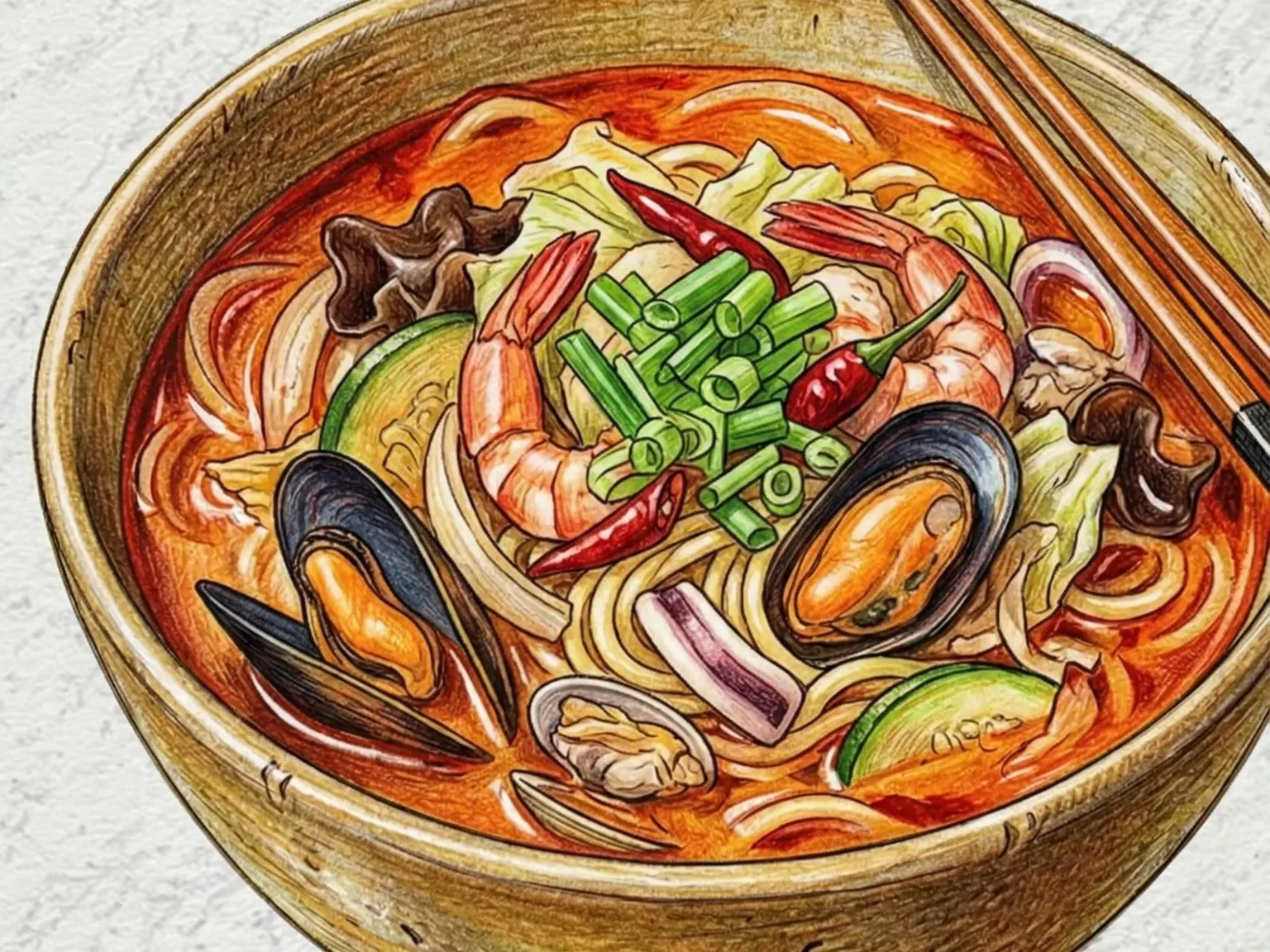
Jjamppong is a Korean-Chinese noodle soup where seafood and vegetables are stir-fried in chili oil at very high heat before broth is added, a sequence that fundamentally shapes the soup. Blooming gochugaru in hot oil instead of adding it directly to liquid extracts fat-soluble compounds that carry a smoky, toasted depth the raw powder cannot contribute. Squid, mussels, and shrimp release their own juices during the fry stage, and those juices dissolve into the chicken stock when the liquid hits the pan. Cabbage and onion caramelize in the residual oil and give off natural sugars that temper the chili heat. Soy sauce binds the seasoning and gives the broth its reddish-brown depth. Springy fresh wheat noodles absorb the concentrated broth, and by the time they reach the table the noodles are already carrying the full flavor of the soup in every strand.

Korean Buchu Honghap Guk (Chive Mussel Soup)
Shared ingredient: mussels Soups

Korean Buchu Honghap Guk (Chive Mussel Soup)

Debearded mussels are simmered with radish in water to draw out a briny, full-bodied stock, with rice wine added early to neutralize any fishy off-notes while keeping the oceanic depth intact. Soup soy sauce and garlic season the broth through the middle of cooking, and Korean chives plus black pepper go in at the very end so their fresh fragrance carries through to the bowl. Cooking uncovered lets off-flavors escape with the steam. Any mussel that stays closed after five minutes of simmering must be removed. Starting the radish alongside the mussels from the beginning allows its natural sweetness to dissolve into the stock and support the briny umami from below.

Korean Shepherd's Purse & Napa Pancake
Serve together Pancakes

Korean Shepherd's Purse & Napa Pancake

Shepherd's purse and napa cabbage combine in this seasonal pancake built around early spring greens. The shepherd's purse brings a pleasantly bitter, herbal character, while napa cabbage contributes gentle sweetness and body. Rice flour worked into the batter produces a slightly chewy consistency, and soup soy sauce keeps the seasoning clean so the greens stay in front. Egg holds the batter together, and the pan-fried surface turns a fragrant, golden brown. Because shepherd's purse has a short season in early spring, this jeon is a limited window into the year's first wild greens.

Korean Andong Guksi (Clear Beef Broth Celebration Noodles)
Similar recipe Noodles

Korean Andong Guksi (Clear Beef Broth Celebration Noodles)

Andong guksi is a banquet noodle dish from the city of Andong in North Gyeongsang Province, served at weddings, ancestral rites, and major family ceremonies for centuries. In Korean culture, long noodles carry a symbolic association with longevity, and that significance kept this dish at the center of celebratory meals across generations. The broth is made from beef brisket and bones simmered for hours until the liquid is clear yet coated with dissolved gelatin - not milky-white in the style of bone broths pushed hard, but translucent and full of a quiet richness that clings faintly to the lips. Wheat noodles, traditionally hand-pulled but now usually dried and purchased, are cooked separately, rinsed, and placed in the strained broth. Toppings are deliberately minimal: thin egg jidan strips, julienned zucchini, and a few slices of the boiled brisket. Seasoning with soup soy sauce and a touch of garlic keeps the broth transparent and positions the beef flavor at the front. Andong's most famous export, jjimdak, relies on bold, chili-forward heat; guksi is the counterpoint - an exercise in restraint and clarity.

Serve with this

Korean Stir-Fried Sweet Potato Stems
Side dishes Medium

Korean Stir-Fried Sweet Potato Stems

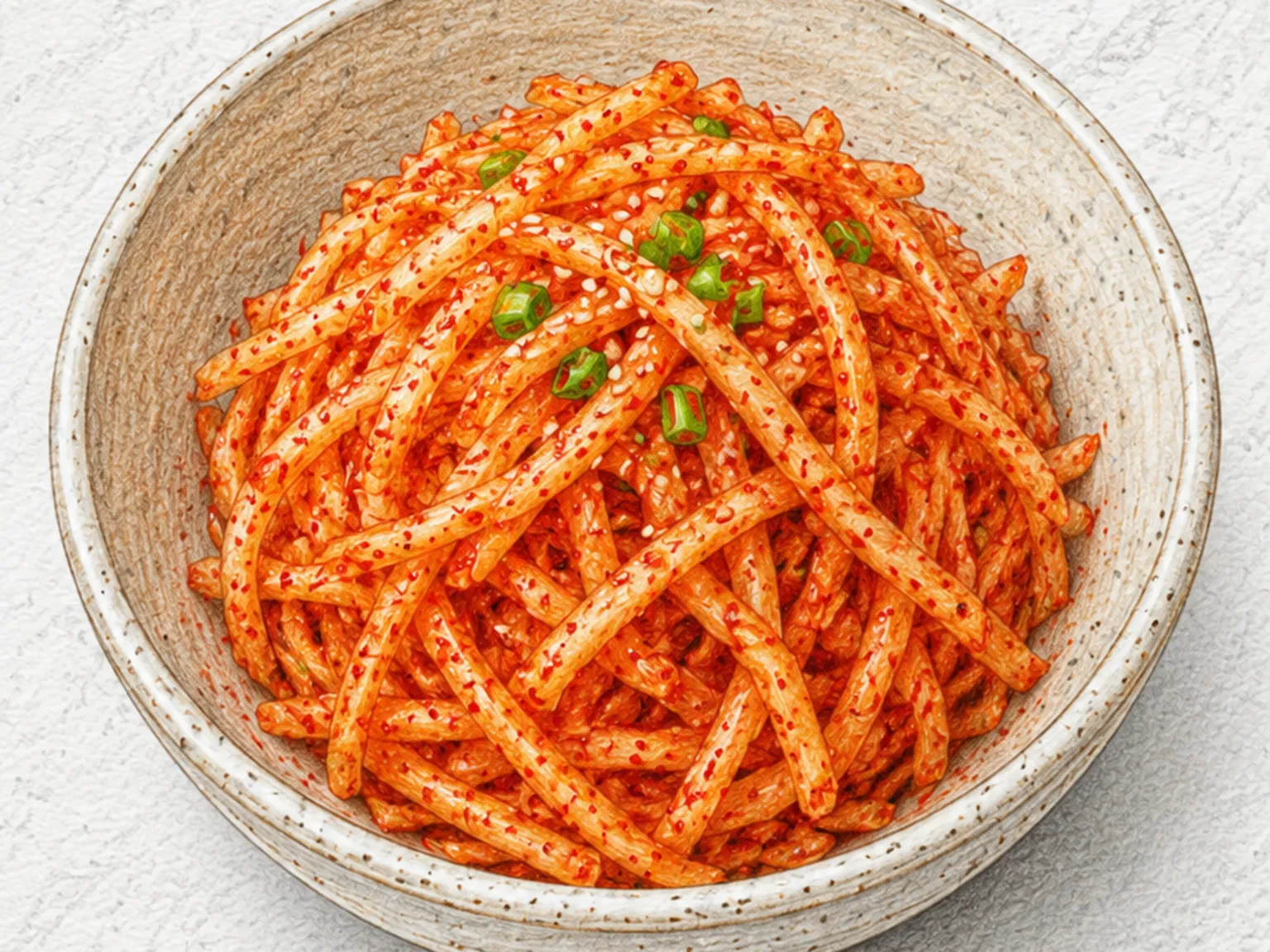
Goguma julgi - sweet potato stems - are the above-ground vines of the sweet potato plant, a byproduct that Korean cooks transform into a summer namul rather than discarding. The most labor-intensive step is peeling each stem by hand, pinching the outer skin with a fingernail and pulling it away to reveal the tender core beneath. After blanching for two minutes and rinsing in cold water, the stems are stir-fried in perilla oil with garlic and seasoned with soup soy sauce. Perilla powder stirred in at the end thickens the remaining liquid into a nutty glaze. In season during summer, the stems are harvested from sweet potato fields before the tubers themselves are dug up.

🏠 Everyday 🍱 Lunchbox
Prep 30min Cook 10min 4 servings
Chicken Mu (Korean Fried Chicken Radish Pickle)
Kimchi Easy

Chicken Mu (Korean Fried Chicken Radish Pickle)

The crunchy, sweet-sour radish pickle served with every order of Korean fried chicken - now easy to make at home in under 15 minutes. Cubed radish is submerged in a cooled brine of vinegar, sugar, salt, and whole black peppercorns. Using fully cooled brine rather than hot is critical for maintaining the radish's firm, snapping crunch. Ready to eat after one day of refrigeration, its bright acidity cleanses the palate between bites of crispy chicken. Stored in a glass jar, this pickle keeps for over a week.

⚡ Quick 🏠 Everyday
Prep 10min Cook 5min 4 servings
Deodeok Citrus Chicken Salad
Salads Medium

Deodeok Citrus Chicken Salad

Deodeok citrus chicken salad is a Korean-style dish that focuses on the interplay between various textures and flavors. The preparation involves pan-searing chicken tenderloin in a hot skillet until it develops a golden crust on the outside while the meat remains tender on the inside. This protein is paired with deodeok root, which is beaten or pounded before use to loosen its tough fibers and soften its structure. Deodeok provides a unique earthy quality and a subtle bitterness that is difficult to find in other root vegetables. Fresh orange segments are included to provide a bright acidity that balances the savory notes of the seared chicken and the natural earthiness of the deodeok. Arugula is used as the base of the greens, contributing a sharp, peppery layer to the overall composition. A simple dressing made from soy sauce and olive oil is used to integrate the Korean-inspired components with more Western salad elements. Because the dish contains a high amount of protein from the chicken and a significant volume of vegetables, it functions as a light meal that remains nutritionally complete.

🥗 Light & Healthy 🏠 Everyday
Prep 20min Cook 12min 2 servings

Similar recipes

Korean Anchovy Broth Thin Noodle Soup
Noodles Easy

Korean Anchovy Broth Thin Noodle Soup

Anchovy somyeon is the noodle soup Korean families fall back on when the kitchen offers little to work with - dried anchovies, a strip of dashima kelp, and a bundle of thin wheat noodles are enough. The broth starts with dried anchovies soaked briefly to cut any bitterness, then simmered with dashima for fifteen minutes before being strained to produce a clear liquid with a faint oceanic sweetness and deep umami. Somyeon - hair-thin wheat noodles - are cooked in a separate pot to keep their starch from clouding the broth, then rinsed repeatedly under cold water until every strand separates cleanly. The noodles go into a bowl of hot broth and are finished with sliced scallion, a small drop of sesame oil, and often a sheet of toasted gim. A few drops of soy sauce tune the salt level, and a soft-boiled egg or a few slices of tofu can round it into a full meal. The appeal of the dish is its restraint: no chili paste, no fermented base, just the clean savor of anchovy stock meeting springy noodles. Korean mothers have served this as a quick midday meal for generations, and it endures as comfort food in its most unadorned form.

🏠 Everyday ⚡ Quick
Prep 10min Cook 15min 2 servings
Honghap-tang (Korean Mussel Garlic Broth)
Soups Easy

Honghap-tang (Korean Mussel Garlic Broth)

Honghap-tang is a Korean mussel soup that proves how much flavor a single shellfish can deliver with almost no help. Shell-on mussels are placed in water with sliced green onion, garlic, and a light dusting of gochugaru, then brought to a boil. As the shells open, they release a briny, faintly sweet liquor that becomes the broth itself, clear in appearance but surprisingly concentrated in taste. The entire process takes about fifteen minutes. Timing matters here: once the shells have opened and the flesh has puffed, the pot comes off the heat immediately or the meat turns rubbery. In Korea, honghap-tang is a standard drinking companion, sipped between shots of soju while the mussel meat is pulled from the shells and dipped in vinegary chojang sauce. The combination of the bold, oceanic broth and the chilled sauce creates a cycle that is hard to stop. Mussels caught during the colder months, when they are fatter and richer, produce the most intensely flavored broth.

🍺 Bar Snacks 🏠 Everyday
Prep 10min Cook 15min 2 servings
Korean Doenjang Mushroom Udon
Noodles Medium

Korean Doenjang Mushroom Udon

Doenjang mushroom udon is a Korean noodle soup where thick-cut shiitake mushrooms simmer in an anchovy-kelp broth with dissolved soybean paste, building layered depth from two distinct fermented and dried umami sources. The shiitake's aromatic depth stacks on top of the doenjang's fermented, mellow character, while onion adds a quiet sweetness that prevents the broth from tasting one-dimensionally salty. Passing the doenjang through a fine sieve before stirring it into the broth ensures no lumps remain and the paste disperses evenly. Parboiling the udon noodles separately in plain water and rinsing briefly strips away surface starch, keeping the broth clear and clean to the last spoonful. A pinch of gochugaru added during the seasoning stage introduces a faint warmth at the finish that sharpens the overall flavor, and a few thin slices of cheongyang chili on top add color and a sharper bite. Adding silken tofu or sliced zucchini makes the bowl substantial enough to serve as a full meal.

🏠 Everyday 🌙 Late Night
Prep 12min Cook 18min 2 servings

Tips

Discard mussels that remain closed after cooking.
Add mussel meat at the end to avoid overcooking.

Nutrition (per serving)

Calories
470
kcal
Protein
28
g
Carbs
67
g
Fat
9
g