Korean Steamed Buns (Fluffy Yeast-Leavened Buns with Sweet Red Bean)
Quick answer
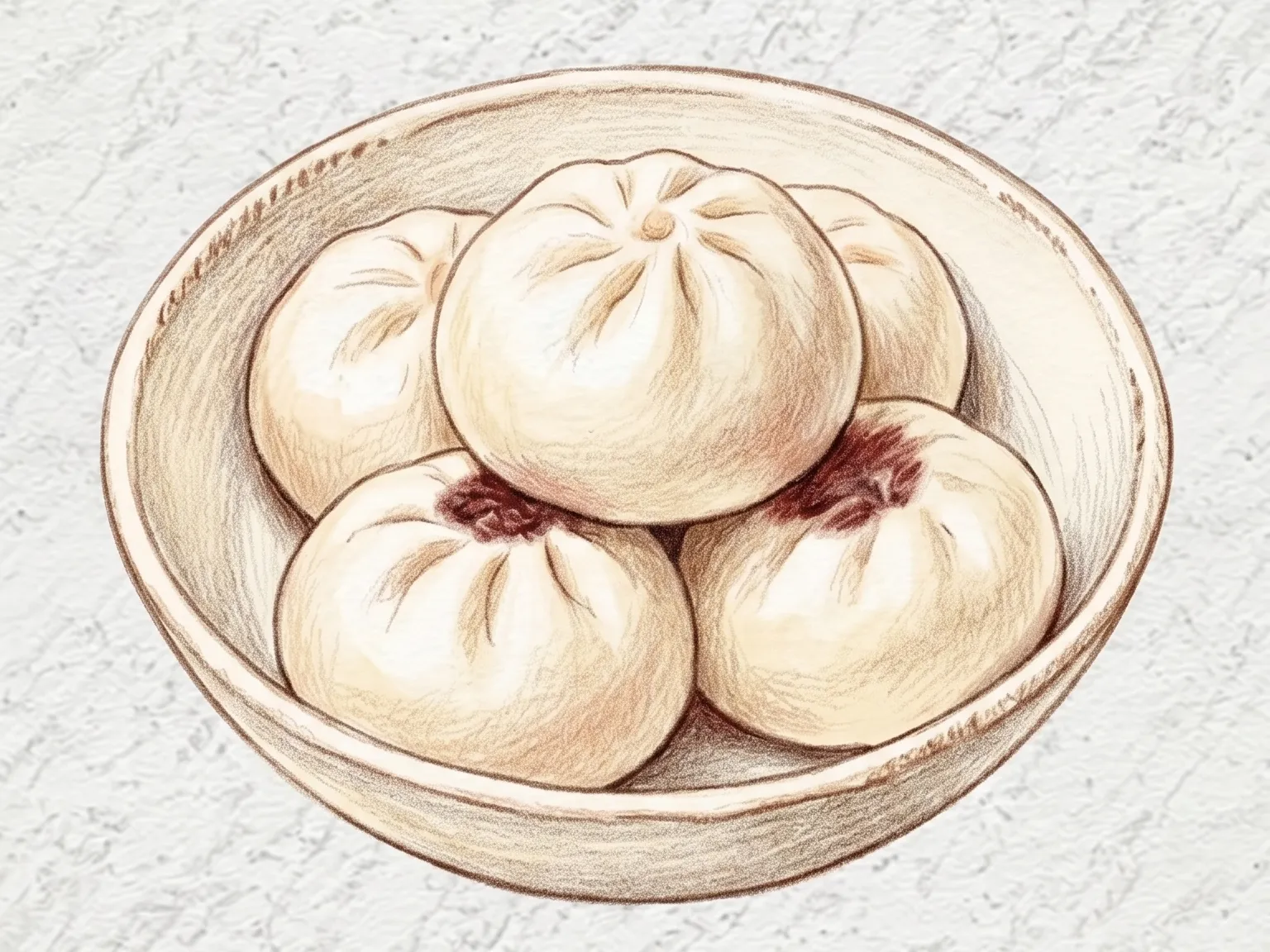
Hoppang is a Korean steamed bun made from yeast-leavened bread flour dough enriched with milk, filled with sweet red bean paste and cooked in a steamer.
What makes this special
- Steaming yeast-leavened milk dough creates a pillowy, springy bun that holds a dense filling of sweet red bean paste inside its moist and elastic layers.
- Bread flour with milk-based yeast dough gives moist, springy texture after steaming
- Seam-side down prevents the bun from bursting under steam pressure
Key ingredients
Core cooking flow
- 1 Stir 1 teaspoon instant yeast and 2 tablespoons sugar into 150 ml warm milk.
- 2 Mix 260 g bread flour with 1/2 teaspoon salt in a bowl.
- 3 Knead the dough for 8-10 minutes, until the surface looks smooth and feels elastic.
Hoppang is a Korean steamed bun made from yeast-leavened bread flour dough enriched with milk, filled with sweet red bean paste and cooked in a steamer. The dough rises during proofing to become pillowy and elastic, turning moist and springy once steamed. The dense sweetness of the red bean filling seeps into the surrounding bread layer, and placing the sealed side down during steaming prevents splitting. A small addition of salt to the dough sharpens the sweetness and creates a subtle contrast that keeps the flavor from becoming flat. Adequate proofing time is equally important: the longer the dough ferments within reason, the more evenly distributed the gas bubbles, which means a consistently light, open crumb after steaming. It is a classic Korean winter street snack, traditionally sold piping hot from steam carts at outdoor stalls and convenience stores throughout the cold season.
Instructions
Read the steps as a cooking flow: prep, heat, seasoning, doneness control, and finish.
- 1Season
Stir 1 teaspoon instant yeast and 2 tablespoons sugar into 150 ml warm milk.
Let it stand for 5 minutes, until a light foam appears, showing the yeast is active before mixing the dough.
- 2Season
Mix 260 g bread flour with 1/2 teaspoon salt in a bowl.
Add the yeast milk and 1 tablespoon vegetable oil, then bring everything together until no dry flour remains.
- 3Control
Knead the dough for 8-10 minutes, until the surface looks smooth and feels elastic.
Cover it so it does not dry out, then proof for 40 minutes, until nearly doubled.
- 4Step
Press the dough gently to release excess gas, then divide both dough and 260 g sweet red bean paste into 8 portions.
Flatten each dough piece with thinner edges and shape the filling into rounds.
- 5Step
Place one filling portion in the center of each dough round, gather the edges, and pinch firmly to seal.
Set each bun seam-side down so it holds its shape and does not split while steaming.
- 6Control
Line the steamer with parchment and space the buns apart, then wrap the lid with a cloth to catch condensation.
Steam over medium heat once steam is rising for 12-15 minutes, until the buns look plump and moist.
After the steps
Pick a recipe that fits this dish.
Continue with shared ingredients, meal pairings, or a similar method.
Recipes That Go Well With This
More Street food →Based on shared ingredients and meal pairing
Korean Chrysanthemum Bean Cakes
Gukhwa-ppang is a Korean winter street pastry baked in a chrysanthemum flower-shaped cast-iron mold, filled with sweet red bean paste at the center. The batter of flour, baking powder, sugar, milk, egg, and melted butter is stirred together with minimal mixing to keep gluten development low, then poured to fill only one-third of the mold before a spoonful of bean paste is placed in the middle and covered with more batter, ensuring the filling sits centered in the finished pastry. Cooking over medium-low heat for three to four minutes on each side produces a golden crust with sharply defined flower-petal ridges pressed into the surface, while the bean paste inside stays soft and flows when the pastry is broken apart. It is often grouped with bungeoppang as a sibling street food, but the dough ratio is heavier and the shell is noticeably thicker, giving it a stronger bread-forward flavor and a slightly smaller proportion of filling to outer crust. The pastry is best eaten immediately after cooking, while the exterior is still crisp and the paste still hot. In recent years vendors have begun filling gukhwa-ppang with cream, chocolate, and sweet potato paste as alternatives to the traditional red bean filling.
Red Bean Pastry (Korean Gyeongju Soft Bun with Anko)
Gyeongju-ppang is a baked Korean pastry made from a yeast-leavened dough enriched with milk and butter, wrapped generously around a core of sweet red bean paste. The dough is rolled thin, formed around the filling with the seam placed down, and baked at 180 degrees Celsius until the top domes up smooth and the surface takes on a pale golden color. Because the filling-to-dough ratio is deliberately high, the dominant flavor in each bite is the dense, sweet red bean, with the thin enriched shell contributing a quiet dairy aroma. The pastry traces its lineage to hwangnam-ppang, originating in the Hwangnam district of Gyeongju, and has become one of the city's defining food souvenirs. It stays moist after cooling, which makes it practical both as a packaged gift and as an everyday snack eaten at room temperature.
Korean Banana Milk
Banana milk is a homemade version of one of Korea's most consistently popular packaged beverages, sold in its distinctive small barrel-shaped bottle since 1974. Fresh ripe bananas are blended with cold milk, a spoonful of condensed milk, and a drizzle of honey to hit the characteristic level of sweetness. A small amount of vanilla extract bridges the fruit flavor and the dairy base, smoothing out any sharpness. Blending with ice produces a thick, smoothie-like consistency, while leaving out the ice gives a thinner, pourable drink closer to the original product. Unlike the commercial version, the homemade result contains no artificial flavoring or coloring, so the color stays a natural pale yellow rather than the vivid shade of the packaged drink. The sweetness varies with banana ripeness, and honey can be adjusted accordingly. Using frozen bananas in place of fresh ones plus ice delivers a cold, creamy texture without dilution. The whole preparation takes under five minutes, making it a practical option for a quick snack or light breakfast.
Korean Steamed Mandu (Pork and Tofu Dumplings Steamed in Half-Moon Shape)
Jjin mandu are Korean steamed dumplings filled with a mixture of ground pork, thoroughly squeezed tofu, soaked glass noodles, garlic chives, and onion, seasoned with soy sauce and sesame oil, then folded into crescent shapes and steamed for 12 to 15 minutes. The steaming method sets these apart from pan-fried or boiled dumplings in a fundamental way: no oil is added, so the wrapper stays moist and clings to the filling rather than crisping, and the filling's own flavors come through without the richness that frying introduces. Removing as much moisture as possible from the tofu before mixing it in is one of the most important steps - tofu that has not been squeezed dry will release liquid during steaming and make the filling watery and the wrapper soggy. Once the moisture is gone, the tofu blends into the pork and gives the filling a softer, more yielding texture than ground meat alone. Garlic chives provide a pungent, grassy bite that naturally cuts through the fat in the pork, while the glass noodles add a slippery, chewy element that contrasts with the tender meat. At the end of steaming, the wrappers turn translucent and the filling becomes just visible through the dough - a reliable sign that the dumplings are fully cooked. A dipping sauce of soy sauce, rice vinegar, and red chili flakes provides acidity and heat that lifts the mild, clean flavor of the filling.
Serve with this
Korean Crispy Glazed Tofu Bites
Dubu gangjeong applies the double-coating logic of Korean fried chicken to tofu, pressing each cube dry before dredging in potato starch, frying until the shell turns shattering crisp, then tossing in a concentrated sticky glaze. The dish originated in temple cuisine as a meatless adaptation of gangjeong and has since become a staple anju in Korean bars. Pressing the tofu is non-negotiable: at least twenty minutes under a heavy weight wrapped in paper towels removes enough moisture to prevent oil from splattering and allows the starch coating to adhere evenly. Potato starch produces a noticeably thinner and more translucent crust than wheat flour, which cracks cleanly rather than bending when bitten. The glaze is made by boiling gochujang, soy sauce, sugar, and rice syrup together until large bubbles break on the surface, signaling that the mixture has concentrated and will cling rather than pool. Pouring the hot glaze over the fried tofu and tossing quickly coats every surface in an even, lacquer-like finish. The defining quality of a well-made dubu gangjeong is the contrast between the caramelized shell with its slight chew and the soft, almost custard-like interior. Once made, it must be eaten within ten minutes before the coating absorbs moisture and goes soft.
Korean Banquet Noodles (Thin Noodles in Anchovy Kelp Broth)
Janchi-guksu is a classic Korean celebration noodle soup with thin wheat noodles served in a clear broth drawn from dried anchovies and kelp. The broth balances the anchovies' deep umami against the kelp's restrained sweetness, with soup soy sauce used for seasoning so the liquid stays transparent and clean rather than cloudy or heavily salted. Julienned zucchini and carrot are stir-fried separately and arranged as garnishes on top, joined by strips of pan-fried egg crepe and crumbled roasted seaweed, giving the bowl its characteristic layered appearance of white, green, yellow, and black. The dish traces back to the custom of serving noodles to guests at weddings, birthdays, and first-birthday celebrations, with the long shape of the noodle carrying a folk belief about longevity that made it a natural fixture at auspicious events. The ingredients are few, but the care taken with the broth determines the character of the bowl - it is a dish that appears simple but rewards proper attention.
Similar recipes
Korean Jjajang Tteokbokki
Jjajang tteokbokki simmers chewy rice cake sticks in a sauce of black bean paste (chunjang) stir-fried with ground pork, onion, and cabbage. The critical first step is pre-frying the chunjang in a generous amount of oil before adding any other ingredients: raw black bean paste carries a flat, slightly bitter taste, but several minutes of stirring in hot oil transforms it, removing the harsh edge and developing the characteristic deep, roasted sweetness that defines the dish. As the sauce reduces and thickens, it clings heavily to each rice cake, delivering an intense hit of savory black bean flavor with every bite. Unlike gochujang-based tteokbokki, there is no chili heat present at all, making this a version accessible to those who find standard tteokbokki too spicy. The ground pork renders fat into the sauce as it cooks, adding richness and making the sauce glossier and heavier in body. Julienned cucumber scattered on top at serving provides a fresh, crunchy contrast that cuts through the richness of the black bean sauce and brightens the overall flavor of the bowl.
Korean Chocolate Custard Bungeoppang
Choco-custard bungeoppang is a variation of Korean fish-shaped bread made with cocoa powder worked into the batter and filled with chocolate custard cream. The cocoa gives the shell a darker brown color than the classic red-bean version and produces a bitter chocolate aroma as it bakes in the cast-iron mold. The chocolate custard inside flows out like cream when bitten while still warm, delivering a rich, concentrated sweetness that contrasts with the faint bitterness of the cocoa shell. The mold must reach full temperature before pouring the batter to ensure a properly crisp shell, and the custard filling should be spooned into the center in small amounts to prevent leaking at the seam. With both the batter and filling built on chocolate, the finished pastry stacks layers of deep sweetness and mild bitterness that differ noticeably from the earthier flavor of the traditional red-bean filling.
Sweet Red Bean Porridge (Korean Adzuki Rice Dessert Soup)
Danpat-juk is a Korean sweet red bean porridge prepared by cooking dried red beans until fully tender, then straining two-thirds through a fine sieve for a smooth paste while keeping the remaining third whole to provide textural contrast throughout the bowl. The water from the initial boil is discarded to eliminate the raw astringency that fresh red beans carry before the flavor fully develops. Sugar, salt, and a small measure of cinnamon season the finished porridge, with the cinnamon adding a warm spiced note without overpowering the bean itself. Small glutinous rice dumplings called saealsim, hand-shaped from glutinous rice flour mixed with boiling water, are dropped into the simmering liquid and float to the surface once cooked through, introducing a chewy counterpoint to the smooth broth. Because the porridge thickens noticeably as it cools, pulling it from the heat while still slightly thinner than the intended final consistency ensures the bowl reaches the table at the right texture.