Flower Rice Pancakes (Glutinous Rice Cakes with Edible Flowers)
Desserts Medium

Flower Rice Pancakes (Glutinous Rice Cakes with Edible Flowers)

Quick answer

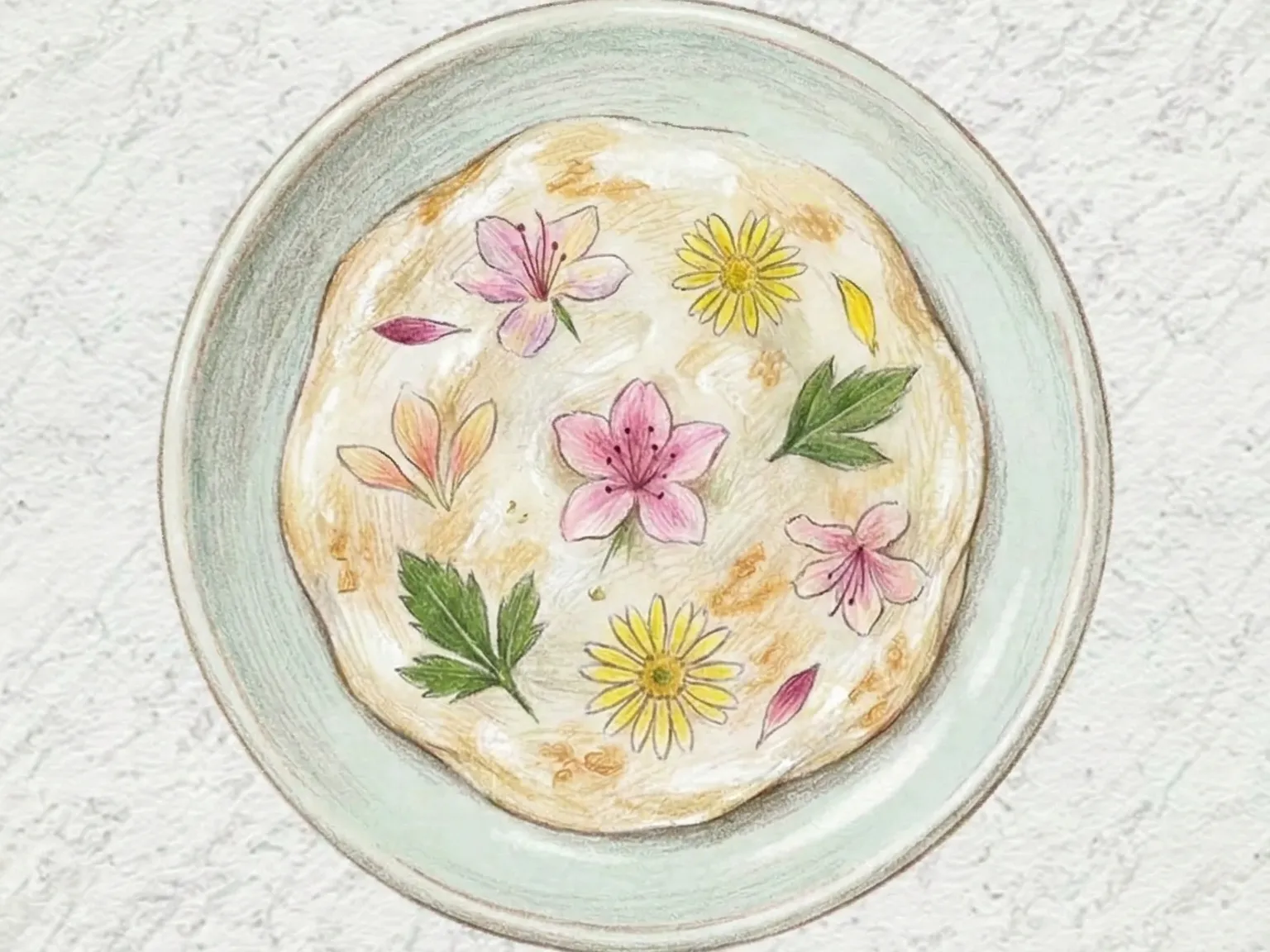
Hwajeon is a traditional Korean rice pancake made by kneading glutinous rice flour with salt and warm water, portioning the dough into 30-gram rounds, and pan-frying on l...

What makes this special

  • Hwajeon flower rice pancakes are prepared on low heat to keep edible petals bright atop glutinous dough.
  • Low heat only; high heat chars outside before inside sets
  • Seasonal flower choice shifts aroma from floral to herbal
Total time
35 min
Level
Medium
Servings
2 servings
Ingredients
7
Calories
310 kcal
Protein
4 g

Key ingredients

glutinous rice flourwatersaltedible flower petalsneutral oil

Core cooking flow

  1. 1 Spread 20g edible flower petals on paper towels and dry them completely before cooking.
  2. 2 Mix 180g glutinous rice flour evenly with 1g salt.
  3. 3 Divide the dough into 30g portions and roll each piece until smooth.

Hwajeon is a traditional Korean rice pancake made by kneading glutinous rice flour with salt and warm water, portioning the dough into 30-gram rounds, and pan-frying on low heat with edible flower petals pressed onto the surface. Low heat is not optional: high heat chars the outside while leaving the center gummy, whereas patient cooking at a gentle temperature produces a uniform chew all the way through. The petals must be dried completely before use to avoid oil splatter, and they are pressed in while the top of the pancake is still slightly underdone so they bond firmly rather than sitting loose on the surface. Different flowers shift the character of each batch: azalea delivers a faintly floral note, chrysanthemum a subtler, more herbal impression, and rose a soft sweetness. Served alongside honey and pine nuts, the honey draws out the mild sweetness of the rice dough, and the pine nuts add a resinous, oily richness that rounds out the last bite.

Prep 20min Cook 15min 2 servings
Recipes by ingredient → honey

Instructions

Read the steps as a cooking flow: prep, heat, seasoning, doneness control, and finish.

6 steps
  1. 1
    Heat

    Spread 20g edible flower petals on paper towels and dry them completely before cooking.

    Wet petals can make the oil splatter and will not adhere cleanly to the rice dough surface.

  2. 2
    Season

    Mix 180g glutinous rice flour evenly with 1g salt.

    Add 120ml warm water a little at a time while kneading until the dough feels soft like an earlobe and barely sticks to your hands.

  3. 3
    Heat

    Divide the dough into 30g portions and roll each piece until smooth.

    Press with your palm into small rounds about 0.7cm thick, smoothing cracked edges so they cook evenly.

  4. 4
    Control

    Add 1.5 tablespoons neutral oil to a pan and warm it slowly over low heat.

    Place the dough rounds in the pan and cook for 2 to 3 minutes, until the edges set and the underside turns pale golden.

  5. 5
    Heat

    When the top still looks slightly tacky, arrange the flower petals on each round.

    Press gently with a fingertip to secure them, and keep the heat low so the outside does not scorch before the center cooks.

  6. 6
    Finish

    When the pancakes are chewy through the center and the edges are lightly golden, transfer them to a plate with the flower side facing up. Serve with 2 tablespoons honey and 10g pine nuts alongside.

After the steps

Pick a recipe that fits this dish.

Continue with shared ingredients, meal pairings, or a similar method.

Recipes That Go Well With This

More Desserts →

Based on shared ingredients and meal pairing

Korean Sweet Glutinous Rice
Shared ingredient: honey Rice

Korean Sweet Glutinous Rice

Glutinous rice is soaked, steamed, and dressed with a mixture of soy sauce, sesame oil, and honey, then studded with jujubes, chestnuts, and pine nuts before a second steaming. The double-steaming process gives the rice a dense, chewy stickiness while the soy sauce penetrates each grain and tints it a deep amber. Jujubes lend a natural caramel-like sweetness, chestnuts add a crumbly, starchy contrast, and pine nuts contribute a subtle oiliness that enriches the overall taste. Traditionally prepared for the first full moon festival, yakbap is equally enjoyable as an everyday snack or packed lunch.

Gyeongdan (Chewy Rice Balls with Sweet Coating)
Shared ingredient: glutinous rice flour Baking

Gyeongdan (Chewy Rice Balls with Sweet Coating)

Gyeongdan are Korean glutinous rice balls, each one shaped by hand into a small sphere, boiled until it floats, then rolled in a dry coating while still warm. The dough is made by kneading glutinous rice flour with hot water rather than cold, a technique that partially gelatinizes the starch and gives the finished rice ball its characteristic chewy spring. Rinsing the cooked balls immediately in cold water stops them from sticking together and firms the surface enough for the coating to cling evenly. Traditional coatings include roasted soybean powder, which is mild and nutty, ground black sesame, which adds deep toasted bitterness, and sweetened red bean crumbles. Some versions are filled with sweet red bean paste before shaping, so the filling bursts as you bite through. Gyeongdan appear on ceremonial tables at seasonal holidays and as everyday snacks, often presented as a trio of colors arranged side by side on a single plate.

Soboro Bread (Korean Sweet Streusel-Topped Bun)
Serve together Baking

Soboro Bread (Korean Sweet Streusel-Topped Bun)

Soboro bread is a Korean bakery staple that tops a soft, milk-enriched yeast bun with a layer of sweet cookie crumble. The bun interior is pillowy and slightly sweet, with a fine crumb that tears in gentle strands, while the streusel cap - mixed from butter, sugar, egg, and flour - bakes into a crunchy, golden shell that cracks into irregular pieces. The appeal lies in the contrast: each bite delivers both the airy softness of enriched bread and the sandy crunch of a cookie. Applying the crumble after the second proof, rather than before, prevents the rising dough from being weighed down and allows the surface to fracture naturally in the oven's heat. The crumble stays crisp even after the bread cools completely, which is why soboro bread remains satisfying the next day when many other bakery items have gone stale.

Pan-Fried Sweet Rice Cake
Similar recipe Desserts

Pan-Fried Sweet Rice Cake

Bukkumi is a traditional Korean pan-fried rice cake made from glutinous rice flour dough filled with sweet red bean paste seasoned with cinnamon and sugar. Using hot water to form the dough partially gelatinizes the starch, creating a pliable skin that stretches without cracking - though the dough must stay covered with a damp cloth throughout assembly to prevent the surface from drying out. Folding the dough into half-moon shapes seals in a cinnamon-laced bean paste filling that lifts the dense sweetness of the red bean with a warm spice note. Pan-frying on low heat builds a golden crust on each side while keeping the filling warm and molten at the center. A light drizzle of honey or a pinch of sugar right after frying adds a final layer of sweetness.

Serve with this

Korean Jjajang Tteokbokki
Street food Easy

Korean Jjajang Tteokbokki

Jjajang tteokbokki simmers chewy rice cake sticks in a sauce of black bean paste (chunjang) stir-fried with ground pork, onion, and cabbage. The critical first step is pre-frying the chunjang in a generous amount of oil before adding any other ingredients: raw black bean paste carries a flat, slightly bitter taste, but several minutes of stirring in hot oil transforms it, removing the harsh edge and developing the characteristic deep, roasted sweetness that defines the dish. As the sauce reduces and thickens, it clings heavily to each rice cake, delivering an intense hit of savory black bean flavor with every bite. Unlike gochujang-based tteokbokki, there is no chili heat present at all, making this a version accessible to those who find standard tteokbokki too spicy. The ground pork renders fat into the sauce as it cooks, adding richness and making the sauce glossier and heavier in body. Julienned cucumber scattered on top at serving provides a fresh, crunchy contrast that cuts through the richness of the black bean sauce and brightens the overall flavor of the bowl.

🧒 Kid-Friendly 🌙 Late Night
Prep 10min Cook 15min 2 servings
Korean Chestnut Latte
Drinks Medium

Korean Chestnut Latte

Bam latte is a Korean autumn drink made by blending boiled chestnuts into a smooth paste and warming it with milk. The chestnuts are pureed with water until the mixture is completely smooth, then combined with milk and heated gently on the stovetop over low heat. Maple syrup introduces a caramel sweetness over the mild, starchy flavor of the chestnuts. Ground cinnamon adds warmth, and a small amount of vanilla extract gives the overall aroma more depth. Blending the chestnuts longer yields a silkier drink; leaving some texture produces a thicker, more porridge-like consistency. The full preparation takes about twenty minutes, making it a practical homemade version of the seasonal chestnut lattes that appear in Korean cafes each autumn.

🍺 Bar Snacks 🌙 Late Night
Prep 10min Cook 20min 2 servings
Chocolate Lava Cake
Western Medium

Chocolate Lava Cake

Chocolate lava cake bakes a batter of melted dark chocolate, butter, whole eggs, egg yolks, sugar, and a small measure of flour in buttered ramekins at 220 degrees Celsius for ten to twelve minutes, producing a set crust and molten center from a single brief baking window. The high oven temperature firms the outside and top of the batter into cake while the core stays liquid, so breaking the surface with a spoon releases a slow pour of concentrated warm chocolate. High-cacao dark chocolate provides a complex, bittersweet depth that pairs with the richness of butter fat, and vanilla extract softens and rounds the overall aroma. Timing controls everything in this recipe: overbaking by even two minutes sets the center solid and destroys the signature flow. The edges of each ramekin should feel just firm when pressed lightly through a towel at the ten-minute mark. Ramekins can be filled ahead and refrigerated, but the baking time then needs an extra one to two minutes to account for the colder starting temperature. Serving with a scoop of vanilla ice cream or a spoonful of cold heavy cream creates a striking contrast between the hot, dense chocolate interior and the chilled, lighter dairy.

🎉 Special Occasion 🧒 Kid-Friendly
Prep 15min Cook 12min 2 servings

Similar recipes

Glutinous Rice Cake with Soybean Powder
Desserts Easy

Glutinous Rice Cake with Soybean Powder

Injeolmi is a Korean glutinous rice cake made by kneading rice flour dough with hot water, steaming it for fifteen minutes, then pounding or beating it vigorously for at least five minutes to develop the characteristic elasticity. The pounding step determines the final texture: insufficient working produces a weak dough that cracks apart, while thorough pounding yields the signature stretchy, chewy pull that injeolmi is known for. The finished dough is stretched out, cut into bite-sized pieces, and rolled in a mixture of roasted soybean powder and sugar, which coats each piece in a fragrant, toasted-grain aroma. Applying a thin layer of sesame oil to both hands and knife before cutting prevents the dough from sticking, and the soybean powder coating is best applied immediately before serving to keep the surface dry and powdery rather than absorbing moisture. Injeolmi appears regularly at ancestral rites, first birthday celebrations, and traditional ceremonies across Korea.

🧒 Kid-Friendly 🌙 Late Night
Prep 20min Cook 15min 4 servings
Honey-Filled Rice Cakes (Steamed Glutinous Rice with Brown Sugar Syrup)
Desserts Easy

Honey-Filled Rice Cakes (Steamed Glutinous Rice with Brown Sugar Syrup)

Kkultteok are bite-sized Korean rice cakes made by kneading glutinous rice flour with hot water, wrapping each 20-gram round of dough around a filling of dark brown sugar, ground cinnamon, and chopped walnuts, then steaming for eight to ten minutes. After steaming, a light brush of sesame oil gives the surface a sheen and keeps the pieces from sticking together, and a final roll in roasted soybean powder adds a dry, nutty outer coating. Biting through the soft, chewy shell releases a pool of melted brown sugar syrup with cinnamon warmth, while the walnut fragments provide crunch against the sticky interior. The most critical step is pinching the dough seam shut as tightly as possible: if the seal fails during steaming, the molten brown sugar syrup leaks out and the rice cake ends up hollow and dry.

🎉 Special Occasion 🧒 Kid-Friendly
Prep 25min Cook 10min 4 servings
Three-Color Sweet Rice Balls
Desserts Medium

Three-Color Sweet Rice Balls

Samsek gyeongdan are traditional Korean rice cake balls made from glutinous rice flour dough divided into three colors: plain white, green from mugwort powder, and pink from prickly pear powder, then rolled into small spheres and boiled. The dough must be kneaded with hot water to fully activate the starch's sticky quality; water that is too cool makes the dough prone to cracking when shaped. The balls need one extra minute of cooking after they float to ensure the centers turn fully translucent, and pulling them out immediately after floating often leaves a dense, undercooked core. The mugwort batch carries an herbal, grassy note, and the prickly pear version offers a faint fruity tang, so three distinct flavors emerge from the same base recipe. Transferring the cooked balls immediately to cold water stops carryover cooking and preserves the springy, bouncy texture. Rolling them in a mixture of roasted soybean powder or black sesame powder with sugar coats each ball in nuttiness, and a light brush of sesame oil prevents the balls from sticking together while giving the surface a subtle sheen.

🧒 Kid-Friendly
Prep 25min Cook 15min 4 servings

Tips

High heat burns the outside while leaving the inside gummy; keep heat low.
Dry petals thoroughly to prevent splattering in the pan.

Nutrition (per serving)

Calories
310
kcal
Protein
4
g
Carbs
52
g
Fat
10
g