Korean Astragalus Chicken Soup
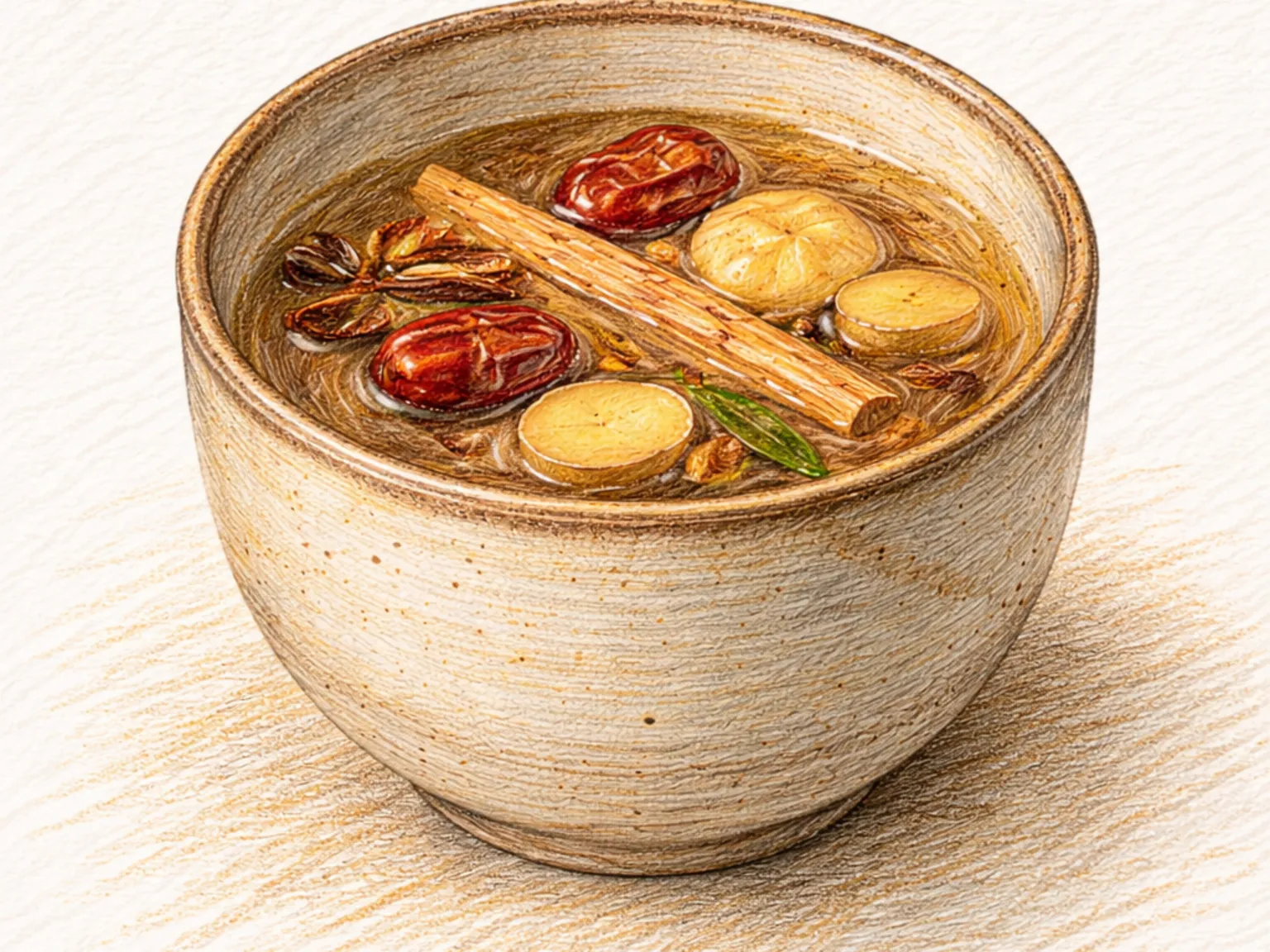
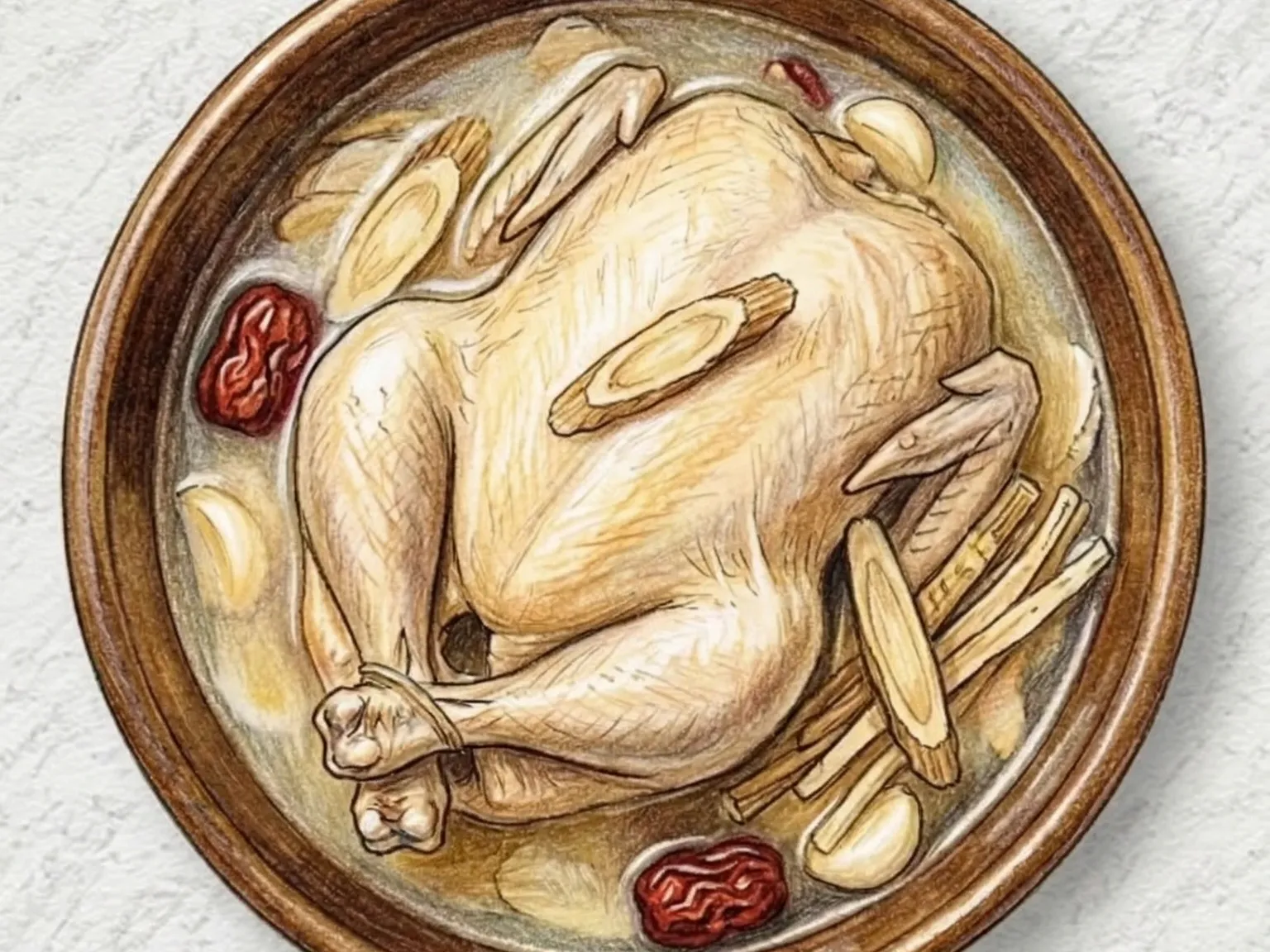
Hwanggi-dak-tang is a Korean herbal chicken soup built around astragalus root, a staple of traditional East Asian medicine valued for its restorative properties. A whole chicken simmers for well over an hour with the dried root, jujubes, and garlic, producing a clear yet full-bodied broth with a faintly sweet, earthy undertone from the herb. The extended cooking dissolves collagen from the skin and joints, giving the liquid a velvety weight that coats the palate. The chicken meat, by the time the soup is ready, pulls apart effortlessly. Jujubes soften into the broth and add a subtle fruity sweetness that bridges the medicinal and culinary sides of the dish. Seasoning is limited to salt, keeping the focus on the herb-infused stock. In Korea, this soup appears most often during seasonal transitions or after illness, served steaming in a stone pot.
Adjust Servings
Instructions
- 1
Rinse chicken pieces thoroughly.
- 2
Combine chicken, astragalus, jujube, garlic, and water in a pot and boil.
- 3
Skim foam, reduce to low heat, and simmer for 60 minutes.
- 4
Remove astragalus root and add green onion for 5 more minutes.
- 5
Season with salt and serve chicken with broth.
As an Amazon Associate, we may earn from qualifying purchases.
Tips
Nutrition (per serving)
More Recipes

Korean Boiled Chicken Soup
Dak-baeksuk is a Korean whole-chicken soup simmered for over fifty minutes with whole garlic cloves, jujubes, green onion, and ginger in a large pot of water. Skimming fat and foam throughout the cooking process is essential to achieving the signature clear broth - neglecting this step leaves the soup greasy and cloudy when reheated. The jujubes lend a subtle sweetness and the garlic, softened to a paste after the long simmer, dissolves into the liquid to create a mellow depth that needs nothing more than salt and pepper. The chicken is shredded against the grain for the softest possible texture, then returned to the hot broth so every bite of meat is saturated with the clean, aromatic stock.

Jangeo-tang (Spicy Freshwater Eel Soup)
Jangeo-tang is a nourishing Korean eel soup in which freshwater eel is first boiled, deboned, and then simmered in a bold seasoning of doenjang and gochugaru. Dried radish greens (sirae-gi) are added to the pot, contributing an earthy, slightly bitter depth that grounds the richness of the eel. Garlic and green onion temper any fishiness, leaving behind only the eel's clean, fatty savoriness. The broth develops a dark, spicy intensity while the eel meat remains soft and oil-rich, dissolving into each spoonful. High in protein and healthy fats, jangeo-tang has long been considered a stamina-building dish in Korea, traditionally eaten during the hottest days of summer or whenever energy reserves run low. The combination of fermented soybean paste and chili gives the soup a complexity that distinguishes it from milder restorative broths.

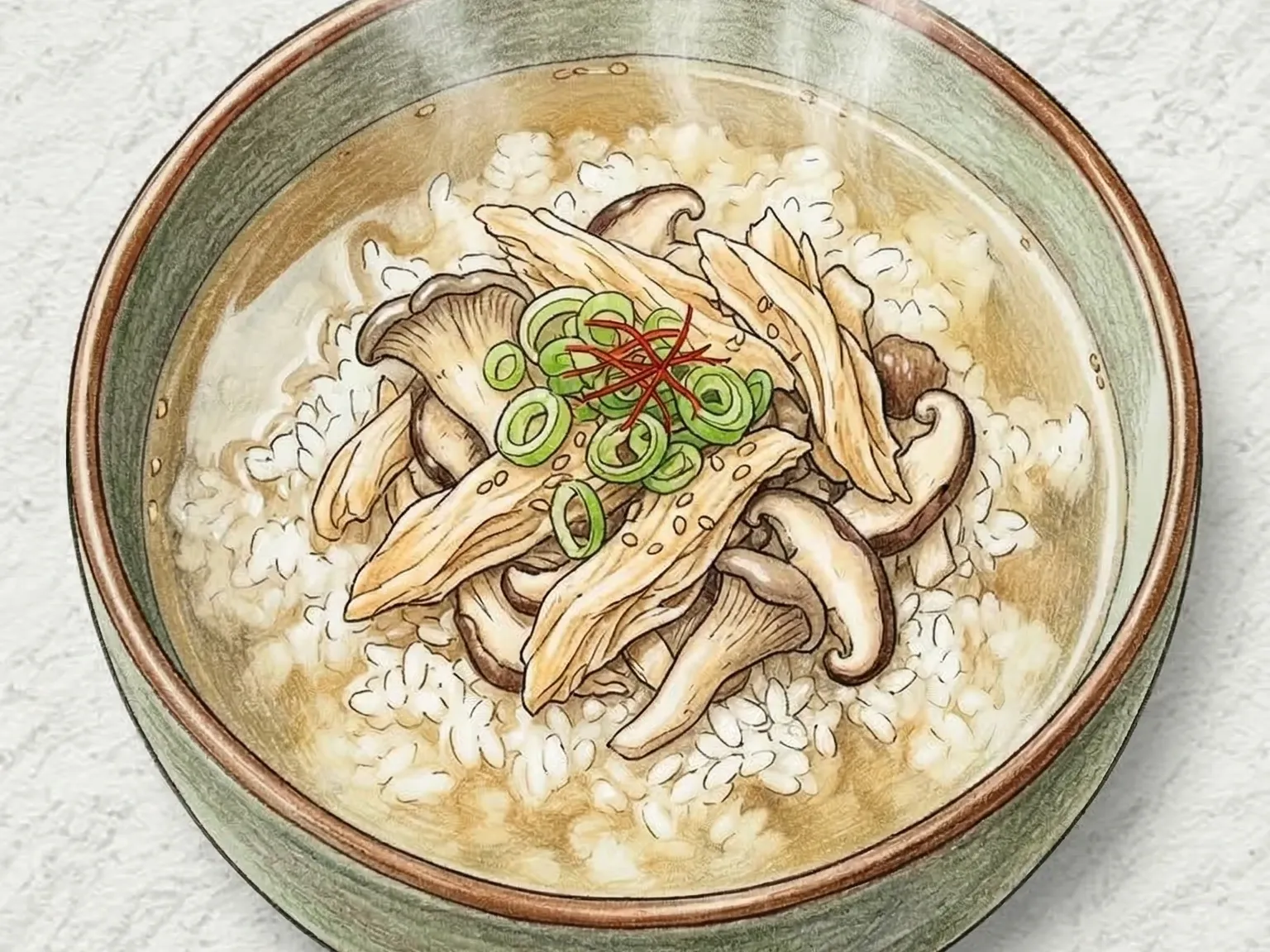
Korean Chicken and Neungi Mushroom Soup
Neungi-dak-gomtang is a Korean chicken soup elevated by neungi mushrooms, a wild variety prized for their intense, almost truffle-like fragrance. The chicken is blanched first to remove impurities, then simmered for fifty minutes with onion, garlic, and ginger to build a clear, rich stock. After straining, the torn chicken meat is returned to the pot along with the neungi mushrooms, which steep in the hot broth for fifteen minutes - long enough to release their deep, earthy perfume without losing its complexity. The mushroom's aroma permeates the entire liquid, transforming an already satisfying chicken soup into something far more layered and aromatic. Seasoning is kept to soup soy sauce and salt, ensuring nothing competes with the interplay between poultry richness and mushroom fragrance. In Korea, this soup is considered both nourishing and luxurious, often served during autumn when neungi mushrooms are freshly foraged.

Korean Seafood & Chicken Herbal Soup
Haesintang is a premium Korean restorative soup that simmers a whole chicken alongside abalone, octopus, and shrimp in a single large pot. The chicken goes in first and cooks for over an hour, yielding a cloudy, collagen-rich stock with a silky mouthfeel. The seafood is added later so it does not overcook: abalone stays chewy, octopus retains its bounce, and shrimp turn just pink. The combination of poultry fat and marine umami produces a broth that is simultaneously rich and clean, deeper than either element could achieve alone. Seasoning is kept to garlic, green onion, and salt to let the ingredients speak. In Korea, haesintang is a celebratory dish, often ordered on hot summer days when stamina is needed, and it is considered one of the most nourishing soups in the culinary tradition.

Korean Spicy Braised Chicken
Dakdoritang is a spicy braised chicken dish where bone-in pieces are simmered with potato, carrot, and onion in a thick sauce of gochujang, gochugaru, soy sauce, and sugar. The chicken releases its juices into the sauce as it cooks, creating a glossy, clinging glaze that coats every piece of vegetable. The potatoes break down just enough to thicken the braising liquid, while the sugar tempers the chili heat into a warm, lingering spice.

Korean Ueong Dak Juk (Burdock Chicken Porridge)
Shredded chicken tenderloin and julienned burdock root are simmered together in a long, slow cook until the porridge turns thick and smooth. The chicken releases a clean, mild broth that forms the base flavor, while the burdock contributes a subtle earthy aroma and slight crunch that adds dimension. Toasting the rice in perilla oil before adding liquid deepens the nuttiness and gives the porridge a silkier body. The result is a gentle, nourishing bowl that sits easy on the stomach.