Korean Dried Pollock Radish Soup
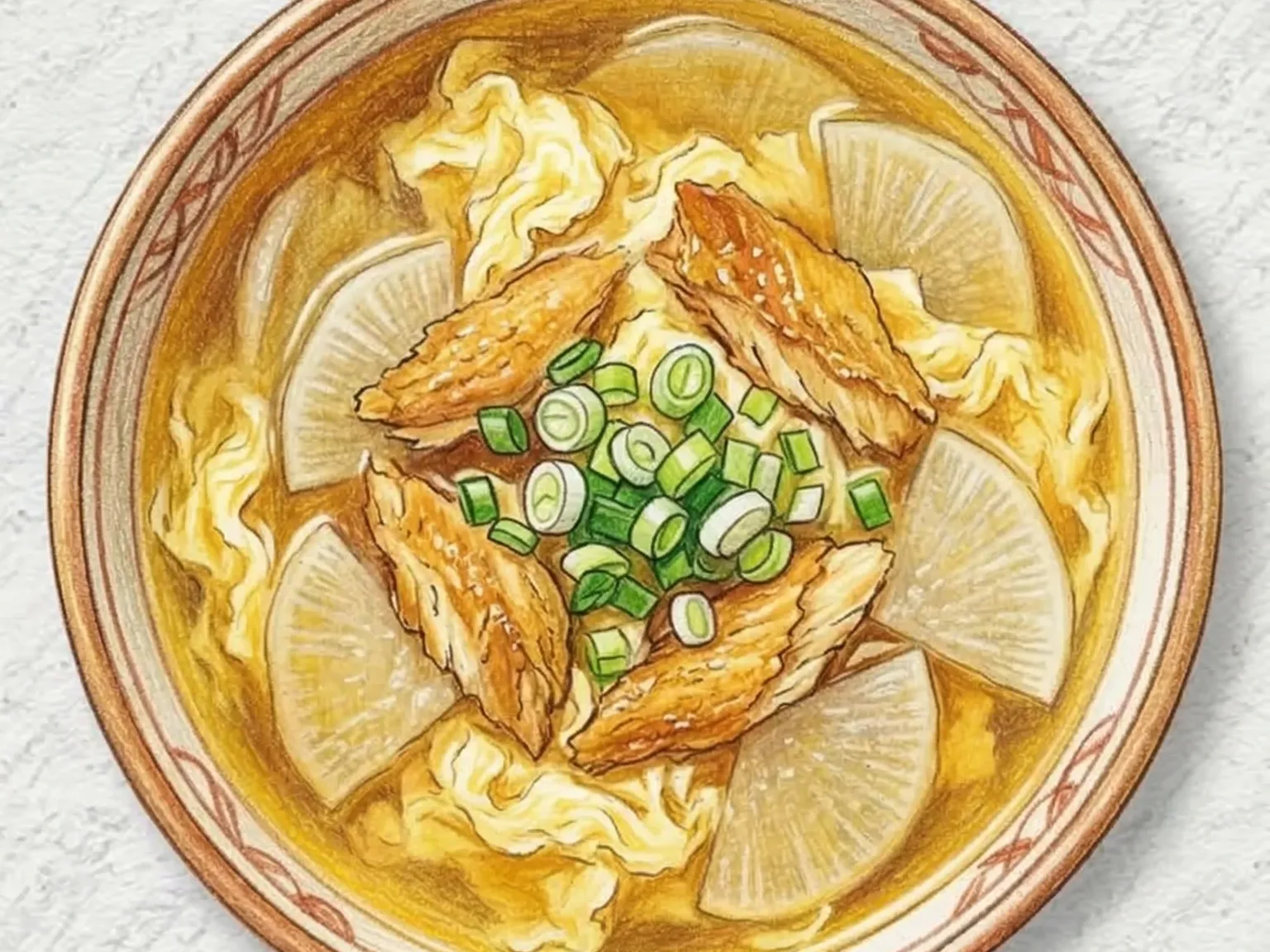
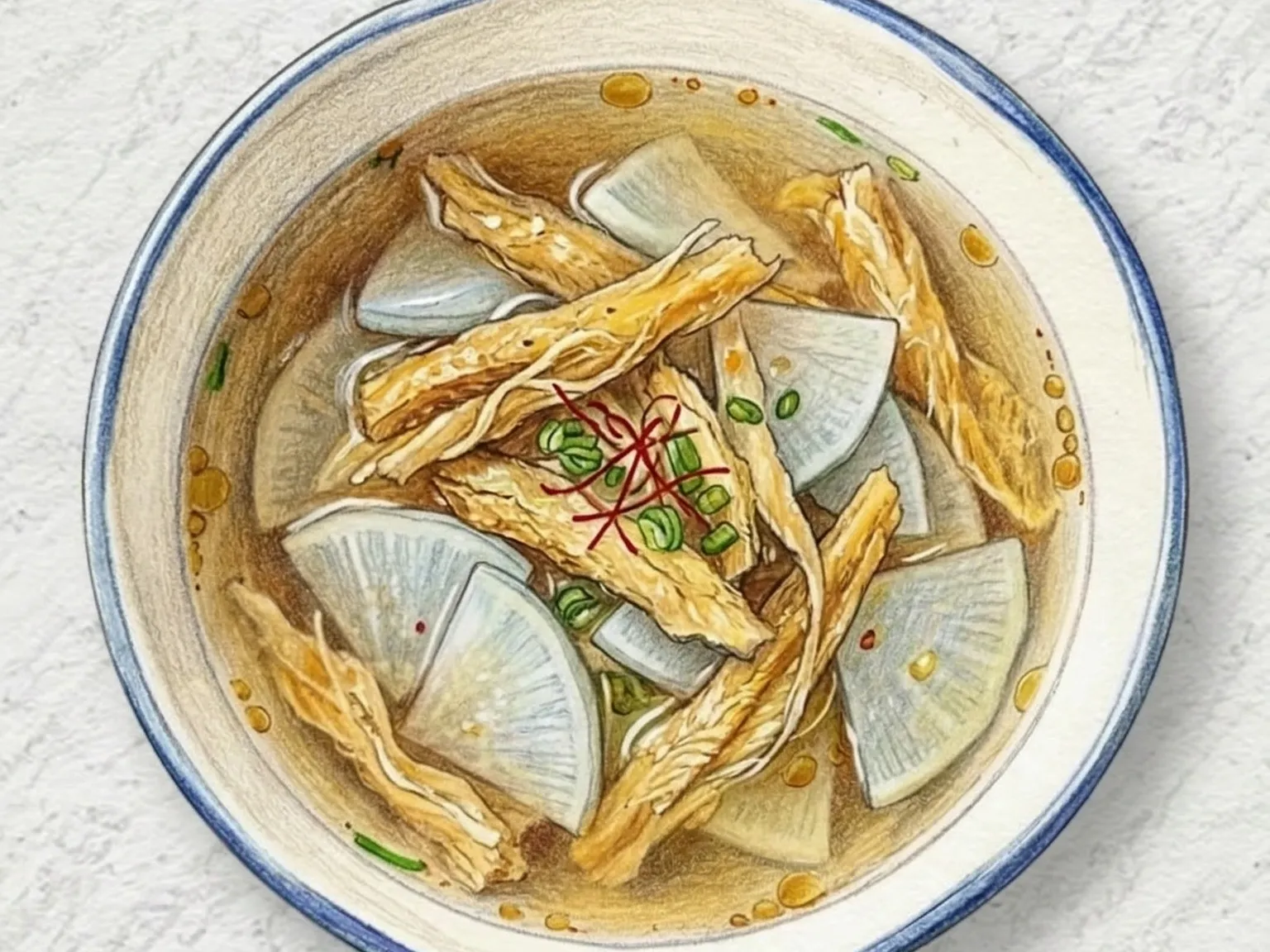
Hwangtae-muguk is an everyday Korean soup made with dried pollock strips and radish in a clean, clear broth. The pollock is first sautéed in sesame oil to coax out its characteristically nutty, savory fragrance, then water is added and the radish simmers until soft and sweet. Soup soy sauce and minced garlic provide the only additional seasoning, keeping the flavor profile transparent enough to let the pollock's concentrated umami and the radish's natural sweetness take center stage. The simplicity of the ingredient list belies the depth of the resulting broth, which tastes fuller than the sum of its parts. It is among the most frequently cooked soups in Korean homes, appearing on breakfast tables and as a reliable remedy on mornings after heavy meals.
Adjust Servings
Instructions
- 1
Rinse dried pollock briefly and squeeze out excess water.
- 2
Thinly slice radish and chop green onion.
- 3
Stir-fry pollock in sesame oil for 1 minute.
- 4
Add radish and water, then simmer for 12 minutes.
- 5
Add soy sauce, garlic, and green onion, then cook 3 more minutes.
As an Amazon Associate, we may earn from qualifying purchases.
Tips
Nutrition (per serving)
More Recipes

Korean Dried Pollock Potato Soup
Hwangtae-gamja-guk is a clear Korean soup that combines dried pollock strips with potato and radish in a gently savory broth. The cooking starts by sautéing the dried pollock in sesame oil, which draws out a toasty, nutty aroma that infuses the entire pot. Potato slices soften as they simmer and begin to break down at the edges, lending the broth a slight body without making it heavy. Radish contributes a clean, cooling sweetness that balances the pollock's concentrated umami. Soup soy sauce and garlic round out the seasoning. The dried pollock itself retains a pleasant chewiness even after simmering, providing a textural anchor in an otherwise smooth bowl. This soup is a common morning staple in Korean households, valued for being filling yet gentle on the stomach.

Korean Clear Puffer Fish Soup
Cleaned puffer fish is simmered with Korean radish and water dropwort in a clear broth that highlights the fish's clean, delicate flavor. The radish goes in first to build a sweet base, and the puffer fish cooks for ten minutes to release its protein-rich, low-fat essence into the stock. Water dropwort added at the very end provides a fresh herbal lift, and only professionally prepared, food-safe puffer fish should ever be used.

Korean Gangwon-Style Dried Pollock Hangover Soup
This Gangwon-province version of dried pollock hangover soup starts by stir-frying shredded dried pollock in sesame oil until it turns deeply fragrant and golden. That step is what sets it apart from other regions' pollock soups - the toasted sesame aroma permeates the entire broth and adds a richness that plain boiling cannot achieve. Radish simmers alongside, contributing a clean sweetness that tempers any fishiness. Garlic and soup soy sauce provide the savory foundation. Near the end, a beaten egg is swirled into the pot, forming soft, silky ribbons that give the clear broth a comforting body. The soup is intentionally mild and free of chili heat, designed to be gentle on an empty or troubled stomach. Koreans have relied on this kind of bugeo-guk for morning-after recovery for generations, and the Gangwon-style sesame preparation is considered one of the most satisfying versions.

Muguk (Korean Radish Anchovy Broth Soup)
Muguk is the most elemental expression of Korean soup - radish simmered in anchovy-kelp stock until the broth turns clear, sweet, and gently savory. The radish does nearly all the work: as it softens, its natural sugars and starch leach into the water, creating a broth that is mild yet far from bland. Seasoned with nothing more than soup soy sauce, garlic, and sliced green onion, muguk is the canvas upon which countless variations are painted. Add beef and it becomes sogogi-muguk; add dried pollock and it becomes hwangtae-muguk. On its own, it pairs with virtually any banchan because its flavor never competes. The soup's simplicity is also its practical advantage - a single radish, a handful of dried anchovies, and a strip of kelp are enough to produce a pot that feeds a family. Korean households return to muguk again and again precisely because it demands so little yet delivers a clean, warming comfort that few other dishes can match. It reheats without loss of quality and often improves overnight as the radish continues to soften and sweeten.

Korean Semi-Dried Pollock Radish Stew
Kodari mu jjigae stews 700g of semi-dried pollock with Korean radish in rice-rinse water, a traditional technique that adds a subtle starchy richness to the broth. The pollock's firm, chewy flesh holds up well during simmering and absorbs the gochujang and gochugaru seasoning deeply. Radish balances the heat with its natural sweetness as it softens in the spicy liquid. Cheongyang chilies add a final kick, making this a warming stew that pairs exceptionally with a bowl of hot rice.

Korean Dried Pollock Napa Stew
This stew pairs dried pollock strips with napa cabbage for a mild, comforting bowl built on clean flavors. The pollock releases a savory, slightly sweet depth into the broth as it rehydrates, while the cabbage softens and adds natural sweetness. Firm tofu and zucchini round out the ingredients, and a touch of perilla oil lends a nutty fragrance. Seasoned simply with soup soy sauce, it works well as a hangover remedy or a light weekday meal.