Korean Seasoned Dried Pollock Strips
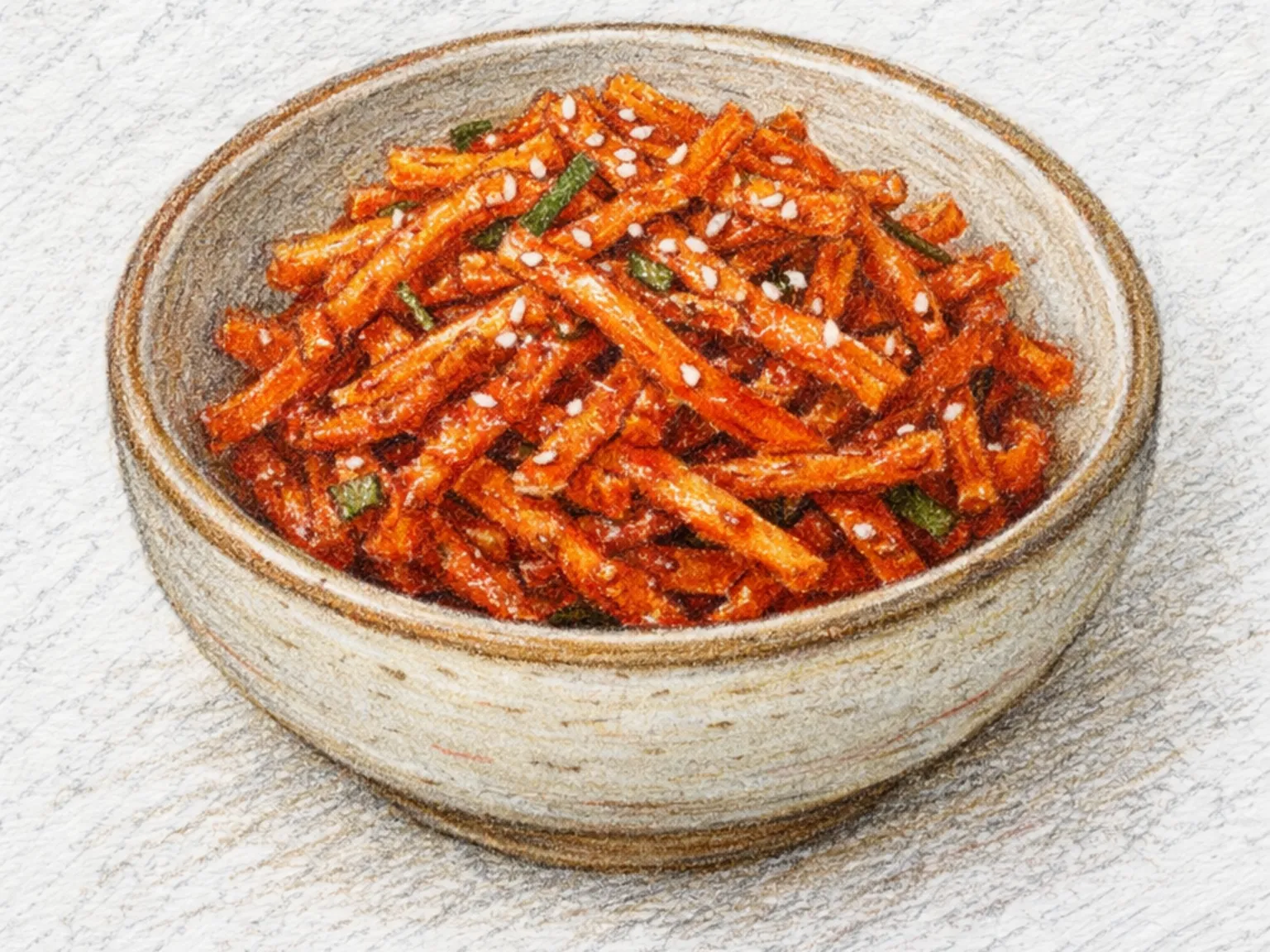
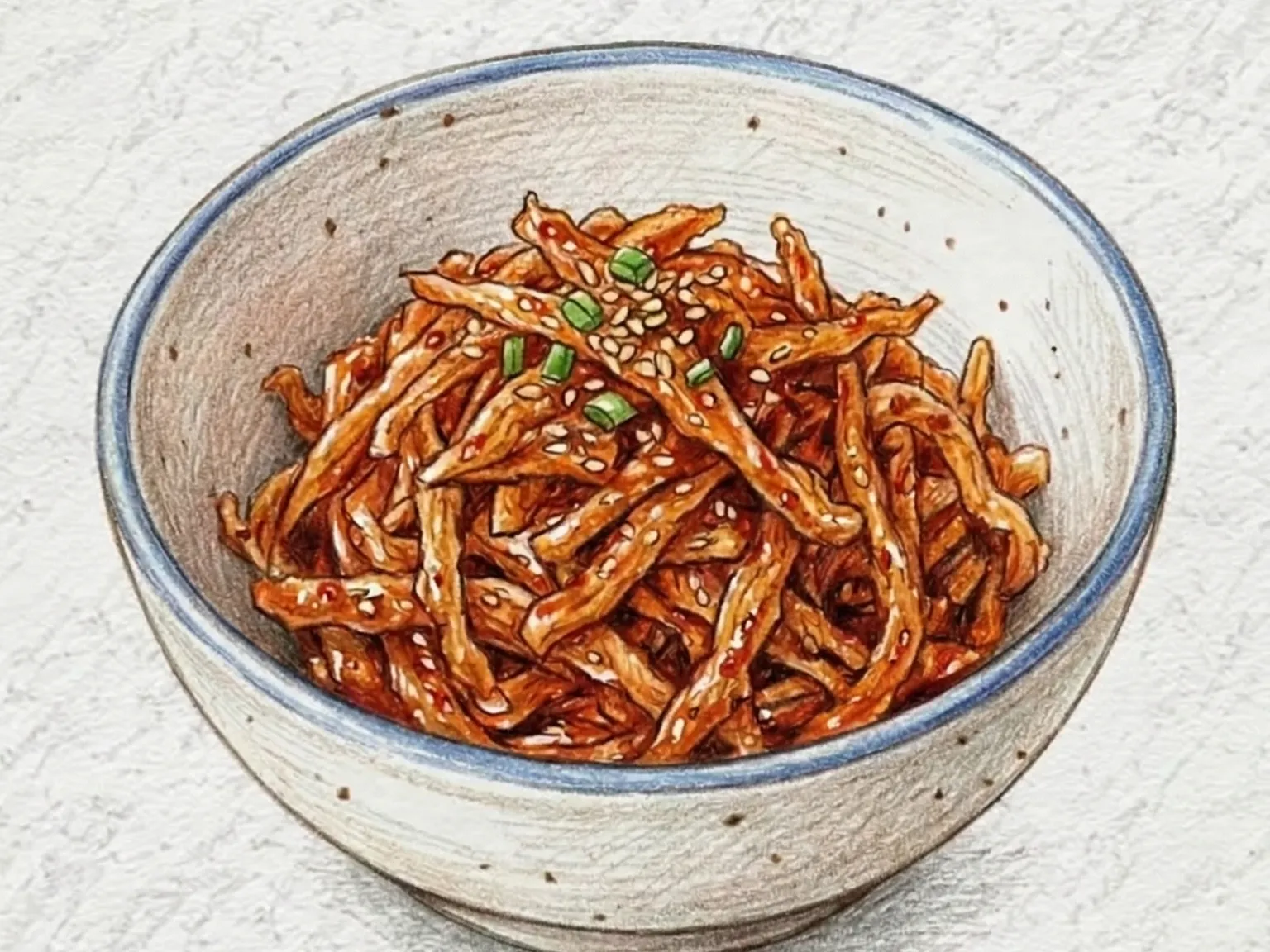
Hwangtaechae-muchim dresses shredded dried pollock strips in a no-cook gochujang sauce - sharing the same core ingredient as hwangtae-po jorim but taking a completely different approach. While the braised version simmers the strips in liquid for a moist finish, this muchim keeps them closer to their original dry state, preserving a chewy, almost jerky-like bite. If the strips are too stiff, a light mist of water followed by a two-minute rest softens them just enough without losing that chew. The dressing combines gochujang, gochugaru, oligosaccharide syrup, and vinegar into a sweet-sour-spicy trio that earns this dish its bap-doduk (rice thief) reputation. A small addition of mayonnaise coats the surfaces with a thin fat layer, preventing the rough texture that dried fish can have. Start to finish, this banchan takes under fifteen minutes.
Adjust Servings
Instructions
- 1
Cut dried pollock strips into bite-size lengths.
- 2
Mix gochujang, gochugaru, syrup, vinegar, and garlic.
- 3
Add pollock strips and toss to coat evenly.
- 4
Add sesame oil and toss once more.
- 5
Finish with sesame seeds.
As an Amazon Associate, we may earn from qualifying purchases.
Tips
Nutrition (per serving)
More Recipes

Korean Seasoned Dried Radish Strips
Mumallaengi-muchim dresses rehydrated dried radish strips in a gochujang-based sauce - a Korean preservation banchan rooted in the pre-refrigeration practice of slicing winter radish and air-drying it in cold winds. Dehydration concentrates the radish's natural sugars and transforms its texture from crisp to chewy, creating a ingredient with more depth than the fresh root. Soaking time determines the outcome: twenty minutes in cold water softens the strips enough to be pleasant while retaining the springy chew that is the whole point of using dried radish. Over-soaking produces a limp, waterlogged result indistinguishable from fresh radish. The dressing blends gochujang, gochugaru, vinegar, sugar, garlic, and sesame oil into a sweet-sour-spicy balance, with vinegar playing a particularly important role - it adds brightness to the dried radish's concentrated, earthy flavor. After mixing, a ten-minute rest allows the sauce to permeate the porous fibers evenly. Because the finished banchan contains almost no free moisture, it travels exceptionally well in lunchboxes and keeps refrigerated for over a week.

Korean Seasoned Dried Squid Strips
Jinmichae-muchim tosses dried shredded squid in a spicy-sweet sauce without any cooking - the no-heat approach preserves the chewy, almost jerky-like pull of the raw strands that stir-frying would soften. The dressing layers gochujang, gochugaru, and oligosaccharide syrup with one tablespoon of mayonnaise, which is the small detail that makes this version work: the mayo's emulsified fat coats each strand, preventing the dry roughness that plain-dressed squid can have against the palate. After mixing, a ten-minute rest lets the squid absorb the seasoning evenly. Because there is virtually no liquid in the finished dish, it travels well in lunchboxes without bleeding into neighboring banchan. Heat level is adjustable by dialing gochugaru up or down, and the whole process takes about fifteen minutes.

Korean Seasoned Salted Pollock Stomach
Changnanjeot - salt-fermented pollock stomach - belongs to Korea's jeotgal tradition, where seafood organs are brined for months until they develop intense umami. The stomach lining has a firm, slightly rubbery chew distinct from softer jeotgal like salted shrimp. Drained of excess brine and dressed with gochugaru, garlic, scallion, and sugar, it becomes a high-impact condiment banchan. A thumbnail-sized piece on rice delivers a concentrated burst of fermented marine salt and chili heat.

Korean Stir-fried Dried Pollock Strips
Hwangtae-chae-bokkeum is a Korean side dish of shredded dried pollock strips soaked until soft, then stir-fried in a gochujang, oligosaccharide syrup, and soy sauce glaze. The pollock absorbs the seasoning as it cooks, turning chewy and moist with a balanced spicy-sweet coating. Once prepared, it keeps well in the refrigerator for several days, making it a practical banchan to have on hand. It works equally well in lunchboxes and as a casual snack with drinks.

Korean Spicy Seasoned Deodeok
Deodeok - Codonopsis lanceolata - is a mountain root used in Korean cooking and folk medicine for centuries. Its flesh is fibrous and sticky, with a ginseng-like bitterness. Peeled and pounded with a mallet to split fibers into ribbon-like shreds, then soaked in cold water to draw out bitterness. A gochujang-vinegar dressing with garlic, sugar, and gochugaru clings to each strand's rough surface. The finished dish is chewy and resinous, with a sweet-sour-spicy glaze.

Korean Spicy Braised Tofu
Spicy dubu-jorim pan-sears firm tofu slabs cut 1.5 centimeters thick until golden on both sides, then braises them in a sauce of soy sauce, gochugaru, garlic, and sugar. Searing first firms the tofu so it holds its shape through the eight-minute simmer, during which onion and green onion cook alongside in the reducing liquid. The chili flakes deliver a direct, persistent heat that penetrates the tofu as the sauce thickens, balanced by the sugar's sweetness. A final circle of sesame oil ties the flavors together with a roasted, nutty aroma.