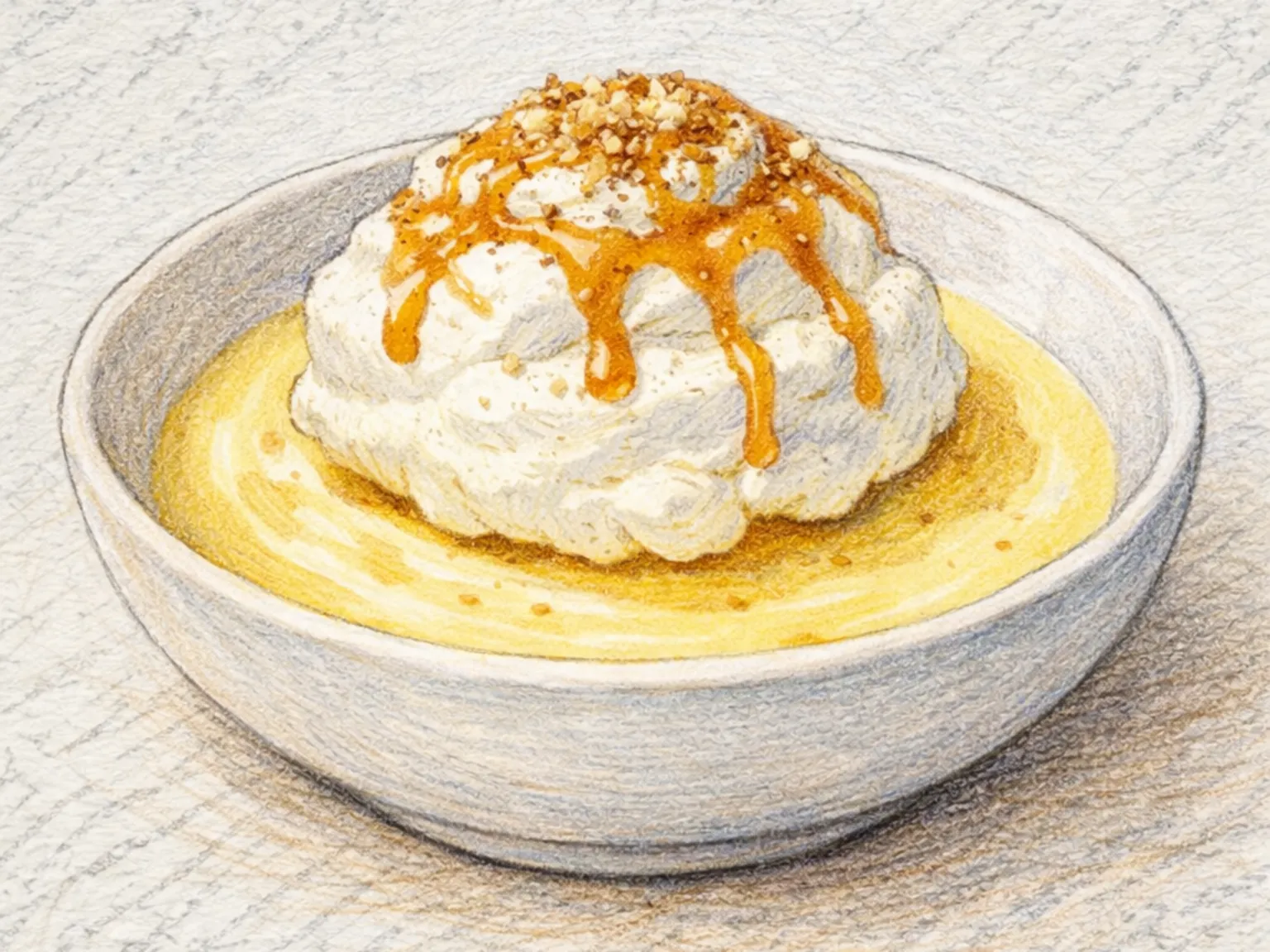
Ile Flottante (Poached Meringue on Vanilla Custard)
Quick answer
Ile flottante presents a cloud of poached meringue floating on a pool of chilled vanilla custard sauce.
What makes this special
- Ile Flottante consists of soft meringue clouds poached in milk over chilled vanilla custard.
- Meringue poached in hot milk 1 minute per side for cloud texture
- Crème anglaise held at 82-84°C to cook without curdling
Key ingredients
Core cooking flow
- 1 Pour 450 ml milk into a saucepan and warm it over medium-low heat until it steams.
- 2 Whisk 4 egg yolks with part of the sugar until the color lightens.
- 3 Return the mixture to the saucepan and cook over low heat, stirring constantly, until it reaches 82-84C.
Ile flottante presents a cloud of poached meringue floating on a pool of chilled vanilla custard sauce. Stiffly beaten egg whites are shaped into rounds and gently poached in hot milk, cooking just enough to set the exterior while the center remains airy and marshmallow-soft. The custard beneath is a creme anglaise made from egg yolks, sugar, milk, and vanilla bean, cooked slowly until it coats the back of a spoon with a silky consistency. The contrast between the weightless meringue and the rich, creamy sauce defines the eating experience: each spoonful combines something ethereal with something indulgent. Thin threads of caramel drizzled over the meringue just before serving add a brittle sweetness and a golden visual accent. Despite having only a handful of components, the dessert demands precision at every stage.
Instructions
Read the steps as a cooking flow: prep, heat, seasoning, doneness control, and finish.
- 1Control
Pour 450 ml milk into a saucepan and warm it over medium-low heat until it steams.
Lower the heat before it boils hard so the milk does not scorch or rise over the pan.
- 2Season
Whisk 4 egg yolks with part of the sugar until the color lightens.
Add the hot milk little by little while whisking constantly, so the yolks warm gradually instead of scrambling.
- 3Control
Return the mixture to the saucepan and cook over low heat, stirring constantly, until it reaches 82-84C.
When it lightly coats the back of a spoon, strain it and chill it until cold.
- 4Season
Place 4 egg whites in a clean bowl and whip until the foam looks fine and even.
Add the remaining sugar in portions and keep whipping until stiff, glossy peaks stand upright.
- 5Step
Immediately scoop the meringue with a large spoon and place it in the warm milk.
Keep the heat low and poach for 1 minute per side, just until the outside sets.
- 6Finish
Lift out the poached meringues and let excess milk drain off.
Spoon cold custard into bowls, float the meringues on top, drizzle with 2 tbsp caramel sauce, and serve right away.
After the steps
Pick a recipe that fits this dish.
Continue with shared ingredients, meal pairings, or a similar method.
Recipes That Go Well With This
More Baking →Based on shared ingredients and meal pairing
Clafoutis (French Baked Cherry Custard Dessert)
Clafoutis is a traditional French dessert from the Limousin region made by arranging fresh cherries in a buttered baking dish, then pouring over a thin batter of eggs, sugar, milk, and flour and baking at 180 degrees Celsius for thirty to thirty-five minutes. The batter is considerably thinner than pancake batter, and the result when baked is a texture that sits between a creamy custard and a light sponge -- the edges puff and turn golden while the center around the cherries stays moist and yielding. Using unpitted cherries is the traditional method: the pits release a faint almond scent during baking that perfumes the surrounding batter in a way that pitted fruit cannot replicate. The cherries also hold their shape better with the pits in. Vanilla extract deepens the egg-and-milk base, and the cherries' own tart juice seeps into the batter during baking, creating concentrated pockets of fruit flavor that balance the overall sweetness. Clafoutis is served directly from the baking dish, typically dusted with powdered sugar and brought to the table while still warm, because the custard texture softens and loosens slightly as it cools, making the warm version noticeably more appealing. Made with blueberries, plums, or apricots instead of cherries, the dessert takes a different name -- flaugnarde -- though the technique remains identical.
Flan Parisien (Parisian Vanilla Custard Tart)
Flan Parisien is a Parisian bakery staple found in nearly every boulangerie in the city. A buttery shortcrust pastry shell holds a thick, firm vanilla custard that bakes slowly until the top develops caramelized brown spots. The custard is made from milk, eggs, sugar, and cornstarch, which gives it a denser, sliceable consistency that distinguishes it from softer baked custards like creme brulee. When properly cooled, the filling holds its shape when cut yet melts smoothly on the tongue with a clean vanilla flavor. Vanilla bean seeds speckled throughout the custard signal that the real ingredient was used rather than extract. The pastry shell must be blind-baked first to prevent sogginess, then filled and baked again until set. It is served cold, and the contrast between the crisp, buttery shell and the cool, trembling custard makes each bite satisfying. Allowing the flan to cool fully at room temperature before refrigerating prevents the custard from cracking or collapsing when sliced, which is the most common mistake when cutting too soon after baking.
Chocolate Lava Cake
Chocolate lava cake bakes a batter of melted dark chocolate, butter, whole eggs, egg yolks, sugar, and a small measure of flour in buttered ramekins at 220 degrees Celsius for ten to twelve minutes, producing a set crust and molten center from a single brief baking window. The high oven temperature firms the outside and top of the batter into cake while the core stays liquid, so breaking the surface with a spoon releases a slow pour of concentrated warm chocolate. High-cacao dark chocolate provides a complex, bittersweet depth that pairs with the richness of butter fat, and vanilla extract softens and rounds the overall aroma. Timing controls everything in this recipe: overbaking by even two minutes sets the center solid and destroys the signature flow. The edges of each ramekin should feel just firm when pressed lightly through a towel at the ten-minute mark. Ramekins can be filled ahead and refrigerated, but the baking time then needs an extra one to two minutes to account for the colder starting temperature. Serving with a scoop of vanilla ice cream or a spoonful of cold heavy cream creates a striking contrast between the hot, dense chocolate interior and the chilled, lighter dairy.
Creme Brulee
Creme brulee is a French custard dessert made from just four components: egg yolks, heavy cream, sugar, and vanilla bean. Hot cream infused with vanilla seeds is tempered into beaten yolks and sugar, then poured into ramekins and baked in a water bath at low heat. The water bath moderates the temperature, preventing the custard from curdling or developing bubbles, yielding a surface as smooth as silk. After thorough chilling, a thin layer of sugar is sprinkled on top and caramelized with a torch until it forms a glassy, amber-colored crust. The ritual of cracking through that crust with a spoon is as integral to the experience as the flavor. Beneath lies cold, trembling custard that melts on the tongue, while the hot caramel introduces a bittersweet crunch.
Serve with this
Beet and Goat Cheese Salad
Beet and goat cheese salad begins with whole beets wrapped in foil and roasted at 200°C for forty-five to sixty minutes, long enough for their raw, earthy undertone to convert almost entirely into a concentrated, caramel-adjacent sweetness. Peeling the skins while the beets are still warm requires only the pressure of a paper towel - they slip off cleanly - and slicing them before they cool preserves the vivid crimson-purple cross-section that makes the dish visually striking. Crumbled goat cheese placed on the warm slices softens slightly, and its tangy acidity cuts through the dense sweetness of the roasted root rather than competing with it. Walnuts toasted briefly in a dry pan lose much of their raw bitterness, developing a nuttiness that bridges the mineral quality of the beet and the dairy sharpness of the cheese. Balsamic reduction does more than dress the plate: its concentrated sweet-tart intensity ties the separate components into a coherent whole. Arugula underneath the beet slices provides a peppery bitterness that sharpens the contrast against the sweetness, giving the salad a complexity well beyond what its short ingredient list suggests. A simple dressing of extra-virgin olive oil and lemon juice over the greens keeps the balance light and clear.
Sweet Chestnut Confection
Yulran is a traditional Korean chestnut confection that is prepared by boiling 300 grams of chestnuts in water for a duration of 20 minutes. Once the boiling process is complete, the chestnut flesh is removed from the shells and pressed through a fine sieve. This manual pressing continues until the texture becomes perfectly smooth. The purpose of using a sieve is to eliminate any grainy bits, which results in a chestnut paste with an even and velvety consistency. This puree is then kneaded together with a combination of honey and ground cinnamon. After the ingredients are thoroughly mixed, the paste is shaped into small, bite-sized rounds. The honey used in this recipe serves as both a source of moisture and a necessary adhesive. Its sticky property provides the strength required for the confection to hold its molded shape effectively without crumbling into pieces. Ground cinnamon is included to provide a warm spice note. This flavor is chosen because it complements the starchy and earthy sweetness of the chestnut rather than competing with the natural profile of the nut. Following the shaping process, each piece is rolled in ground pine nuts. This step coats the exterior in a mild nuttiness and introduces a subtle textural contrast against the smooth paste contained within. For a final visual touch, thin slices of jujube are placed on top as a garnish to provide a stroke of red color. The finished rounds are then placed in the refrigerator to chill for 15 minutes. This cooling period firms the surface of the paste just enough so that the confections can be picked up cleanly with the fingers without sticking to the skin. Historically, Yulran was a common fixture on the ceremonial and banquet tables of the Joseon court. It was valued for its clean and understated sweetness, which allows the natural flavor of the chestnut to remain the central focus.
Korean Butter-Grilled Scallops
Garibi butter-gui sears fresh scallops in garlic butter until each side develops a deep golden-brown crust, then finishes with lemon juice and parsley to balance the richness. Removing every trace of surface moisture with paper towels before seasoning is the single most important step -- water on the surface of the scallop causes it to steam rather than sear, and no caramelized crust will form until that moisture has evaporated. Each side cooks for only one to two minutes at the highest heat the pan can sustain, leaving the center just barely opaque and the texture tender rather than rubbery. After flipping, butter and minced garlic are added directly to the hot pan and spooned continuously over the scallops so the aroma infuses the surface. A squeeze of lemon and a scatter of chopped parsley added just before removing from heat layers acidity and freshness over the butter richness. Simple to prepare and fast to cook, this dish appears regularly at home gatherings in Korea as a crowd-pleasing appetizer.
Similar recipes
Charlotte Russe (Ladyfinger Bavarian Cream Chilled Dessert)
Charlotte Russe is a chilled French dessert built around a mold lined with ladyfinger biscuits and filled with Bavarian cream. The cream base is a creme anglaise, a cooked custard of egg yolks, milk, and sugar, into which bloomed gelatin is stirred while warm. The mixture is cooled until it begins to thicken at the edges, then folded together with softly whipped cream before it can fully set. This timing matters: too early and the cream deflates the custard, too late and the gelatin seizes before the mousse can be poured. Ladyfingers are arranged vertically around the interior of the mold, their sugar-dusted side facing outward. As the mousse sets over several hours in the refrigerator, the biscuits absorb moisture from the inside and soften while their exterior stays dry. Unmolding reveals a neat cylinder of pale biscuit encasing smooth, ivory mousse. The dessert stands on its own, but a raspberry or strawberry coulis poured alongside adds bright acidity that cuts through the fat and brings the sweetness into balance.
Chocolate Souffle
Chocolate souffle folds stiffly beaten egg white meringue into a base of melted dark chocolate and egg yolks, then bakes it in a buttered ramekin at high heat until it rises dramatically above the rim. The intense oven heat expands the air trapped within the meringue, pushing the souffle upward while the exterior sets into a thin, delicate crust and the interior remains a molten, near-liquid chocolate cream. Breaking through the top with a spoon releases a rush of hot, intensely flavored chocolate from inside, and that moment of opening is the point of the entire dessert. The souffle begins to deflate within a minute or two of leaving the oven, so it must go directly to the table without delay. Coating the inside of the ramekin with butter followed by sugar is not optional: this surface preparation gives the batter traction to climb straight upward rather than sticking to the sides and collapsing unevenly. Using chocolate with a high cocoa content produces a deeper, more defined contrast between bitterness and sweetness. The most critical technical step is folding the meringue into the chocolate base using broad, circular motions with a spatula and a minimum number of strokes, because overmixing deflates the air bubbles that are responsible for the rise. Serve dusted with powdered sugar or alongside a scoop of vanilla ice cream.
Lobster Bisque
Lobster bisque serves as a foundational dish within the French culinary tradition, specifically categorized as a smooth cream soup based on crustacean shells. The preparation begins by roasting the lobster shells in butter until they reach a dark, saturated color, a step that develops the base flavors of the dish. This is followed by a flambe process using cognac, which serves to eliminate any lingering bitterness from the shells while introducing a layer of smoky depth to the mixture. Once the shells are prepared, they are placed in a pot with fish stock, whole tomatoes, and a selection of aromatic vegetables to simmer for a minimum of thirty minutes. This extended simmering time allows for the maximum extraction of flavor from the lobster shells into the surrounding liquid. After the simmering process is complete, the mixture is passed through a fine sieve to remove all solid fragments and ensure a uniform consistency. The resulting broth is then combined with heavy cream, which provides a thick and velvety texture that characterizes the final soup. Fresh tarragon is incorporated to provide an herbal element that balances the concentrated richness of the cream and seafood. The lobster meat, which was set aside earlier in the process, is stirred into the hot liquid at the final stage of preparation to ensure that its texture remains tender and does not become tough. The final result is a soup that features a concentrated essence of the ocean and represents one of the most technical and polished preparations found in French cooking.