Imja-sutang (Royal Chilled Pine Nut Soup)
Soups Hard

Imja-sutang (Royal Chilled Pine Nut Soup)

Quick answer

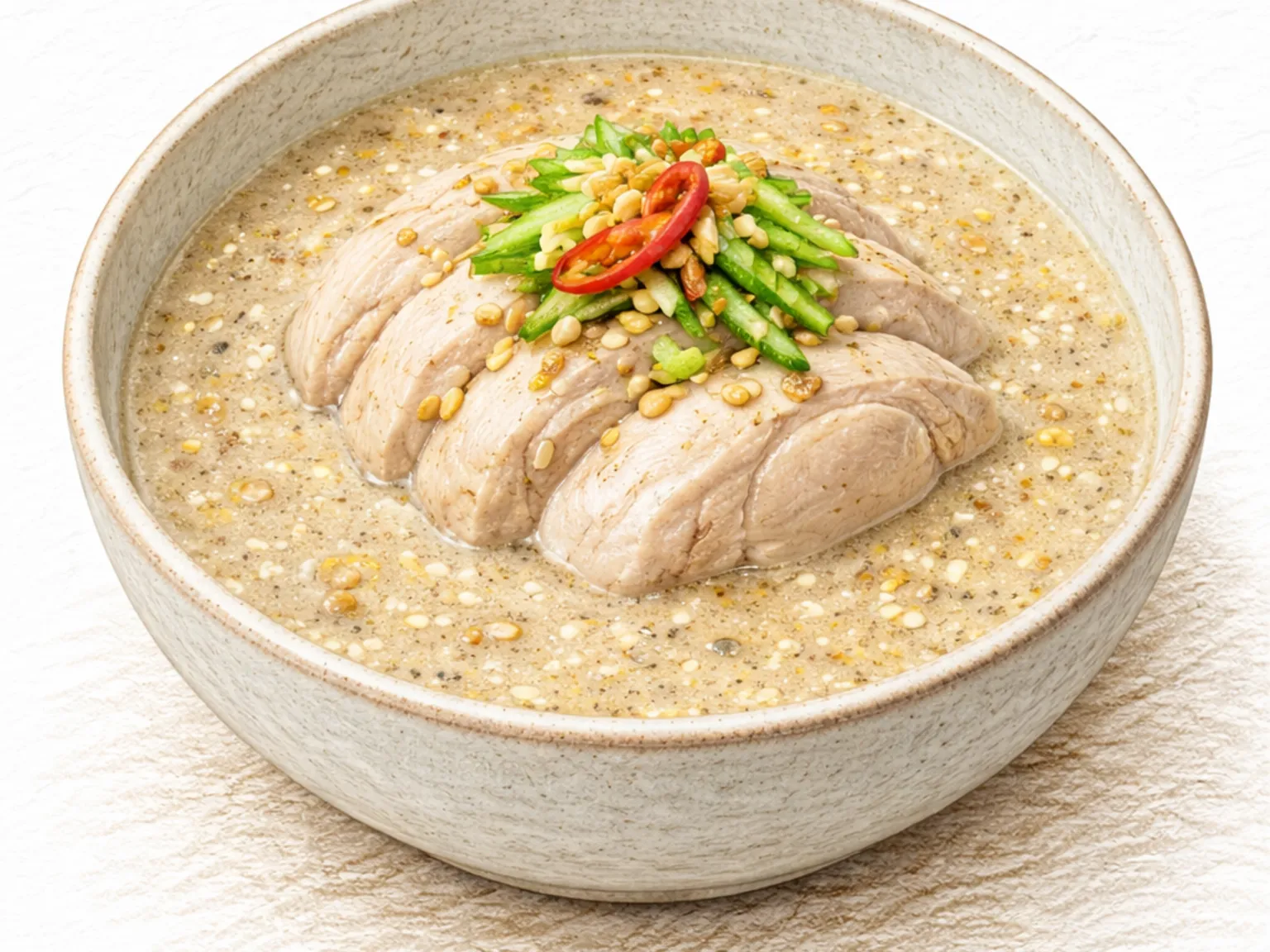
Imja-sutang is a royal Korean chilled soup that combines finely ground pine nuts and sesame seeds with chicken broth to create an opaque, creamy liquid of remarkable richness.

What makes this special

  • Imja-sutang serves a royal chilled soup made with finely ground pine nuts and sesame seeds.
  • Blended pine nuts and sesame create a milky opaque nut broth
  • Joseon royal banquet dish; served chilled with hand-torn chicken
Total time
60 min
Level
Hard
Servings
2 servings
Ingredients
7
Calories
410 kcal
Protein
35 g

Key ingredients

chicken breastpine nutssesame seedsmilkwater

Core cooking flow

  1. 1 Place 350 g chicken breast in 700 ml water and bring it to a boil over medium heat.
  2. 2 Lift out the chicken and let it cool for about 10 minutes, then shred it finely along the grain.
  3. 3 Put 40 g pine nuts and 2 tablespoons sesame seeds in a dry pan.

Imja-sutang is a royal Korean chilled soup that combines finely ground pine nuts and sesame seeds with chicken broth to create an opaque, creamy liquid of remarkable richness. The nut paste is blended with cooled chicken stock and a touch of milk until smooth, producing a porridge-like consistency that coats the palate with a gentle, lingering nuttiness. Poached chicken breast is shredded along the grain and submerged in the broth, and thin slices of cucumber are sometimes added for a cool, crisp contrast. The soup is traditionally served cold or at room temperature, making it especially refreshing in summer. Seasoning is minimal - just salt - because the natural oils in the pine nuts and sesame provide all the depth the dish needs. Imja-sutang traces its origins to Joseon dynasty court cuisine, where it was prepared for royal banquets, and it retains an air of elegance that elevates any table it appears on.

Prep 25min Cook 35min 2 servings
Recipes by ingredient → chicken breast milk cucumber

Instructions

Read the steps as a cooking flow: prep, heat, seasoning, doneness control, and finish.

6 steps
  1. 1
    Control

    Place 350 g chicken breast in 700 ml water and bring it to a boil over medium heat.

    Once boiling, lower the heat and poach for 12 to 15 minutes until the center is fully cooked.

  2. 2
    Heat

    Lift out the chicken and let it cool for about 10 minutes, then shred it finely along the grain.

    Skim any foam from the cooking liquid, cool it completely, and keep it as the broth.

  3. 3
    Control

    Put 40 g pine nuts and 2 tablespoons sesame seeds in a dry pan.

    Toast over low heat for 2 to 3 minutes, shaking often, and stop before they darken once a nutty aroma rises.

  4. 4
    Prep

    Blend the toasted pine nuts and sesame seeds with 200 ml milk, adding the cooled broth in portions.

    Run the blender long enough for the mixture to turn pale, creamy, and thick without visible coarse bits.

  5. 5
    Finish

    For a silkier soup, pass the blended liquid through a sieve once.

    Add the 1 teaspoon salt gradually, tasting as you go, and season slightly more firmly if the soup will be served cold.

  6. 6
    Finish

    Place the shredded chicken in serving bowls and pour the nut broth over it.

    Cut 80 g cucumber into fine strips, add it on top for crunch, and serve immediately while cold or at room temperature.

After the steps

Pick a recipe that fits this dish.

Continue with shared ingredients, meal pairings, or a similar method.

Recipes That Go Well With This

More Soups →

Based on shared ingredients and meal pairing

Korean Cold Vinegar Mustard Chicken Soup
Shared ingredient: chicken breast Soups

Korean Cold Vinegar Mustard Chicken Soup

Chogye-tang is a chilled Korean chicken soup where boiled, shredded breast meat sits in an ice-cold broth sharpened with rice vinegar and hot mustard paste. The broth must be thoroughly refrigerated before seasoning and serving - at a warm temperature the mustard loses its sharp bite and the vinegar's acidity becomes dull, collapsing the defining tang that makes the dish what it is. Shredding the chicken along its grain rather than chopping it allows the cold, pungent broth to soak into every fiber rather than sitting on the surface of the meat. Julienned cucumber layered on top provides a crisp, cooling contrast to the shredded meat. The flavor logic mirrors that of Pyongyang-style cold noodles - sour, spicy, and bracingly cold - but replaces starch with lean protein, making it a lighter and more protein-forward meal. Historically associated with royal court cuisine as a restorative summer dish, it continues to be eaten in the same cold format during the hottest months.

Chogye Guksu (Korean Cold Chicken Noodles)
Shared ingredient: chicken breast Noodles

Chogye Guksu (Korean Cold Chicken Noodles)

Shredded poached chicken and julienned cucumber top thin wheat noodles served in an icy mustard-vinegar chicken broth. The broth starts as a clear, clean chicken stock, then gains its defining sharpness from dissolved mustard powder and rice vinegar, delivering a nasal tingle and bright acidity that revive the appetite on sweltering days. The chicken, torn along the grain into thin strips, adds lean protein without weight, while sliced Korean pear contributes a crisp, mildly sweet counterpoint that keeps the bowl from feeling heavy. Mustard heat flares briefly on the palate and fades quickly, leaving behind the savory clarity of well-made stock. Keeping the broth thoroughly chilled through service is essential: it prevents the noodles from softening and preserves the contrast that defines this dish. Floating a few ice cubes in the bowl ensures the temperature holds from the first chopstickful to the last.

Korean Cockle & Water Parsley Mixed Rice
Serve together Rice

Korean Cockle & Water Parsley Mixed Rice

Kkomak-minari bibimbap is a seasonal rice bowl that comes together when cockles are at their peak in early spring, pairing the ocean sweetness of briefly blanched cockle meat with the clean, grassy sharpness of raw water parsley (minari). The cockle meat is rinsed in light salt water to remove any residual sand, then blanched for no more than thirty seconds in boiling water so the flesh stays springy rather than contracting into a rubbery texture. Julienned carrot and zucchini are each stir-fried separately, controlling moisture and flavor independently, then set aside to cool before assembly. A bowl of well-steamed rice is layered with the blanched cockles, the sauteed vegetables, and the raw minari placed on top last to protect its volatile fragrance from the heat below. A bibimbap sauce made from gochujang, sesame oil, minced garlic, and a touch of vinegar ties everything together when mixed, balancing the briny umami of the cockles against the brightness of the parsley. Sesame oil and toasted sesame seeds added at the end round the flavors and give the bowl a warm, nutty finish.

Korean Perilla Chicken Soup
Similar recipe Soups

Korean Perilla Chicken Soup

Deulkkae samgye-guk is a perilla-enriched Korean chicken soup that delivers the warming, restorative depth of samgyetang with a considerably simpler preparation -- no glutinous rice to stuff, no ginseng required, just chicken pieces and perilla seed powder. The chicken is cut into large pieces and placed in cold water from the start, then simmered for forty minutes so the collagen and flavor compounds dissolve gradually into the broth, turning it milky and full-bodied. Perilla powder must be pre-dissolved in a small cup of water before being stirred in -- adding it dry causes it to clump -- and ten more minutes of gentle simmering allows its oils to emulsify fully into the chicken stock, creating a broth with a smooth, nutty coating on every sip. Seasoning with only soup soy sauce and salt lets the natural savoriness of the chicken and the distinctive fragrance of perilla come through without distraction. Rich in the omega-3 fatty acids of perilla seed and the protein of chicken, this soup is eaten as a restorative meal during hot summers and whenever energy levels drop.

Serve with this

Korean Beef & Shiitake Japchae
Side dishes Medium

Korean Beef & Shiitake Japchae

Japchae originated as a Joseon royal court dish of stir-fried vegetables before sweet potato glass noodles were added to create the form recognized today. This version pairs glass noodles with soy-marinated beef and sliced shiitake mushrooms. Each component cooks separately: beef and mushrooms stir-fried with garlic, spinach blanched and squeezed dry, carrots and onions sauteed until just tender. A final toss with sesame oil brings everything together. The noodles should be translucent and springy, carrying a sweet-salty soy glaze into each forkful. A standard presence on every Korean holiday table at Chuseok, Seollal, and birthday celebrations alike.

🏠 Everyday 🎉 Special Occasion
Prep 20min Cook 18min 4 servings
Korean Stuffed Perilla Leaf Pancakes
Pancakes Medium

Korean Stuffed Perilla Leaf Pancakes

Kkae-ip-jeon are pan-fried perilla leaf parcels stuffed with a filling of ground pork and firm tofu, coated in flour and egg. The tofu must be squeezed dry in a cloth before mixing; excess moisture causes the filling to spread and stick to the pan. Garlic chives and onion add crunch and fragrance to the mix, and the filling seasoned with soy sauce and black pepper pairs cleanly with the perilla's strong herbal character. Dusting with flour first, then dipping in egg, produces an even coating, and frying covered over medium-low heat for two minutes per side ensures the filling is cooked through to the center. The bite-sized pieces work well as a packed lunch side or as bar food.

🍺 Bar Snacks 🎉 Special Occasion
Prep 22min Cook 12min 2 servings
Korean Pickled Bok Choy (Soy Vinegar Chili Brine)
Kimchi Easy

Korean Pickled Bok Choy (Soy Vinegar Chili Brine)

Cheonggyeongchae jangajji is a Korean pickled bok choy made by halving the heads and submerging them in a boiled brine of soy sauce, vinegar, and sugar with Cheongyang chili, garlic, and ginger. The thick white stems retain their crunch after pickling while the tender green leaves absorb the brine softly, creating two contrasting textures within a single piece. Cheongyang chili leaves a clean, lingering heat at the finish, and ginger contributes a warm undertone to the pickling liquid. Draining the bok choy thoroughly before pickling keeps the brine clear, and after two days of refrigeration the seasoning penetrates evenly throughout for a well-balanced banchan. Pouring the brine over the bok choy only after it has cooled prevents the leaves from softening too much. The spent brine can be reboiled and reused to pickle tofu or daikon, extending its value beyond the first batch.

🥗 Light & Healthy 🍱 Lunchbox
Prep 20min Cook 8min 4 servings

Similar recipes

Korean Boiled Chicken Soup
Soups Medium

Korean Boiled Chicken Soup

Dak-baeksuk is a Korean whole-chicken soup simmered for over fifty minutes with whole garlic cloves, jujubes, green onion, and ginger in a large pot of water until the broth runs clear and deeply flavored. Skimming fat and foam throughout the cooking process is essential for the signature clarity of the broth. Neglecting this step leaves the soup greasy and cloudy when reheated the next day. The jujubes contribute a subtle sweetness and the garlic, softened to near-paste after the long simmer, dissolves into the liquid to create a mellow depth that needs nothing more than salt and pepper to taste complete. The chicken is shredded against the grain for the softest possible texture, then returned to the hot broth so every bite of meat is saturated with the clean, aromatic stock. Unlike samgyetang, dak-baeksuk skips ginseng, making it simpler to prepare while remaining a staple restorative meal eaten during Korea's hottest summer days.

🏠 Everyday
Prep 20min Cook 70min 4 servings
Korean Astragalus Chicken Soup
Soups Medium

Korean Astragalus Chicken Soup

Hwanggi-dak-tang is a Korean herbal chicken soup built around astragalus root, a staple of traditional East Asian medicine long valued for its restorative and immune-supporting properties. The dried root, known in Korean as hwanggi, carries a faintly sweet, earthy flavor that is subtle enough to complement rather than dominate the broth. A whole chicken simmers for well over an hour with the dried root, jujubes, and garlic, producing a clear yet full-bodied liquid with a gentle herbal undertone that deepens as the pot reduces. The extended cooking dissolves collagen from the skin, cartilage, and joints, giving the broth a velvety weight that coats the palate without turning cloudy. The chicken meat, by the time the soup is ready, pulls apart with almost no resistance. Jujubes gradually soften into the broth over the long cooking time and add a subtle fruity sweetness that bridges the medicinal and culinary aspects of the dish without making it taste overtly medicinal. Seasoning is kept to salt alone so the herb-infused stock remains the focus. In Korea, this soup appears most often during the seasonal transitions of early summer and late autumn, or during recovery from illness, typically served steaming in a heavy stone pot.

🏠 Everyday
Prep 15min Cook 75min 4 servings
Royal Korean Hot Pot (Court-Style Beef & Tofu Banquet)
Stews Hard

Royal Korean Hot Pot (Court-Style Beef & Tofu Banquet)

Sinseollo is a traditional Korean royal court hot pot featuring ground beef, tofu, shiitake mushrooms, carrot, and napa cabbage arranged in a rich beef broth. Seasoned with soup soy sauce and finished with beaten egg, the broth develops a velvety body. Historically served in a brass charcoal-heated vessel at the royal table, each ingredient is placed with care to showcase its color and shape. The layered umami from the diverse ingredients creates a remarkably complex flavor. Adding seasoning in stages makes it easier to adjust saltiness, sweetness, and heat without covering the base ingredients.

🎉 Special Occasion 🥗 Light & Healthy
Prep 45min Cook 30min 4 servings

Tips

Strain once for an extra silky texture.
Season slightly stronger if serving cold.

Nutrition (per serving)

Calories
410
kcal
Protein
35
g
Carbs
9
g
Fat
26
g