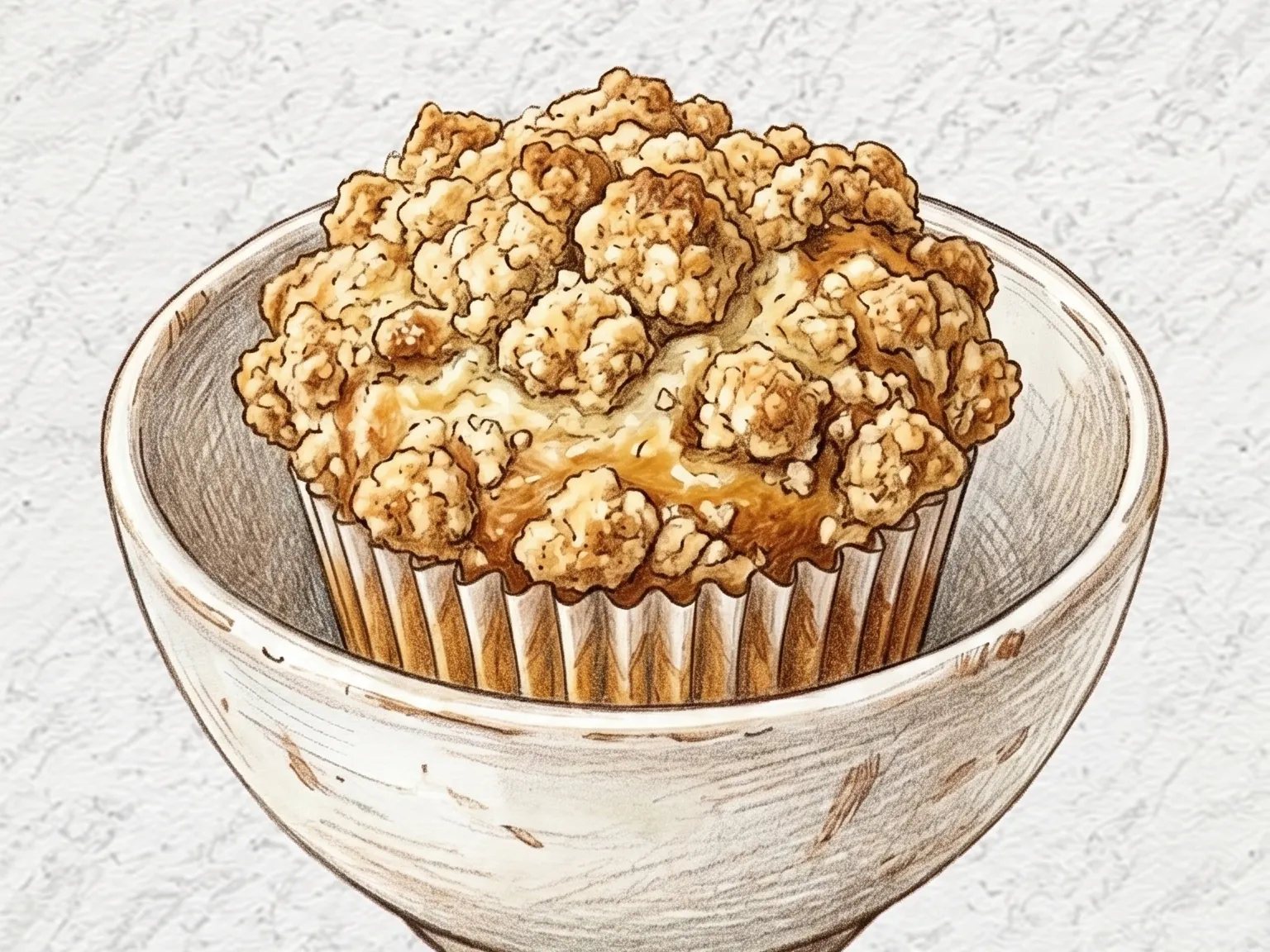
Injeolmi Crumble Muffins (Roasted Soybean Crumble Top)
Roasted soybean powder, the same coating used on injeolmi rice cakes, flavors both the muffin batter and the crumble topping in this Korean-inspired bake. The batter is soft and moist with a mild nuttiness throughout, while the crumble on top bakes into crunchy, sandy clusters that shatter when bitten. Together they create a textural contrast between the pillow-soft interior and the crisp crown. The flavor profile is warm and toasty, reminiscent of roasted grains, and pairs well with grain lattes or misutgaru drinks that share the same family of flavors. Sweetness is kept moderate, making these appropriate as an after-school snack for children. Each muffin fills the kitchen with a roasted, almost popcorn-like aroma while baking.
Adjust Servings
Instructions
- 1
Preheat oven to 180C and line a muffin tin.
- 2
Combine dry ingredients in one bowl; whisk egg, milk, and oil in another.
- 3
Add wet mix to dry and stir just until no dry pockets remain.
- 4
Fold in soybean powder and mochi cubes, then fill cups to 80%.
- 5
Top with extra soybean powder, bake 20-22 minutes, and cool fully.
As an Amazon Associate, we may earn from qualifying purchases.
Tips
Nutrition (per serving)
More Recipes

Injeolmi Scone (Soybean Powder & Rice Cake Scone)
This scone folds roasted soybean powder and small pieces of glutinous rice cake into a classic British scone dough, capturing the flavor of Korean injeolmi in a handheld baked form. The soybean powder lends the crumb a warm, toasted nuttiness that plain flour cannot achieve, while the tteok bits soften in the oven and create chewy pockets scattered throughout. Keeping the butter cold and cutting it into the dry ingredients in small pieces ensures the scone develops flaky layers that crack open at the surface and stay tender inside. A light glaze of honey or a side of sweetened condensed milk echoes the traditional way injeolmi is enjoyed, reinforcing the sweet-nutty pairing. Served alongside warm tea, these scones make an appealing afternoon treat. The key technique is minimal mixing: overworking the dough develops too much gluten and produces a tough, dense result instead of the desired crumbly softness.

Injeolmi Crumble Cheesecake
This cheesecake merges the roasted soybean powder flavor of injeolmi, a beloved Korean rice cake, with a dense New York-style cream cheese base. Toasted soybean flour and glutinous rice powder are worked into the batter, adding a subtle nuttiness that builds with every bite. On top, a crumble made from the same soybean flour bakes until crisp, delivering a crunchy contrast to the smooth, fudgy interior. The result tastes distinctly Korean yet feels familiar to anyone who enjoys rich cheesecake. It pairs well with green tea or grain lattes, where the roasted notes echo and amplify each other. Chilling overnight lets the flavors meld and the texture firm to a satisfying density.

Injeolmi Mochi Brownies (Chewy Rice Flour Cocoa Bars)
Glutinous rice flour replaces wheat flour in these brownies, producing a chewy, mochi-like texture coated in roasted soybean powder for an injeolmi twist. The cocoa and brown sugar create a deep chocolate flavor while the rice flour gives the crumb an elastic, stretchy quality that regular brownies lack entirely. After baking, a generous coating of toasted soybean powder adds the signature nutty aroma of injeolmi rice cakes. The combination of chocolate and roasted soybean may sound unusual, but the flavors share a common toasty warmth that binds them together naturally. Eaten cold from the refrigerator, the chew becomes firmer and more pronounced. At room temperature, the brownie softens and stretches, offering a completely different mouthfeel from the same recipe.

Omija Cream Cheese Muffins (Korean Schisandra Muffins)
Soft muffin batter is dotted with cubes of cream cheese and swirled with omija syrup, then baked until the tops dome and crack. The cream cheese melts partially in the oven, creating dense, tangy pockets that contrast with the airy crumb around them. Omija - the Korean five-flavor berry - adds a layered tartness that goes beyond simple fruit sourness, carrying faint bitter, peppery, and salty undertones that make each bite more complex than a typical fruit muffin. The cream cheese smooths out the omija's sharper edges, acting as a rich buffer between the berry's intensity and the sweet batter. A final brush of omija syrup over the warm muffin tops deepens the pink color and reinforces the berry flavor on the crust, where it concentrates into a thin, tacky glaze.

Glutinous Rice Cake with Soybean Powder
Injeolmi is a Korean glutinous rice cake made by kneading rice flour dough with hot water, steaming it for fifteen minutes, then pounding or beating it vigorously for at least five minutes to develop maximum elasticity. The pounding step is critical: insufficient working produces a weak dough that cracks, while thorough pounding yields the signature stretchy, chewy pull. The finished dough is stretched out, cut into bite-sized pieces, and rolled in a mixture of roasted soybean powder and sugar, which coats each piece in a fragrant, toasted-bean aroma. Applying a thin layer of sesame oil to hands and knife prevents sticking during cutting, and the soybean powder coating is best applied right before serving to keep it dry and powdery.

Korean Street Egg Bread (Sweet Batter Muffin with Whole Egg)
Gyeran-ppang is a Korean street-style egg bread made by pouring a sweet batter of cake flour, baking powder, milk, and melted butter into a muffin mold, then cracking a whole egg on top before baking. A small amount of diced ham sits beneath the egg, adding a salty counterpoint to the sweet dough. Baking at 180 degrees Celsius for sixteen minutes yields a jammy yolk, while eighteen minutes produces a firmer set, letting the baker control doneness to taste. Vanilla extract in the batter tempers any eggy notes, and a sprinkle of parsley before the oven adds a faint herbal fragrance to the golden, puffy surface.