Jaecheop-guk (Korean Marsh Clam Clear Soup)
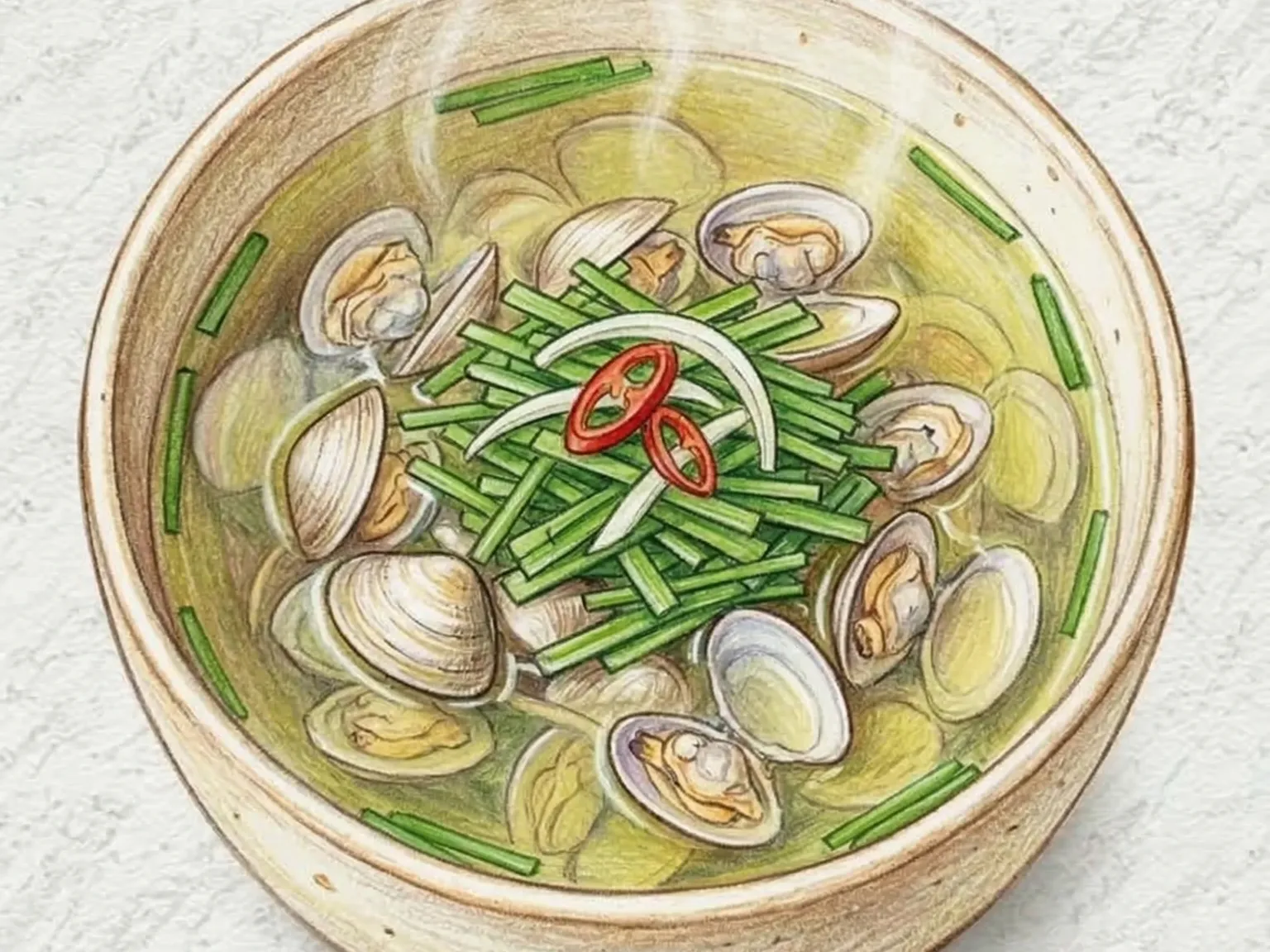
Crystal-clear broth, impossibly deep flavor - jaecheop-guk is Korea's prized marsh clam soup, a Hadong specialty worth traveling for. Tiny freshwater clams from the Seomjin River are purged in salted water, then simmered until they open and release their concentrated liquor into the broth. The result is a translucent soup with a remarkably clean umami - far more intense than the small size of the clams would suggest. Chopped chives are added at the end, their sharp green flavor lifting the broth with a bright finish. Soup soy sauce and garlic provide restrained seasoning. The soup has a long-standing reputation in Korea as one of the best hangover remedies, and in Hadong it is served in restaurants that specialize in nothing else, drawing visitors specifically for this one bowl.
Adjust Servings
Instructions
- 1
Soak the clams in salted water for 20 minutes, then rinse well several times.
- 2
Bring water to a boil, add clams, and cook until they open.
- 3
Skim foam from the surface to keep the broth clear.
- 4
Add minced garlic and soup soy sauce, then simmer for 3 minutes.
- 5
Add chives just before turning off the heat and season with salt.
As an Amazon Associate, we may earn from qualifying purchases.
Tips
Nutrition (per serving)
More Recipes

Korean White Clam Clear Soup
Baekhap jogae tang is a clear Korean soup built entirely on the flavor of hard clams simmered in water without additional stock. The clams are soaked in salt water until fully purged of sand, then placed in cold water and heated gradually; this slow temperature rise draws maximum flavor from the shells into the broth. Daikon radish simmers alongside, lending a cool sweetness that tempers the clams' saltiness. A tablespoon of cheongju (clear rice wine) is added to neutralize any briny off-notes and leave a clean finish. Garlic is used sparingly so it does not compete with the shellfish flavor, and scallion and red chili are added at the end for color and fragrance. Salt is kept minimal since the clam liquor itself provides ample seasoning. The soup's entire philosophy rests on a single ingredient doing all the heavy lifting: no anchovy, no kelp, just clams producing a broth that is simultaneously light and deeply flavored.

Haejangguk (Korean Pork Bone Hangover Soup)
Haejangguk is Korea's iconic hangover soup, a thick and fiery bowl designed to restore the body after a night of drinking. The base is a long-simmered pork spine broth that delivers a deep, porky richness. Napa cabbage outer leaves, called ugeoji, are seasoned with doenjang and garlic and added to the broth, contributing a chewy, fibrous texture. Congealed ox blood, known as seonji, is a traditional addition that lends an iron-rich density and dark visual contrast. Gochugaru provides a persistent, forehead-sweating heat that Koreans believe helps flush out toxins and clear the head. The finished soup is served bubbling in a stone pot, and the first few spoonfuls tend to produce an involuntary sigh of relief. Dedicated haejangguk restaurants open before dawn to serve construction workers and late-night revelers, and the dish has been a fixture of Korean culinary tradition for centuries.

Gomchi-guk (Eelpout Fish Radish Soup)
Gomchi-guk is an East Coast Korean fish soup made with eelpout, a soft-fleshed deep-sea fish rich in natural gelatin. The fish is cut into chunks and simmered with radish in plain water, producing a broth that is remarkably clean yet carries a gentle marine richness and a slightly viscous body from the dissolved collagen. Radish tames any fishiness and adds a refreshing sweetness, while a splash of cheongju rice wine helps eliminate residual off-notes. As the soup cooks, the eelpout flesh breaks apart and melds into the liquid, making the broth and the fish nearly inseparable. Garlic and green onion provide the finishing aromatics. This is a regional specialty of the Gangwon and North Gyeongsang coastal towns, where it is typically served bubbling in a stone pot during the winter months. For those who live far from the coast, frozen or dried eelpout can approximate the experience.

Korean Fish Soup (White Fish and Radish Clear Broth)
Saengseon-guk is a traditional Korean fish soup made with white-fleshed fish and radish in a clear broth. The radish simmers first, building a base of natural sweetness, before garlic and soup soy sauce are added for depth. The fish goes in once the radish is halfway cooked, and timing matters - it should cook only until the flesh turns opaque and begins to flake, as prolonged boiling would break it apart and cloud the broth. Tofu and sliced Korean chili peppers join near the end, adding soft texture and a mild kick. Green onion finishes the bowl with a fresh note. The result is a light, transparent soup where the fish's own clean, marine flavor does most of the work. It is the kind of straightforward home cooking that appears on Korean dinner tables throughout the year, requiring little more than fresh fish and basic pantry staples.

Korean Perilla Gamjatang (Nutty Perilla Pork Bone & Potato Stew)
This perilla-forward version of gamjatang uses a generous four tablespoons of perilla seed powder, coating the broth in a distinctly nutty richness. Pork backbone simmers into a heavy, collagen-laden stock, while potatoes and napa outer leaves soak up the flavors. Twelve perilla leaves add their herbal fragrance on top. A touch of doenjang deepens the umami, making this variation notably creamier and more aromatic than the standard recipe.

Korean Clam Kalguksu (Hand-Cut Noodles in Clam Broth)
Baekhap kalguksu is a Korean knife-cut noodle soup where the broth comes entirely from hard clams. Purged clams are simmered in water until they open, then removed while the broth is strained through cloth to catch any remaining grit. Thinly sliced daikon radish and Korean zucchini cook in the strained broth for five minutes, adding vegetal sweetness. The hand-cut noodles go in next and boil for six to seven minutes until they turn translucent; starch released from the noodles thickens the broth naturally into a lightly viscous consistency. Once the noodles are cooked, the reserved clam meat returns to the pot and the soup is seasoned with minced garlic and guk-ganjang. Adding onion deepens the broth's sweetness further. Because the base is clam liquor rather than the more common anchovy stock, the soup carries a distinctly marine character that infuses every strand of noodle, setting it apart from other kalguksu variations.