Korean Spicy Platter Noodles
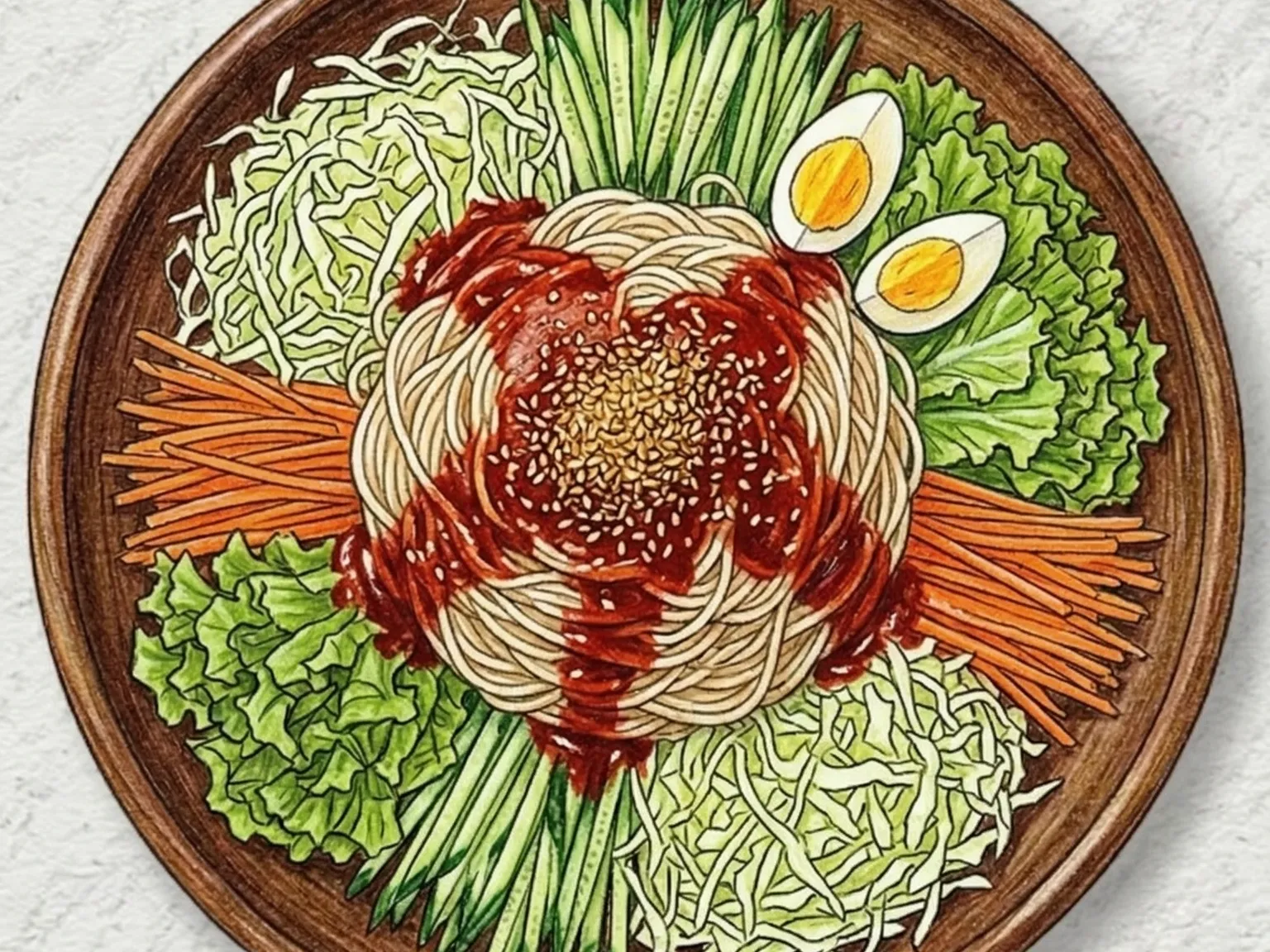
Jaengban-guksu is a large-platter noodle dish where boiled somyeon and an abundant pile of raw vegetables are tossed together in a spicy-tangy sauce. Shredded cabbage, cucumber, carrot, and lettuce supply a variety of fresh, crunchy textures, while the dressing - gochujang blended with vinegar, sugar, and soy sauce - hits sweet, sour, and spicy notes in quick succession. Sesame oil and toasted sesame seeds weave a nutty undertone that tempers the dressing's sharpness. Traditionally served on a wide tray for communal mixing, it is a sociable summer dish meant to be shared.
Adjust Servings
Instructions
- 1
Julienne cabbage, cucumber, carrot, and lettuce, soak briefly in cold water, then drain well.
- 2
Mix gochujang, vinegar, sugar, soy sauce, and sesame oil to make the dressing.
- 3
Boil somyeon for 3-4 minutes, rinse thoroughly in cold water, and drain completely.
- 4
In a large bowl, combine noodles and vegetables, then toss evenly with the dressing.
- 5
Plate on a wide platter and sprinkle sesame seeds on top.
- 6
Adjust with extra vinegar or gochujang if desired and serve immediately.
As an Amazon Associate, we may earn from qualifying purchases.
Tips
Nutrition (per serving)
More Recipes

Korean Spicy Pork Mixed Noodles
Jeyuk bibim-guksu tops cold mixed noodles with stir-fried spicy pork, combining two popular Korean dishes into one bowl. Pork shoulder is marinated in gochujang and gochugaru, then seared quickly so the edges caramelize while the inside stays moist. Shredded cabbage and onion provide a crisp contrast, and soy sauce with sugar balances the heat with savory sweetness. The temperature contrast between chilled somyeon and hot, sizzling pork creates a distinctive eating experience, finished with a drizzle of sesame oil for a nutty send-off.

Korean Spicy Mixed Wheat Noodles
Bibim guksu is a chilled Korean noodle dish in which boiled and cold-rinsed somyeon wheat noodles are tossed in a sauce of gochujang, chili flakes, plum syrup, vinegar, soy sauce, and sesame oil. The heat from the gochujang, the sweetness of plum syrup, and the brightness of vinegar layer together into a multi-dimensional flavor in every bite. Rinsing the noodles thoroughly in cold water removes excess starch, giving them a bouncy chew and allowing the sauce to cling evenly. Torn lettuce and julienned cucumber folded in at the end contribute crunch and moisture that loosen the thick sauce just enough. A tablespoon of noodle cooking water can thin the sauce if it feels too heavy.

Korean Spicy Noodles with Beef Pancake
Yukjeon bibim guksu pairs pan-fried beef pancakes with spicy-tangy dressed wheat noodles. Thin slices of lean beef round are patted dry, dusted with flour, dipped in beaten egg, and fried until golden on both sides. Removing moisture before coating is what gives the yukjeon its crisp exterior and keeps the egg layer from sliding off. The dressing combines gochujang, soy sauce, vinegar, sugar, and sesame oil into a sauce that balances heat with sweet-sour brightness. Somyeon noodles are boiled and rinsed multiple times in cold water to wash off excess starch, which keeps them springy and helps the dressing cling evenly. Shredded cucumber and lettuce add freshness and crunch against the warm, savory beef.

Korean Spicy Mixed Cold Noodles
Bibim naengmyeon is a spicy cold noodle dish made by tossing chewy naengmyeon noodles in a sauce of gochujang, chili flakes, vinegar, sugar, and sesame oil. The noodles' distinctively resilient, almost rubbery chew grips the bold sauce, creating an intensely textured eating experience. Rinsing the boiled noodles multiple times in cold water and draining them thoroughly is critical to prevent the sauce from becoming watery. Julienned cucumber and thinly sliced Korean pear cut through the heat with refreshing crunch and a mild fruity sweetness. A halved boiled egg placed on top offers a creamy counterpoint to the spice.

Korean Gochujang Bibim Udon Cup (Spicy Mixed Udon Cup)
Gochujang bibim udon cup is a cold-tossed udon dish served in a cup, dressed with a sauce of gochujang, soy sauce, oligosaccharide syrup, vinegar, and sesame oil. The fermented heat of gochujang meets the vinegar's acidity to create a tangy-spicy profile without harshness, while the syrup adds body that helps the sauce coat the thick udon strands evenly. Raw julienned cabbage and carrot are mixed in for textural crunch against the soft noodles. Cooling the noodles completely before tossing prevents the sauce from clumping, ensuring every strand is evenly seasoned.

Korean Buckwheat Noodle Salad
Buckwheat noodles are boiled and rinsed in cold water to lock in their earthy flavor and springy bite, then tossed with julienned cucumber, red cabbage, and carrot for color and crunch. The dressing builds on gochujang and vinegar for a spicy-sour backbone, with soy sauce and sesame oil adding savory depth underneath. Thorough rinsing removes surface starch so the noodles stay separate and the dressing coats each strand evenly. Served chilled, the salad works as a light standalone meal in warm weather, refreshing enough to stimulate appetite without weighing you down.