Korean Roasted Sword Bean Tea
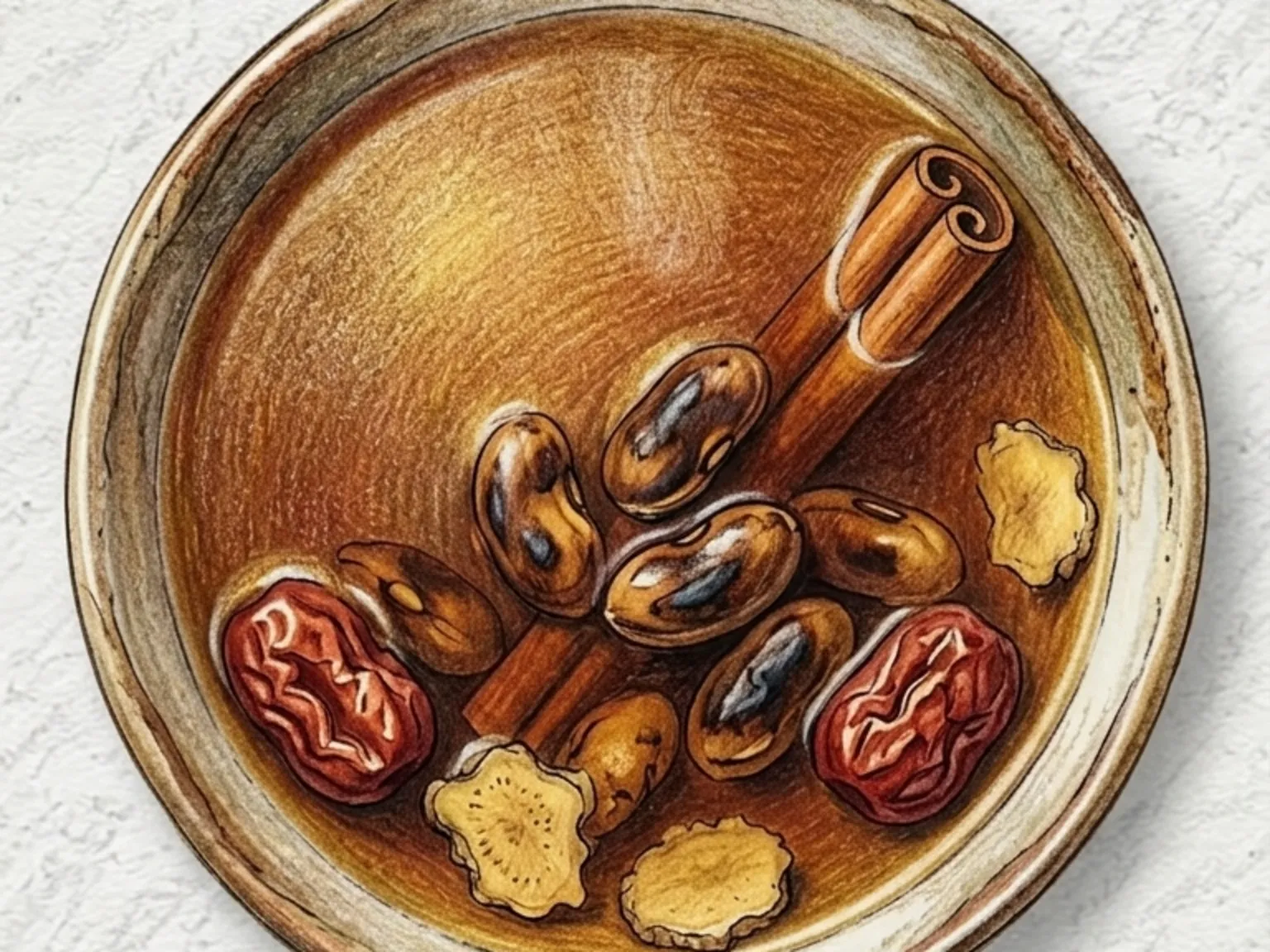
Jakdukong-cha is brewed from roasted sword beans - legumes three to four times larger than common beans - simmered with dried jujubes, fresh ginger, and a cinnamon stick for about twenty-five minutes. Roasting the sword beans browns their surface and develops a heavy, toasty grain aroma that forms the tea's base. Ginger and cinnamon build layered spice warmth on top of the roasted bean foundation, and dried jujubes contribute a fruity sweetness that counterbalances any residual bitterness. Honey is added at the end to fine-tune the sweetness, and the tea is caffeine-free.
Adjust Servings
Instructions
- 1
Shake roasted sword beans in a sieve to remove dust, then halve and pit the jujubes.
- 2
Slice ginger thinly (about 2 mm) so flavor infuses quickly.
- 3
Add water, sword beans, jujubes, ginger, and cinnamon to a pot and bring to a boil over high heat.
- 4
Once boiling, reduce to low heat and simmer gently for 20 minutes.
- 5
Turn off heat, rest for 3 minutes, then strain for a clear tea.
- 6
Stir in honey to taste and serve warm or chilled.
As an Amazon Associate, we may earn from qualifying purchases.
Tips
Nutrition (per serving)
More Recipes

Korean Roasted Cassia Seed Tea
Gyeolmyeongja-cha is brewed from cassia seeds that are first dry-roasted over medium heat until they turn a deep amber and release a toasty, nutty fragrance. The roasted seeds are then simmered in water for about twenty minutes, producing a rich brown liquor with a robust grain-like flavor. Sliced ginger is added during simmering for a warming, peppery layer, and jujubes mellow the overall taste with subtle fruit sweetness. Honey adjusts the sweetness to preference, and thin lemon slices floated on top add a clean citrus finish that balances the earthy depth.

Korean Dandelion Root Tea
Mindeulle-cha is a Korean dandelion root tea made by dry-roasting dried dandelion root and barley in a pot before simmering them with water, sliced ginger, and licorice root for eighteen minutes. The initial roasting step transforms the earthy root into something toasty and grain-like, while licorice and ginger soften any remaining bitterness into a warm, smooth finish. Rice syrup stirred in at the end adds a malty sweetness that deepens the tea's body. Naturally caffeine-free, it can be enjoyed hot or chilled over ice at any hour.

Korean Bitter Melon Jujube Tea
Yeoju-daechu-cha is a Korean herbal tea that steeps dried bitter melon, pitted jujubes, dried tangerine peel, and fresh ginger together for 25 minutes. The bitter melon provides a gentle, lingering bitterness that the jujubes counter with their natural sweetness, while the tangerine peel adds a citrus top note and ginger delivers a warm, peppery finish. Honey is dissolved after the heat is turned off to preserve its delicate fragrance, and a few pine nuts floated on the surface contribute a mild nuttiness. The tea is caffeine-free, and the bitter melon quantity can be reduced for those sensitive to its flavor.

Korean Liriope Root Tea (Herbal Pear Ginger Brew)
Maekmundong-cha is a Korean herbal tea made by gently simmering dried liriope root with sliced Korean pear, fresh ginger, and jujubes for twenty minutes. The pear softens the root's natural bitterness and contributes a subtle fruity sweetness, while ginger adds quiet warmth in the background. A spoonful of rice syrup stirred in at the end ties all the flavors together with a mild, malty sweetness. The tea reheats well after refrigeration, keeping its layered aroma intact over several days.

Kongnamul-guk (Bean Sprout Anchovy Soup)
Kongnamul-guk is one of the simplest Korean soups, built on nothing more than bean sprouts, water, soup soy sauce, and garlic. The key step is boiling the sprouts with the lid firmly closed for seven minutes, which eliminates the raw beany smell that would otherwise persist. Green onion goes in at the very end, contributing a mild bite without overpowering the broth's clean, vegetal character. Adding chili flakes and a cracked egg transforms it into a spicy hangover-cure version, but the plain form is just as satisfying alongside rice and a few side dishes.

Korean Bean Sprout Dried Pollock Soup
Kongnamul-hwangtae-guk pairs stir-fried dried pollock strips with bean sprouts in a clear, restorative broth. The pollock is toasted briefly in sesame oil alongside radish slices, building a nutty, savory foundation before water is added. After ten minutes of simmering, bean sprouts and garlic go in uncovered for five more minutes, keeping the sprouts crisp and letting any residual fishiness escape with the steam. Soup soy sauce and a touch of salt finish the seasoning, and sliced green onion adds brightness. The result is a light but deeply flavored soup commonly served as a morning-after remedy.