Jambalaya
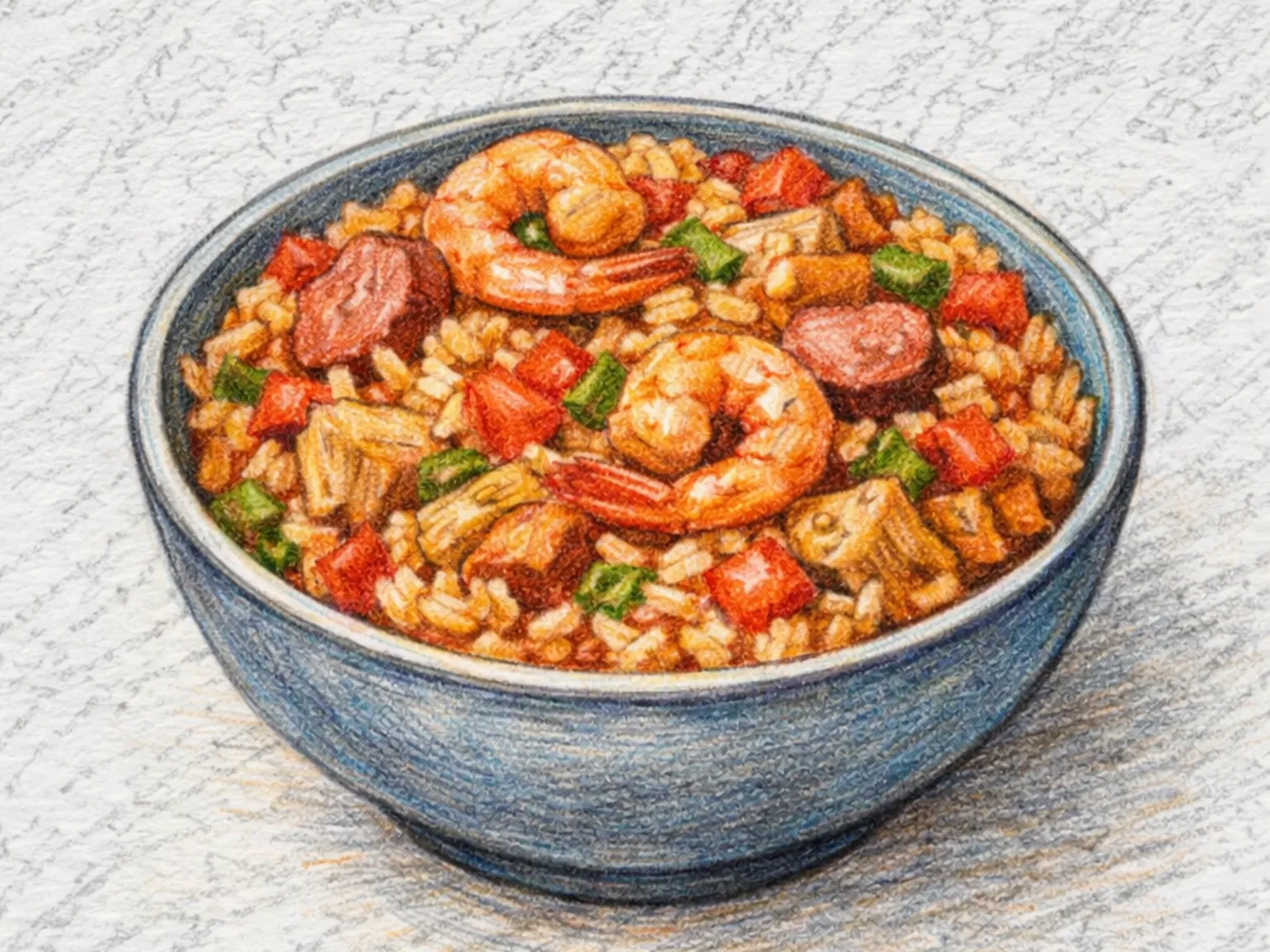
Jambalaya is a Louisiana Creole one-pot dish where chicken, andouille sausage, and shrimp cook together with rice in a spiced tomato broth. Browning the sausage and chicken first renders fat and develops deep flavor, then the Cajun holy trinity of onion, celery, and bell pepper is sauteed in the drippings until softened. Tomatoes, Cajun seasoning, rice, and chicken stock are added and brought to a boil, then covered and simmered on low heat so the rice absorbs the seasoned liquid as it cooks. The shrimp go in only during the final two to three minutes - adding them earlier causes them to toughen and lose their firm, bouncy texture. Each grain of rice carries the smoky, spicy character of the broth, making the dish a complete meal from a single pot.
Adjust Servings
Instructions
- 1
Brown the sausage and chicken.
- 2
Sauté the onion, celery, and bell pepper (the holy trinity).
- 3
Add tomatoes, Cajun seasoning, rice, and chicken stock; bring to a boil.
- 4
Cover and simmer until rice is cooked; add shrimp at the end.
As an Amazon Associate, we may earn from qualifying purchases.
Tips
Nutrition (per serving)
More Recipes

Shrimp Creole
Shrimp Creole builds its flavor base from the Cajun holy trinity - onion, celery, and bell pepper - sauteed in olive oil until softened and sweet. Garlic and paprika go in next for thirty seconds to bloom their aromas before canned tomatoes are added and simmered over medium heat for eight minutes, reducing the liquid into a thick, fragrant sauce. The shrimp are stirred in only at the end and cooked for three to four minutes until just pink, preserving their tender bite. The tomato's natural acidity balances the paprika's smokiness, and a dash of hot sauce pushes the dish toward its authentic Louisiana character. Served ladled generously over steamed white rice, the sauce soaks into the grains and carries every layer of flavor.

Shrimp Etouffee
Shrimp etouffee starts with a blonde roux - butter and flour stirred continuously over medium heat until the mixture turns light brown and smells faintly of toasted nuts. The Cajun trinity of diced onion, celery, and bell pepper is added directly to the roux, where the vegetables release moisture that loosens the paste and contributes sweetness. Chicken stock and paprika transform the mixture into a thick, velvety sauce with warm color and gentle spice. The shrimp go in during the final four minutes of cooking so they absorb the sauce's flavor without overcooking. Darkening the roux beyond light brown risks bitterness that overpowers the delicate shrimp. The finished dish is spooned over steamed rice, which absorbs the rich sauce.

Lobster Roll
Lobster roll is a New England sandwich that fills a butter-toasted hot dog bun with chunks of cooked lobster meat tossed lightly in mayonnaise, lemon juice, and diced celery. Keeping the lobster pieces large enough to bite through is essential - overchopping turns the filling mushy and obscures the natural sweetness of the shellfish. Only a small amount of mayonnaise is used so it binds the meat without masking its flavor, while the lemon juice provides a sharp acidity that keeps the richness in check. Toasting the flat sides of the bun in butter creates a crisp, golden exterior that contrasts with the cool, tender filling inside. Served chilled in the classic cold style, the lobster roll is a simple but indulgent summer meal.

Gumbo
Gumbo is a Louisiana stew built on a dark roux - flour and oil stirred continuously over medium-low heat until the mixture reaches a deep chocolate brown. Cooking the roux to this stage breaks down the starch so it thickens less, but develops a complex, nutty smokiness that defines the dish. The Cajun holy trinity of onion, celery, and green bell pepper is sweated in the roux, followed by smoked sausage that renders its fat and smoky flavor into the base. Chicken stock, sliced okra, and cayenne pepper simmer together for forty minutes, during which the okra's natural mucilage adds body to the broth. Shrimp are stirred in only at the end to prevent overcooking, and the finished gumbo is traditionally ladled over steamed white rice.

Korean Grilled Mackerel Rice Bowl
Mackerel fillet is pan-seared skin-side down until the skin turns crisp and golden, then served over rice with a quick sauce of soy sauce, cooking wine, oligosaccharide syrup, minced ginger, and softened onion. The oily flesh of the mackerel absorbs the soy-ginger glaze, producing a clean, salty-sweet finish without fishiness. Keeping the pan still for the first minute of searing is critical for achieving crisp skin, and brushing the fillet with a little cooking wine before cooking further neutralizes any unwanted odor. Chopped chives scattered on top complete the bowl with color and a mild onion bite.

Korean Blue Crab Doenjang Pot Rice
Cleaned blue crab sits atop soaked rice in a heavy pot, cooked in anchovy-kelp stock infused with dissolved doenjang. Garlic and vegetables are first sautéed in perilla oil for an aromatic base, then the stock-doenjang mixture and crab go in for a five-minute boil, fifteen minutes on low, and a ten-minute covered rest. The crab's briny sweetness and doenjang's fermented depth soak into every grain, while zucchini and shiitake mushrooms contribute a subtle sweetness that tempers the salt. An extra minute on low heat after resting creates a crispy nurungji crust at the bottom - a prized bonus in Korean pot rice.