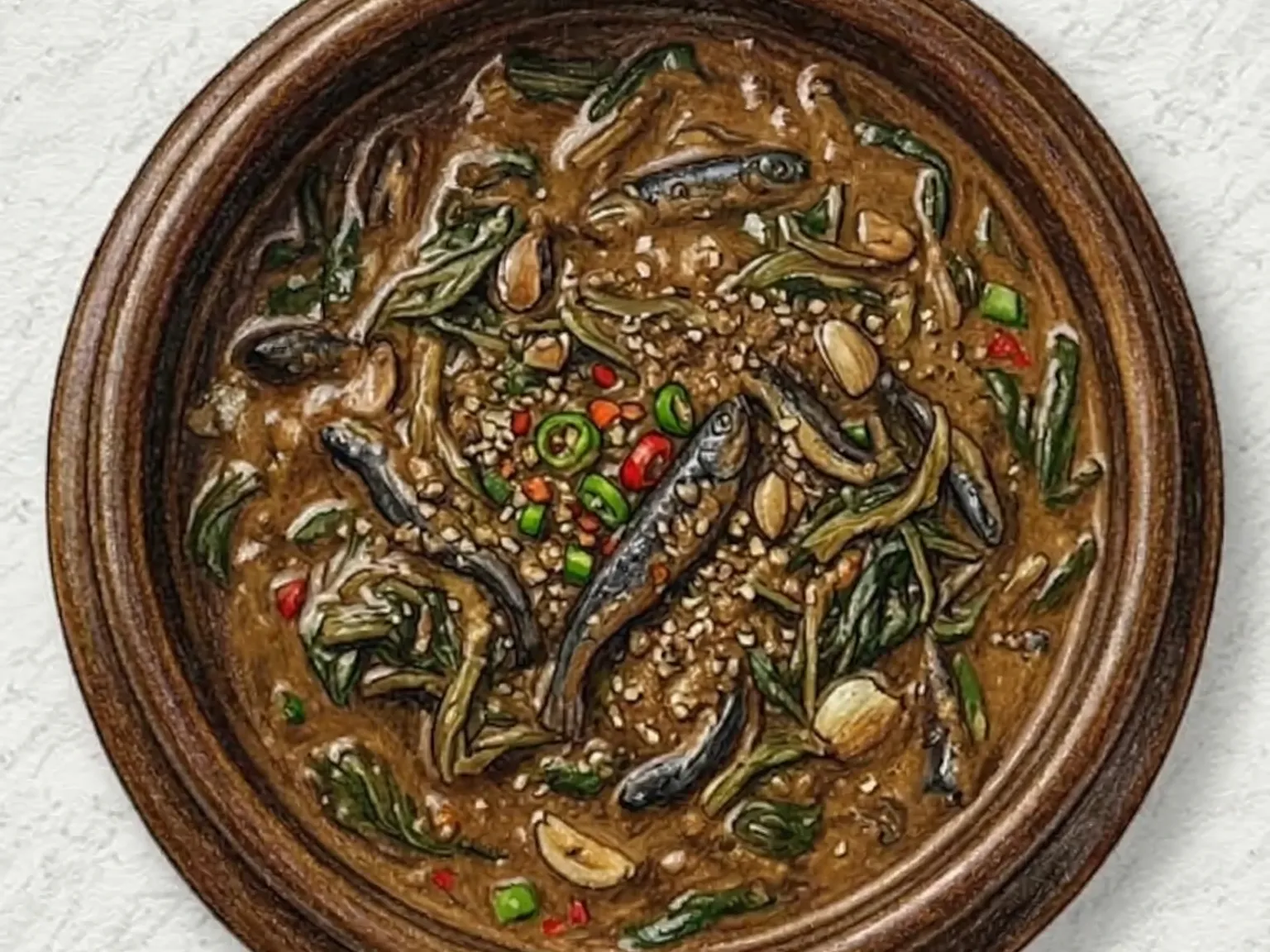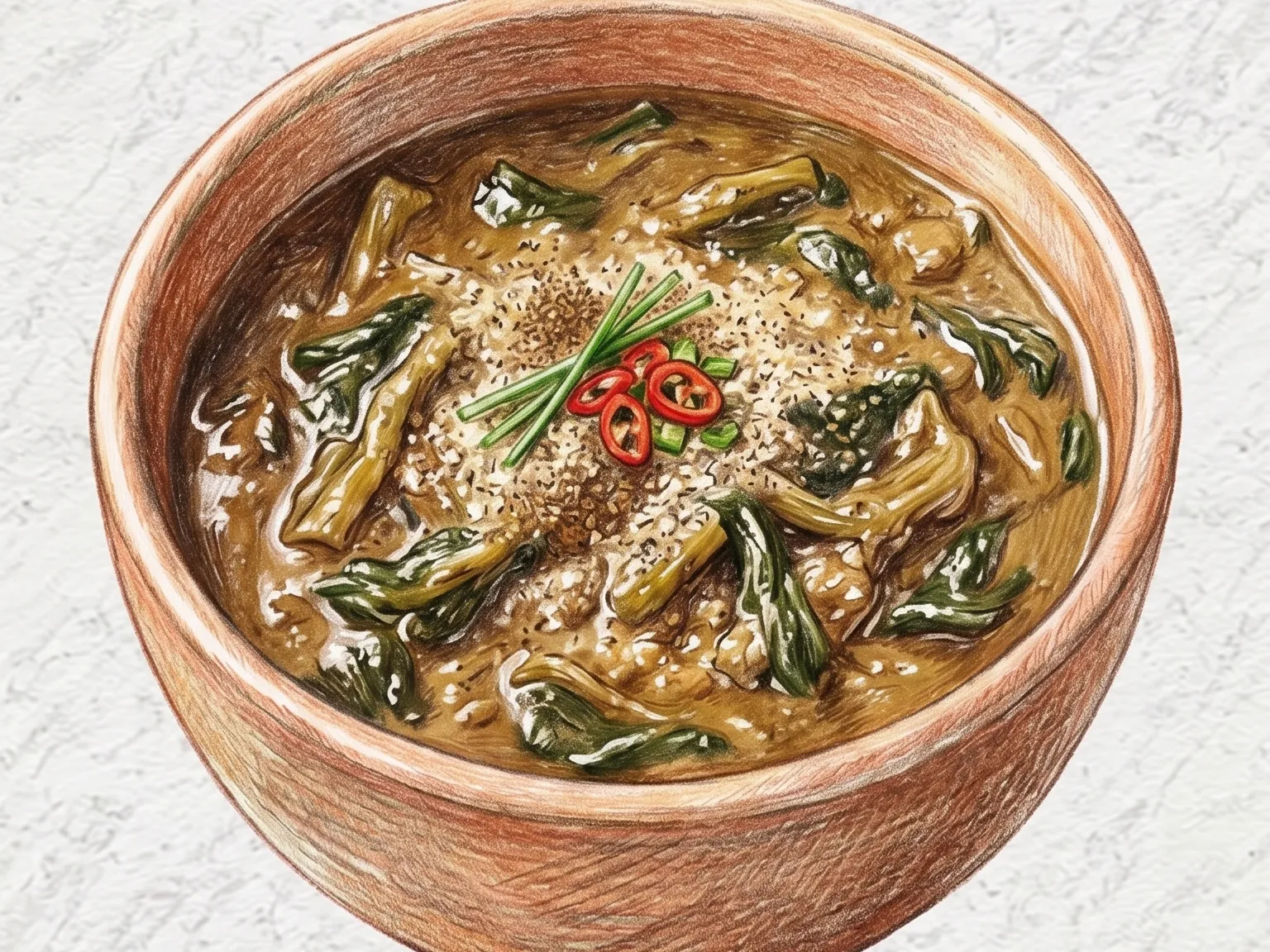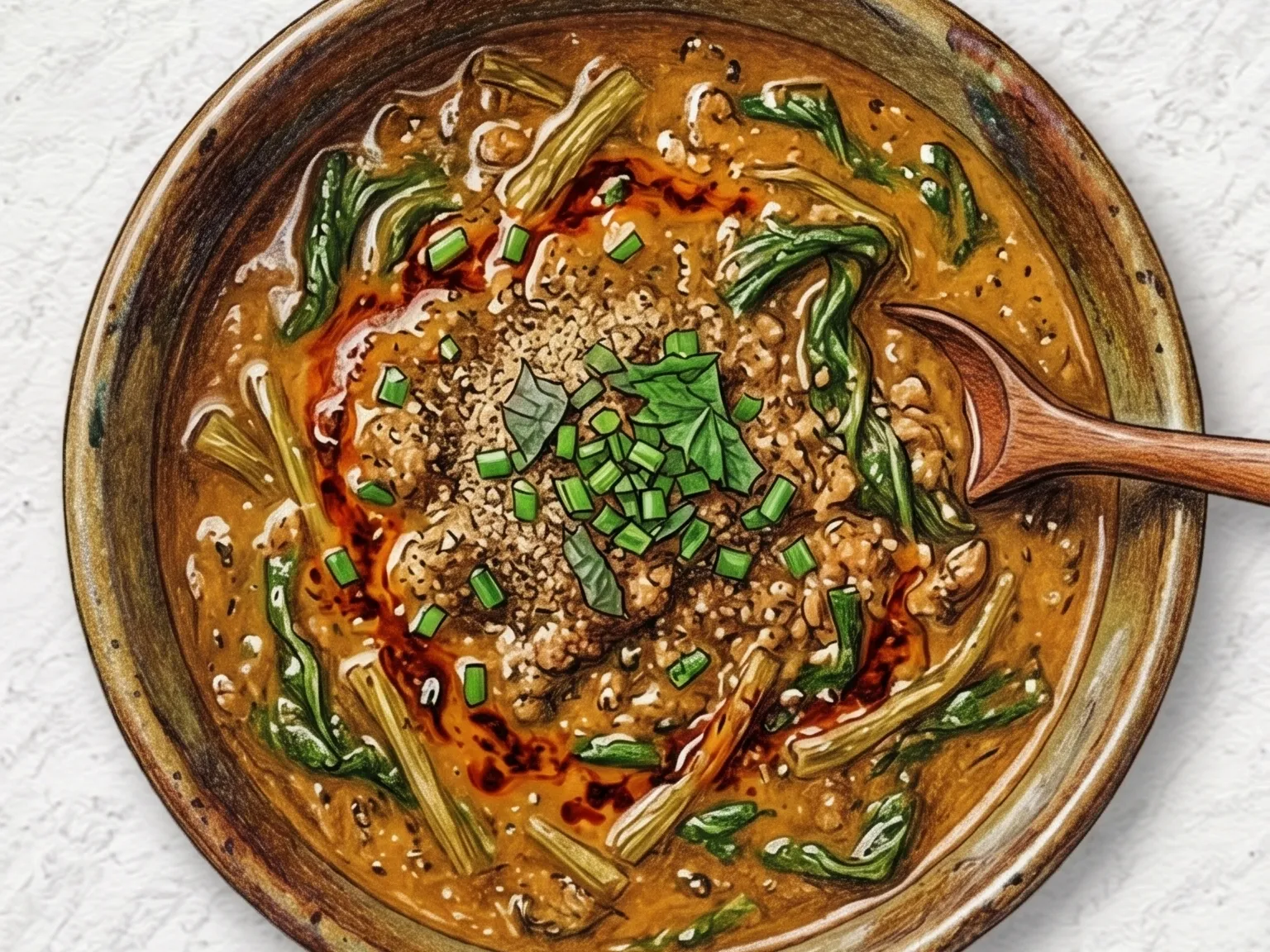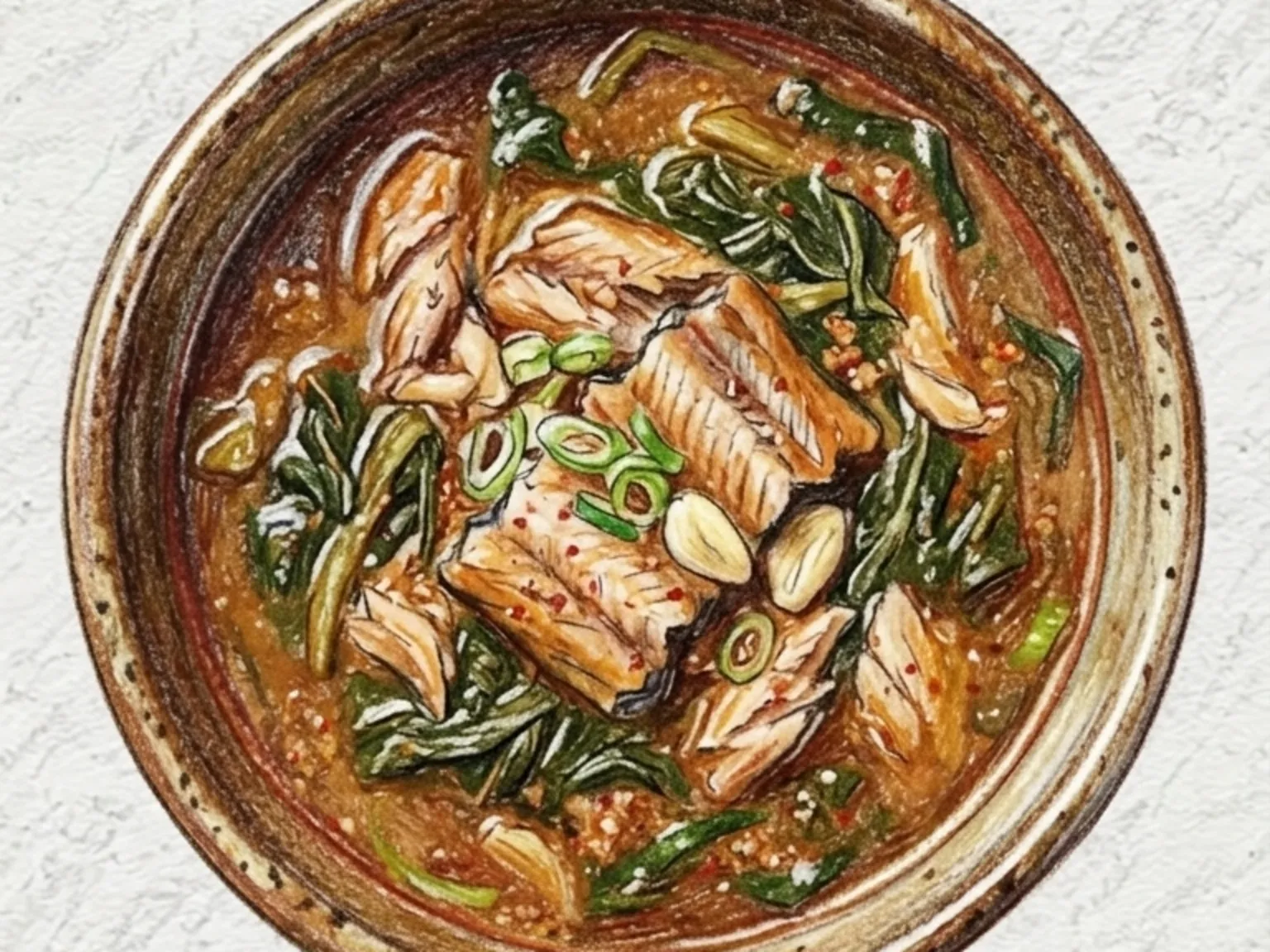
Jangeo-tang (Spicy Freshwater Eel Soup)
Jangeo-tang is a nourishing Korean eel soup in which freshwater eel is first boiled, deboned, and then simmered in a bold seasoning of doenjang and gochugaru. Dried radish greens (sirae-gi) are added to the pot, contributing an earthy, slightly bitter depth that grounds the richness of the eel. Garlic and green onion temper any fishiness, leaving behind only the eel's clean, fatty savoriness. The broth develops a dark, spicy intensity while the eel meat remains soft and oil-rich, dissolving into each spoonful. High in protein and healthy fats, jangeo-tang has long been considered a stamina-building dish in Korea, traditionally eaten during the hottest days of summer or whenever energy reserves run low. The combination of fermented soybean paste and chili gives the soup a complexity that distinguishes it from milder restorative broths.
Adjust Servings
Instructions
- 1
Clean and cut eel, then boil in water for 20 minutes.
- 2
Cool and separate eel flesh from bones and skin.
- 3
Strain the boiling liquid and use it as broth.
- 4
Add doenjang, gochugaru, garlic, and greens to broth and simmer 12 minutes.
- 5
Add eel flesh and green onion, then cook 8 more minutes.
As an Amazon Associate, we may earn from qualifying purchases.
Tips
Nutrition (per serving)
More Recipes

Korean Astragalus Chicken Soup
Hwanggi-dak-tang is a Korean herbal chicken soup built around astragalus root, a staple of traditional East Asian medicine valued for its restorative properties. A whole chicken simmers for well over an hour with the dried root, jujubes, and garlic, producing a clear yet full-bodied broth with a faintly sweet, earthy undertone from the herb. The extended cooking dissolves collagen from the skin and joints, giving the liquid a velvety weight that coats the palate. The chicken meat, by the time the soup is ready, pulls apart effortlessly. Jujubes soften into the broth and add a subtle fruity sweetness that bridges the medicinal and culinary sides of the dish. Seasoning is limited to salt, keeping the focus on the herb-infused stock. In Korea, this soup appears most often during seasonal transitions or after illness, served steaming in a stone pot.

Korean Spicy Freshwater Fish Soup
Eotang is a traditional Korean soup made by boiling whole freshwater fish for over forty minutes to extract every bit of flavor from the bones and flesh. The stock is strained twice through a fine sieve to remove all small bones, then returned to the pot with radish, doenjang, and garlic for another twenty minutes of simmering. Red chili flakes and green onion go in last, adding a sharp spiciness that balances the deep, earthy richness of the fish broth. The process is time-intensive, but the resulting soup has a thick body and concentrated flavor that lighter preparations cannot match.

Korean Monkfish Soup (Spicy Southern Coastal Fish Broth)
Agwi-tang is the soup version of Korea's monkfish preparations, originating from the fishing villages along the southern coast where monkfish - called agwi or agu depending on dialect - is landed fresh. Unlike braised or stir-fried monkfish dishes, the tang form prioritizes a clear, brothy base built on anchovy stock. Radish simmers first for eight minutes, sweetening the liquid before the monkfish enters. The fish cooks gently at medium heat, its collagen dissolving into the broth and giving it body. Bean sprouts go in last, contributing a clean crunch that contrasts the soft fish flesh. A final addition of sliced green onion and a punch of gochugaru turns the broth a hazy red. This is hangover food in Korea's coastal towns - hot, spicy, and restorative, traditionally served steaming at dawn markets.

Korean Seafood Hot Pot Soup
Haemul-tang is a Korean seafood hot pot that throws together crab, shrimp, clams, and squid in a fiery, brick-red broth. The liquid starts with gochugaru and plenty of garlic, building a spicy base that the seafood then amplifies with its own briny juices. Radish chunks soften as the pot bubbles, thickening the broth slightly and adding a cool sweetness behind the heat. Green onions and cheongyang peppers go in toward the end for a sharp, vegetal bite. The magic of haemul-tang lies in the convergence of flavors: crab shells release a sweet, crustacean stock; clams open to spill their liquor; shrimp and squid contribute distinct textures from snappy to chewy. The pot is brought to the table still at a rolling boil, and diners pick through the shells and tentacles while the broth continues to concentrate.

Korean Soupy Tteokbokki (Rice Cakes in Spicy Gochujang Broth)
Gukmul-tteokbokki is a broth-based tteokbokki where rice cakes and fish cakes simmer in a kelp stock seasoned with gochujang, gochugaru, soy sauce, and sugar. Unlike dry or stir-fried versions, the generous broth lets the seasoning penetrate each rice cake while the fish cakes boost the soup's savory depth. Simmering over medium heat for eight to ten minutes softens the rice cakes while preserving a chewy core, and scallions stirred in at the end add freshness. The leftover broth is commonly enjoyed with a bowl of rice stirred in or with added ramyeon noodles.

Korean Spicy Beef Soup Noodles
Yukgaejang guksu starts with a deep broth made by simmering beef brisket until the liquid turns rich and full-bodied. The meat is shredded along the grain and returned to the pot alongside fernbrake, bean sprouts, and green onion that have been seasoned with gochugaru, sesame oil, and garlic before a brief stir-fry. This pre-seasoning step lets the chili heat dissolve into the oil, producing a rounded spiciness rather than raw powder burn. Korean soup soy sauce adjusts the salt level without clouding the broth's color. Thin wheat somyeon noodles are boiled separately and added at the end so they absorb the broth without turning mushy. Swapping in glass noodles changes the texture to a chewier, more slippery bite that holds onto the soup longer.