Charim

2686 Korean & World Recipes

2686+ Korean recipes, clean and organized. Ingredients to instructions, all at a glance.

Korean Soy-braised Beef (Tender Shredded Brisket in Soy Glaze)

Korean Soy-braised Beef (Tender Shredded Brisket in Soy Glaze)

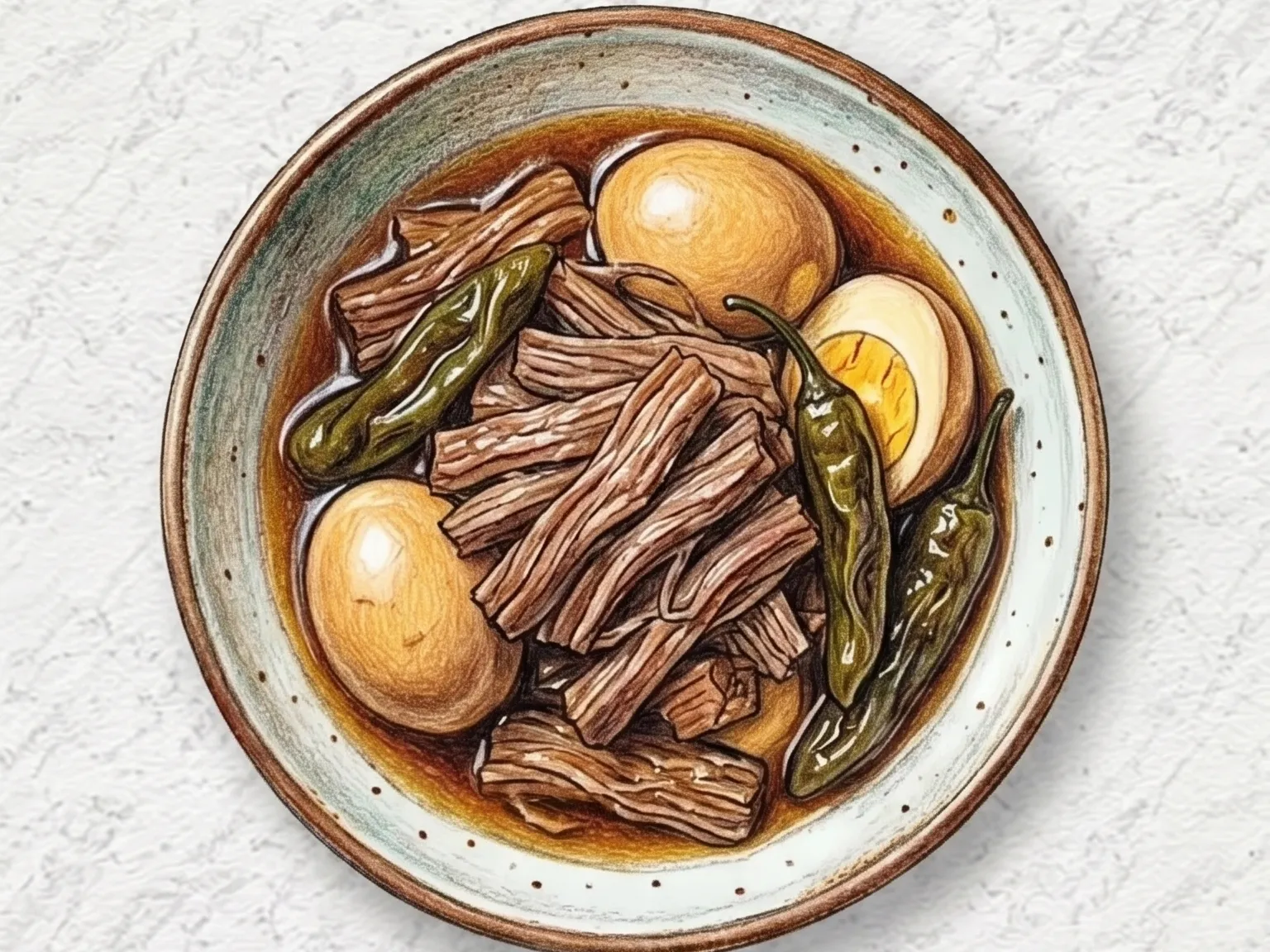
Jangjorim is the soy-braised beef that lives semi-permanently in Korean refrigerators - a make-ahead banchan with a shelf life of roughly two weeks. Beef eye round (hongdukkasal) is the traditional cut because its uniform grain and low fat content allow clean shredding along the fibers, producing the signature stringy texture. The process is unhurried: thirty minutes of soaking to draw out blood, forty minutes of simmering with whole garlic and peppercorns, then shredding and returning to the pot with soy sauce and sugar for another twenty minutes. Hard-boiled eggs and shishito peppers added in the final stage absorb the dark soy broth - the eggs turn mahogany and the peppers contribute a gentle heat to the sauce. Swapping in quail eggs makes each piece lunchbox-sized. Flavor deepens noticeably after a day of refrigeration as the seasoning penetrates fully.

Prep 15minCook 60min4 servings

Adjust Servings

2servings
servings

Instructions

  1. 1

    Soak 300g beef in cold water for 30 minutes to draw out blood.

  2. 2

    Boil beef, 500ml water, garlic, and peppercorns, skimming foam.

  3. 3

    Simmer on medium-low 30 minutes, remove beef, and shred along the grain.

  4. 4

    Add soy sauce and sugar to broth, return shredded beef, braise 20 more minutes.

  5. 5

    Add boiled eggs and shishito peppers, braise together for 5 more minutes.

  6. 6

    Cool slightly, store in an airtight container with broth, and refrigerate.

🛒Shop Ingredients on Amazon

As an Amazon Associate, we may earn from qualifying purchases.

Tips

Flavors deepen after a day in the fridge.
Quail eggs are a great lunchbox-friendly alternative.
If the broth is too salty, add a bit more water to adjust.

Nutrition (per serving)

Calories
200
kcal
Protein
22
g
Carbs
8
g
Fat
9
g

Variations

Soy Braised Beef Jangjorim

Soy Braised Beef Jangjorim highlights Beef eye round and Garlic cloves. It is simmered until the sauce turns glossy and deeply savory with a mild sweetness.

Beef & Quail Egg Soy Braise

Beef & Quail Egg Soy Braise highlights beef eye round and quail eggs. It is simmered until the sauce turns glossy and deeply savory with a mild sweetness.

More Recipes

Korean Sogogi Jangjorim (Soy-Braised Beef)
SteamedMedium

Korean Sogogi Jangjorim (Soy-Braised Beef)

Sogogi jangjorim is one of Korea's essential make-ahead side dishes, made by boiling lean beef round until tender, shredding it along the grain, and braising the shreds with quail eggs in soy sauce, sugar, and garlic. Using the beef cooking broth as the braising base means every spoonful of liquid carries concentrated meat flavor. The quail eggs take on a deep brown color as they simmer and absorb the soy seasoning throughout. Cooling the pot completely before storing is a critical step because the meat and eggs continue to draw in flavor as the temperature drops. Refrigerated, this banchan lasts well over a week, making it a staple of Korean meal prep.

🎉 Special Occasion🍱 Lunchbox
Prep 20minCook 70min4 servings
Korean Beef & Quail Egg Soy Braise
Side dishesMedium

Korean Beef & Quail Egg Soy Braise

Jangjorim is how Korean cooks make beef last all week. Eye-round is simmered, shredded along the grain, and braised in concentrated soy sauce with sugar, garlic, and whole black peppercorns. Quail eggs absorb the dark liquid until chestnut brown throughout. Low heat reduces the sauce to a thick, glossy coating on every strand. Served cold, jangjorim is intensely salty - meant for small bites with plain rice, where one piece of soy-stained beef carries an entire mouthful of grain.

🏠 Everyday🍱 Lunchbox
Prep 20minCook 45min4 servings
Korean Braised Potatoes (Soy-Glazed Braised Potato Banchan)
Side dishesEasy

Korean Braised Potatoes (Soy-Glazed Braised Potato Banchan)

Gamja-jorim - soy-braised potatoes - is among the top five most frequently made banchan in Korean households, alongside kimchi, kongnamul, and gyeran-mari. Small potatoes are parboiled whole until just fork-tender, then transferred to a mixture of soy sauce, sugar, rice syrup, garlic, and water. The braising happens over medium-low heat for fifteen minutes with the lid off, allowing the sauce to reduce gradually into a thick, syrupy glaze. Constant gentle stirring prevents the soft potatoes from sticking or breaking apart. As the liquid evaporates, each potato develops a dark amber, lacquered surface while the interior remains starchy and yielding. The taste is straightforwardly sweet-salty with a garlic undertone - comfort food in its most elemental form. Korean mothers often make a large batch on weekends, refrigerating it to serve cold throughout the week. The dish improves overnight as the glaze continues to penetrate the potato's interior.

🏠 Everyday🍱 Lunchbox
Prep 10minCook 20min4 servings
Korean Jangjorim Butter Rice
RiceEasy

Korean Jangjorim Butter Rice

Unsalted butter is melted into hot rice so each grain is coated in a slick of fat, then topped with shredded soy-braised beef and its concentrated braising liquid. The beef's soy-based marinade carries enough salt and sweetness that no additional seasoning is needed, and breaking a raw egg yolk into the center and stirring transforms the texture into something creamy. Roasted seaweed flakes add a brittle crunch and oceanic note, while scallion and sesame seeds round out the finish. If the jangjorim is already prepared, the entire assembly takes less than fifteen minutes.

🏠 Everyday🍱 Lunchbox
Prep 10minCook 15min2 servings
Korean Braised Anchovy Side Dish
Side dishesEasy

Korean Braised Anchovy Side Dish

Myeolchi-jorim simmers tiny dried anchovies in soy sauce, rice syrup, and garlic into a moist, glazed banchan that contrasts fundamentally with stir-fried anchovy preparations. Where bokkeum chases crispness, jorim aims for softness - the anchovies absorb the braising liquid over a sustained simmer, becoming pliant and saturated with sweet-salty flavor throughout their interior. A one-minute dry toast removes any fishiness before soy sauce, syrup, minced garlic, and water go into the pan, simmering uncovered on low heat for ten minutes. As the liquid reduces, a sticky, dark glaze wraps around each anchovy; unlike the bokkeum, pressing one between your teeth releases a rush of seasoned juice from within. Sesame seeds and sesame oil stirred in off-heat add a final layer of nuttiness. Once fully cooled, the reduced sauce thickens further into an almost jelly-like coating that holds the anchovies together. Refrigerated in an airtight container, myeolchi-jorim keeps for over a week.

🏠 Everyday🍱 Lunchbox
Prep 8minCook 15min4 servings
Korean Soy-Braised Soybeans
Side dishesEasy

Korean Soy-Braised Soybeans

Kong-jorim is soy-braised soybeans simmered slowly in soy sauce and sugar until each bean turns glossy - a pantry staple rooted in the era when rice and beans were the twin pillars of Korean sustenance. Soaking the beans for a minimum of eight hours is non-negotiable: it shortens cooking time and allows the seasoning to penetrate to the center. Skipping this step produces beans that are salty on the surface and chalky inside. After boiling until tender, the beans simmer on low heat for fifteen minutes in the soy-sugar mixture, then corn syrup is added to create a transparent glaze that gives each bean its characteristic shine. Using black soybeans (soritae) instead of yellow yields a dramatic deep purple-black luster as the anthocyanin pigments dissolve into the braising liquid. Stored in a sealed container, kong-jorim keeps in the refrigerator for over two weeks, making it a go-to weekend meal-prep banchan.

🏠 Everyday🍱 Lunchbox
Prep 480minCook 40min6 servings
More Side dishes