Korean Butter-Grilled Abalone
Grilled Medium

Korean Butter-Grilled Abalone

Quick answer

Scored abalone is seared quickly in garlic butter, with the cooking time kept to two or three minutes so the flesh stays springy and firm rather than contracting into a t...

What makes this special

  • Jeonbok Beoteo-gui features scored abalone seared quickly in garlic butter for a springy texture.
  • Overcooking past 2-3 minutes causes abalone flesh to seize and toughen
  • Minced abalone viscera melted into butter adds a deep ocean layer
Total time
30 min
Level
Medium
Servings
2 servings
Ingredients
8
Calories
248 kcal
Protein
24 g

Key ingredients

abalonebutterminced garlicsoy saucecooking wine

Core cooking flow

  1. 1 Scrub the 6 abalones well, especially around the shell edges where grit can remain.
  2. 2 Score the top of each abalone in a shallow crosshatch so the seasoning reach...
  3. 3 Warm the pan over low heat and melt 30 g butter slowly so it does not brown too fast.

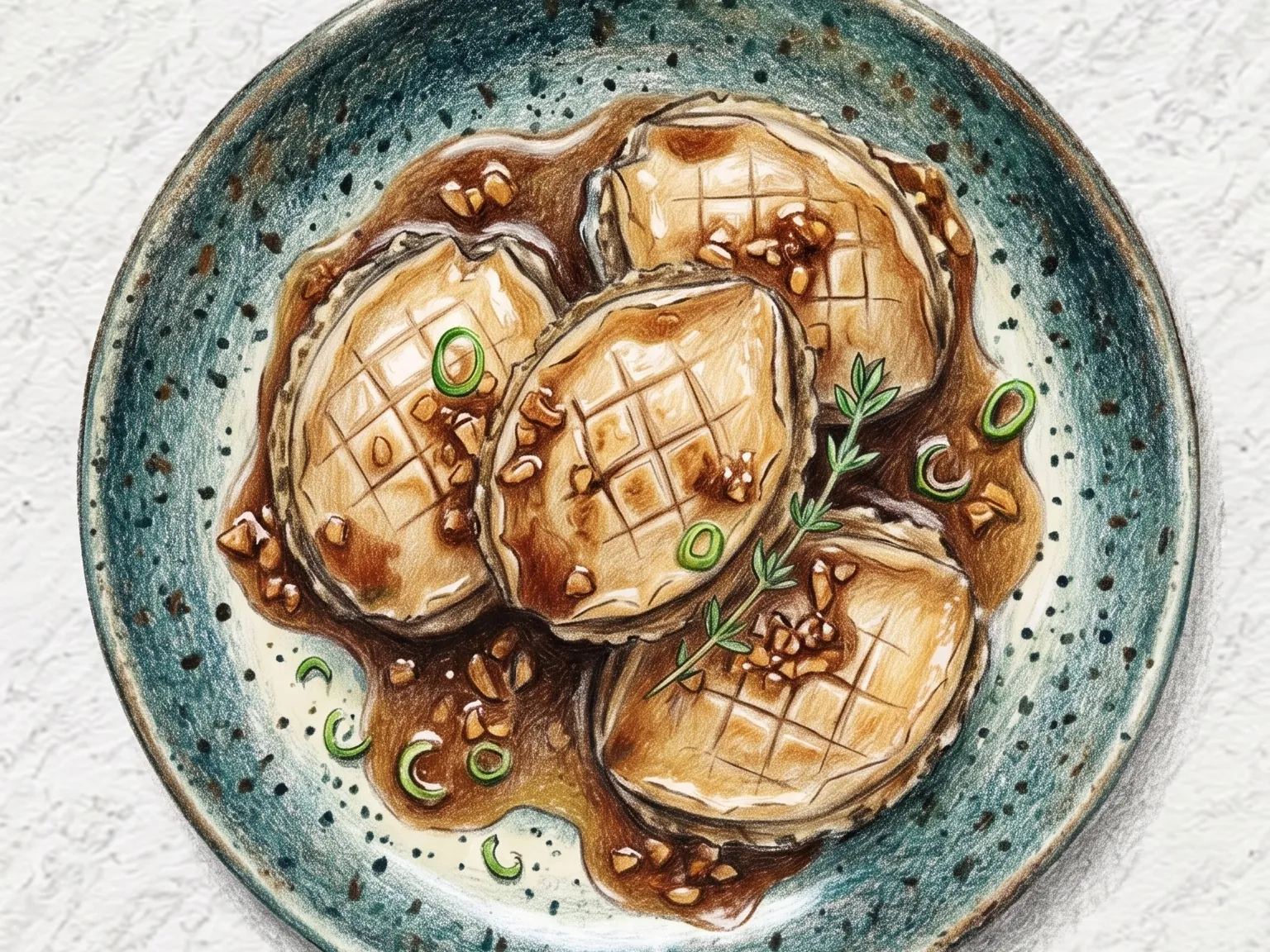
Scored abalone is seared quickly in garlic butter, with the cooking time kept to two or three minutes so the flesh stays springy and firm rather than contracting into a tough, rubbery state. Minced garlic is added to the melted butter first, allowing its fragrance to bloom before the abalone goes in, so the shellfish absorbs the full depth of the butter. A small addition of soy sauce to the pan deepens the umami without masking the delicate sweetness of the abalone itself. For an extra layer of oceanic richness, the abalone liver can be minced and stirred directly into the butter sauce as it finishes; the liver melts in, contributing a briny, mineral depth that amplifies the sea flavor of the dish. The finished abalone is best served in the cleaned shells, which both keep the butter sauce pooled around the meat and make for an appealing natural presentation. A light squeeze of lemon juice just before serving cuts through the richness of the butter and brings out the natural sweetness of the shellfish.

Prep 20min Cook 10min 2 servings

Instructions

Read the steps as a cooking flow: prep, heat, seasoning, doneness control, and finish.

6 steps
  1. 1
    Step

    Scrub the 6 abalones well, especially around the shell edges where grit can remain.

    Slide a spoon under the flesh, separate it from the shell, remove the tooth, and keep the shells for serving.

  2. 2
    Season

    Score the top of each abalone in a shallow crosshatch so the seasoning reaches the surface without cutting too deeply.

    Sprinkle with 1 tablespoon cooking wine and black pepper, rest for 5 minutes, then pat dry.

  3. 3
    Control

    Warm the pan over low heat and melt 30 g butter slowly so it does not brown too fast.

    Add 1 tablespoon minced garlic and cook for about 40 seconds, stirring until fragrant but not scorched.

  4. 4
    Season

    If using the liver, mince it finely and stir it into the butter until the sauce looks evenly mixed and glossy.

    Place the abalone in the pan scored side down so the cuts meet the garlic butter first.

  5. 5
    Season

    Raise the heat to medium, sear for 1 minute, then flip and cook for another minute.

    When the flesh just begins to curl at the edges, add 1 tablespoon soy sauce and coat quickly.

  6. 6
    Finish

    Turn off the heat before the total cooking time passes 2 to 3 minutes, since extra heat makes abalone tough.

    Stir in 0.5 tablespoon sesame oil and chopped scallion, spoon the sauce over, and serve in the shells.

After the steps

Pick a recipe that fits this dish.

Continue with shared ingredients, meal pairings, or a similar method.

Recipes That Go Well With This

More Grilled →

Based on shared ingredients and meal pairing

Korean Butter-Grilled Mussels
Shared ingredient: butter Grilled

Korean Butter-Grilled Mussels

Mussels are steamed open with white wine, then tossed in melted garlic butter for a second round of cooking. The wine lifts the brininess while the butter adds a nutty depth that clings to each shell. A squeeze of lemon at the end cuts through the richness, keeping the finish clean. Scattered chives bring color and a mild onion note. Serving with crusty bread alongside to soak up the buttery broth rounds out the dish into a satisfying starter or bar snack. It can be served as a grilled side dish or drinking food, with simple accompaniments chosen to match the sauce, broth, or topping.

Korean Abalone & Garlic Stem Stir-fry
Shared ingredient: abalone Stir-fry

Korean Abalone & Garlic Stem Stir-fry

The preparation of Jeonbok-maneuljong-butter-bokkeum involves a high heat stir-fry technique using thinly sliced abalone and garlic scapes cooked in butter. The primary goal of using high heat is to release the aromatic properties of the butter and seafood while maintaining a specific texture. Before cooking, the abalone must be cleaned and the internal organs removed so that only the flesh is used. Slicing the abalone thinly is a requirement because the high temperature of the pan cooks the pieces almost instantly. This rapid cooking ensures the flesh remains springy rather than contracting into a tough or rubbery texture. Because the protein in the abalone begins to seize if cooked for longer than one minute, the speed of the stir-fry is the most critical variable in the process. Garlic scapes are used to provide a firm and snappy bite to the dish. These are cut into uniform lengths and placed in the pan before the abalone. This specific order gives the scapes a brief head start in the cooking process so that both the vegetables and the seafood finish at the same time. The ingredients should be added to the pan only after the butter has melted and started to foam. This foaming indicates the start of the Maillard reaction, which is responsible for browning the surface of the pieces and increasing the overall scent of the dish. A spoonful of soy sauce is then poured specifically along the heated edges of the pan. This technique allows the sauce to caramelize on contact with the hot surface, which adds a layer of savory and slightly sweet flavors to the mixture. The process concludes with the addition of ground black pepper, which provides a mild spice that supports the scent of the butter. Provided that the ingredients are prepped in advance, the entire stir-fry takes less than ten minutes to complete.

Manduguk (Korean Dumpling Clear Broth Soup)
Serve together Soups

Manduguk (Korean Dumpling Clear Broth Soup)

Manduguk is a Korean dumpling soup in which hand-folded dumplings stuffed with ground pork, tofu, scallion, and garlic are dropped into a clear, simmering broth, typically anchovy-kelp stock or beef broth, and cooked until they float. As the dumplings cook, their thin wheat-flour wrappers release a subtle starch that gives the broth a barely perceptible body, while the filling leaks savory juices that enrich the liquid gradually. A thin drizzle of beaten egg stirred in near the finish creates silken wisps on the surface of the broth and gives the bowl a more finished appearance. Shredded egg strips and crumbled dried seaweed scattered on top add a pleasant contrast in color and a faint oceanic note to the flavor. Many Korean households serve manduguk on Lunar New Year as an alternative to tteokguk, and some combine the two by adding sliced rice cakes alongside the dumplings. Dumplings can be made in large batches and frozen raw, which means this soup can be pulled together quickly on weeknights without sacrificing any of the flavor that comes from homemade filling. A small dish of soy-vinegar dipping sauce served alongside lets each person adjust the seasoning at the table, and the light acidity of the sauce cuts through the mild broth in a way that makes the contrast between the two worth trying.

Korean Grilled Clams (Butter Garlic Mixed Shellfish Grill)
Similar recipe Grilled

Korean Grilled Clams (Butter Garlic Mixed Shellfish Grill)

Mixed clams are submerged in salt water for at least one hour so they expel any sand and grit naturally, then placed shell-side down on a hot grill or pan. As the shells gradually crack open from the heat, a knob of butter, minced garlic, and a splash of rice wine are dropped into each opened shell for one to two more minutes of cooking. The briny liquid that the clams release mingles with the melting butter, building a concentrated natural sauce inside every shell without any additional stock or seasoning needed. Because clams vary in size, they open at different times, so pulling each one as soon as it opens rather than waiting for the whole batch prevents overcooking. Any clam that stays firmly shut after the others have opened should be discarded as unsafe. Chopped fresh parsley scattered over the finished clams cuts through any residual fishiness with a clean herbal note.

Serve with this

Korean Grilled Eel Rice Bowl
Rice Medium

Korean Grilled Eel Rice Bowl

Jangeeo deopbap is a bowl of grilled freshwater eel over steamed rice, where the key technique is building up a thick, lacquered glaze through multiple applications of a sweet-salty sauce reduced from soy sauce, mirin, sugar, and ginger juice. The eel starts skin-side down on the grill over medium heat for around five minutes to crisp the skin, then is flipped and basted repeatedly with the sauce as it finishes cooking. A single coat of sauce produces a pale, thin color, so at least two applications and ideally three or more are needed to build the characteristic glossy surface. With each additional coat, the sugars in the sauce react with heat through both Maillard browning and caramelization, layering flavor with every pass. Because freshwater eel is naturally fatty, fat drips during grilling can cause flare-ups, so heat control is important throughout the process. Sansho pepper dusted on at the end cuts through the eel's inherent richness with a sharp, numbing fragrance that balances the sweet glaze and keeps the dish from feeling heavy.

🎉 Special Occasion 🏠 Everyday
Prep 10min Cook 15min 1 servings
Korean Seasoned Bracken Fern
Side dishes Easy

Korean Seasoned Bracken Fern

Gosari, the Korean name for bracken fern, is one of the oldest foraged vegetables in Korean cooking, with consumption records tracing back to the Three Kingdoms period. It is a mandatory component of bibimbap and a required dish on jesa, the ancestral rite table set for ceremonies honoring the dead. Dried gosari must soak overnight in cold water and then boil until the tough, wiry fibers relax into a distinctively springy, almost elastic chew that no fresh vegetable can replicate. The rehydrated fern is stir-fried in perilla oil with minced garlic until fragrant, then a small amount of soup soy sauce and water goes in and the pan is covered to let the liquid absorb and the fern braise briefly. This short braising step is what rounds the flavor and ensures the seasoning penetrates the fibrous strands rather than sitting only on the surface. Perilla oil is the traditional fat of choice rather than sesame oil because its green, herbal quality pairs more naturally with the woodsy, forest-floor flavor of gosari, amplifying rather than competing with it. Large batches are typically made during Chuseok or Seollal and eaten over several days, as the flavor improves and deepens as the dish sits.

🏠 Everyday 🎉 Special Occasion
Prep 15min Cook 15min 4 servings
Korean Bitter Herb Kimchi
Kimchi Hard

Korean Bitter Herb Kimchi

Sseumbagwi kimchi is a traditional spring fermented side dish made from sseumbagwi, a wild bitter herb that grows in Korea during early spring. The herb is soaked in cold water for at least twenty minutes to pull back its pronounced bitterness before being salted to soften the stalks. It is then dressed in a seasoning paste built from gochugaru, sand lance fish sauce, minced garlic, ginger, sweet rice paste, and plum syrup, mixed together with cut scallions. The rice paste adds body to the seasoning so it clings to the herb's thin stems and narrow leaves rather than sliding off. Plum syrup works on both the bitterness and the salt's edge at once, smoothing the overall profile without masking the herb's character. Sand lance fish sauce is preferred over anchovy sauce here because its gentler aroma does not compete with the plant's natural flavor. Five hours of room-temperature fermentation followed by refrigeration sets off lactic acid development, layering tangy depth over the bitter-green base. The flavor peaks around day three when bitterness, acidity, and umami reach the best balance. If the raw herb tastes too sharp, one additional soak in fresh cold water brings it within range before seasoning.

🎉 Special Occasion 🍱 Lunchbox
Prep 45min Cook 5min 4 servings

Similar recipes

Korean Butter-Grilled Scallops
Drinks Medium

Korean Butter-Grilled Scallops

Garibi butter-gui sears fresh scallops in garlic butter until each side develops a deep golden-brown crust, then finishes with lemon juice and parsley to balance the richness. Removing every trace of surface moisture with paper towels before seasoning is the single most important step -- water on the surface of the scallop causes it to steam rather than sear, and no caramelized crust will form until that moisture has evaporated. Each side cooks for only one to two minutes at the highest heat the pan can sustain, leaving the center just barely opaque and the texture tender rather than rubbery. After flipping, butter and minced garlic are added directly to the hot pan and spooned continuously over the scallops so the aroma infuses the surface. A squeeze of lemon and a scatter of chopped parsley added just before removing from heat layers acidity and freshness over the butter richness. Simple to prepare and fast to cook, this dish appears regularly at home gatherings in Korea as a crowd-pleasing appetizer.

🍺 Bar Snacks 🎉 Special Occasion
Prep 12min Cook 8min 2 servings
Korean Salt-Grilled King Prawns
Grilled Easy

Korean Salt-Grilled King Prawns

Daeha-sogeum-gui is a Korean salt-grilled king prawn preparation where whole shell-on prawns are placed directly on a bed of coarse sea salt and cooked over indirect heat. The salt draws out surface moisture while conducting steady, even heat beneath the shells, so the prawns essentially steam inside their own carapace and keep their flesh springy rather than contracted. Scoring the back with kitchen scissors and removing the intestinal tract before cooking eliminates any off-note from the gut, leaving only the clean, natural sweetness of the prawn. The precise moment to pull them from the heat is when the shells turn a solid bright orange, as any longer drives off the moisture that keeps the flesh tender. A squeeze of fresh lemon adds acidity that sharpens the natural umami without masking it, and the dish works well with no additional seasoning at all.

🍺 Bar Snacks 🎉 Special Occasion
Prep 15min Cook 12min 2 servings
Korean Gapojingeo Beoteo Maneul Gui (Butter Garlic Cuttlefish Grill)
Grilled Easy

Korean Gapojingeo Beoteo Maneul Gui (Butter Garlic Cuttlefish Grill)

Gapojingeo beoteo-maneul-gui is butter-garlic grilled cuttlefish in which the thick body of the cuttlefish is scored in a crosshatch pattern and cooked in a pan with foaming butter and minced garlic. Cuttlefish flesh is substantially thicker and denser than regular squid, which means scoring is not optional for even cooking. Without it, the outside would overcook before heat reaches the center. The cuts also create channels that the melted butter and garlic flow into as the cuttlefish sears, infusing each section with concentrated fat and aromatics rather than just coating the surface. The timing of when to add the cuttlefish matters. The butter should be on medium heat and just beginning to foam at the edges when the cuttlefish goes in. At that temperature, the garlic releases its fragrance into the oil without burning, and the cuttlefish develops a golden crust before it has time to toughen. Two minutes per side is typically enough. The crosshatch pattern spreads open as the flesh cooks, and the surface takes on a lightly charred color that signals the Maillard reaction has done its work. Leaving it longer makes the flesh rubbery. A squeeze of lemon juice at the end cuts the richness of the butter and lifts the whole dish with a clean, acidic finish.

🍺 Bar Snacks ⚡ Quick
Prep 15min Cook 12min 2 servings

Tips

Cook abalone briefly, usually 2-3 minutes, to keep it tender.
Finely chop and add the liver to the butter sauce for deeper umami.

Nutrition (per serving)

Calories
248
kcal
Protein
24
g
Carbs
4
g
Fat
15
g