Korean Abalone Radish Soup
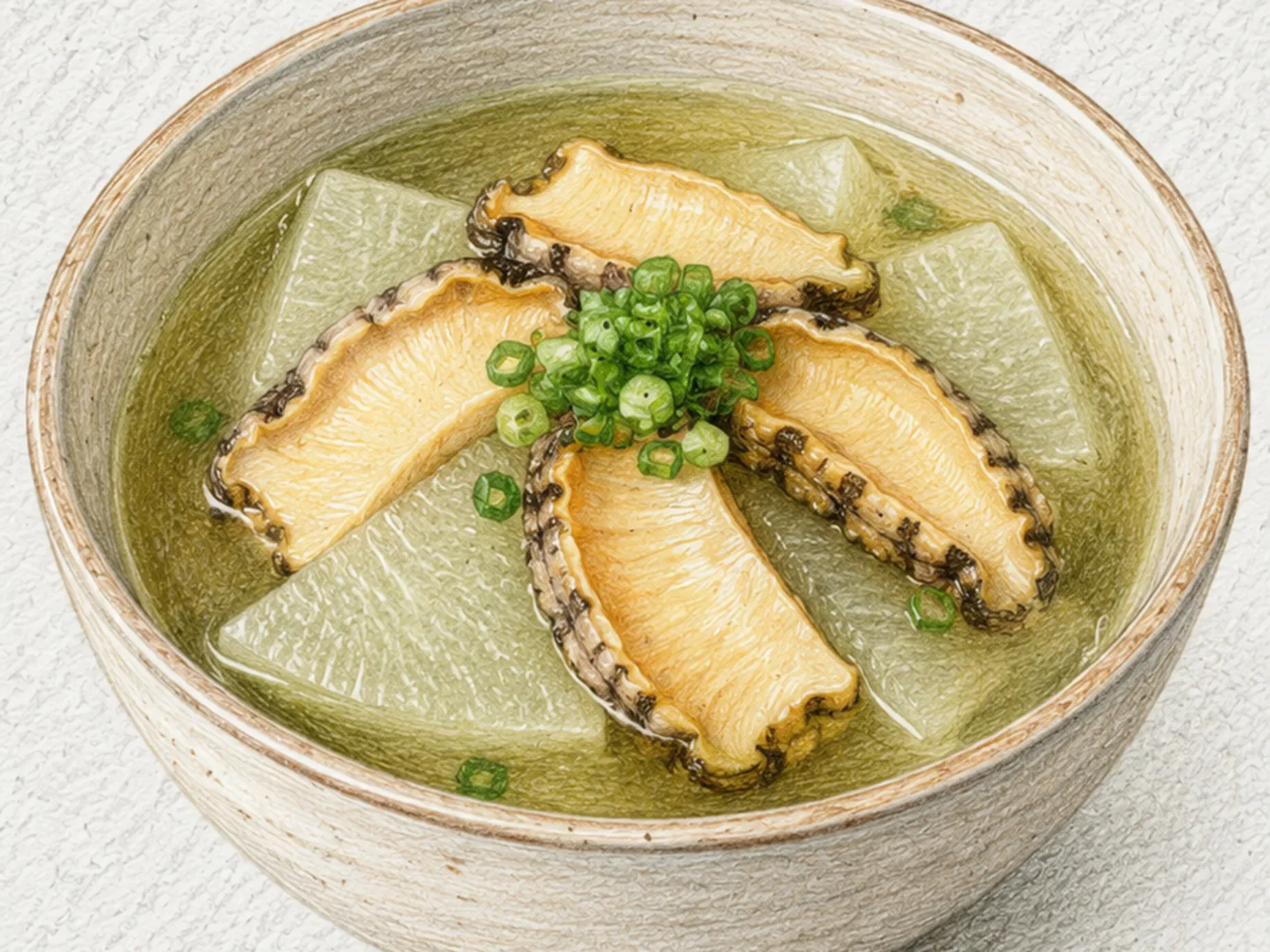
Jeonbok-muguk is a refined Korean soup that simmers sliced abalone and radish in a kelp-based broth. The preparation often begins by sautéing the abalone-innards included-in sesame oil, which turns the broth a faint green and introduces a concentrated marine richness that kelp alone cannot match. Radish slices cook alongside, softening and releasing a mild sweetness that counterbalances the abalone's salinity. Soup soy sauce and garlic are the only added seasonings, deliberately minimal so the abalone's distinctive flavor remains in focus. The abalone retains its firm, chewy bite even after simmering, providing a satisfying texture against the soft radish. In Korea, abalone soup signals a special-occasion meal or a gesture of care, yet the cooking itself is straightforward enough for a weeknight dinner.
Adjust Servings
Instructions
- 1
Scrub abalone shells, separate meat and innards, then slice thinly.
- 2
Cut radish into thin squares and finely slice green onion.
- 3
Simmer water with kelp for 8 minutes over low heat, then remove kelp.
- 4
In another pot, sauté abalone innards and radish in sesame oil for 2 minutes.
- 5
Add the kelp stock, abalone meat, and garlic, then simmer 12 minutes.
- 6
Season with soup soy sauce and salt, add green onion, and boil 1 more minute.
As an Amazon Associate, we may earn from qualifying purchases.
Tips
Nutrition (per serving)
More Recipes

Muguk (Korean Radish Anchovy Broth Soup)
Muguk is the most elemental expression of Korean soup - radish simmered in anchovy-kelp stock until the broth turns clear, sweet, and gently savory. The radish does nearly all the work: as it softens, its natural sugars and starch leach into the water, creating a broth that is mild yet far from bland. Seasoned with nothing more than soup soy sauce, garlic, and sliced green onion, muguk is the canvas upon which countless variations are painted. Add beef and it becomes sogogi-muguk; add dried pollock and it becomes hwangtae-muguk. On its own, it pairs with virtually any banchan because its flavor never competes. The soup's simplicity is also its practical advantage - a single radish, a handful of dried anchovies, and a strip of kelp are enough to produce a pot that feeds a family. Korean households return to muguk again and again precisely because it demands so little yet delivers a clean, warming comfort that few other dishes can match. It reheats without loss of quality and often improves overnight as the radish continues to soften and sweeten.

Ojingeo-muguk (Korean Squid Radish Soup)
Ojingeo-muguk is a clear Korean soup that pairs squid rings with radish in a gently sweet, savory broth. The radish goes in first and simmers for eight minutes, releasing a natural sweetness that forms the flavor base. Squid, cleaned and sliced into rings, is added afterward and cooked for no more than five minutes - just enough for the flesh to turn opaque and firm while staying tender. Overcooking would make it rubbery, so timing is critical. The squid contributes a clean seafood umami that merges with the radish's sweetness, creating a broth that is transparent yet surprisingly full. Soup soy sauce and garlic are the only seasonings, and a scattering of sliced green onion finishes the bowl. Without any chili, the soup is mild and soothing, making it one of the most approachable seafood soups in the Korean home repertoire.

Korean Dried Pollock Radish Soup
Hwangtae-muguk is an everyday Korean soup made with dried pollock strips and radish in a clean, clear broth. The pollock is first sautéed in sesame oil to coax out its characteristically nutty, savory fragrance, then water is added and the radish simmers until soft and sweet. Soup soy sauce and minced garlic provide the only additional seasoning, keeping the flavor profile transparent enough to let the pollock's concentrated umami and the radish's natural sweetness take center stage. The simplicity of the ingredient list belies the depth of the resulting broth, which tastes fuller than the sum of its parts. It is among the most frequently cooked soups in Korean homes, appearing on breakfast tables and as a reliable remedy on mornings after heavy meals.

Korean Beef Radish Soup (Sesame Oil Braised Beef and Daikon)
Sogogi muguk is one of the most frequently cooked soups in Korean households, built from just two main ingredients: beef and daikon radish. Thin-cut beef is stir-fried in sesame oil until lightly browned, then thick radish slices go into the pot before water is added. As the soup comes to a boil and then settles into a steady simmer, the radish transforms: its initial sharpness mellows into a clean sweetness that balances the beef's depth, and its starch clouds the broth just enough to give it body. Soup soy sauce provides the seasoning, tinting the liquid a pale amber while pushing umami forward over saltiness. Minced garlic added near the end lends a quiet heat that sits behind the main flavors rather than competing with them. The radish, when properly cooked, should yield easily to a spoon yet still hold a hint of structure at its center. This soup also serves as the foundational broth for tteokguk on Lunar New Year, and Koreans reach for it instinctively when the weather turns cold or the body needs warming.

Korean Clear Broth Tofu Stew
Tofu simmers in a deep beef stock alongside shiitake mushrooms and zucchini in this clean-flavored stew. The quality of the beef stock drives the entire dish, with shiitake mushrooms reinforcing the umami depth. Soft tofu cubes absorb the rich broth, while zucchini contributes a mild sweetness. Seasoned only with soup soy sauce and salt, this stew showcases a restrained, elegant approach to Korean jjigae without any chili heat.

Korean Anchovy Broth Thin Noodle Soup
Anchovy somyeon is the noodle soup Korean families turn to when the kitchen has nothing special - dried anchovies, a strip of kelp, and a bundle of thin wheat noodles are all it takes. The broth is built by simmering dried anchovies and dashima in water for fifteen minutes, then straining for a clear, umami-rich liquid with a faint oceanic sweetness. Somyeon - hair-thin wheat noodles - cook in a separate pot to prevent their starch from clouding the broth, then are rinsed under cold water until the strands separate cleanly. The noodles sit in a bowl of the hot broth, topped with sliced scallion, a drop of sesame oil, and sometimes a sheet of toasted gim. The appeal lies in its restraint: no chili, no fermented paste, just clean anchovy flavor meeting springy noodles. Korean mothers have served this as a quick lunch for generations, and it remains comfort food in its most distilled form.