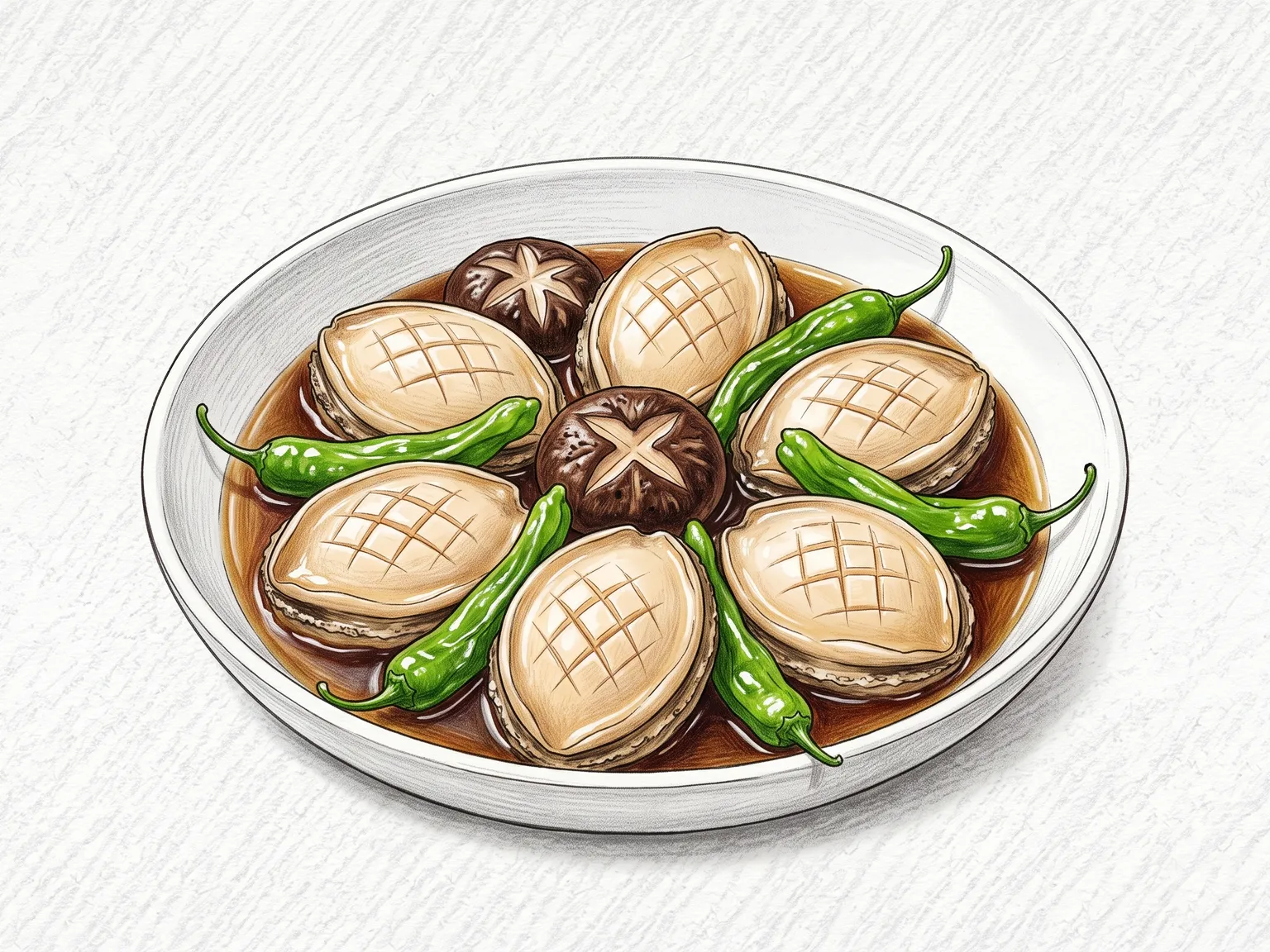
Jeonbokjang (Korean Soy-Marinated Abalone)
Quick answer
- Total time
- At least 1 day 1 hr 50 min
- Level
- Medium
- Servings
- 5 servings
- Ingredients
- 10
About this dish
Jeonbokjang is made two ways in Korea: with raw abalone, or with abalone that has been lightly cooked first.
Read more
This recipe steams it. Soy brine does not cook abalone, so a raw version depends entirely on raw-grade quality and on keeping everything refrigerated from cleaning to marinating; cooking it first means people who should avoid raw seafood can eat it too. Stop steaming as soon as the flesh is opaque to the center. Longer steaming shrinks and toughens it, and a day in the brine will not soften it again. The crosshatch cuts on top give the brine a way into the thick flesh. Live abalone is sold at many Korean and Asian fish counters; frozen raw abalone in the shell can be thawed in the refrigerator and steamed the same way.
Ingredients
As an Amazon Associate, we may earn from qualifying purchases.
Instructions
Stops the screen from turning off while you cook.
- 1
Scrub the shells and the exposed flesh of the abalone with a brush or toothbrush to remove grit, and rinse under running water.
- 2
When the water under the steamer is boiling and producing plenty of steam, set the abalone in the shell, flesh side up, in a single layer. Cover and steam over medium heat for 8 minutes; take them out when the flesh is opaque to the center and springs back when pressed.
- 3
Once they have cooled slightly, slide a spoon inside the shell to free the flesh.
Separate the viscera and cut away the hard teeth at the mouth. Seal and refrigerate the viscera separately for abalone porridge.
- 4
Score the top of each abalone in a shallow crosshatch about 5 mm apart.
Spread them on a plate and chill in the refrigerator.
- 5
Put 300 ml water, 150 ml soy sauce, 50 ml mirin and 2 tablespoons sugar in a pot with the garlic, sliced ginger, leek and dried shiitake. Bring to a boil, lower to medium-low and simmer for 10 minutes. Add the shishito peppers, simmer 1 minute more and turn off the heat.
- 6
Lift out the shiitake and shishito and set them aside, then strain out the remaining solids.
Cool the brine in a shallow metal container over an ice bath, then refrigerate for at least 1 hour, until it is 4°C (39°F) or below all the way through.
- 7
Place the abalone, scored side up, in a sterilized airtight container and top with the shiitake and shishito.
Pour in the chilled brine to cover, close the lid and refrigerate for 24 hours.
- 8
To serve, slice thinly along the scoring and spoon over a little brine.
Keep the rest submerged in the brine in the refrigerator and lift pieces out with clean tongs.
References checked
These references were consulted when this page was prepared or corrected. A source check does not mean the recipe was independently kitchen-tested.
- 7월 이달의 수산물 전복: 고르는 법, 손질법, 보관법, 요리법 (2026-07-03)
해양수산부 어식백세 · Checked: 2026-10-20
- 전복장 레시피 (2023-06-21, 만개의레시피 회원 레시피 소개)
해양수산부 어식백세 · Checked: 2026-10-20
- 해수온도 상승, 비브리오 식중독 주의 당부 (보도자료, 2025-09-05)
식품의약품안전처 · Checked: 2026-10-20
- 장염 비브리오·패혈증 주의보, 어패류 85℃ 이상 가열 (식약처 안내 보도, 2018-08-09)
데일리팜 · Checked: 2026-10-20
Use-up ingredient planner
Turn these ingredients into two more meals
The overlap excludes basic seasonings. Open the next recipe and your selected dishes will stay with you.
Korean Boiled Chicken Soup
whole garlic cloves, fresh ginger
Ganjang Gejang (Korean Soy-Marinated Raw Crab)
whole garlic cloves, fresh ginger
Ganjang Saeujang (Korean Soy-Marinated Raw Shrimp)
whole garlic cloves, fresh ginger