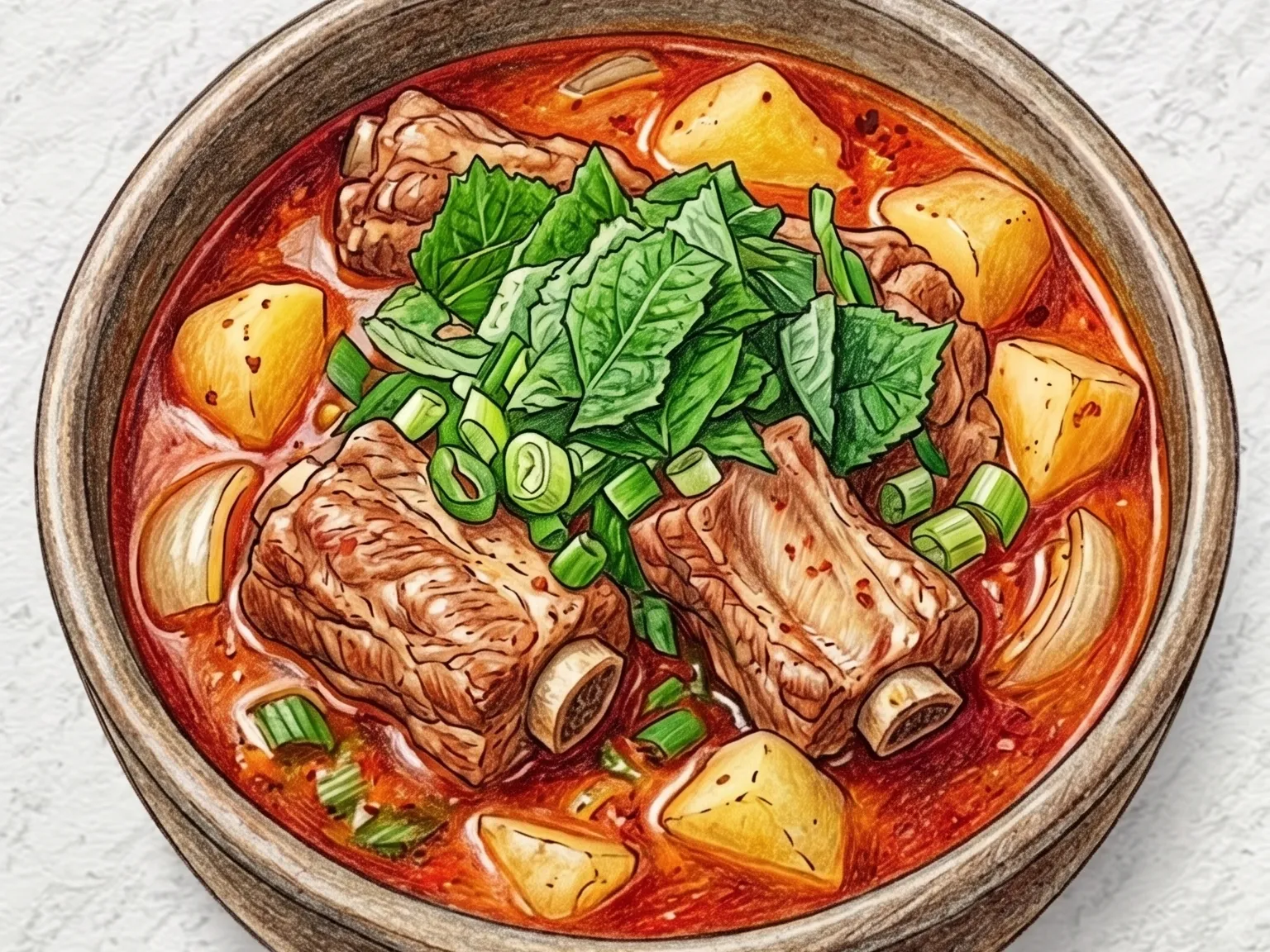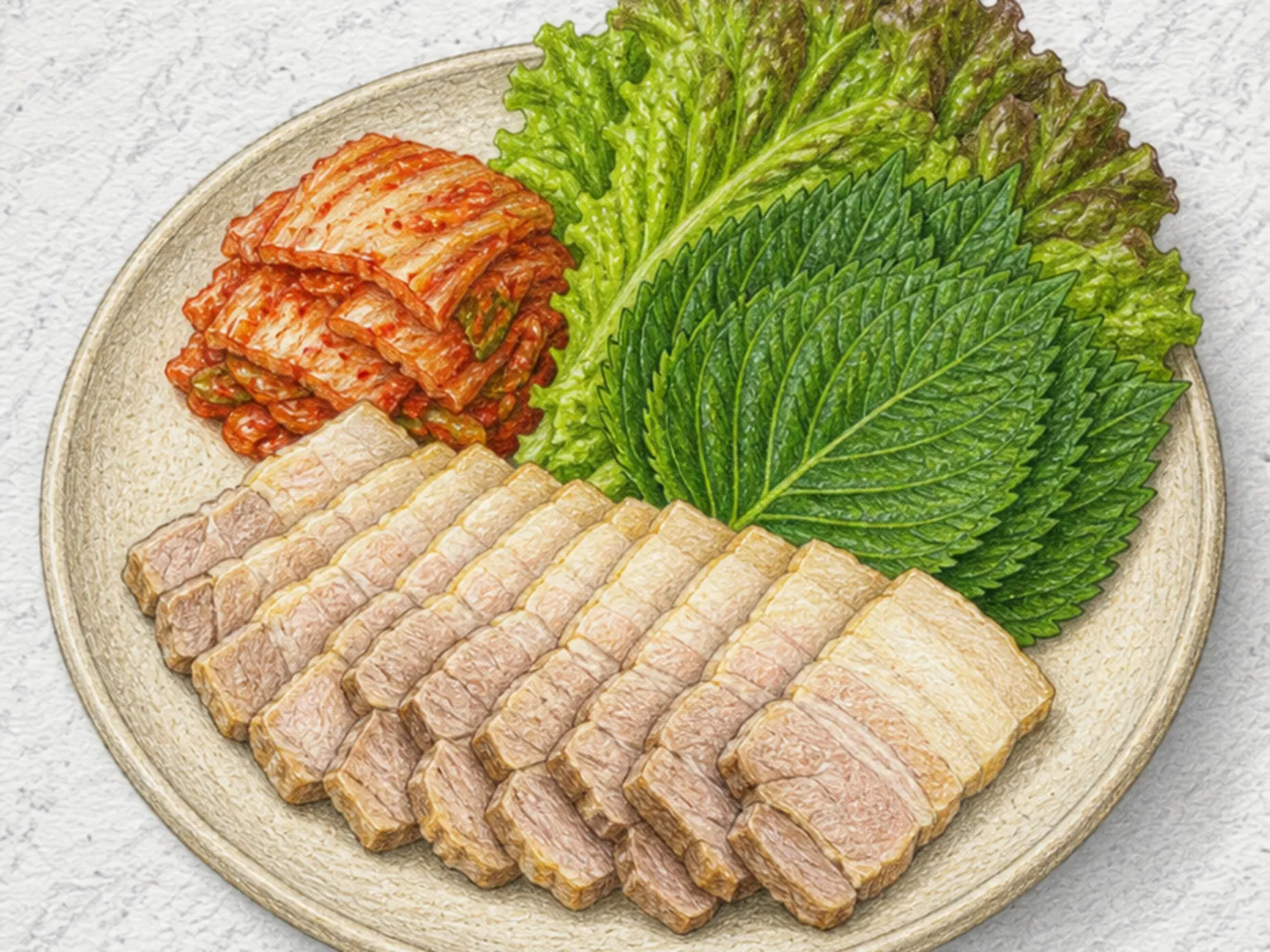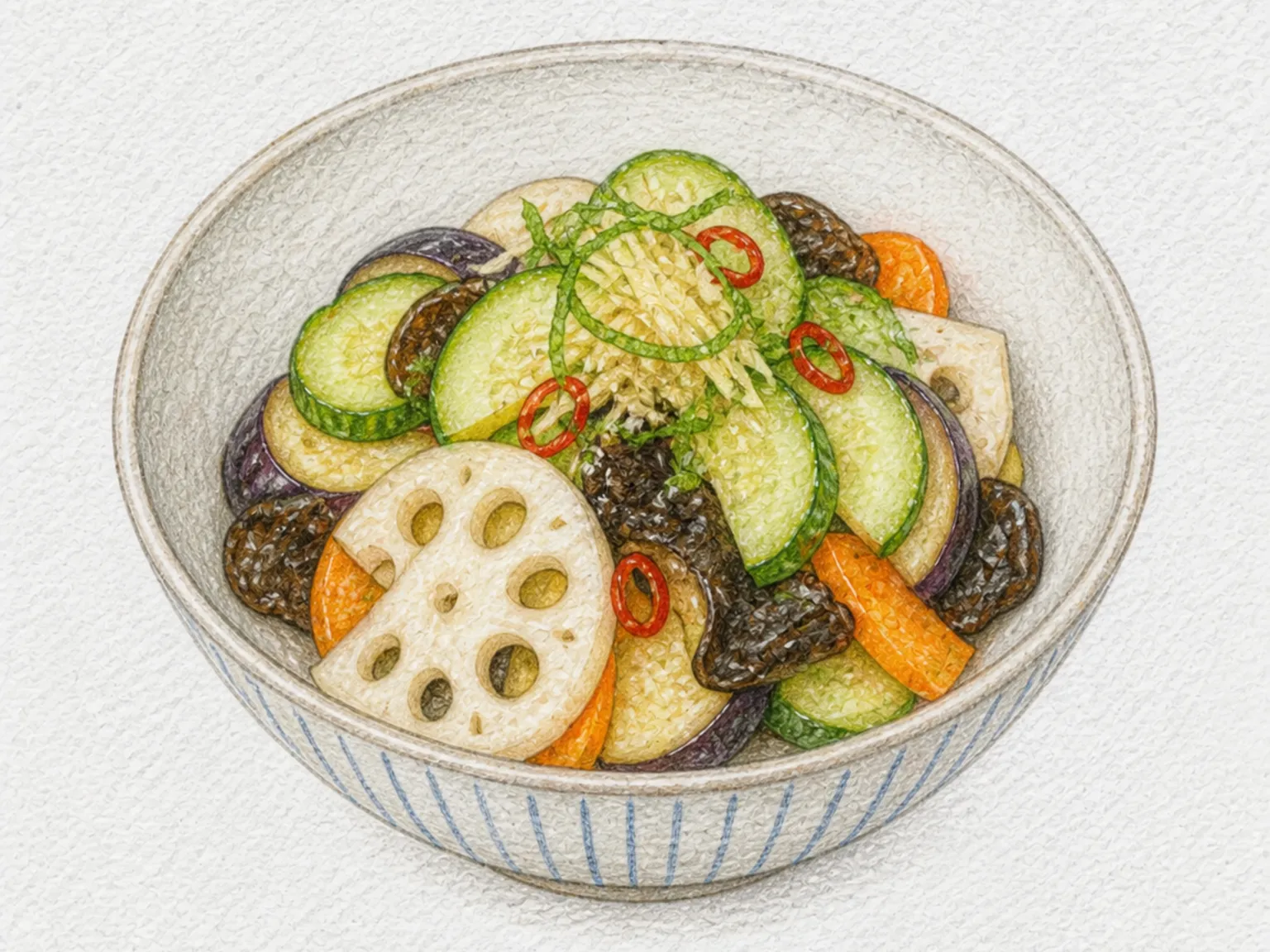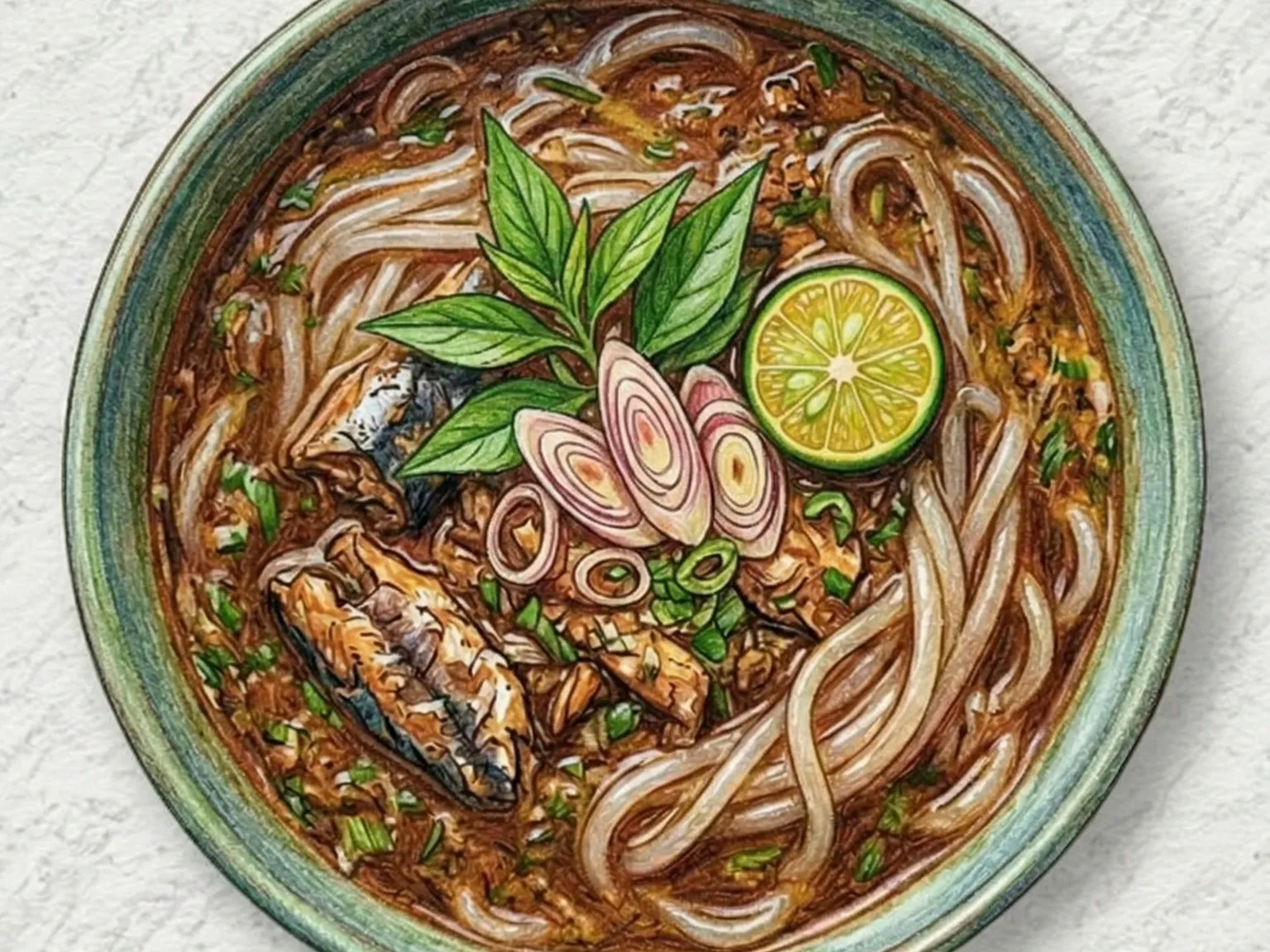
Tamarind Fish Noodle Soup
Asam laksa is Penang's defining noodle soup, recognized by UNESCO as one of Malaysia's intangible cultural heritage items. Where Singapore's curry laksa builds its richness on coconut milk, this version draws its entire character from a tamarind-soured fish broth that is tart, briny, and aggressively aromatic in a way that coconut-based versions never are. Whole mackerel is poached until it flakes, then removed and broken apart by hand; the remaining liquid is blended with torch ginger flower, lemongrass, and galangal pounded into a coarse paste to build the broth's layered fragrance. Tamarind sourness arrives first and dominates the initial impression, followed by a slow build of chili heat and the ocean depth of fish sauce. Thick rice noodles sit at the bottom of the bowl, their chewy resistance offering physical contrast to the sharp, lean broth that pours over them. The table condiments - julienned cucumber, fresh mint leaves, thinly sliced onion, and a spoonful of belacan-enriched prawn paste - are not optional garnishes but integral components: the fermented prawn paste in particular adds a dimension of umami that rounds the broth's acidity into something far more complex. Every hawker stall in Penang has its own spice ratios handed down through family lines, which is why no two bowls taste exactly alike.

Black Sesame Tangyuan (Glutinous Rice Balls with Sesame Paste Filling)
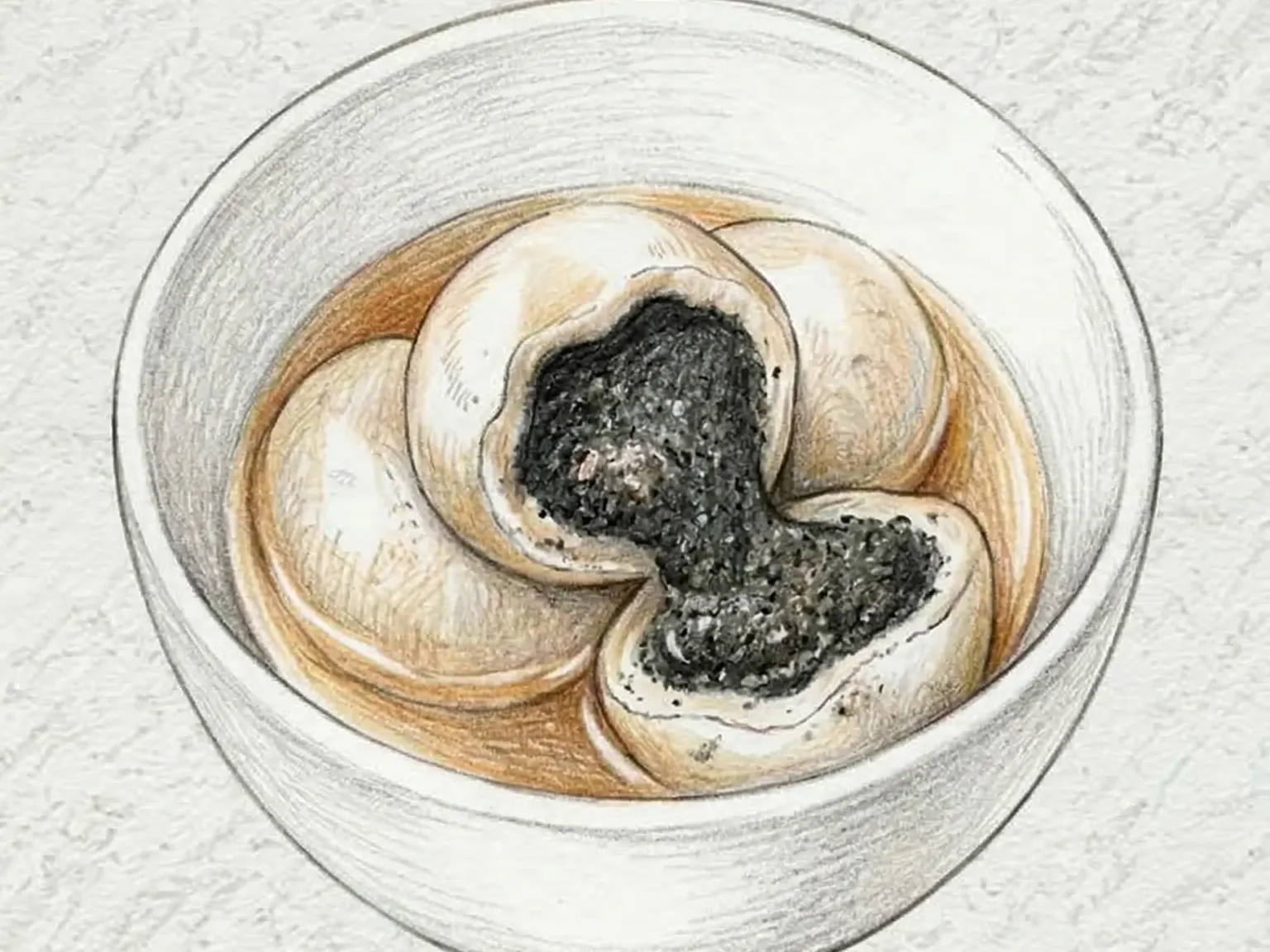
Black sesame tangyuan are Chinese glutinous rice dumplings filled with a dense, jet-black sesame paste and traditionally served in a light ginger broth during Yuanxiao Festival and the Winter Solstice -- occasions when eating round dumplings represents family reunion and wholeness. The filling is made by grinding toasted black sesame seeds and mixing them with sugar and softened butter until a thick, almost solid paste forms; chilling this paste before wrapping makes it much easier to handle and prevents it from oozing out during shaping. The outer dough is shaped from glutinous rice flour mixed with just enough boiling water to create a smooth, pliable skin that seals without cracking. Dropped into boiling water, the dumplings are ready when they float to the surface, at which point they should be transferred promptly to avoid overcooking and tearing. A single bite breaks through the springy, chewy exterior and releases the molten sesame filling, which flows out with concentrated nuttiness. Served in a ginger syrup made by simmering fresh ginger slices with rock sugar, the warmth and mild spice of the broth complement the heavy richness of the sesame, making the bowl feel balanced despite its density. The textural contrast between the elastic skin and the flowing interior is what makes tangyuan distinctly satisfying.

Korean Restaurant-Style Kkakdugi
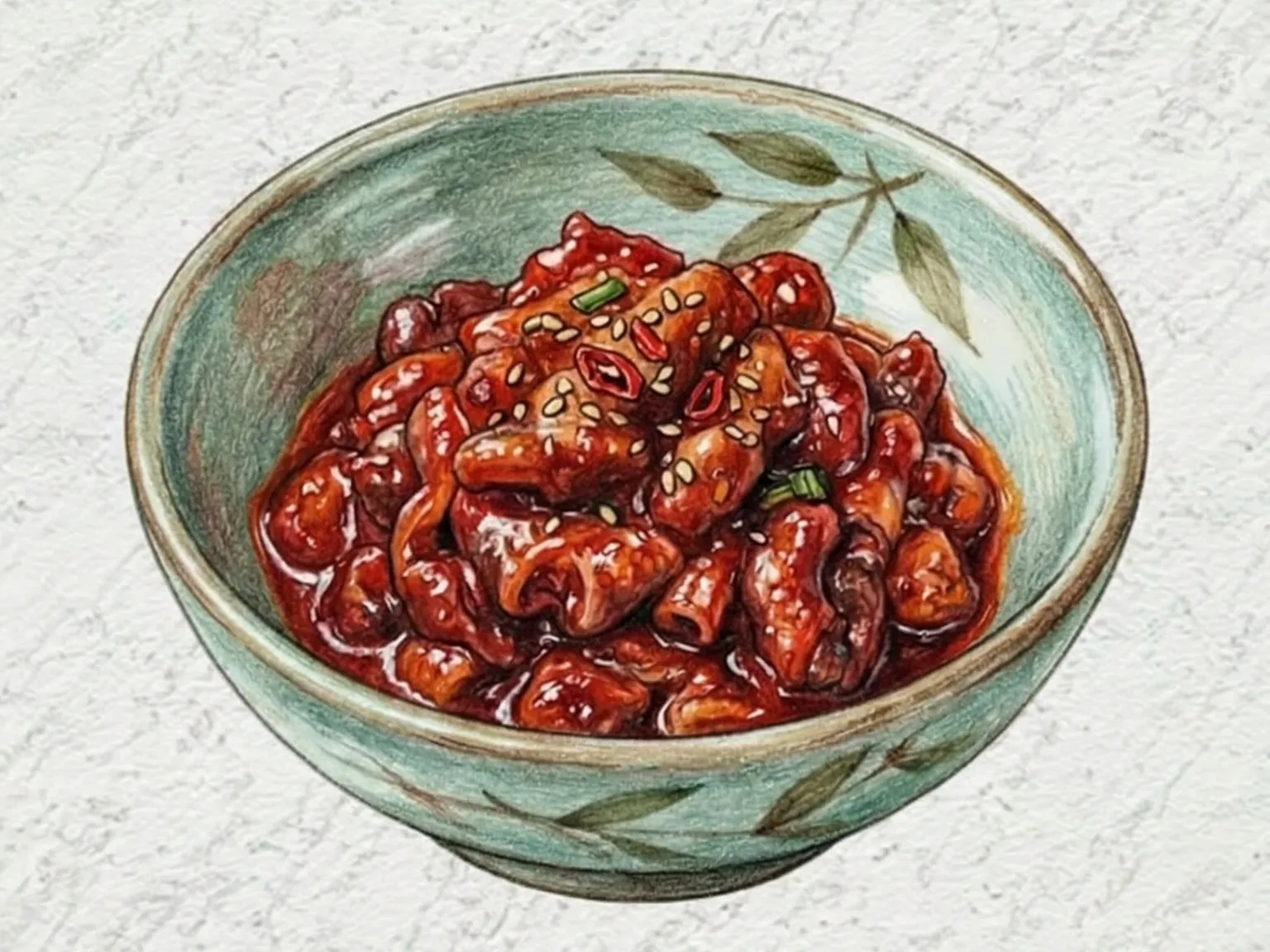
Sikdang-style kkakdugi is the cubed radish kimchi served as a complimentary banchan at virtually every Korean restaurant, standing alongside baechu-kimchi as a permanent fixture on the Korean table. Cutting Korean radish into chunky 2 cm cubes preserves crunch deep into the flesh even after salting and fermentation. Twenty minutes in coarse salt draws out excess moisture, and the cubes are then coated in a seasoning mixture of gochugaru, anchovy fish sauce, garlic, ginger, and sugar. The fish sauce lays the umami foundation that develops further during fermentation, while ginger suppresses the raw edge of the radish and leaves a clean finish. One day at room temperature initiates lactic acid fermentation, producing the characteristic tingle of an active kimchi, after which refrigeration allows the flavor to mature steadily over two to three weeks. Winter radish carries more natural sugar, so the added sugar can be reduced without sacrificing sweetness. In summer, shortening the room-temperature rest to half a day before refrigerating prevents the kimchi from becoming overly sour. It pairs particularly well alongside grilled pork belly, rice noodle soup, and earthenware pot rice soup, where its acidity cuts through the richness of the main dish.

Korean Bok Choy Crab Porridge
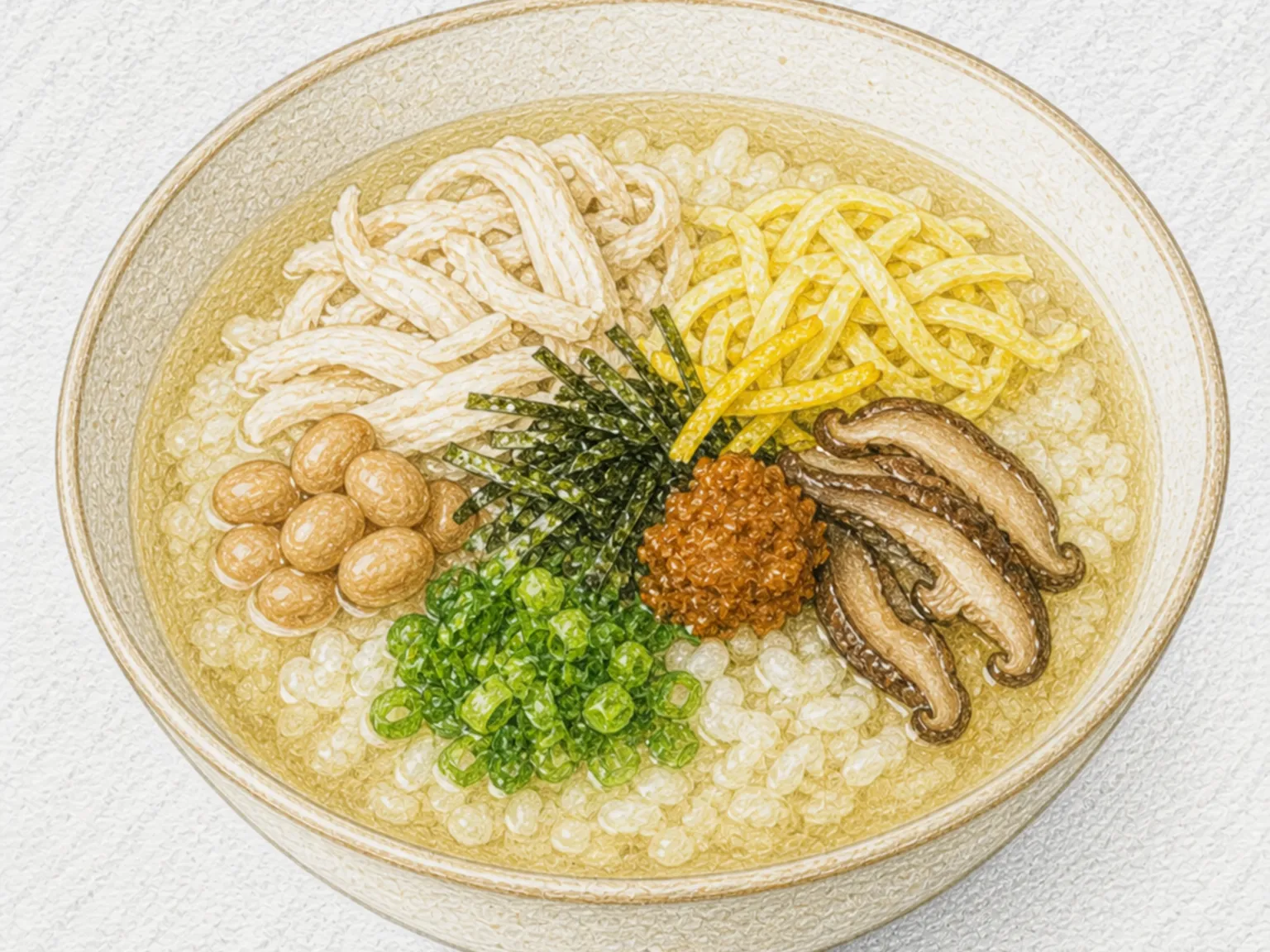
Cheonggyeongchae gesal juk is a Korean porridge that begins by sauteing onion and ginger in sesame oil to build an aromatic base, then simmering soaked rice with crab meat until the grains soften into a smooth, flowing consistency. Bok choy goes in near the end to preserve its bright green color and gentle crunch. The crab brings a mild sweetness that spreads evenly through the porridge and adds a refined savoriness, while ginger keeps the flavor clean and free of any fishiness; sesame oil's fragrance lingers subtly throughout. Soaking the rice beforehand allows the grains to break down evenly within a shorter cook time, and stirring regularly prevents sticking at the bottom. Light on the stomach and gently warming, this porridge suits a morning meal, a day when the body needs something easy, or the shift between seasons.

Japanese Braised Pork Belly
Thick cubes of pork belly are blanched for five minutes to remove impurities, then simmered in water with ginger and green onion for fifty minutes until the fat layers turn translucent and completely tender. The parboiled meat transfers to a fresh pot with soy sauce, mirin, and sugar, where it braises over medium-low heat for another thirty minutes as the liquid reduces by half and lacquers each piece in a dark, glossy coat. Mirin carries off residual off-odors along with its alcohol as it heats, while leaving a gentle sweetness behind in the meat. Ginger neutralizes the musky, funky quality that pork belly fat tends to develop during prolonged cooking. Boiled eggs added to the braising liquid absorb the soy-mirin mixture through their whites, turning amber and picking up savory flavor all the way through to the yolk. Cooling the finished dish completely and reheating it once deepens the texture further: the collagen that dissolved during cooking sets into a firm gel while cold, then melts again on reheating, thickening the sauce into something close to a demi-glace. Skimming the solidified fat from the chilled surface removes excess grease without stripping any of the flavor.

Baesuk (Korean Poached Pear Punch)
Baesuk is a traditional Korean punch made by slowly simmering whole or large-cut Korean pear with ginger, whole black peppercorns, and dried jujubes. As the pear cooks over low heat, its juice gradually dissolves into the liquid, building a natural sweetness that forms the drink's backbone. Ginger contributes a warm, peppery sharpness that interlocks with the pear's sweetness, producing a flavor that is comforting yet clean. Whole peppercorns are added sparingly and function as an aromatic element rather than a source of actual heat. Jujubes add a faint reddish tint and a mild fruity undertone to the liquid. Honey is stirred in after the heat is turned off and the temperature has dropped slightly to preserve its fragrance; because the pear already provides significant sweetness, the honey amount should start small and be adjusted by taste. Overnight refrigeration allows the ginger and pear flavors to penetrate more fully, rounding out the drink. Pine nuts floated on the surface before serving add a subtle oily richness to the finish of each sip. Historical records indicate that baesuk appeared on royal banquet tables during the Joseon dynasty and at aristocratic tea spreads, and Korean traditional medicine has long recommended it as a remedy for cold prevention and digestive support. Even today it remains a seasonal drink associated with holidays and ancestral rite preparations.

Korean Pear Bellflower Root Tea
Baedoraji-cha is a traditional Korean herbal tea that is prepared through the slow simmering of Asian pears and bellflower roots. The processing of the bellflower root, referred to as doraji in Korean, represents an essential stage of the recipe. Because raw bellflower roots contain a sharp bitterness that can give the tea a harsh medicinal quality, the roots must be peeled and treated with salt. This involves kneading the roots firmly by hand with salt and then rinsing them with water. Repeating this sequence of kneading and rinsing two or three times is necessary to draw out the bitter compounds from the plant. The pear is prepared by removing the core and cutting the fruit into uniform chunks. The skin can either be retained or removed according to individual preference before the pieces are placed into the pot. As the pear pieces simmer, their juice integrates into the water to provide a natural sweetness without the requirement of added sugar. To complement these main components, a few slices of fresh ginger and a handful of dried jujubes are added to the mixture. The ginger introduces a subtle warmth and a slightly peppery flavor that helps to soften the herbal intensity of the bellflower root. At the same time, the dried jujubes provide a light fruity depth and give the tea its distinctive color. The ingredients are left to infuse over low heat for approximately thirty to forty minutes to ensure that the flavors from the various components are fully extracted into the water. After the simmering process is finished, the sweetness of the beverage can be adjusted with jocheong, which is a traditional grain syrup. This syrup is utilized because it blends into the liquid more smoothly than honey or granulated sugar. This beverage is traditionally served warm during seasons characterized by cold or dry air. It is often consumed when the throat feels dry or irritated, as the saponins present in the bellflower root are recognized for their soothing properties.

Korean Soy Glazed Chicken Wings
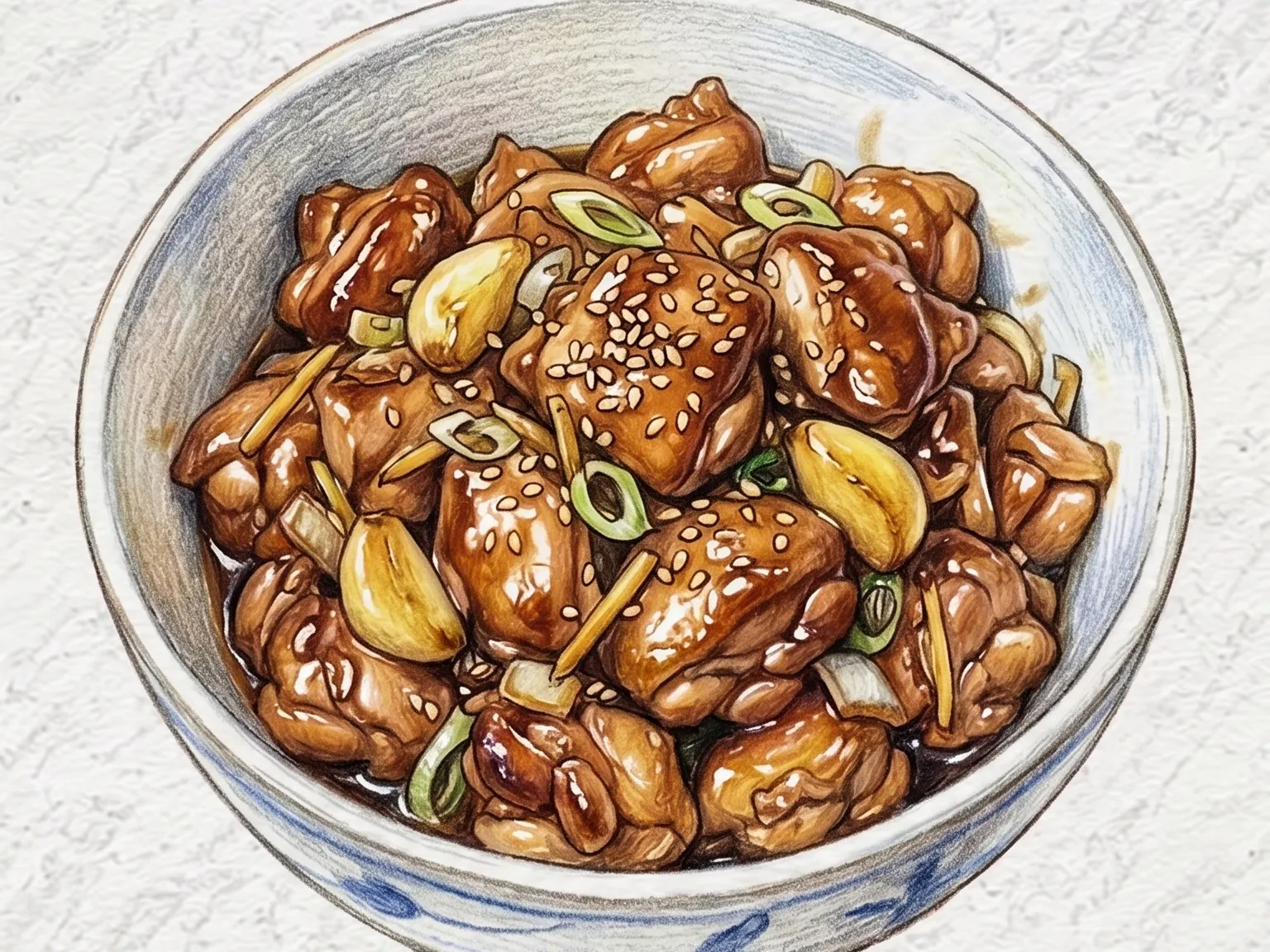
Dakbong-ganjang-gui is a Korean soy-glazed chicken wings dish where the wings marinate in a mixture of dark soy sauce, cooking wine, honey, minced garlic, and ginger for at least an hour so the seasoning works its way to the bone. The collagen concentrated around the wing bones melts during the long cook, creating a sticky, gelatinous quality beneath the skin that gives these smaller cuts a more satisfying chew than larger pieces. The sugars in the soy-honey glaze caramelize under heat and build a glossy, dark-brown coating that thickens with each basting. Basting once or twice mid-cook layers the glaze, and finishing at higher heat for the last few minutes crisps the surface while leaving the interior moist and tender. The contrast between the glazed exterior and the yielding meat beneath is the defining quality of the dish. A drizzle of sesame oil and a scatter of toasted sesame seeds over the finished wings add a roasted nuttiness that deepens the savory-sweet profile and signal that the dish is complete.

Korean Boiled Chicken Soup
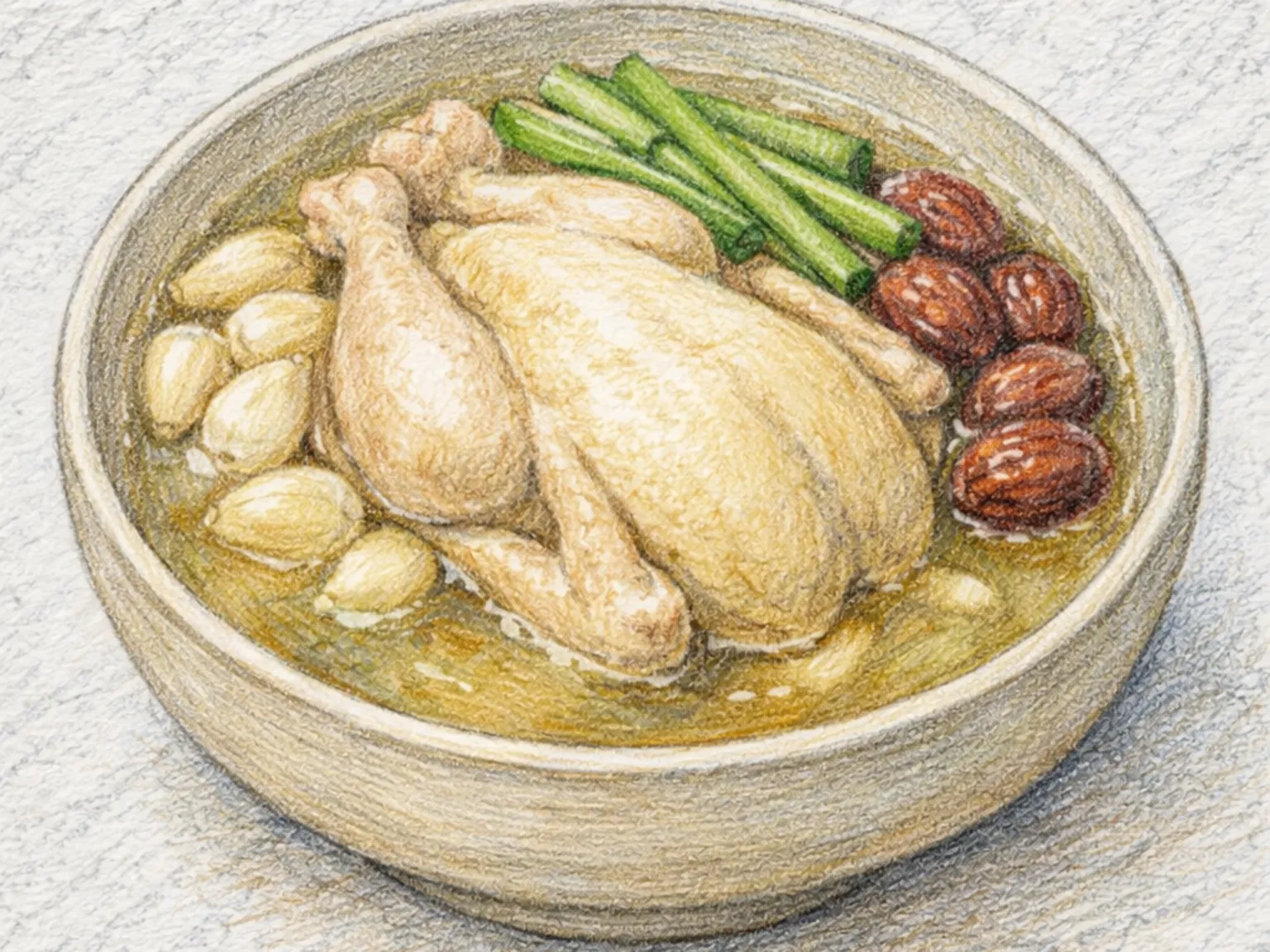
Dak-baeksuk is a Korean whole-chicken soup simmered for over fifty minutes with whole garlic cloves, jujubes, green onion, and ginger in a large pot of water until the broth runs clear and deeply flavored. Skimming fat and foam throughout the cooking process is essential for the signature clarity of the broth. Neglecting this step leaves the soup greasy and cloudy when reheated the next day. The jujubes contribute a subtle sweetness and the garlic, softened to near-paste after the long simmer, dissolves into the liquid to create a mellow depth that needs nothing more than salt and pepper to taste complete. The chicken is shredded against the grain for the softest possible texture, then returned to the hot broth so every bite of meat is saturated with the clean, aromatic stock. Unlike samgyetang, dak-baeksuk skips ginseng, making it simpler to prepare while remaining a staple restorative meal eaten during Korea's hottest summer days.

Korean Flower Crab Pancake
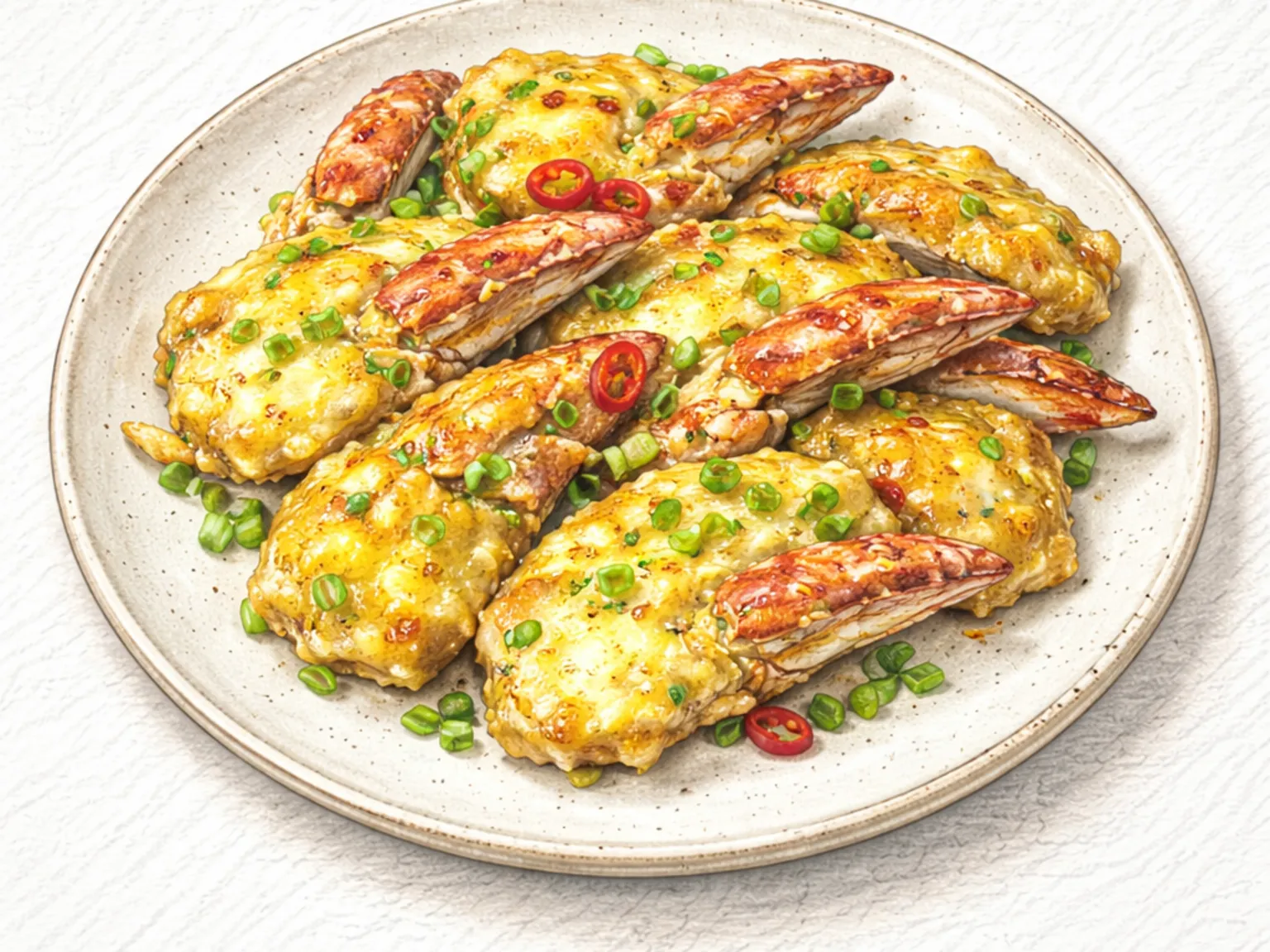
Fresh blue crab meat is picked clean, coated in a mixture of all-purpose flour and Korean pancake mix, dipped in beaten egg, and pan-fried until the surface turns golden. The crab's natural sweetness and mild brininess stay intact throughout the process, and minced ginger cuts through any residual fishiness without announcing itself in the finished jeon. Black pepper is added in small amounts - just enough to clean up the aftertaste without competing with the delicate crab. The egg coating holds moisture inside, keeping the meat tender while the outside crisps to a light, golden crust. A generous amount of crab filling in each piece is what makes the texture satisfying.

Japanese Simmered Yellowtail and Daikon
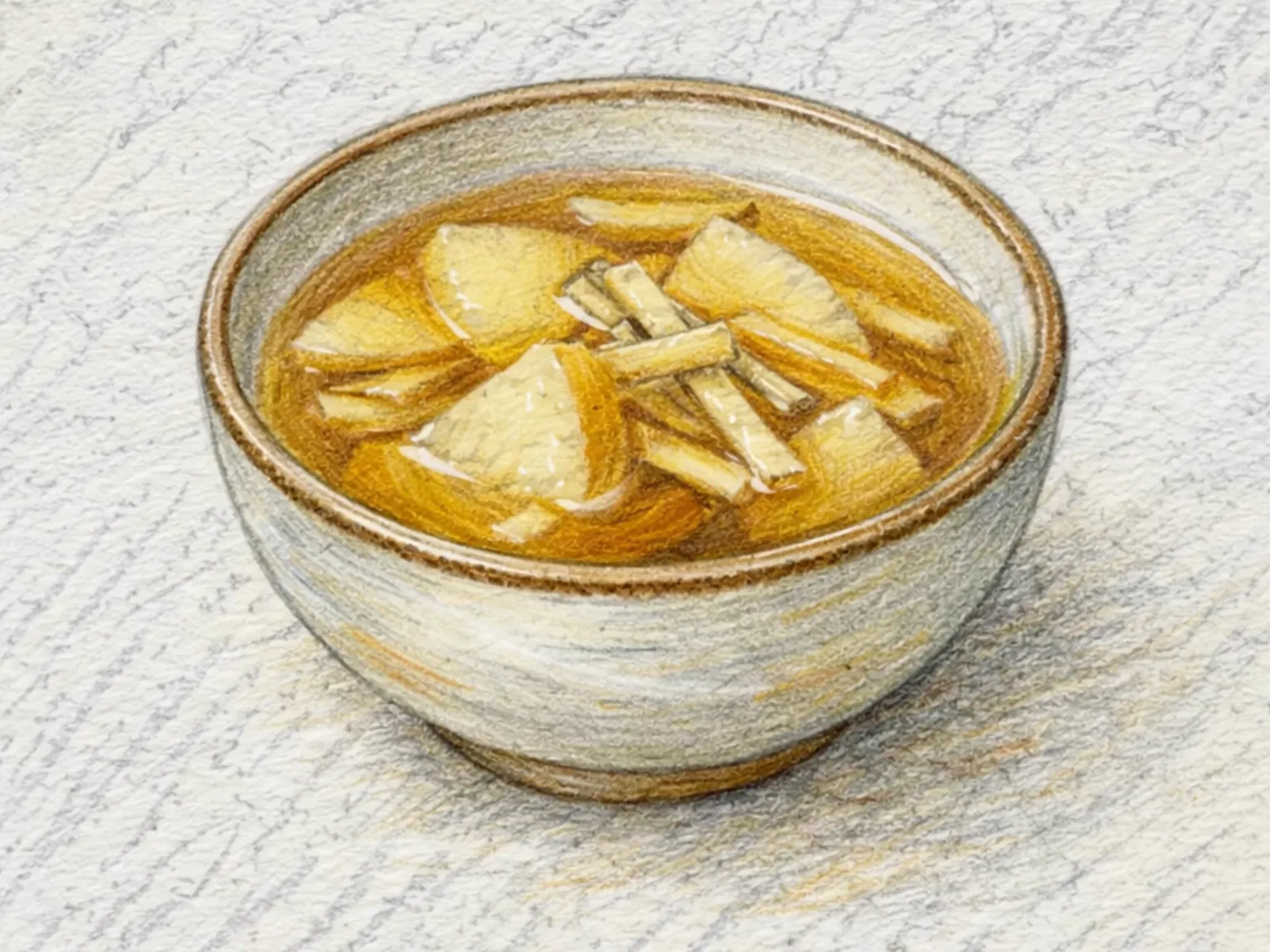
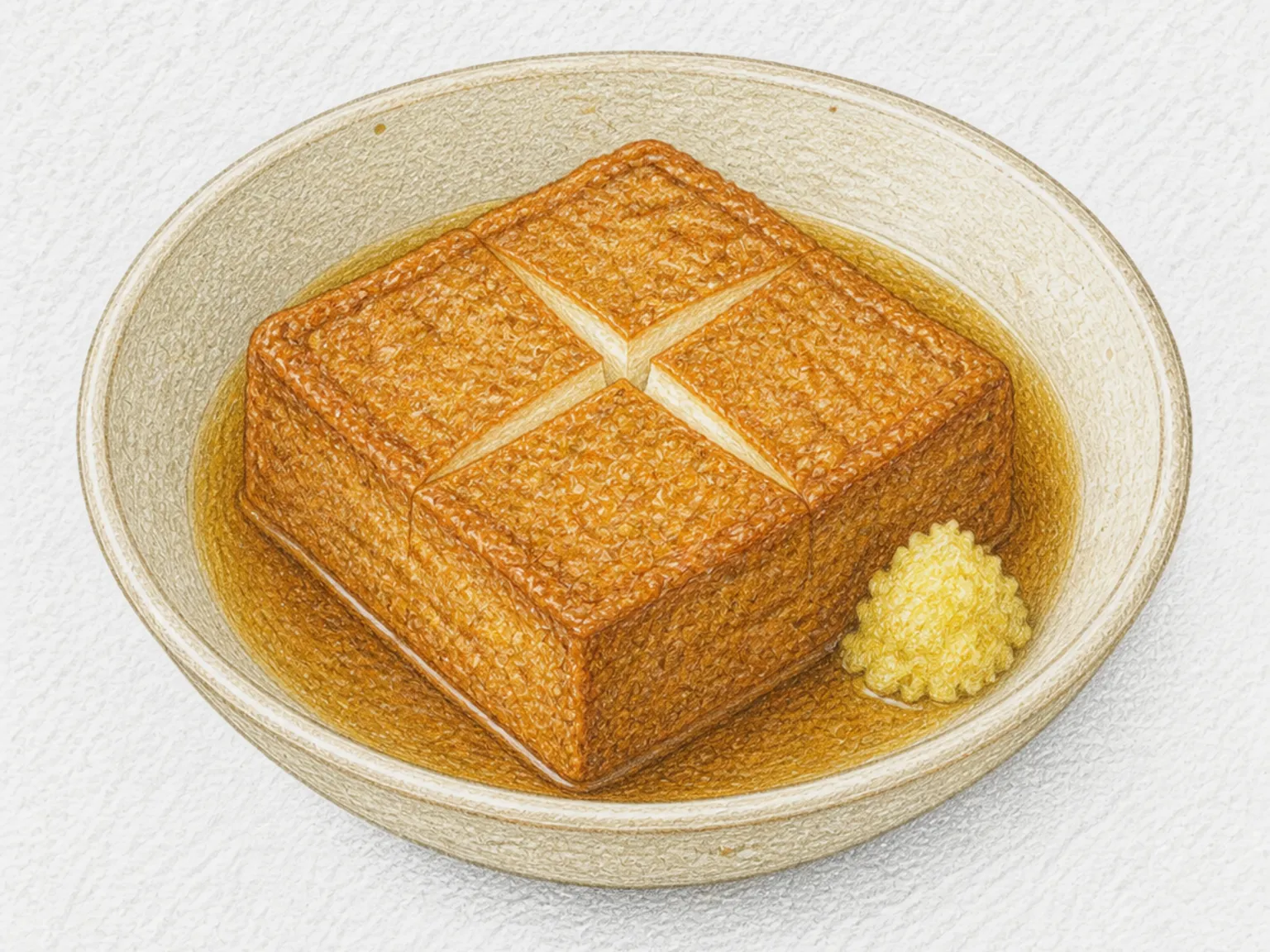
Yellowtail and daikon are simmered in a dashi broth seasoned with soy sauce, mirin, and sake until the braising liquid concentrates around the fish. The daikon absorbs the rich stock as it cooks, turning tender and translucent with a deep savory flavor throughout. Sliced ginger added to the pot neutralizes the fishiness without masking the yellowtail's natural richness. Sugar tempers the salt in the soy, producing a glaze that coats the skin and clings to the daikon. The dish is best from December through January, when yellowtail carries its peak fat content and yields the most flavorful braising stock.

Korean Napa Cabbage Kimchi
Baechu kimchi is Korea's definitive fermented food - salted napa cabbage layered with a seasoning paste of gochugaru, anchovy fish sauce, garlic, ginger, and glutinous rice paste, then fermented at controlled temperatures until the correct balance of salt, heat, umami, and lactic acid develops. Kimchi is not a pickled vegetable in the Western sense; it is a living fermented food whose character changes continually from the moment it is made. The salting step is the technical foundation. Coarse sea salt draws moisture from the cabbage over six to eight hours, making the stems flexible while leaving the characteristic crunch intact. Under-salting results in kimchi that weeps too much liquid during fermentation and turns mushy; over-salting suppresses microbial activity and masks the seasoning. The glutinous rice paste in the seasoning serves two purposes simultaneously: it acts as an adhesive that keeps the seasoning paste clinging to each leaf rather than sliding off, and it provides fermentable sugars that give the lactobacillus bacteria an early food source, accelerating the initial fermentation. Julienned radish adds textural contrast, and scallions contribute a layer of savory depth. After one day at room temperature to establish the bacterial culture, the kimchi moves to cold storage where lactic acid accumulates slowly. At two to three weeks, the heat from gochugaru, the umami from fish sauce, and the acidity from fermentation reach their optimal equilibrium. Older kimchi - four weeks or more - develops a pronounced sourness and deeper, more fermented flavor that makes it better suited for cooking in kimchi-jjigae or kimchi-bokkeum than for eating raw.

Lanzhou Beef Noodles (Clear Spiced Beef Shank Soup Noodles)
Lanzhou beef noodles are a clear-broth noodle soup originating from Lanzhou in China's Gansu province. Beef shank is soaked in cold water for thirty minutes to draw out blood, blanched, then simmered for two hours with star anise, a cinnamon stick, ginger, and garlic. Diligent skimming during the early stages of simmering is what keeps the broth transparent despite its long cooking time. Daikon radish is added to the strained broth and simmered until translucent, and the seasoning is kept to soy sauce and salt. The cooked beef is sliced thin and arranged over noodles in the bowl, with green onion, cilantro, and a drizzle of chili oil on top. Traditional versions use hand-pulled noodles stretched to order, but store-bought Chinese wheat noodles work as a practical substitute at home. The long cook time yields a broth that is clear yet deeply savory, which is the defining quality of this noodle.

Chicken Tikka Masala
Chicken tikka masala marinates chicken overnight in yogurt, curry powder, garlic, and ginger, then grills or broils it at high heat to develop char on the surface before finishing in a sauce of tomato puree, garam masala, and heavy cream. The lactic acid in yogurt gently breaks down surface proteins while acting as a vehicle to drive the spices deeper into the meat. Browning diced onion in butter, then cooking tomato puree with garam masala for at least fifteen minutes allows the sharp, raw edges of the spices to mellow and integrate fully, building a sauce base with genuine depth. Heavy cream added just before serving wraps the tomato acidity and chili heat in a smooth, rich body that unifies the dish. Overnight marination makes a substantial difference compared to a short soak, as the spices have time to penetrate to the center of each piece. Basmati rice or naan bread served alongside is standard, and dragging the bread through the sauce captures the full range of flavor in a single bite.

Ayam Bakar (Indonesian Grilled Chicken in Sweet Soy Marinade)
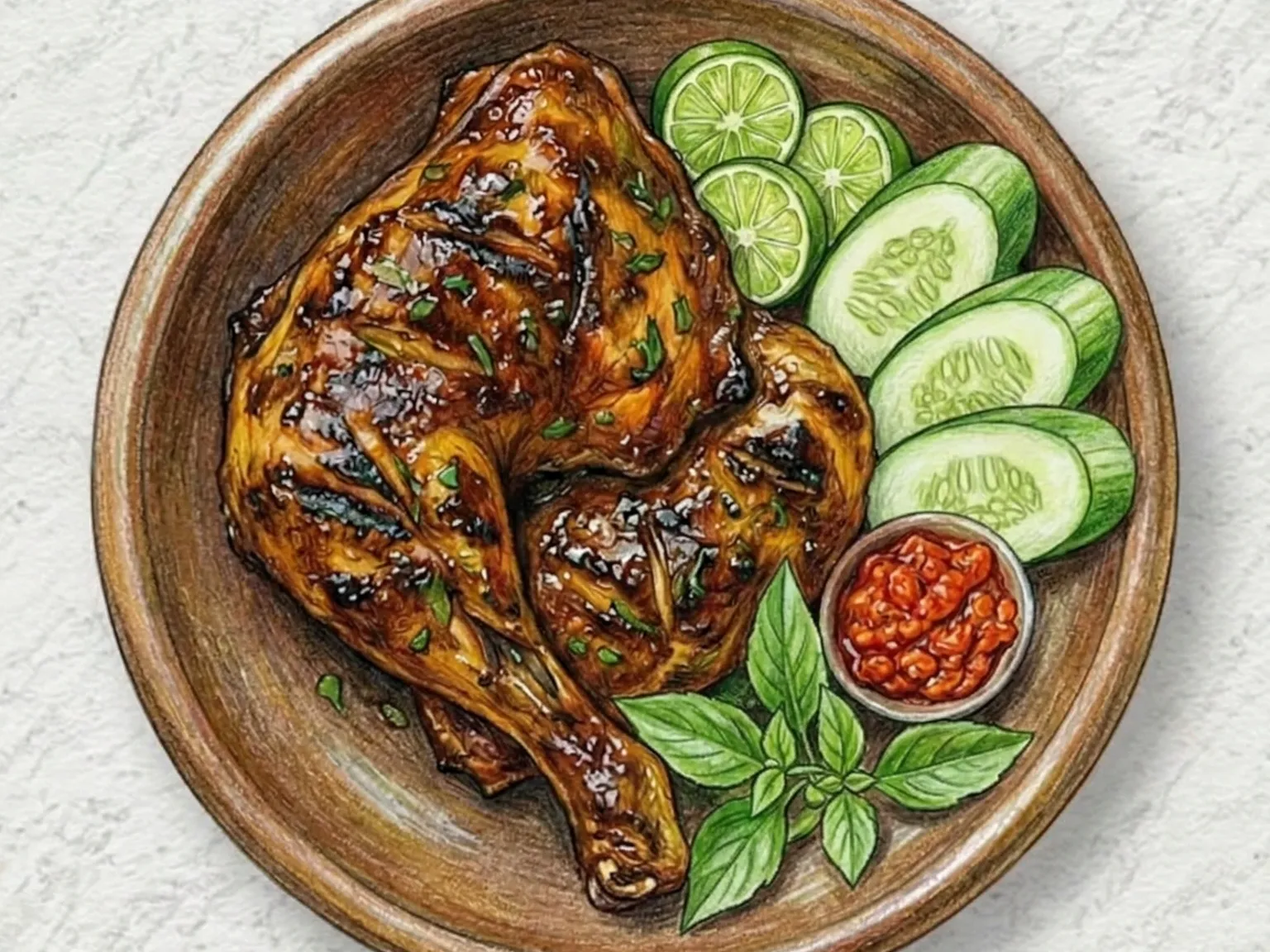
Ayam bakar means 'roasted chicken' in Malay-Indonesian and is a staple street food across Java, Sumatra, and Bali, where roadside warungs grill it over coconut-shell charcoal. The preparation follows a two-stage method: the chicken first simmers in a marinade of kecap manis (sweet soy sauce), garlic, ground coriander, turmeric, and lime juice until partially cooked and deeply colored throughout. The pre-cooked pieces then move to a very hot grill where the sugar-heavy glaze caramelizes rapidly, forming dark, lacquered patches with a faint char at the edges. This two-step approach ensures the meat stays moist under the intense grill heat while the exterior achieves maximum caramelization. The surface is sticky-sweet, with turmeric's earthiness and coriander's citrusy warmth detectable beneath. Served alongside steamed white rice, raw cucumber slices, and sambal, the dish relies on the sharp chili heat of the sauce and the cool cucumber to balance the sweetness of the glaze. The smoke from coconut-shell charcoal is considered part of the flavor, though a gas or charcoal grill at home produces an acceptable result.

Korean Cutlassfish Pot Rice
Galchi sotbap is a Korean one-pot rice dish in which cutlassfish seasoned with soy sauce and ginger is arranged on top of soaked rice along with sliced radish and shiitake mushroom, then cooked together in a heavy pot over direct heat. As the rice steams, the oils from the fish seep down through the grains, carrying a clean, rich marine savoriness into every layer of the pot. Radish softens slowly alongside the rice and releases a gentle sweetness that supports the fish without competing with it. Ginger handles any potential fishiness, keeping the overall flavor bright and unclouded. Shiitake mushroom contributes earthiness, added umami, and a chewy counterpoint to the tender fish and rice. The aroma released when the lid is lifted - soy-seasoned fish, steamed grain, and caramelized crust - is a considerable part of the eating experience. A soy-sesame dipping sauce is provided for mixing through the rice, layering in salt and nuttiness. The rice crust that forms at the base of the pot, called nurungji, adds a toasted crunch. The dish is finest in autumn when cutlassfish from the waters around Jeju Island and Korea's southern coast carry their peak fat content.

Korean Chicken Breast and Celery Stir-fry
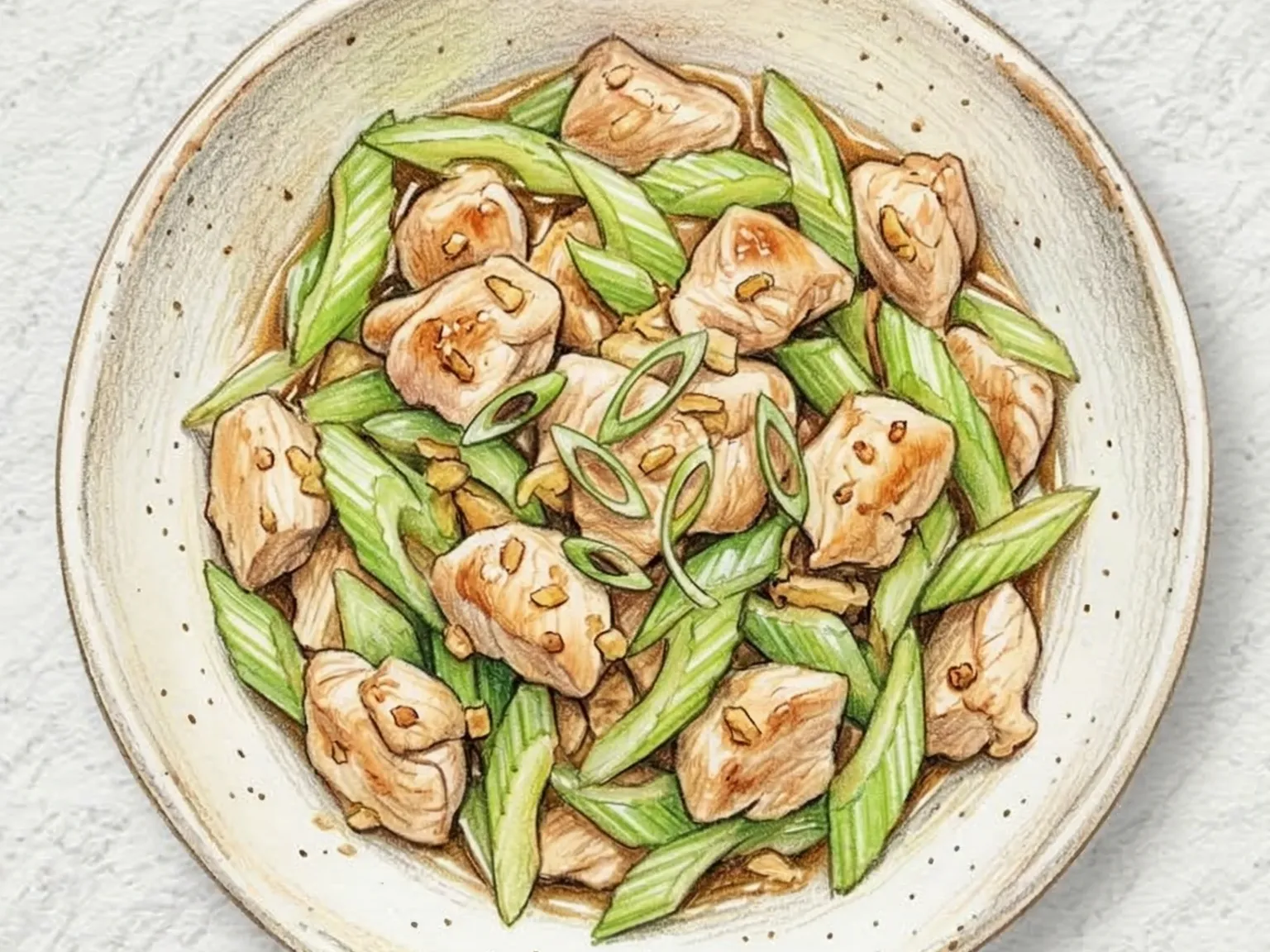
Bite-sized chicken breast pieces are marinated in soy sauce and minced ginger for ten minutes, then stir-fried over high heat with diagonally cut celery and thinly sliced onion. The ginger penetrates the meat during the brief rest, suppressing any bland poultry odor while leaving a bright, peppery note in the background. Soy sauce hitting the hot pan triggers a Maillard reaction on the chicken surface, building a thin layer of caramelized flavor that keeps the interior moist. Celery goes in only during the last two minutes so its stalks retain their crunch; including the leaves adds a noticeably herbal finish that sets this apart from standard chicken stir-fries. A teaspoon of oligosaccharide syrup gives the sauce just enough body to cling to each piece evenly rather than pooling at the bottom of the pan, and sliced red chili scattered in at the end contributes visual brightness more than significant heat. At 295 calories and 36 grams of protein per serving, this dish fits naturally into a post-workout meal or a calorie-conscious lunchbox without any sense of compromise.

Sweet Pumpkin Rice Punch (Korean Kabocha Malt Drink)
Danhobak sikhye is a Korean malt rice punch with steamed kabocha pumpkin puree stirred in to thicken the body and deepen the color beyond what plain sikhye offers. The base follows traditional method: cooked rice steeps in malt-strained water held at around 60 degrees Celsius, where the malt enzymes convert starches to maltose over several hours, creating a sweetness that needs no added sugar. Kabocha puree blended into the fermented liquid adds a dense, velvety weight and a warm golden-orange color. Sliced fresh ginger added during the fermentation hold leaves a faint spicy note in the finish, which prevents the pumpkin's natural sweetness from turning cloying as the drink warms. After the steeping is done, the liquid is brought to a full boil to stop the enzyme activity before cooling. Served cold with a few floating rice grains, it occupies the space between a refreshing beverage and a light dessert.

Korean Baekseju Herbal Rice Wine
Baekseju is a traditional Korean herbal rice wine produced by infusing a fermented glutinous rice base with twelve medicinal ingredients including fresh ginseng, jujubes, ginger, wolfberry, and cinnamon, then sweetening the result with honey. The brand was launched by Kooksoondang in 1992 and has since become the dominant commercial representative of the yakju category - herbal Korean rice wine - in mainstream retail. The foundation is glutinous rice fermented with nuruk, a traditional wheat and grain-based starter culture that produces a mildly sweet, relatively low-acid alcohol. Fresh ginseng steeped in that fermenting liquid contributes its characteristic bitterness and earthy depth, which sit on top of the rice sweetness rather than replacing it. Jujubes lend a faint reddish tint and a dried-fruit sweetness that stays in the background, while ginger delivers a slow, peppery warmth that registers at the back of the throat after swallowing. The honey is added after primary fermentation has proceeded far enough that the yeast population is declining; this preserves residual sugar in the finished wine rather than having it fully fermented out. That residual sweetness is central to Baekseju's flavor identity and distinguishes it from drier yakju styles. Alcohol content sits around thirteen percent, comparable to a medium-bodied grape wine. The liquid is filtered clear and appears golden, substantially more transparent than unfiltered makgeolli. Served cold, the herbal complexity recedes and the wine drinks crisp and refreshing; at room temperature, the ginseng bitterness and jujube sweetness become more pronounced with each sip. It pairs well with fatty or strongly flavored Korean dishes - grilled pork belly, braised spicy chicken - where the medicinal herbaceousness cuts through the richness.

Korean Grilled Spicy Chicken Ribs
Dakgalbi-gui is the original Chuncheon-style grilled chicken dish, where bone-in thigh and leg pieces marinate in a crimson paste of gochujang, soy sauce, sugar, garlic, sesame oil, and ginger before cooking directly over an open flame or on a very hot pan. Unlike the more widely known iron-plate dakgalbi stir-fried with vegetables, this grilled version focuses solely on the meat to maximize char and smoky flavor on the surface. Deboned thigh meat spread flat exposes more surface area to both the marinade and the heat, concentrating flavor throughout, and a minimum two-hour rest in the marinade ensures the spice penetrates deep into the flesh. The gochujang caramelizes at high temperatures, forming edges that are simultaneously spicy, sweet, and faintly bitter from the char.

Korean Chicken Bone Broth Soup
Dak-gomtang is a Korean clear chicken bone broth soup made by simmering a whole chicken with onion, garlic, and ginger over medium-low heat for at least fifty minutes. After the meat is removed and hand-shredded, the bones return to the pot for another fifteen minutes, releasing gelatin that gives the broth a silky body. When refrigerated, the liquid sets into a soft gel, a sign of its collagen richness. Skimming the fat layer after refrigeration produces a noticeably cleaner, clearer taste on reheating. The broth is seasoned simply with soup soy sauce and salt, and sliced green onion added at the end brings a fresh, sharp contrast to the mellow chicken flavor. Unlike samgyetang, which is stuffed with ginseng and glutinous rice, dak-gomtang relies entirely on the chicken itself for depth, representing a more restrained approach to Korean restorative cooking. The soup dates back to the Joseon era and is traditionally eaten during convalescence or hot summer days. Adding cooked rice or thin noodles turns it into a complete one-bowl meal.

Korean Steamed Pomfret (Whole Fish with Soy Ginger Sauce)
Whole pomfret is gently steamed with soy sauce, rice wine, ginger, and green onion into a clean, mild preparation. Pomfret has thin, delicate flesh that separates from the bone with little effort after steaming, making it easy to eat. Ginger and green onion together neutralize any fishiness while the soy sauce provides subtle salt and a light color. A thin drizzle of sesame oil at the end adds a toasted, nutty aroma without masking the fish. The result is a non-spicy, low-fat dish that works well for a wide range of diners.

Korean White Kimchi (Non-Spicy Napa Pear Fermented)
Baek kimchi is a Korean white kimchi made without gochugaru, producing a completely non-spicy, clear-broth fermented vegetable. Napa cabbage is salted and wilted, rinsed, then layered with julienned radish, sliced garlic, and ginger tucked between the leaves. Pureed pear serves as a natural sugar source that feeds fermentation, while dried jujubes add a subtle background sweetness to the brine. Salted water is poured over the assembled cabbage, the container is sealed, and after one day at room temperature the kimchi moves to the refrigerator for a slow ferment. Without chili heat, the flavor centers on the clean lactic acidity that develops over time, balanced by the natural sweetness of pear and jujube and the warm bite of garlic and ginger dissolved into the brine. The fermentation is slower than standard kimchi, reaching optimal taste at two to three weeks. It is eaten with its brine, either on its own or as a palate-clearing side alongside fatty meat dishes. Before chili peppers were introduced to the Korean peninsula in the late sixteenth century, kimchi without gochugaru was the standard form, and baek kimchi is considered the closest modern equivalent to those pre-chili preparations.

Wonton Noodle Soup
Wonton noodle soup is a Cantonese classic that pairs thin egg noodles with shrimp-and-pork wontons in a clear pork bone broth. The broth is deliberately kept light and clean, relying on long simmering rather than heavy seasoning for its flavor. Each wonton has a thin wrapper that barely conceals a filling with noticeable shrimp texture. The egg noodles are springy and slightly alkaline, a hallmark of Hong Kong-style noodle making. Wrapping wontons from scratch adds about 30 minutes of prep, though pre-made wontons shorten the process significantly.