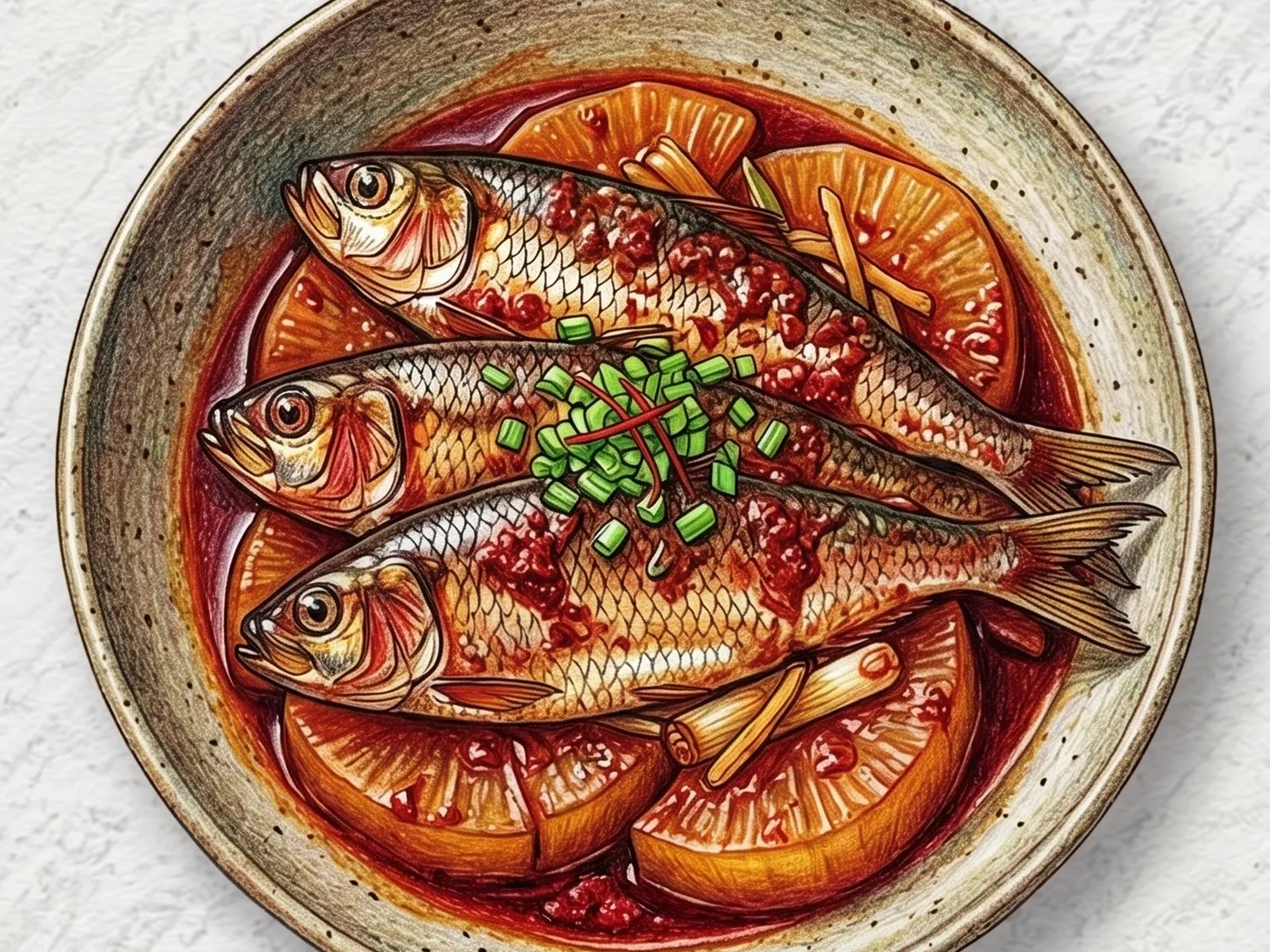
Korean Braised Gizzard Shad
Steamed Medium

Korean Braised Gizzard Shad

Quick answer

Jeoneo-jjim is a braised gizzard shad dish in which the fish and Korean radish are slowly cooked together in a soy sauce and gochugaru seasoning, making it a dish best su...

What makes this special

  • Jeoneo-jjim slow-cooks autumn gizzard shad with radish to lock in seasonal fat and spicy flavor.
  • Autumn gizzard shad's seasonal fat keeps the flesh moist through the spicy braise
  • Radish base traps fishy odor and turns sweet absorbing the seasoned broth
Total time
45 min
Level
Medium
Servings
4 servings
Ingredients
8
Calories
360 kcal
Protein
33 g

Key ingredients

gizzard shadradishsoy saucered pepper flakesminced garlic

Core cooking flow

  1. 1 Clean 700 g gizzard shad by scraping off the scales, removing the innards, and cutting off the heads.
  2. 2 Cut 250 g radish into thick 1 cm pieces and cover the bottom of the pot in a tight layer.
  3. 3 Mix 3 tbsp soy sauce, 1.5 tbsp red pepper flakes, 1 tbsp minced garlic, 0.5...

Jeoneo-jjim is a braised gizzard shad dish in which the fish and Korean radish are slowly cooked together in a soy sauce and gochugaru seasoning, making it a dish best suited to autumn when the fish carries its peak fat. Radish slices line the bottom of the pot and serve a dual purpose: they act as a natural buffer that absorbs fishiness rising from the heat, and they soak up the braising liquid as they soften, turning sweet and deeply flavored by the end of cooking. The gizzard shad's characteristic fatty richness pairs well with the bold chili and garlic seasoning, and ginger threads through the entire preparation to neutralize any remaining off-notes and leave the flavor clean. Autumn-caught fish are fattier and remain moist even after extended braising, which makes them far preferable to fish taken at other times of year. Green onion is scattered on top at the finish for fragrance, and the intensified, reduced braising sauce left in the pot is traditionally ladled over steamed rice as a condiment in its own right.

Prep 20min Cook 25min 4 servings

Instructions

Read the steps as a cooking flow: prep, heat, seasoning, doneness control, and finish.

6 steps
  1. 1
    Season

    Clean 700 g gizzard shad by scraping off the scales, removing the innards, and cutting off the heads.

    Make three deep scores along the back so the seasoning can reach the thicker flesh without needing long cooking.

  2. 2
    Control

    Cut 250 g radish into thick 1 cm pieces and cover the bottom of the pot in a tight layer.

    This keeps the fish from scorching, absorbs some fishy aroma, and gives the radish time to turn sweet.

  3. 3
    Season

    Mix 3 tbsp soy sauce, 1.5 tbsp red pepper flakes, 1 tbsp minced garlic, 0.5 tsp ginger, and 220 ml water until no dry clumps remain. The sauce should be loose enough to flow between the fish and radish.

  4. 4
    Control

    Place the scored fish over the radish without stacking them too tightly, then spoon the sauce evenly over the top.

    Cover and cook over medium heat for about 12 minutes, until the liquid bubbles steadily and the radish starts softening.

  5. 5
    Finish

    Once the sauce is boiling, lower the heat and baste the fish with the hot liquid instead of turning it over.

    Keep the simmer gentle so the flesh stays moist and does not break apart before the radish finishes cooking.

  6. 6
    Finish

    Scatter 1 sliced green onion over the fish and simmer about 5 minutes more.

    Stop when the radish looks translucent, the fish surface glistens, and the sauce is slightly reduced, then serve with rice and the remaining braising liquid.

After the steps

Pick a recipe that fits this dish.

Continue with shared ingredients, meal pairings, or a similar method.

Recipes That Go Well With This

More Steamed →

Based on shared ingredients and meal pairing

Korean Spicy Fish Roe Braise
Shared ingredient: korean radish Steamed

Korean Spicy Fish Roe Braise

Al-jjim is a Korean braised dish built around pollock roe sacs and milt - the parts of the fish that most home cooks discard or that are sold separately at markets near fishing ports. The two components come from the same fish but behave completely differently when cooked. The roe sacs firm up into a dense, granular texture as they heat, each individual egg becoming distinct and slightly resistant to the bite. The milt, by contrast, softens to a custard-like consistency, breaking apart in soft curds that dissolve into the braising sauce. Radish slices line the pot bottom, providing a sweet buffer against the aggressive saltiness of the gochugaru-soy braising liquid and preventing the more delicate milt from burning. The dish cooks at low heat for about fifteen minutes, during which the roe and milt release their marine oils into the sauce, adding an oceanic richness to the spicy, salty base. Green onions or scallions added at the end contribute a fresh, sharp counterpoint that keeps the heavy sauce from becoming monotonous. Al-jjim is a winter specialty in Korea's east coast fishing ports - Pohang, Gangneung, Sokcho - where fresh pollock roe is available during the winter spawning season. Frozen roe can be substituted year-round, but it releases fewer marine oils into the sauce, producing a noticeably less rich broth than the fresh version.

Korean Steamed Rockfish (Spicy Gochugaru Radish Braise)
Shared ingredient: korean radish Steamed

Korean Steamed Rockfish (Spicy Gochugaru Radish Braise)

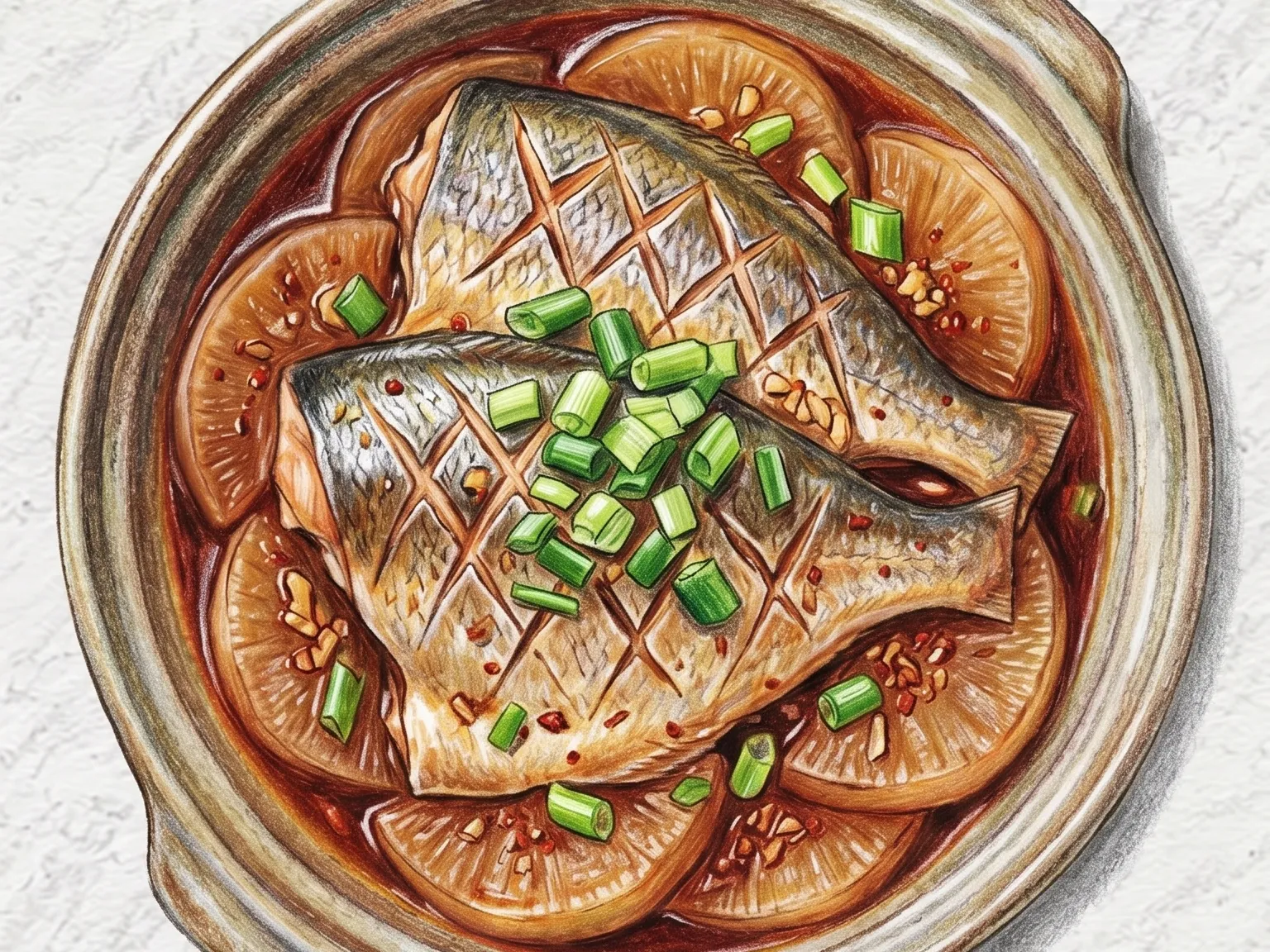
Ureok-jjim is a Korean spicy steamed rockfish cooked with Korean radish, onion, and green onion in a gochugaru and soy sauce broth. Rockfish has firm, well-defined flesh that holds its shape through the cooking process, and scoring the skin lets the bold seasoning reach deep into the meat. Radish softens in the braising liquid and absorbs the chili heat while contributing natural sweetness, and ginger keeps the fish tasting clean. The remaining sauce is concentrated enough to spoon over rice, delivering a hit of spicy, salty flavor with every bite.

Korean Beef & Shiitake Japchae
Serve together Side dishes

Korean Beef & Shiitake Japchae

Japchae originated as a Joseon royal court dish of stir-fried vegetables before sweet potato glass noodles were added to create the form recognized today. This version pairs glass noodles with soy-marinated beef and sliced shiitake mushrooms. Each component cooks separately: beef and mushrooms stir-fried with garlic, spinach blanched and squeezed dry, carrots and onions sauteed until just tender. A final toss with sesame oil brings everything together. The noodles should be translucent and springy, carrying a sweet-salty soy glaze into each forkful. A standard presence on every Korean holiday table at Chuseok, Seollal, and birthday celebrations alike.

Korean Grilled Gizzard Shad
Similar recipe Grilled

Korean Grilled Gizzard Shad

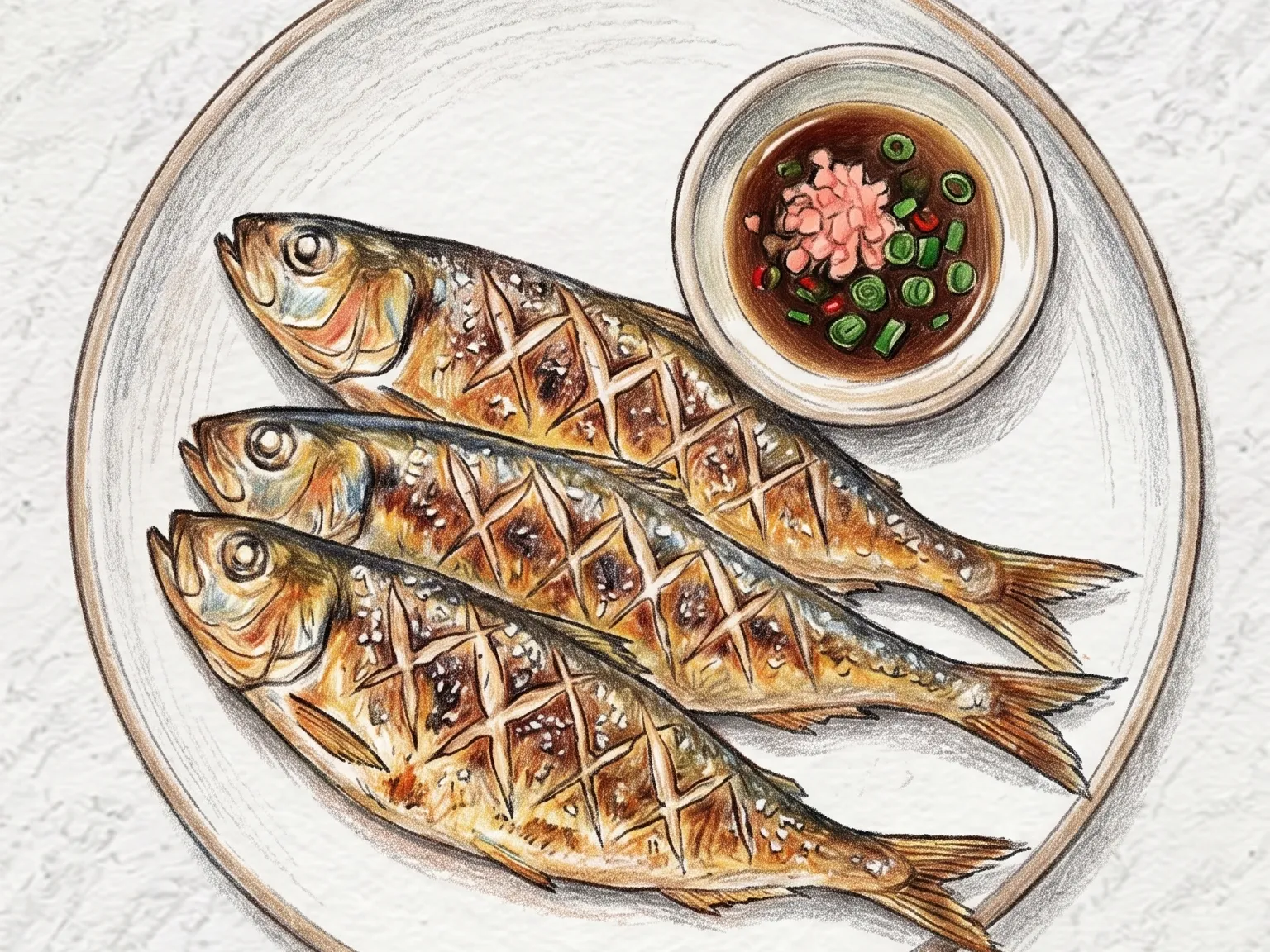
Jeoneo-gui is a grilled gizzard shad dish that captures the best of autumn, when this small fish is at peak fat content and flavor. The fish is scored on both sides with close, shallow cuts, rubbed with coarse salt, and left to rest for ten minutes before grilling. The resting time allows surface moisture to draw out, which reduces fishiness and creates the conditions for a properly crisp skin over a hot pan or grill. Gizzard shad has numerous fine, small bones that make the raw fish awkward to eat, but scoring densely and cooking over high heat softens the bones through heat, allowing the entire fish to be eaten without picking. A ginger soy dipping sauce - minced ginger, soy sauce, rice vinegar, and sliced cheongyang chili - accompanies the fish to cut through its notable oiliness, with the sharp ginger note neutralizing the fishy aroma. Autumn gizzard shad is so prized in Korea that the proverb says its grilling smell is enough to bring a daughter-in-law back home.

Serve with this

Korean Cockle & Water Parsley Mixed Rice
Rice Medium

Korean Cockle & Water Parsley Mixed Rice

Kkomak-minari bibimbap is a seasonal rice bowl that comes together when cockles are at their peak in early spring, pairing the ocean sweetness of briefly blanched cockle meat with the clean, grassy sharpness of raw water parsley (minari). The cockle meat is rinsed in light salt water to remove any residual sand, then blanched for no more than thirty seconds in boiling water so the flesh stays springy rather than contracting into a rubbery texture. Julienned carrot and zucchini are each stir-fried separately, controlling moisture and flavor independently, then set aside to cool before assembly. A bowl of well-steamed rice is layered with the blanched cockles, the sauteed vegetables, and the raw minari placed on top last to protect its volatile fragrance from the heat below. A bibimbap sauce made from gochujang, sesame oil, minced garlic, and a touch of vinegar ties everything together when mixed, balancing the briny umami of the cockles against the brightness of the parsley. Sesame oil and toasted sesame seeds added at the end round the flavors and give the bowl a warm, nutty finish.

🎉 Special Occasion 🍱 Lunchbox
Prep 20min Cook 15min 2 servings
Korean Seafood & Chicken Herbal Soup
Soups Hard

Korean Seafood & Chicken Herbal Soup

Haesintang is a premium Korean restorative soup that combines a whole chicken with abalone, octopus, and shrimp, simmered together in a single large pot for an extended period. The chicken goes in first and cooks for well over an hour, building a cloudy, collagen-rich stock with a naturally silky body. The seafood is added later in the process to avoid overcooking: abalone stays chewy, octopus retains its characteristic bounce, and shrimp turn just pink and stop there. The interaction between the poultry fat and the marine umami produces a broth with a depth that neither chicken alone nor seafood alone could achieve. Seasoning is deliberately restrained, typically garlic, green onion, and salt, so the flavors of the ingredients themselves define the soup rather than any added sauce or spice. In Korea, haesintang is categorized as a stamina food, most commonly eaten on the hottest days of summer in the traditional belief that rich nourishment combats heat fatigue. Its combination of two high-end protein sources places it firmly in the celebratory register of Korean home and restaurant cooking.

🏠 Everyday 🎉 Special Occasion
Prep 35min Cook 70min 4 servings
Korean Garlic Scape Kimchi
Kimchi Easy

Korean Garlic Scape Kimchi

Maneul jong kimchi is a garlic scape kimchi made by lightly brining freshly harvested scapes, then dressing them in a seasoning paste of gochugaru, fish sauce, and plum syrup blended with pureed onion and pear. The scapes' sharp, piercing garlic aroma does not diminish through fermentation - it persists alongside the stems' crisp bite, delivering alternating pulses of heat and umami that build with each chew. Pear works into the base to introduce a fruit sweetness that blunts the chili intensity, while fish sauce provides the fermented backbone that grounds the entire kimchi. Trimming the fibrous bottoms before seasoning produces a more uniform snap throughout. Leaving the jar at room temperature for roughly two days allows the flavors to integrate and mellow into balance before refrigerating. This is a seasonal kimchi made only in spring when garlic scapes appear in the market, and its combination of raw green pungency and assertive garlic heat sets it apart from any other variety in the Korean kimchi repertoire.

🍱 Lunchbox 🏠 Everyday
Prep 30min Cook 5min 4 servings

Similar recipes

Korean Braised Hairtail Fish
Steamed Medium

Korean Braised Hairtail Fish

Galchi-jjim is a Korean braised hairtail fish dish where sliced hairtail and Korean radish are simmered together in a seasoned broth of gochugaru, soy sauce, garlic, and ginger until the liquid reduces to a concentrated glaze. The fish has a rich, oily white flesh that drinks in the bold seasoning while staying tender and intact. Ginger juice is added specifically to neutralize the oceanic smell that hairtail can carry, keeping the finished dish clean and approachable. The radish cooks down in the braising liquid, becoming deeply seasoned throughout as it absorbs the spiced sauce. The remaining sauce is intentionally left in small quantity so it can be spooned directly over steamed rice, which is considered the most satisfying way to eat this dish. It is a staple Korean fish preparation that appears on home dinner tables across the year.

🏠 Everyday 🎉 Special Occasion
Prep 18min Cook 30min 2 servings
Korean Spicy Braised Pufferfish
Steamed Hard

Korean Spicy Braised Pufferfish

Cleaned pufferfish fillets are steamed with bean sprouts and water dropwort under a spicy sauce built from gochugaru and gochujang. Pufferfish meat is very low in fat, giving it a lean, firm texture that holds together under bold seasoning rather than falling apart. Bean sprouts add a crisp, watery contrast to the dense chili paste, and water dropwort brings a distinctly herbal, slightly peppery fragrance that lifts the dish. Soy sauce and minced garlic round out the seasoning, adding depth without shifting the profile away from the chili-forward base. Pufferfish preparations are a regional specialty of Korea's coastal areas, where the fish is abundant and handled with particular care.

🎉 Special Occasion
Prep 25min Cook 35min 4 servings
Korean Spicy Braised Cod with Radish
Stir-fry Medium

Korean Spicy Braised Cod with Radish

Cod fillets are braised in a seasoning sauce of soy sauce, gochujang, and gochugaru until the liquid reduces and the flavors soak into the flesh. Cod is a lean fish with a clean, neutral character, and the bold seasoning penetrates the meat to add depth without overwhelming it. Daikon radish placed alongside the fish absorbs the braising liquid as it cooks, becoming as flavorful as the fish itself. Onion slowly softens and releases natural sweetness into the sauce during the simmer. The flesh flakes easily and separates cleanly from the bone, making this dish accessible for all ages. Keeping the lid on over medium heat during braising prevents the sauce from reducing too fast and ensures the fish cooks through evenly.

🏠 Everyday 🍱 Lunchbox
Prep 18min Cook 22min 4 servings

Tips

Do not overcook; gizzard shad breaks apart easily.
Thicker radish slices give sweeter flavor.

Nutrition (per serving)

Calories
360
kcal
Protein
33
g
Carbs
10
g
Fat
20
g