Korean Spicy Pork Bulgogi Grill
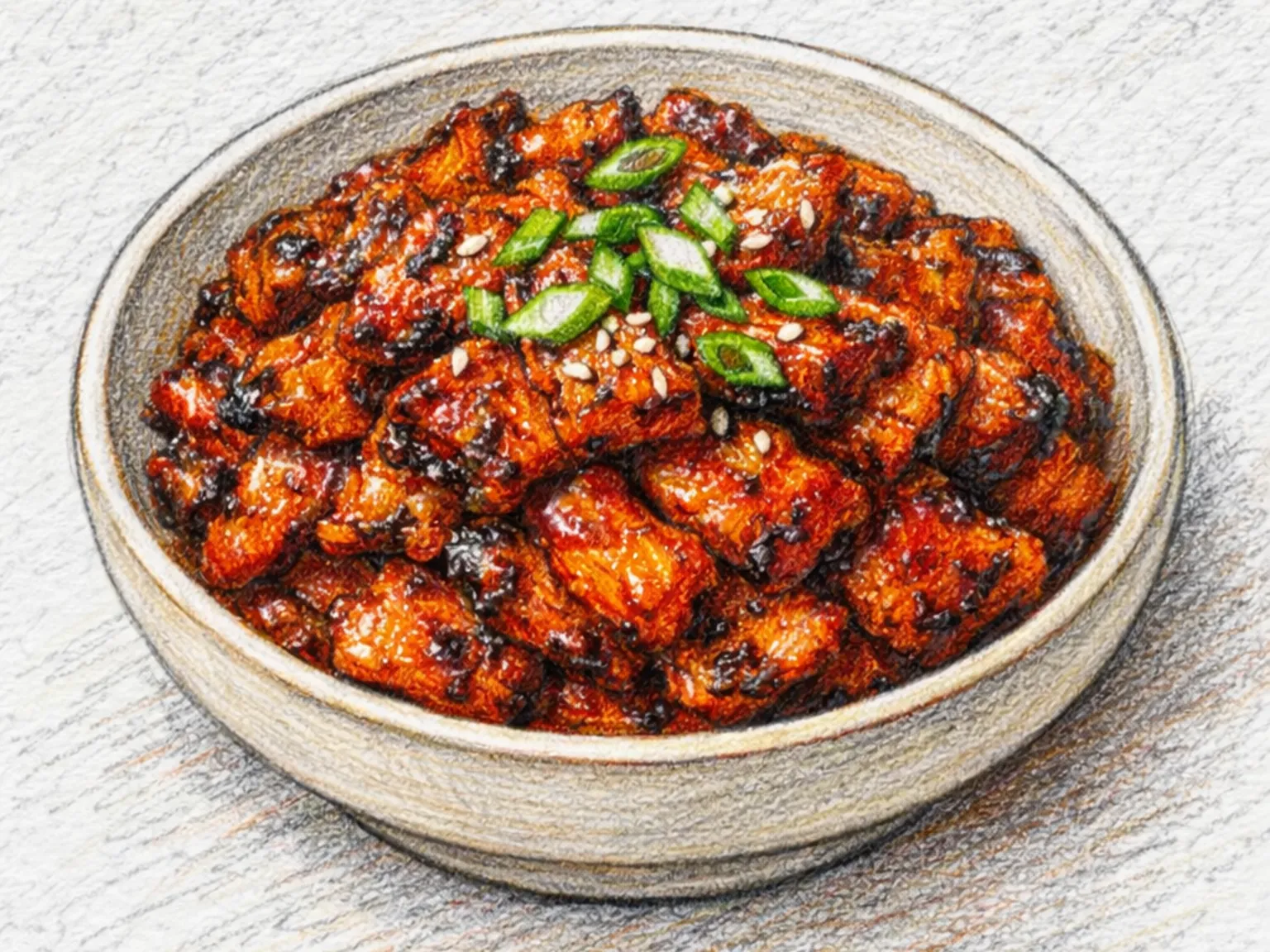
Pork shoulder is marinated for at least thirty minutes in a mixture of gochujang, soy sauce, sugar, and ginger juice, then grilled over high flame. The sugars in the marinade caramelize at high heat, forming a dark, flavorful crust on the surface. Wrapping the grilled meat in fresh lettuce leaves combines the charred smokiness with the crunch and freshness of raw greens.
Adjust Servings
Instructions
- 1
Mix gochujang, soy sauce, sugar, garlic, ginger, and sesame oil.
- 2
Marinate pork for at least 30 minutes.
- 3
Grill marinated pork on high heat.
- 4
Cook both sides until nicely charred.
- 5
Wrap in lettuce leaves to eat.
As an Amazon Associate, we may earn from qualifying purchases.
Tips
Nutrition (per serving)
More Recipes

Korean Grilled Pork Makchang
Makchang-gui is a Korean grilled pork large intestine dish where the offal is thoroughly cleaned, blanched for seven minutes to remove impurities and excess fat, then coated in a spicy marinade of gochujang, soy sauce, sugar, minced garlic, gochugaru, sesame oil, and black pepper. The blanching step is non-negotiable-it eliminates off-flavors and firms the intestine's texture so it holds up on the grill. After fifteen minutes of marinating, the wrinkled surface absorbs the sweet-spicy sauce, which caramelizes into a dark, sticky glaze over medium heat as the interior moisture slowly evaporates. The result is a chewy exterior with a rich, fatty interior that releases its flavor gradually with each bite, and patience with medium heat prevents the sugar-heavy sauce from burning.

Korean Grilled Squid and Pork
Osam-gui is a Korean mixed grill of squid and pork belly marinated together in a spicy sauce of gochujang, soy sauce, sugar, minced garlic, and sesame oil, then cooked on a pan or grill. As the pork belly renders its fat, it merges with the marinade to form a rich, savory-spicy sauce in the pan that the squid absorbs during cooking, producing a deeper flavor than either ingredient would achieve alone. The two proteins cook at very different rates, so the pork belly goes in first for five to six minutes to render its fat and partially cook through before the squid is added-squid toughens past three to four minutes of heat exposure. The gochujang paste scorches easily at high temperatures, so maintaining medium heat and turning the pieces frequently is necessary to build a glossy glaze without any burnt bitterness.

Korean Gochujang Pork Bulgogi
Gochujang dwaeji bulgogi marinates pork neck in gochujang, soy sauce, chili flakes, garlic, and plum syrup, then stir-fries it over high heat for an intensely flavored main course. The plum syrup provides a bright, tangy sweetness that counterbalances the fermented heat of gochujang. Perilla leaves are tossed in at the very end, their herbal aroma cutting through the richness of the pork and adding a distinctive Korean fragrance. Onion melts into the sauce for rounded sweetness while green onion contributes a fresh bite. It is excellent served over rice or wrapped in lettuce leaves for contrasting textures.

Korean Grilled Pork Neck (Salt-Seasoned Fatty Neck Cut BBQ)
Dwaeji-moksal-gui is Korean salt-grilled pork neck sliced one centimeter thick and seasoned with nothing more than coarse salt and black pepper before searing on a blazing grill. The neck cut is threaded with fine intramuscular fat that renders during cooking, producing a self-basting effect and a rich, porky flavor that needs no marinade-the best pieces have roughly a seven-to-three fat-to-lean ratio. Each side should cook for under two minutes over maximum heat to develop a dark sear while keeping the interior moist; flipping too often drops the surface temperature and produces a steamed, gray result instead of charred grill marks. The standard Korean barbecue way to eat it is in a lettuce wrap with a roasted garlic clove and a dab of ssamjang.

Korean Grilled Webfoot Octopus
Cleaned webfoot octopus is tossed in a marinade of gochujang, chili flakes, soy sauce, and sugar for ten minutes, then seared on high heat for just three to four minutes. The brief cook time preserves the octopus's natural springy texture, while the intense flame adds a smoky char to the spicy glaze. Green onion tossed in at the very end introduces a fresh, sharp note that cuts through the heat.

Korean Spicy Gochujang Bulgogi
This spicy gochujang pork bulgogi builds its bold flavor from a marinade of gochujang, Korean chili flakes, soy sauce, garlic, and corn syrup applied to thick-cut pork neck. Stir-frying on medium-high heat drives off moisture first, allowing the sauce to caramelize and develop depth rather than turn watery. Onion goes in next, contributing natural sweetness that tempers the chili heat, followed by green onion for a fresh aromatic lift. Scoring thicker slices helps the marinade penetrate more evenly. The generous four-serving yield makes it a practical centerpiece for family dinners.