Chinese Soy-Braised Beef Shank
Quick answer
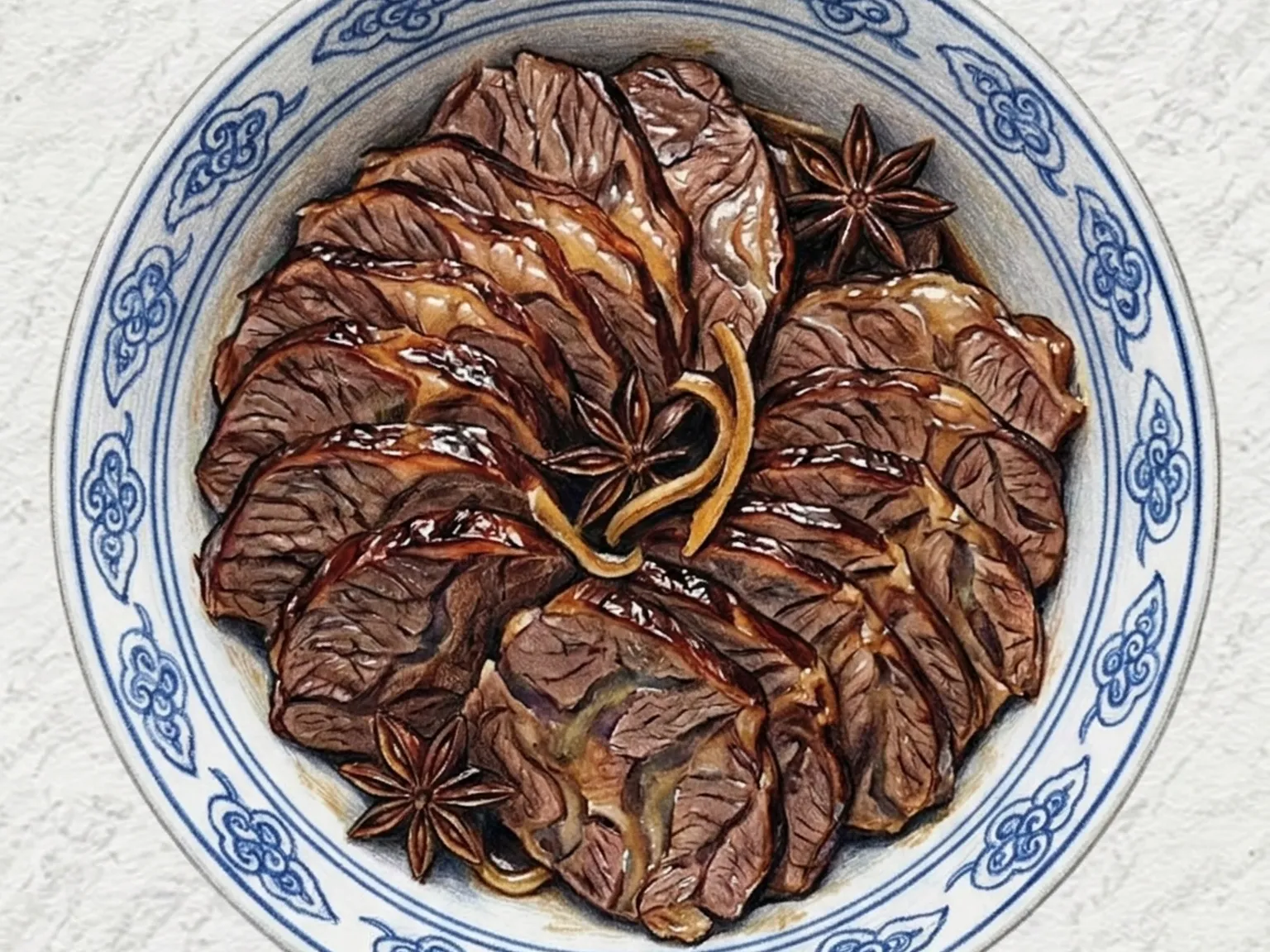
Jiang niu rou is a Chinese soy-braised beef shank simmered for at least ninety minutes with soy sauce, dark soy sauce, star anise, ginger, green onion, and sugar.
What makes this special
- Jiang niu rou simmers beef shank for 90 minutes before slicing against the grain for tenderness.
- 90-plus minute braise followed by cooling and slicing against the grain for clean cuts
- Dark soy gives mahogany color while star anise spices the fatty shank
Key ingredients
Core cooking flow
- 1 Soak 1000 g beef shank in plenty of cold water for 2 hours to draw out excess blood.
- 2 Put the beef into boiling water and blanch it over high heat for 5 minutes.
- 3 Add 1600 ml water, 5 tbsp soy sauce, 1 tbsp dark soy sauce, and 1 tbsp sugar to a pot.
Jiang niu rou is a Chinese soy-braised beef shank simmered for at least ninety minutes with soy sauce, dark soy sauce, star anise, ginger, green onion, and sugar. The long, unhurried braise gradually breaks down the dense connective tissue in the shank while keeping the meat structurally intact, so it can be sliced cleanly across the grain once it has cooled completely. Star anise infuses the fatty cut with its distinctive warm, licorice-edged fragrance, and dark soy sauce deepens the color to a lacquered mahogany while adding a subtle sweetness that rounds out the saltiness. The sweet-savory balance of soy and sugar penetrates all the way through the meat rather than staying on the surface, which means the flavor holds up even when the shank is served cold straight from the refrigerator. The leftover braising liquid retains its full concentration of aromatics and is traditionally repurposed for cooking soy-braised eggs, making it a practical two-for-one preparation.
Instructions
Read the steps as a cooking flow: prep, heat, seasoning, doneness control, and finish.
- 1Finish
Soak 1000 g beef shank in plenty of cold water for 2 hours to draw out excess blood.
If the water turns very red, change it once so the finished braise tastes cleaner and less gamey.
- 2Control
Put the beef into boiling water and blanch it over high heat for 5 minutes.
Skim off the gray foam and impurities as they rise, then lift out the meat and let the surface drain well.
- 3Season
Add 1600 ml water, 5 tbsp soy sauce, 1 tbsp dark soy sauce, and 1 tbsp sugar to a pot.
Add 2 star anise, the green onion, and ginger, then bring it to a full boil so the sugar dissolves.
- 4Control
Add the blanched beef shank to the braising liquid and boil over high heat for 5 minutes.
Lower the heat to low, leave the lid slightly ajar, and keep the liquid at a gentle simmer, not a hard boil.
- 5Prep
Braise for 90 minutes, turning the meat once halfway through.
The surface should become evenly dark and glossy, and a chopstick should slide into the thickest part smoothly when the connective tissue has softened.
- 6Prep
Turn off the heat and cool the beef completely while it stays submerged in the liquid.
Once cold, slice it against the grain about 0.3 cm thick, arrange the slices, and spoon over a little braising liquid before serving.
After the steps
Pick a recipe that fits this dish.
Continue with shared ingredients, meal pairings, or a similar method.
Recipes That Go Well With This
More Steamed →Based on shared ingredients and meal pairing
Chinese Red-Braised Fish (Hong Shao Yu)
Hong shao yu is a Chinese braised fish dish made by pan-searing white fish until golden, then pouring over a sauce of soy sauce, sugar, ginger, green onion, and Shaoxing wine and simmering over medium heat until the liquid reduces to a glaze. Searing the fish first firms up the surface so the flesh holds together during braising, and the browning from the sear adds a savory depth to the final sauce that straight braising cannot achieve on its own. Sugar softens the saltiness of the soy sauce into a sweet-savory balance, while ginger neutralizes any fishiness and contributes a sharp, clean aroma throughout the braise. As the sauce reduces it coats each piece of fish in a glossy, dark glaze well suited to spooning over steamed rice. The dish comes together in under thirty minutes, and thicker white fish holds moisture better through the braise than thin fillets. Patting the fish thoroughly dry before placing it in the pan prevents oil splatter and ensures the surface browns evenly rather than steaming.
Dongpo Pork (Chinese Soy-Braised Melt-in-Mouth Pork Belly)
Dongpo rou is a Chinese-style pork belly braised slowly in soy sauce, rice wine, sugar, ginger, and green onion until the fat turns translucent and the lean sections absorb a deep mahogany glaze. The belly is cut into thick five-centimeter squares and tied with kitchen twine so the layers stay together over the long cook. Searing the pieces briefly in hot oil before moving them to the braising liquid is not decorative; the Maillard reaction at the surface builds color and aroma that carry into the finished dish. Long cooking over low heat renders the fat layers meltingly soft, while the lean portions turn a deep mahogany from the soy and sugar. Rice wine drives off any porkiness and ginger sharpens the finish, though the dominant impression is a sweet, deeply savory richness. Named after the Song dynasty poet Su Dongpo, the dish is appreciated for the luxurious texture of the rendered fat as much as for its flavor. Reducing the braising liquid separately and spooning it over the finished pieces produces a glossy coat that makes the plated result visually striking.
Tomato Egg Rice Bowl (Stir-fried Tomatoes with Soft Scrambled Eggs)
Ripe tomatoes are cut into wedges and stir-fried over high heat until they release their juices and form a natural, tangy sauce. Beaten eggs are poured in and gently folded so they stay soft and barely set, mingling with the tomato pulp. A small amount of sugar and soy sauce brings the sweet-tart balance into focus. Spooned over hot rice, the sauce soaks into the grains and the whole bowl comes together in under ten minutes, drawing on the simplicity of Chinese home cooking. It can be served as a one-bowl meal, with simple accompaniments chosen to match the sauce, broth, or topping.
Chinese Red-Braised Pork Belly
Hong shao rou, red-braised pork belly, originated in the Suzhou region before spreading across China to become one of the country's defining braised dishes. Cubed pork belly is briefly boiled to remove impurities, then the pot is dried and sugar is melted alone until it reaches a deep amber caramel. The pork returns to the pot to coat every surface before dark soy sauce, light soy sauce, Shaoxing rice wine, fresh ginger slices, and star anise are added. Covered and simmered over low heat for sixty to ninety minutes, the fat layers slowly dissolve into the braising liquid while the lean meat becomes tender enough to break apart with chopsticks without any pressure. The sauce reduces to a thick, mahogany-lacquered glaze that carries layers of sweetness, salt, and the faintly medicinal warmth of star anise. Served over plain steamed rice with a generous spoonful of the sauce poured over the bowl, the dish transforms the simplest grain into a complete and deeply satisfying meal.
Serve with this
Korean Namdo-Style Loach Soup
Namdo-chueotang is the southern Korean take on loach soup, distinguished from other regional versions by grinding the entire loach - bones and all - into a thick, porridge-like broth. The loaches are first boiled until completely soft, then blended and strained to produce a dense, opaque base packed with protein and calcium. Dried radish greens simmer in this liquid, contributing a rustic, earthy backbone. Doenjang and gochujang season the soup with fermented depth and moderate heat, while a generous addition of perilla seed powder lends a nutty richness that rounds out the heavy flavors. A final dusting of sancho pepper tames any lingering fishiness and adds a tingling, aromatic kick. This is restorative cooking at its most direct - a thick, warming bowl meant to rebuild energy during the colder months.
Korean Mushroom Japchae (Shiitake Glass Noodle Stir-Fry)
Beoseot japchae replaces beef with shiitake mushrooms as the primary source of savory depth, making it a staple of Buddhist temple cuisine and vegetarian tables alike. Sweet potato noodles are soaked and boiled, then rinsed in cold water immediately to lock in a firm, springy texture. Shiitake, spinach, carrot, and onion are each cooked separately - their moisture levels and heat tolerances differ enough that combining them prematurely flattens every component. Soy sauce, sugar, minced garlic, and sesame oil bring the noodles and vegetables together, and the finished dish rests for ten minutes so the seasoning penetrates the noodles evenly. The result is a japchae where the mushroom carries genuine umami weight without any meat.
Korean Salted Pollock Roe Jeotgal
Myeongran jeotgal is a Korean salted and fermented pollock roe where fresh roe sacs are meticulously cleaned of blood spots and membranes, brushed with rice wine to suppress fishiness, then packed in a curing blend of coarse sea salt, gochugaru, and minced garlic alongside a piece of kelp. Over three to five days in cold storage, salt draws moisture out of each tiny egg, concentrating their pop-and-burst texture while enzymatic breakdown generates a deep, layered umami that raw roe cannot produce on its own. The chili flakes introduce a gentle warmth that sits behind rather than over the roe's natural salinity. Sliced thin and arranged over hot steamed rice, each piece releases a salty, oceanic intensity with every bite - a condiment that disappears faster than any dish it accompanies.
Similar recipes
Chinese Red-braised Pork Belly
Hongshao rou is a traditional Chinese red-braised pork belly dish where thick-cut pork is slowly simmered in soy sauce, sugar, cooking wine, ginger, and scallion. The meat is first seared to render excess fat, then braised on low heat until the seasoning penetrates deeply. As it cooks, the pork becomes fork-tender and the sauce reduces into a thick, glossy glaze with a deep reddish hue. It is one of the most beloved home-cooked dishes across China, served simply over steamed rice. The benchmark for a well-made version is pork that yields at the slightest pressure from chopsticks.
Taiwanese Beef Noodle Soup
Taiwanese beef noodle soup slow-braises beef brisket in a soy-based broth seasoned with doubanjiang, star anise, cinnamon, and Sichuan peppercorns. The minimum 90-minute simmer renders the meat fork-tender while building a deeply layered broth. Thick wheat noodles are served in the finished broth, soaking up its concentrated flavor. Spice level is adjustable by varying the amount of doubanjiang. Common garnishes include pickled mustard greens and blanched bok choy, adding brightness to the rich bowl.
Braised Pork Belly with Preserved Mustard Greens
Meicai kourou is a Hakka Chinese dish of parboiled pork belly that is seared with soy sauce for color, then layered with preserved mustard greens and steamed for over an hour. The prolonged steaming renders the fat translucent and meltingly soft, while the fermented, salty greens infuse the meat with their concentrated flavor. When inverted onto a plate, the neatly stacked slices glisten under the braising sauce. It is a centerpiece dish meant for sharing, with the sauce spooned over steamed rice to capture every layer of richness.