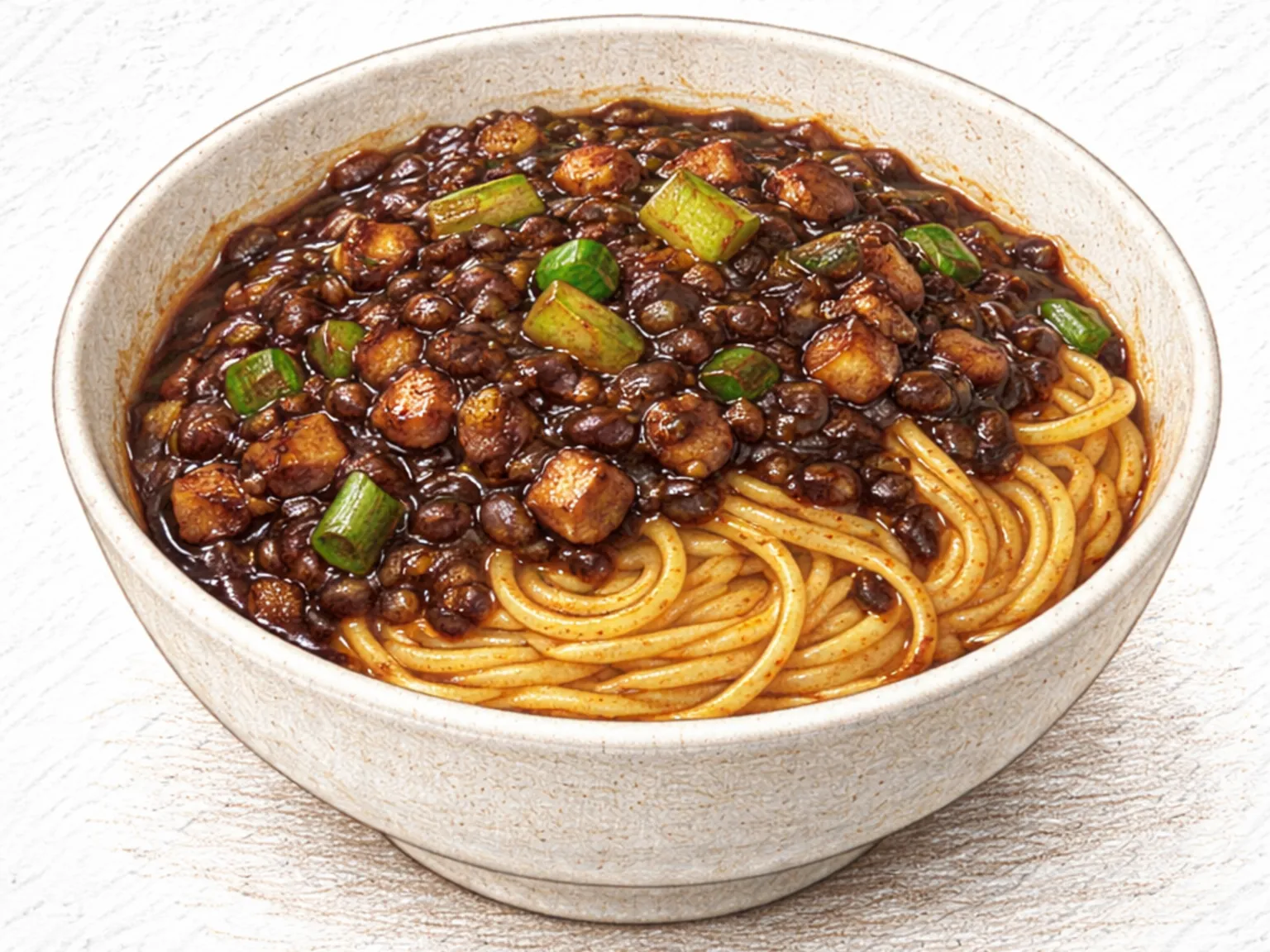
Bunsik-Style Korean Black Bean Noodles
Fry 70 g black bean paste in 3 tbsp oil over medium-low heat for 1 to 2 minutes, stirring constantly, until it looks glossy and smells roasted. Cook 140 g ground pork until the pink disappears, stir-fry the diced onion, zucchini, and potato for 4 to 5 minutes, then return the paste with the sugar and 300 ml water and simmer for 7 to 9 minutes, until a chopstick goes into the potato easily. Stir the starch slurry again and drizzle it in gradually until the sauce coats a spoon thickly.
Quick answer
- Total time
- 40 min
- Level
- Medium
- Servings
- 2 servings
- Ingredients
- 10
About this dish
Small cubes of potato and zucchini sit in a thick black bean sauce that clings heavily to the noodles, the way it does at Korean bunsik snack shops.
Read more
Some of the potato breaks down as it simmers and thickens the sauce on its own before the starch slurry is added. Frying the chunjang in oil first takes the edge off its raw bitterness, leaving the slow-cooked onion's sweetness to round it out.
Ingredients
Instructions
- 1
Dice the onion, zucchini, and potato into small, even cubes so they cook at the same pace.
Loosen the ground pork with a spoon or chopsticks before it goes into the pan, which helps it brown instead of clumping.
- 2
Heat the 3 tablespoons of oil over medium-low heat, then add the black bean paste.
Stir constantly for 1-2 minutes until the paste looks glossy and smells roasted, keeping the heat moderate so it does not scorch.
- 3
Add the 140 g of ground pork to the same pan and cook over medium heat.
Break it up as it cooks until the pink color disappears and the rendered fat looks clearer, which builds a cleaner base for the sauce.
- 4
Add the onion, zucchini, and potato, then stir-fry for 4-5 minutes.
Stop when the onion turns translucent and the potato edges look slightly cooked, but keep the vegetables moving so the paste residue does not stick.
- 5
Return the fried paste, then add the sugar and 300 ml of water.
Simmer over medium heat for 7-9 minutes, until a chopstick or fork goes into the potato easily and the sauce tastes rounded instead of raw.
- 6
Stir the starch slurry again, then drizzle it in gradually while mixing until the sauce coats a spoon thickly.
Boil the noodles, rinse briefly in cold water, drain well, and spoon the hot sauce generously over them.
Use-up ingredient planner
Turn these ingredients into two more meals
The overlap excludes basic seasonings. Open the next recipe and your selected dishes will stay with you.
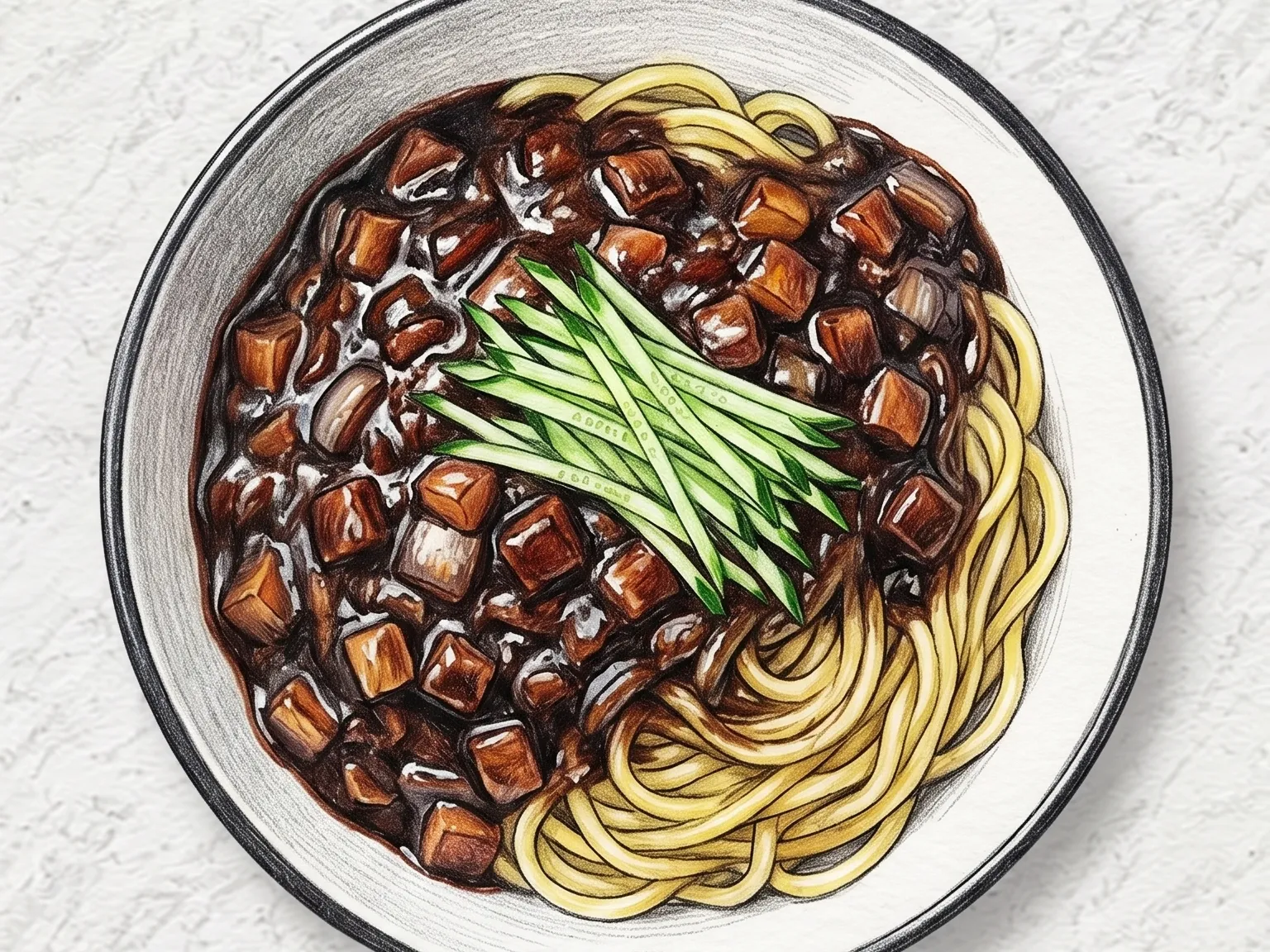
Korean Black Bean Noodles
fresh wheat noodles, black bean paste
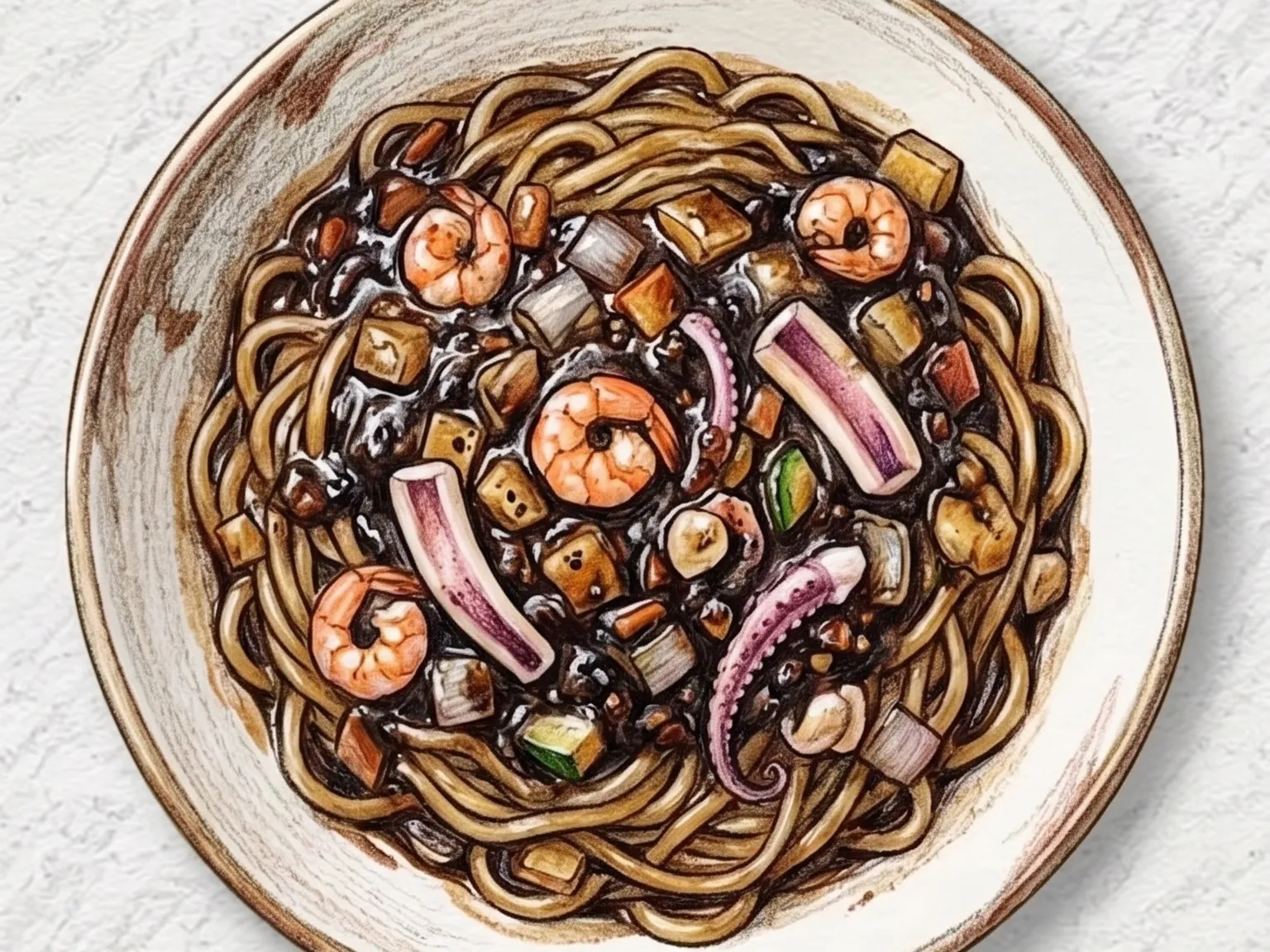
Seafood Jajangmyeon (Black Bean Noodles with Squid and Shrimp)
fresh wheat noodles, black bean paste
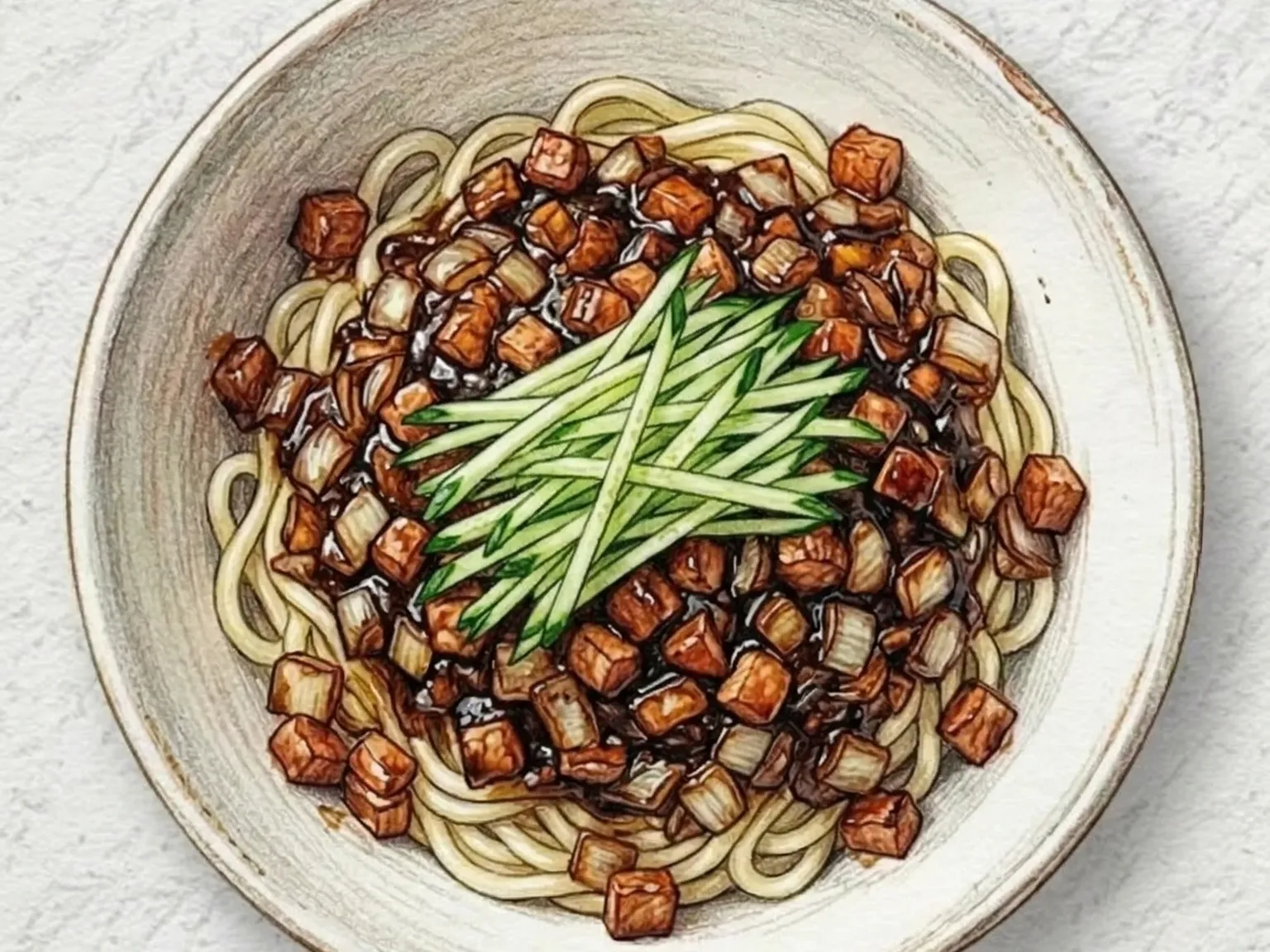
Gan Jjajangmyeon (Dry-Fried Black Bean Sauce Noodles)
fresh wheat noodles, black bean paste