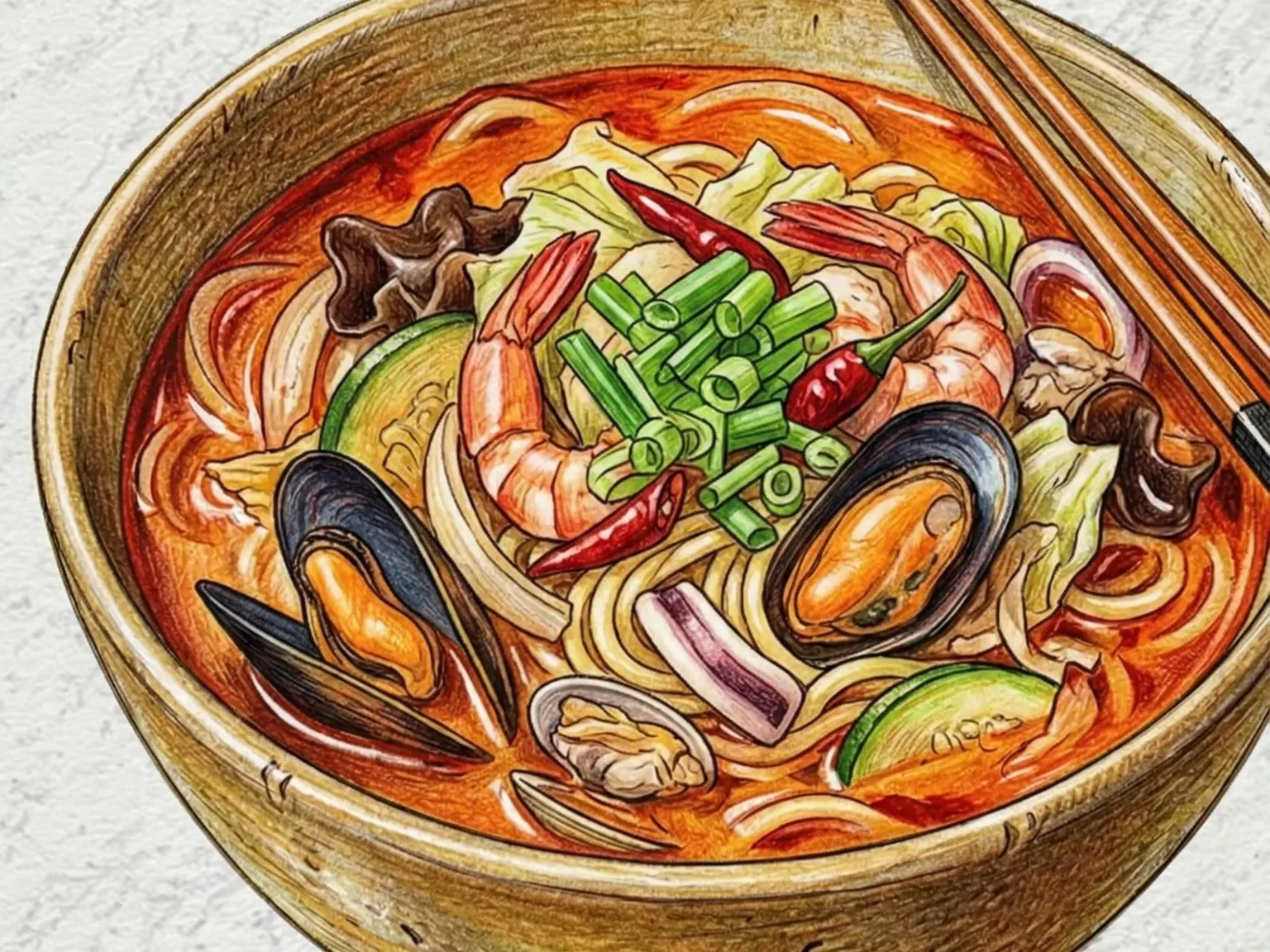
Korean Spicy Seafood Noodle Soup
Jjamppong is a fiery Korean-Chinese noodle soup where squid, mussels, and vegetables are stir-fried in chili-infused oil before being flooded with chicken stock and brought to a rolling boil. The high-heat frying step blooms the gochugaru in oil, embedding a smoky, roasted spice into the broth that raw chili powder alone cannot achieve. Cabbage, onion, and green onion soften into the liquid and release their natural sugars, while soy sauce ties the seasoning together. Springy fresh wheat noodles absorb the vivid red broth, delivering intense heat and deep seafood flavor in every mouthful.
Adjust Servings
Instructions
- 1
Cut squid into bite-size pieces and rinse mussels well.
- 2
Heat oil in a wok and stir-fry green onion to make scallion oil.
- 3
Add onion and cabbage, stir-frying on high heat until softened.
- 4
Stir in chili flakes for 20 seconds, then add squid and mussels.
- 5
Pour in soy sauce and stock, then boil for 6-7 minutes.
- 6
Cook noodles separately, place in bowls, and ladle over the soup.
As an Amazon Associate, we may earn from qualifying purchases.
Tips
Nutrition (per serving)
More Recipes

Korean Spicy Beef Soup Noodles
Yukgaejang guksu starts with a deep broth made by simmering beef brisket until the liquid turns rich and full-bodied. The meat is shredded along the grain and returned to the pot alongside fernbrake, bean sprouts, and green onion that have been seasoned with gochugaru, sesame oil, and garlic before a brief stir-fry. This pre-seasoning step lets the chili heat dissolve into the oil, producing a rounded spiciness rather than raw powder burn. Korean soup soy sauce adjusts the salt level without clouding the broth's color. Thin wheat somyeon noodles are boiled separately and added at the end so they absorb the broth without turning mushy. Swapping in glass noodles changes the texture to a chewier, more slippery bite that holds onto the soup longer.

Korean Mussel Soup Noodles
Honghap tangmyeon is a mussel noodle soup where a generous amount of mussels is simmered to produce a deeply briny, clear broth. Korean radish cooks alongside the mussels, lending the liquid a natural sweetness and a clean finish. Soup soy sauce and cooking wine adjust the seasoning, while minced garlic and green onion build an aromatic layer that keeps any fishiness at bay. A light dusting of black pepper over the steaming bowl sharpens the broth's marine character and warms the palate.

Korean Andong Guksi (Clear Beef Broth Celebration Noodles)
Andong guksi is a noodle tradition from the city of Andong in North Gyeongsang Province, where it has been served at weddings, ancestral rites, and important family events for centuries - in Korean culture, long noodles symbolize longevity. The broth is made by simmering beef brisket and bones for hours until the liquid is clear yet deeply flavored, with a clean gelatin richness that coats the lips. Wheat noodles - historically hand-pulled but now usually dried - are boiled separately, rinsed, and placed in the strained broth. The toppings are deliberately understated: thin strips of egg jidan, julienned zucchini, and perhaps a few slices of the boiled brisket. Seasoning with soup soy sauce and a touch of garlic keeps the broth transparent and lets the beef flavor speak. Unlike the bold, chili-heavy soups of Andong's other famous dish (jjimdak), guksi is an exercise in restraint and clarity.

Korean Anchovy Broth Thin Noodle Soup
Anchovy somyeon is the noodle soup Korean families turn to when the kitchen has nothing special - dried anchovies, a strip of kelp, and a bundle of thin wheat noodles are all it takes. The broth is built by simmering dried anchovies and dashima in water for fifteen minutes, then straining for a clear, umami-rich liquid with a faint oceanic sweetness. Somyeon - hair-thin wheat noodles - cook in a separate pot to prevent their starch from clouding the broth, then are rinsed under cold water until the strands separate cleanly. The noodles sit in a bowl of the hot broth, topped with sliced scallion, a drop of sesame oil, and sometimes a sheet of toasted gim. The appeal lies in its restraint: no chili, no fermented paste, just clean anchovy flavor meeting springy noodles. Korean mothers have served this as a quick lunch for generations, and it remains comfort food in its most distilled form.

Korean Seafood Hot Pot Soup
Haemul-tang is a Korean seafood hot pot that throws together crab, shrimp, clams, and squid in a fiery, brick-red broth. The liquid starts with gochugaru and plenty of garlic, building a spicy base that the seafood then amplifies with its own briny juices. Radish chunks soften as the pot bubbles, thickening the broth slightly and adding a cool sweetness behind the heat. Green onions and cheongyang peppers go in toward the end for a sharp, vegetal bite. The magic of haemul-tang lies in the convergence of flavors: crab shells release a sweet, crustacean stock; clams open to spill their liquor; shrimp and squid contribute distinct textures from snappy to chewy. The pot is brought to the table still at a rolling boil, and diners pick through the shells and tentacles while the broth continues to concentrate.

Korean Monkfish Soup (Spicy Southern Coastal Fish Broth)
Agwi-tang is the soup version of Korea's monkfish preparations, originating from the fishing villages along the southern coast where monkfish - called agwi or agu depending on dialect - is landed fresh. Unlike braised or stir-fried monkfish dishes, the tang form prioritizes a clear, brothy base built on anchovy stock. Radish simmers first for eight minutes, sweetening the liquid before the monkfish enters. The fish cooks gently at medium heat, its collagen dissolving into the broth and giving it body. Bean sprouts go in last, contributing a clean crunch that contrasts the soft fish flesh. A final addition of sliced green onion and a punch of gochugaru turns the broth a hazy red. This is hangover food in Korea's coastal towns - hot, spicy, and restorative, traditionally served steaming at dawn markets.