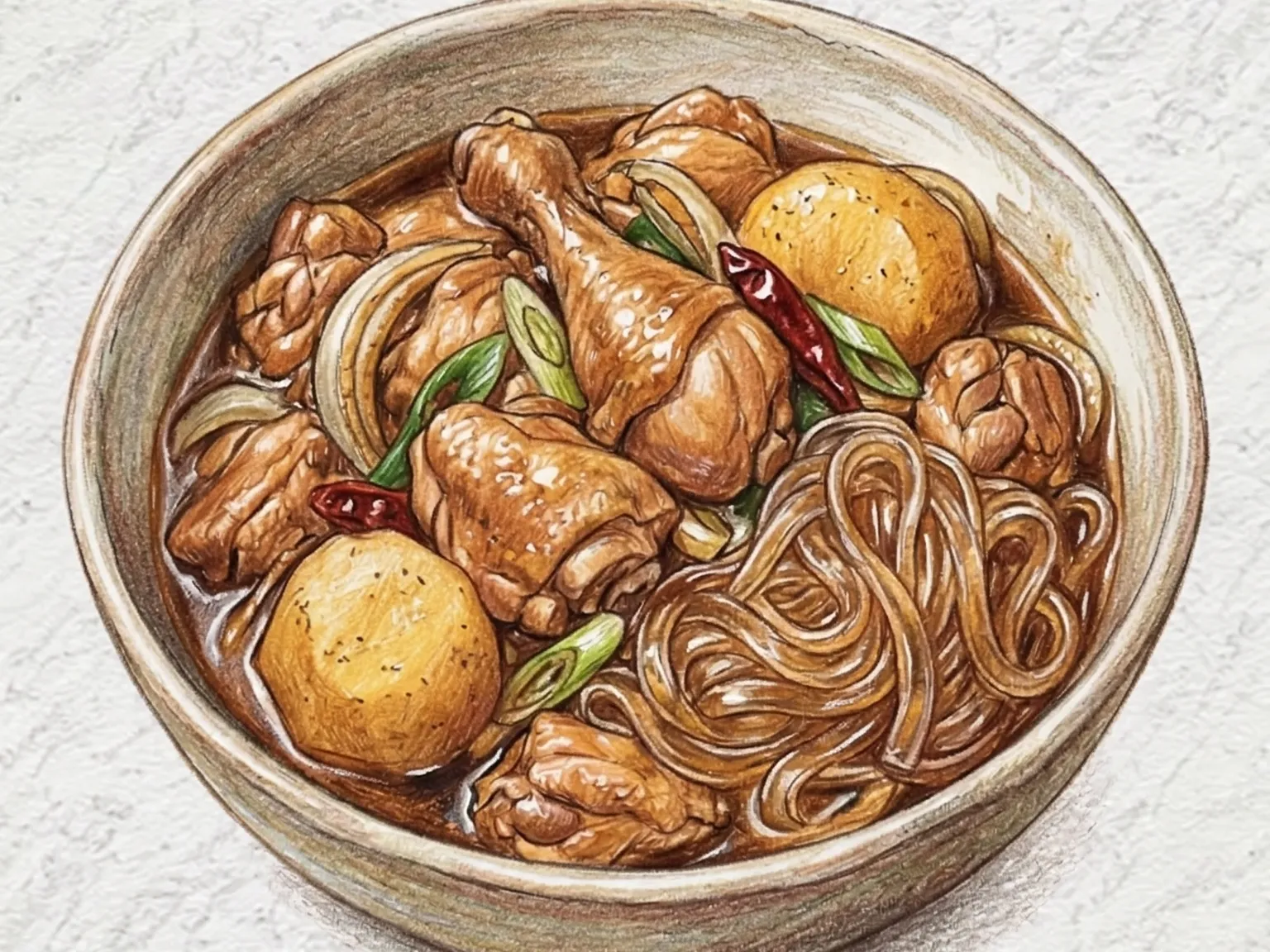
Korean Soy Braised Chicken with Glass Noodles
Jjimdak is a Korean braised chicken dish originating from the Andong region, featuring bone-in chicken, potatoes, and glass noodles simmered in a soy sauce, sugar, and garlic glaze. The soy-based sauce soaks into the chicken and potatoes, delivering a salty-sweet depth in every bite. Glass noodles swell as they absorb the braising liquid, becoming chewy and flavorful, while potatoes turn soft and starchy. As the dish reduces, the sauce thickens into a glossy coating that clings to each piece, making it irresistible over rice.
Adjust Servings
Instructions
- 1
Soak glass noodles in cold water for 30 minutes, then rinse and drain the chicken.
- 2
Cut potato and onion into large chunks.
- 3
Add chicken, water, soy sauce, sugar, and minced garlic to a pot and bring to a boil.
- 4
Reduce to medium heat, add potato, and simmer for 20 minutes.
- 5
Add onion and soaked noodles, then cook 8–10 more minutes until the sauce thickens.
- 6
Taste and adjust seasoning, turn off heat, and rest for 3 minutes before serving.
As an Amazon Associate, we may earn from qualifying purchases.
Tips
Nutrition (per serving)
More Recipes

Korean Andong Braised Chicken
Andong jjimdak is said to have originated in Andong's old market - Gu-sijang - during the 1980s, though its roots in soy-braised chicken cooking go back much further in Gyeongsang Province. Whole chicken pieces braise in a dark, concentrated sauce of soy sauce, sugar, gochugaru, garlic, and ginger until the meat nearly separates from the bone. Glass noodles - dangmyeon - are added toward the end, absorbing the braising liquid until they turn translucent and deeply stained. Potatoes and carrots provide bulk and sweetness, while dried red chilies and sliced cheongyang pepper deliver a layered heat that builds slowly. The finished dish arrives at the table in a wide, shallow pot, glossy and dark, with every component coated in the reduced soy glaze. It became a nationwide phenomenon in the early 2000s and remains one of Korea's most popular communal dishes, typically shared by two or three people over steamed rice.

Korean Chicken Japchae (Glass Noodles with Chicken Breast and Vegetables)
Dak-japchae is a variation of the classic Korean glass noodle stir-fry that uses chicken breast instead of beef. The chicken keeps the dish lean and light in flavor. Spinach, carrot, shiitake mushroom, and onion each bring a different texture and color, building multiple layers of taste in a single plate. Soy sauce and sugar strike the sweet-salty balance, and sesame oil coats the chewy glass noodles with a nutty richness. It delivers satisfying fullness with fewer calories than pork or beef versions of japchae.

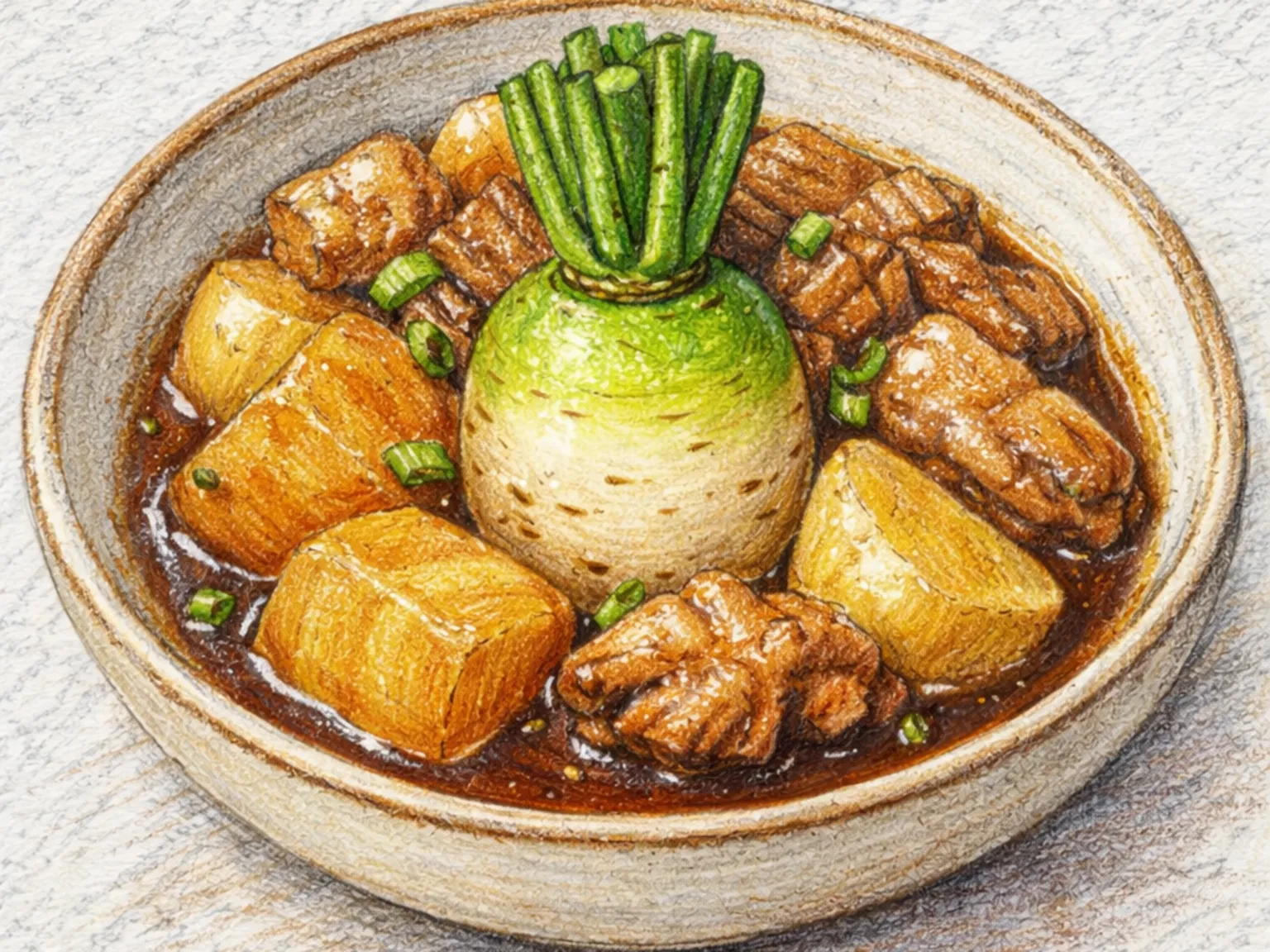
Korean Braised Flounder with Radish
Gajami-jorim is a Korean braised flounder dish where the fish is gently simmered with Korean radish in a soy sauce and chili flake broth. The delicate flounder flesh absorbs the seasoning while careful low heat keeps it from breaking apart. The radish serves a dual purpose, neutralizing any fishiness while contributing a clean, refreshing sweetness to the braising liquid. Spooning the reduced sauce over rice makes it a complete, standalone meal.

Korean Soy Braised Chicken
Dak-jjim is bone-in chicken braised with potato, carrot, and onion in a sauce of soy sauce, sugar, and garlic. Juices released from the bones meld with the soy seasoning to form a glossy, concentrated gravy, and the vegetables absorb this liquid so they are seasoned all the way through. Sugar tempers the saltiness of the soy into a clear sweet-salty balance that coats every piece. Served in a hot stone pot at the center of the table, it is one of the most familiar home-cooked dishes in Korean cuisine.

Korean Chicken Knife-Cut Noodle Soup
A whole chicken is simmered with scallion, garlic, and ginger until the broth turns cloudy and rich, then hand-cut wheat noodles are cooked directly in that liquid. As the noodles release their starch into the pot, the broth takes on a silky body that coats the palate, and the noodles themselves absorb the concentrated chicken flavor at every surface. Shredded chicken meat, pulled along the grain, is piled on top just before serving. Potato and zucchini chunks, added during the final minutes, contribute gentle sweetness and soft texture. A generous grind of black pepper over the steaming bowl sharpens the chicken aroma and adds a subtle warmth. On a cold day, this noodle soup delivers the kind of deep, lasting comfort that lighter broths cannot match.

Korean Soy Braised Chicken Chunks
Dakganjang-jjim is a Korean soy-braised chicken dish where bone-in thigh pieces are slowly simmered with potatoes and carrots in a soy sauce marinade. The chicken absorbs the salty-sweet seasoning deeply, yielding meat that is moist and full of umami. The vegetables cook down in the braising liquid, taking on a concentrated flavor without any added spice. It is a mild, comforting dish that works well as a main or a generous side over steamed rice.