Korean Steamed Mandu (Pork and Tofu Dumplings Steamed in Half-Moon Shape)
Quick answer
Jjin mandu are Korean steamed dumplings filled with a mixture of ground pork, thoroughly squeezed tofu, soaked glass noodles, garlic chives, and onion, seasoned with soy...
What makes this special
- Jjin-mandu presents half-moon dumplings filled with pork and tofu, steamed for a clean flavor.
- Steam cooking without oil lets the filling's pure flavors come through
- Pressing tofu dry in cloth is essential; excess moisture pools inside while steaming
Key ingredients
Core cooking flow
- 1 Wrap the 150 g tofu in a clean cloth and press firmly until it feels crumbly rather than wet.
- 2 Cut the 50 g soaked glass noodles into short pieces.
- 3 Place about one spoonful of filling in the center of each wrapper, without overfilling.
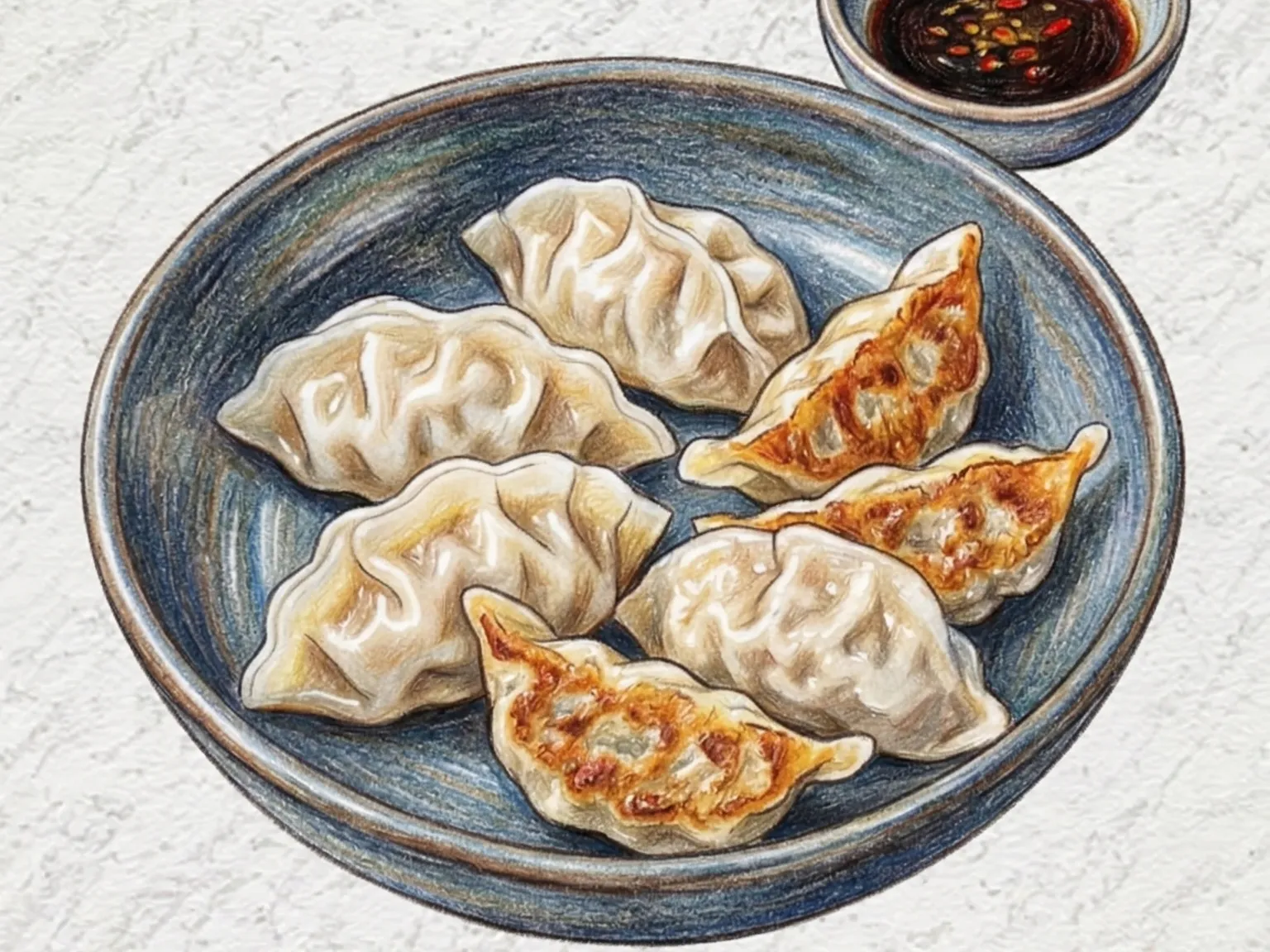
Jjin mandu are Korean steamed dumplings filled with a mixture of ground pork, thoroughly squeezed tofu, soaked glass noodles, garlic chives, and onion, seasoned with soy sauce and sesame oil, then folded into crescent shapes and steamed for 12 to 15 minutes. The steaming method sets these apart from pan-fried or boiled dumplings in a fundamental way: no oil is added, so the wrapper stays moist and clings to the filling rather than crisping, and the filling's own flavors come through without the richness that frying introduces. Removing as much moisture as possible from the tofu before mixing it in is one of the most important steps - tofu that has not been squeezed dry will release liquid during steaming and make the filling watery and the wrapper soggy. Once the moisture is gone, the tofu blends into the pork and gives the filling a softer, more yielding texture than ground meat alone. Garlic chives provide a pungent, grassy bite that naturally cuts through the fat in the pork, while the glass noodles add a slippery, chewy element that contrasts with the tender meat. At the end of steaming, the wrappers turn translucent and the filling becomes just visible through the dough - a reliable sign that the dumplings are fully cooked. A dipping sauce of soy sauce, rice vinegar, and red chili flakes provides acidity and heat that lifts the mild, clean flavor of the filling.
Instructions
Read the steps as a cooking flow: prep, heat, seasoning, doneness control, and finish.
- 1Prep
Wrap the 150 g tofu in a clean cloth and press firmly until it feels crumbly rather than wet.
Finely chop the 80 g garlic chives and 80 g onion so no large pieces tear the wrappers.
- 2Season
Cut the 50 g soaked glass noodles into short pieces.
Add the pork, tofu, vegetables, garlic, soy sauce, sesame oil, salt, and pepper, then mix until the filling lightly binds and no wet pockets remain.
- 3Step
Place about one spoonful of filling in the center of each wrapper, without overfilling.
Moisten the edge with water, press out trapped air, and seal into a firm half-moon so steam does not open it.
- 4Heat
Line the steamer with paper and bring the water to a full boil first.
Arrange the dumplings with space between them, then place them in only after steady steam is rising.
- 5Control
Cover and steam over high heat for 12 to 15 minutes.
Avoid opening the lid often because the temperature drops quickly, and cook until the wrappers look translucent and the filling shows through faintly.
- 6Finish
Let the cooked dumplings stand for about 1 minute before lifting them so the softened wrappers tear less easily.
Serve with soy sauce, vinegar, and gochugaru dipping sauce, and freeze any uncooked extras.
After the steps
Pick a recipe that fits this dish.
Continue with shared ingredients, meal pairings, or a similar method.
Recipes That Go Well With This
More Street food →Based on shared ingredients and meal pairing
Korean Gullim Mandu (Round Dumplings)
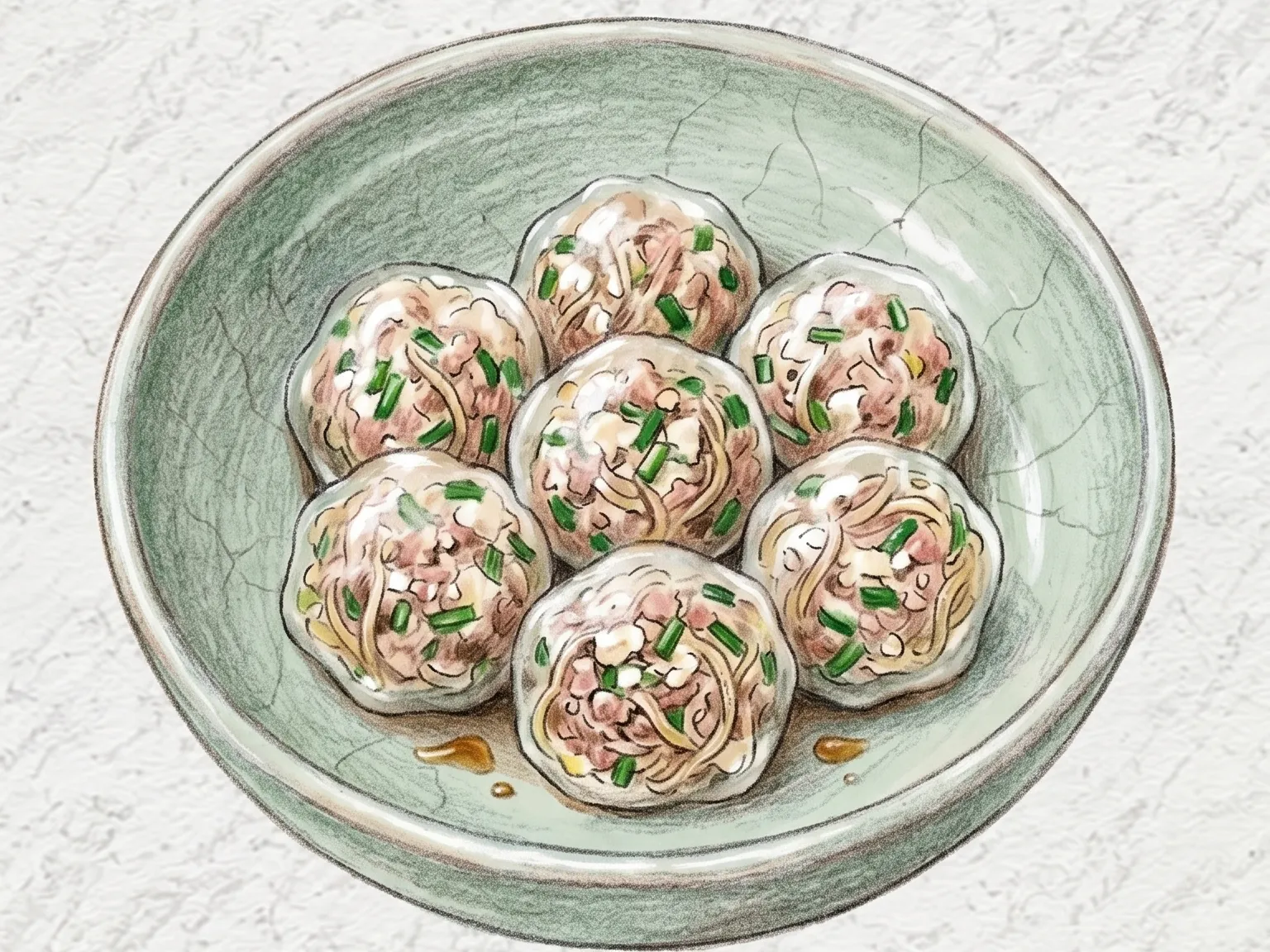
Gullim-mandu is a Korean dumpling made without wrappers. The filling of ground pork, pressed tofu, garlic chives, onion, and soaked glass noodles is kneaded firmly until cohesive enough to be rolled into balls by hand. Each ball is then coated in potato starch or cornstarch, rolled until the surface is evenly covered, and placed in a steamer. As steam penetrates the starch coating, it sets into a translucent, chewy skin that is far thinner than standard dumpling wrappers yet carries a distinct springy resistance when bitten through. A second coat of starch before steaming produces a thicker shell with a more pronounced chew. Inside, the pork juices mingle with the sharp fragrance of garlic chives while the glass noodles contribute a soft, yielding bite. The traditional accompaniment is a dipping sauce of soy sauce, rice vinegar, sesame oil, and minced cheongyang chili. Gullim-mandu can also be dropped into tteok-guk or mandu-guk, where the starch on the exterior gradually dissolves into the broth and thickens it lightly over time.
Korean Meat Mandu (Pork and Beef Dumplings with Tofu Filling)
Gogi-mandu is a Korean meat dumpling filled with ground pork, ground beef, squeezed tofu, onion, scallion, and garlic, seasoned with soy sauce and sesame oil. Kneading the filling in a single direction develops myosin bonds in the meat proteins, giving the mixture a sticky consistency that helps it hold together and retain moisture during cooking. The pork contributes fat and a mild sweetness, the beef adds a deeper, more savory flavor, and the tofu, wrung dry before mixing, softens the overall texture and prevents the filling from becoming too dense. These dumplings can be steamed in a basket for a clean, light result, or cooked using the steam-then-fry method: a splash of water in a covered pan brings them through with heat, then the lid is removed and the bottoms are crisped directly on the pan surface, producing a golden, crunchy base that contrasts with the soft filling above.
Candied Sweet Potato
Goguma mattang is a Korean candied sweet potato snack made by cutting peeled sweet potatoes into large chunks and deep-frying them at 170 degrees Celsius until the interior turns floury and soft. A syrup of sugar, corn syrup, water, and a measured splash of soy sauce is cooked separately until large, foamy bubbles form - the visual cue for adding the fried sweet potatoes. Everything must be coated within thirty seconds to lock in a thin, glass-like caramel shell that crisps and turns translucent as it cools. The soy sauce shifts the flavor from purely sweet to a rounded, slightly savory depth. Pre-draining surface moisture from the cut sweet potatoes reduces oil splatter during frying and helps the syrup grip the pieces evenly. Black sesame seeds are scattered over the finished pieces for a toasted, nutty note, and each piece is spread individually on parchment paper while still warm so they cool without sticking together.
Korean Shrimp Mandu (Chunky Shrimp and Pork Dumplings)
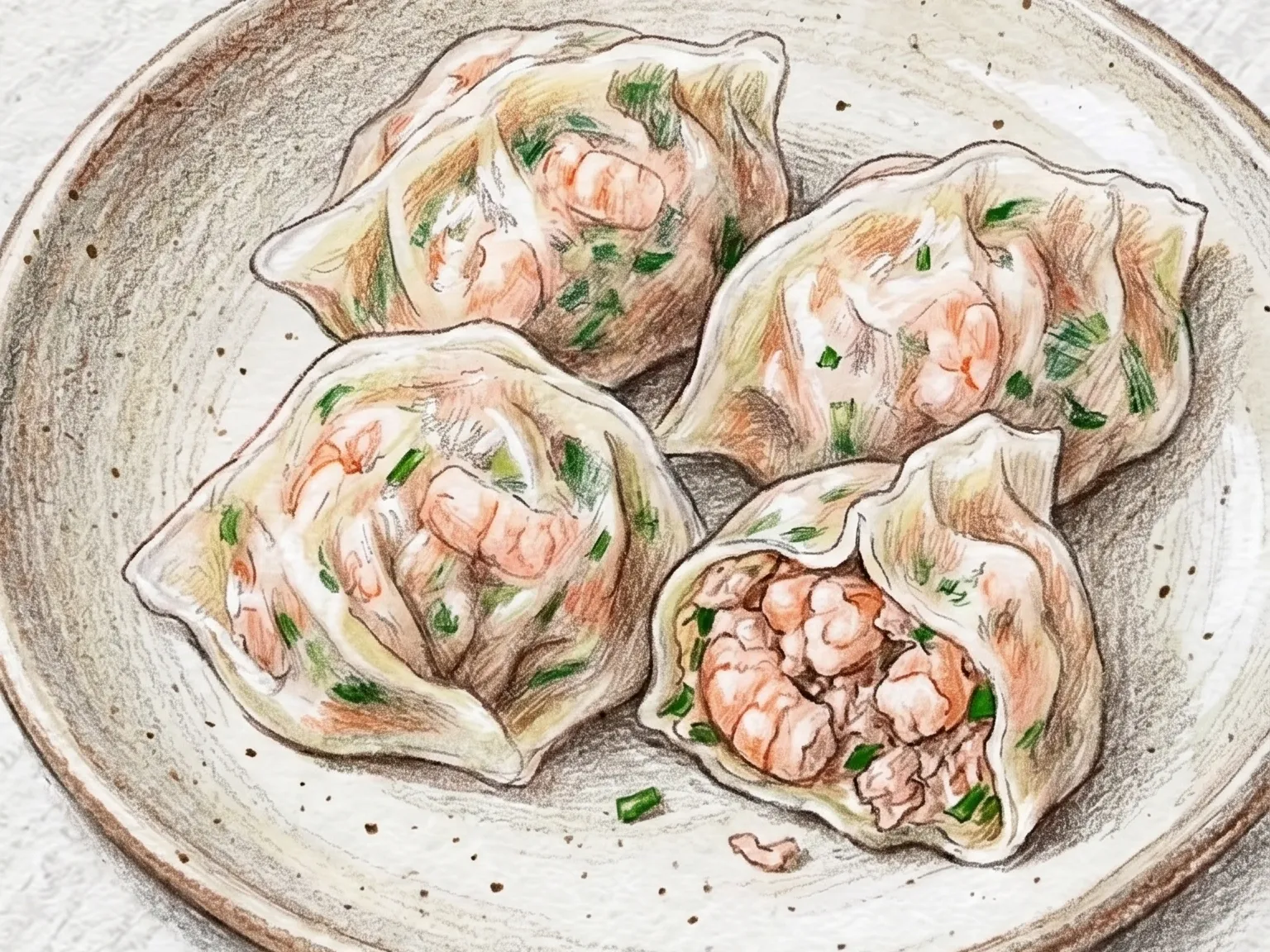
Saeu-mandu are Korean dumplings filled with coarsely chopped shrimp, ground pork, garlic chives, and onion. The shrimp is intentionally left in chunky pieces so each bite delivers a distinct pop of texture alongside the pork. The filling is seasoned with sesame oil and garlic, keeping the flavor clean with a gentle seafood sweetness underneath. Steaming turns the wrappers translucent and lets the pink shrimp show through, while pan-frying gives a golden, crisp bottom that contrasts with the soft upper shell.
Serve with this
Korean Potato Salad (Creamy Mashed Potato Ham Cucumber)
Korean potato salad arrived through Japan's yoshoku tradition but developed its own distinct identity in Korean home kitchens. Potatoes are boiled until tender and mashed while still hot, but not to a perfectly smooth consistency - leaving some lumps gives the salad a dual texture of creamy mashed potato and soft, intact chunks that hold together when eaten. Diced ham is pan-seared briefly to render out excess fat before being incorporated, preventing the finished salad from becoming greasy. Cucumber is salted and squeezed to remove water, which keeps the salad from turning watery as it sits. Boiled carrot is mixed in for color and a mild sweetness. The dressing is mayonnaise adjusted with sugar and salt, resulting in a distinctly sweet-creamy profile that is noticeably different from Western versions of the dish. Chilling the assembled salad for at least one hour before serving allows the seasoning to equalize throughout the mixture, improving the flavor considerably compared to eating it straight away. The salad is served as a banchan alongside rice, and it is also commonly spread inside sandwiches.
Kongguksu (Korean Cold Soy Milk Noodles)
Kongguksu is a Korean cold noodle dish in which thin somyeon noodles are served in a chilled broth made entirely from blended soybeans. Cooked white soybeans are peeled as thoroughly as possible to reduce any bitterness, then blended with cold water, sesame seeds, and salt until the mixture is smooth and creamy. The resulting soy broth is refrigerated until genuinely cold before use -- adding ice directly to the bowl would thin it out, so proper chilling in advance is the standard approach. Somyeon noodles are boiled until just cooked through, then rinsed vigorously under cold running water and briefly submerged in ice water to firm up their texture before being placed in the serving bowl. The cold soy broth is poured generously over the noodles, and julienned cucumber is arranged on top for color and crunch. Seasoning is personal: some eat it with salt only, others stir in a small amount of sugar. Straining the broth once through a fine mesh sieve eliminates any remaining gritty bits and gives the finished soup a noticeably silkier mouthfeel. High in plant protein and relatively light on the stomach despite its richness, it is exactly the kind of cold dish that makes summer heat more bearable. Black soybeans blended in alongside white ones deepen both the color and the toasty, nutty flavor.
Korean Soybean Drink (Creamy Blended Soybean Milk)
Kongmul is a traditional Korean soybean drink made by soaking dried white soybeans for at least eight hours, boiling them until fully tender, and blending them smooth together with toasted sesame seeds and pine nuts. Straining the blended mixture through a fine cloth produces a silky, cream-colored liquid with a deep, layered nuttiness. A pinch of salt and a drizzle of honey clarify and sharpen the clean bean flavor without masking it. Served chilled over ice, it functions as a protein-rich meal replacement during hot months. Kongmul is also used as the cold broth for noodle dishes, where plain cooked noodles are served submerged in the chilled liquid. Unlike commercial soy milk, kongmul contains no additives and captures only the flavor of the bean itself.
Similar recipes
Korean Crispy Kimchi Fried Dumplings
Kimchi gun mandu are pan-fried dumplings filled with finely chopped kimchi, squeezed tofu, ground pork, and green onion seasoned with soy sauce and garlic, shaped into half-moons. The bottoms are first crisped in oil, then water is added and the pan is covered for four minutes to steam the tops, achieving a contrast of crunchy base and moist upper wrapper. The kimchi's acidity and heat permeate the pork fat to create a more assertive umami than plain dumplings, and the tofu smooths out the filling's texture. A splash of vinegar in the soy dipping sauce cuts any greasiness.
Jeungpyeon (Fermented Makgeolli Rice Cake)
Jeungpyeon is a traditional Korean fermented rice cake made by mixing rice flour with makgeolli, resting the batter in a warm place for one hour until air pockets form throughout, then steaming for eighteen to twenty minutes. The yeast and lactic acid bacteria in the makgeolli break down the rice starch and generate small bubbles, and a supplementary amount of baking powder ensures the cake rises into a soft, sponge-like crumb. Raisins and pumpkin seeds pressed onto the surface just before steaming absorb heat and steam, the raisins plumping and the seeds releasing their richness directly into the top of the cake. Wrapping the steamer lid in cloth catches condensation before it can drip down and dimple the surface, which is the key to a smooth top. Unlike plain steamed rice cakes, jeungpyeon carries a faint tang and fermentation aroma from the makgeolli that sets it apart. Records place it at Joseon royal banquets, and it remains a particular favorite as a summer dessert when its lightness is most welcome.
Korean Kimchi Pancake
Kimchi-jeon is a Korean savory pancake made by chopping well-fermented kimchi into small pieces, mixing it into a batter of pancake flour, kimchi brine, and chili flakes, then frying the batter in oil until both sides turn golden and crisp. Using kimchi brine instead of plain water is the central technique: the lactic acid from fermentation adds a tangy depth to the flour base that water simply cannot provide. The batter consistency varies with how wet the kimchi is, so the target is a texture that runs slowly rather than puddles, which usually requires less liquid than might seem necessary. Neutral cooking oil or perilla oil suits the flavor profile better than olive oil, preserving the characteristic savory aroma of Korean pan-fried foods. Four minutes on the first side over medium-high heat followed by three minutes after flipping produces a crust that is genuinely crisp at the surface while the inside stays moist from the kimchi's own liquid. Pressing lightly with a spatula before flipping helps confirm that the underside has set firmly enough to hold its shape. A pancake that is too thin burns before it develops flavor, and one that is too thick leaves the interior underdone. Kimchi-jeon is at its best immediately off the pan, but a brief return to a dry skillet restores most of the crispness when reheating leftovers.
Tips
Nutrition (per serving)
Variations
Giant Korean Dumplings
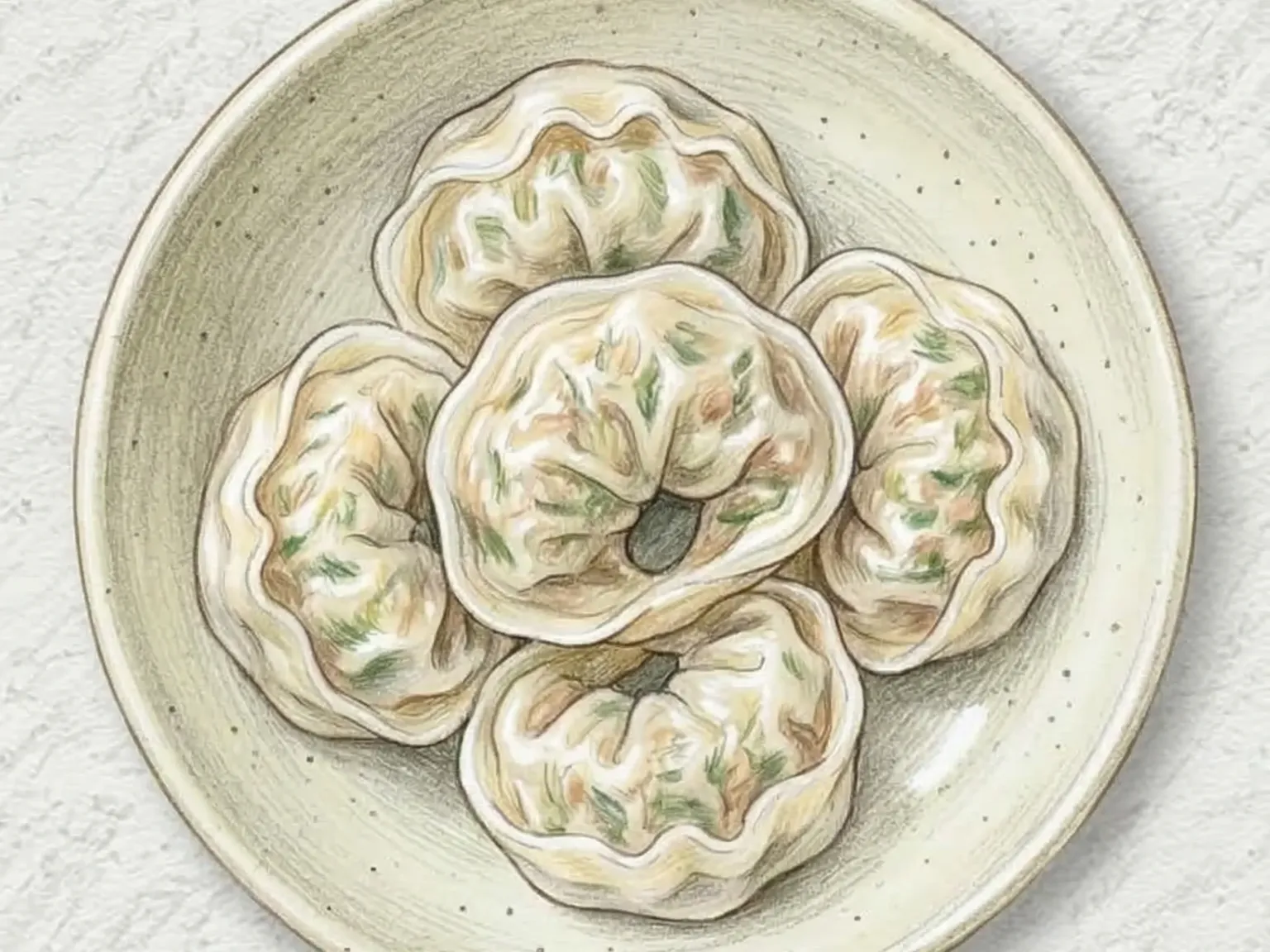
Extra-large Korean dumplings generously filled with seasoned pork, vegetables, and glass noodles. Steamed or pan-fried, they are a satisfying, hearty street food.