Korean Sweet Spicy Stir-fried Filefish Jerky

Korean Sweet Spicy Stir-fried Filefish Jerky

Quick answer

Jjipo-bokkeum is a Korean side dish made from flat dried filefish jerky tossed in a sweet and spicy glaze of gochujang, oligosaccharide syrup, soy sauce, garlic, and sesame oil.

What makes this special

  • Dried filefish jerky tumbles in a sweet gochujang glaze for a chewy, Korean drinking-snack staple.
  • Filefish jerky pre-toasted on low heat before sauce is added for nuttiness
  • Oligosaccharide glaze softens the stiff jerky into a yielding chew
Total time
15 min
Level
Easy
Servings
4 servings
Ingredients
7
Calories
210 kcal
Protein
17 g

Key ingredients

dried filefish jerkygochujangsoy sauceoligosaccharide syrupsugar

Core cooking flow

  1. 1 Cut 120 g dried filefish jerky into bite-size pieces with scissors.
  2. 2 Mix 1 tablespoon gochujang, 1 tablespoon soy sauce, 1.5 tablespoons oligosac...
  3. 3 Add 1 tablespoon cooking oil to a pan and warm it over low heat.

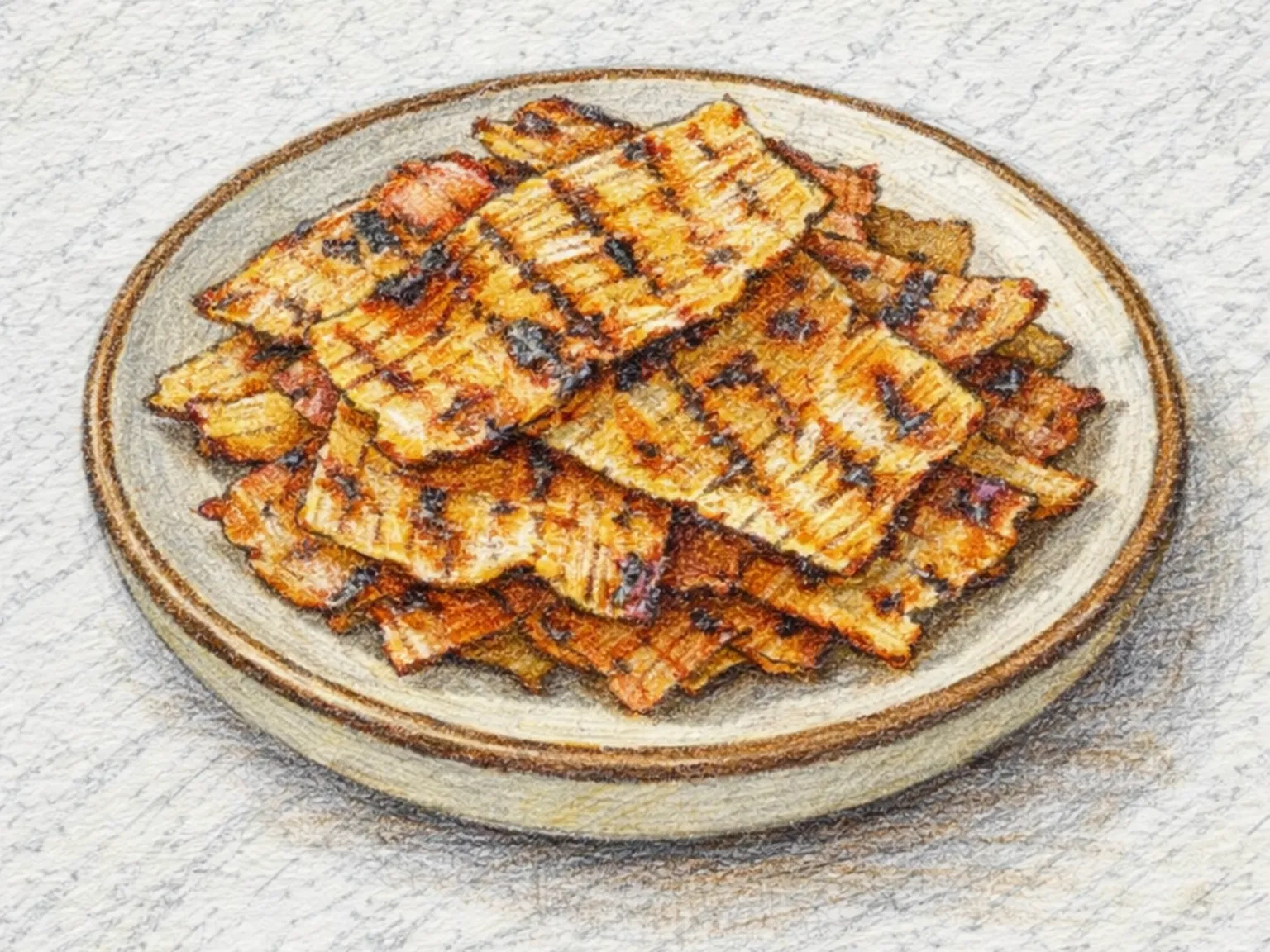
Jjipo-bokkeum is a Korean side dish made from flat dried filefish jerky tossed in a sweet and spicy glaze of gochujang, oligosaccharide syrup, soy sauce, garlic, and sesame oil. The jerky pieces are lightly pan-fried in a small amount of oil first to develop a toasty, nutty surface before the sauce goes in, which builds an initial layer of flavor and texture before the glaze coats the outside. The seasoning sauce is added over low heat and the pan is kept moving to prevent the sugar in the oligosaccharide syrup from burning, coating each piece evenly in a glossy, sticky layer. The syrup softens the otherwise tough chew of the dried fish so that each piece bends slightly rather than snapping, and every bite releases the filefish's concentrated, deeply savory umami that builds with each chew. Made ahead and stored refrigerated, jjipo-bokkeum keeps its flavor well for five to seven days, making it one of the more practical banchan to prepare in advance. It works equally well as a rice side, an afternoon snack eaten on its own, or served alongside drinks as an anju.

Prep 8min Cook 7min 4 servings

Instructions

Read the steps as a cooking flow: prep, heat, seasoning, doneness control, and finish.

6 steps
  1. 1
    Prep

    Cut 120 g dried filefish jerky into bite-size pieces with scissors.

    Keep the pieces about 3 to 4 cm wide so they stay flexible and do not dry out or crumble too quickly in the pan.

  2. 2
    Season

    Mix 1 tablespoon gochujang, 1 tablespoon soy sauce, 1.5 tablespoons oligosaccharide syrup, and 1 teaspoon sugar before cooking.

    A smooth sauce coats faster, which helps prevent the jerky from turning hard while you stir.

  3. 3
    Control

    Add 1 tablespoon cooking oil to a pan and warm it over low heat.

    Add the jerky and stir for about 1 minute, turning the pieces until the surface smells lightly toasted and looks a little drier.

  4. 4
    Control

    Reduce the heat to very low and add the mixed sauce.

    Because the syrup can burn quickly, keep shaking and tossing the pan, coating all the pieces within about 30 seconds instead of letting the sauce sit.

  5. 5
    Season

    Once the sauce clings in a glossy layer, stir-fry only 30 seconds to 1 minute more.

    Stop when the pieces bend slightly and feel softer, rather than cooking longer until the glaze thickens and the jerky stiffens.

  6. 6
    Step

    Turn off the heat, sprinkle in 1 teaspoon sesame seeds, and toss evenly.

    The glaze is stickier while hot, so let the dish cool briefly before serving it with rice, as a snack, or with drinks.

After the steps

Pick a recipe that fits this dish.

Continue with shared ingredients, meal pairings, or a similar method.

Recipes That Go Well With This

More Stir-fry →

Based on shared ingredients and meal pairing

Korean Stir-fried Dried Pollock Strips
Shared ingredient: toasted sesame seeds Stir-fry

Korean Stir-fried Dried Pollock Strips

Hwangtae-chae-bokkeum is a Korean side dish of shredded dried pollock strips soaked until fully soft, then stir-fried in a gochujang, oligosaccharide syrup, and soy sauce glaze. Hwangtae is a specific type of dried pollock produced by repeated freeze-thaw cycles in cold mountain air over winter, which gives it a lighter, spongier texture than ordinary dried pollock -- that porosity is what allows it to absorb the seasoning so completely during cooking. Soaking the dried strips in cold water for at least twenty minutes is necessary to rehydrate the flesh fully; squeezing out the excess moisture before adding them to the pan helps the glaze cling evenly rather than diluting in the pan. As the pollock fries, it drinks in the seasoning and turns chewy and moist, with the gochujang's heat and the syrup's sweetness working together to neutralize any residual fishiness. A finishing drizzle of sesame oil and a scatter of sesame seeds rounds out the flavor. The dish keeps well in the refrigerator for four to five days, making it a practical banchan to prepare in advance for lunchboxes or as a casual snack alongside drinks.

Korean Gochujang Fish Cake Stir-fry
Shared ingredient: toasted sesame seeds Stir-fry

Korean Gochujang Fish Cake Stir-fry

Gochujang eomuk bokkeum stir-fries chewy fish cake sheets in a glossy sauce of gochujang, soy sauce, oligosaccharide syrup, and minced garlic. Briefly blanching the fish cakes before they go into the pan removes excess grease, producing a cleaner-tasting dish where the spicy-sweet glaze clings evenly to each surface without any slipperiness. Onion lends natural sweetness that rounds out the chili heat, while diagonally sliced green onion adds a fresh, sharp finish. Sesame oil and toasted sesame seeds complete the dish with a nutty layer. Adding a small splash of water to the sauce keeps things moist if a softer finish is preferred. This is one of Korea's most reliable everyday banchan, equally suited to a weekday dinner and a packed lunchbox.

Korean Beef Fried Rice (Soy-Marinated Ground Beef Stir-fried Rice)
Serve together Rice

Korean Beef Fried Rice (Soy-Marinated Ground Beef Stir-fried Rice)

Sogogi bokkeumbap stir-fries soy-marinated ground beef with diced vegetables and day-old rice over high heat for a deeply savory fried rice. The beef goes in first, rendering its fat and leaving behind a flavorful fond that coats the pan. Onion, carrot, and zucchini follow, cooking just until their edges soften and their natural sugars begin to caramelize. Cold rice is added and tossed vigorously to break up clumps, picking up the soy seasoning and meat juices as it fries. A final drizzle of sesame oil right before plating adds a fragrant, nutty finish. The beef infuses the rice with a meaty depth while the vegetables keep the dish from feeling heavy, making it a quick, satisfying meal from everyday pantry ingredients.

Korean Sweet Spicy Pollock Floss Stir-fry
Similar recipe Side dishes

Korean Sweet Spicy Pollock Floss Stir-fry

Myeongyeopchae-bokkeum stir-fries finely shredded dried pollock floss in gochujang and oligosaccharide syrup until each fiber strand is evenly coated and moist. Myeongyeopchae is thinner and softer-fibered than hwangtaechae, the wider dried pollock strips, arriving in a dense cotton-like bundle that must be loosened strand by strand before cooking. Running your fingers along the grain separates the fibers cleanly, allowing the seasoning to penetrate evenly and preventing the finished banchan from clumping together in the mouth. A dry toast of thirty seconds in an oil-free pan drives off residual moisture and coaxes out a toasted fish aroma before gochujang, gochugaru, oligosaccharide syrup, soy sauce, and minced garlic go in over the lowest heat for a rapid coating. The fine fibers absorb the sauce almost immediately and turn pliant and glistening, but heat held too long draws the moisture back out, leaving them tough and stiff, so the entire stir-fry must be completed within two minutes. A finishing drizzle of sesame oil and a scatter of sesame seeds deepen the nutty aroma. The resulting banchan occupies a middle ground between the chewier, more aggressively seasoned hwangtaechae-muchim and the bolder jinmichae-bokkeum, its mild sweet-spicy profile approachable enough for children. The relatively dry finish means the seasoning does not bleed into adjacent items in a lunchbox, and stored in an airtight container in the refrigerator the flavor holds well for up to five days.

Serve with this

Korean Konjac Noodle Salad
Side dishes Easy

Korean Konjac Noodle Salad

Silgonyak-chae-muchim tosses 250 grams of blanched konjac noodles with julienned cucumber, carrot, and onion in a gochujang-based dressing spiked with vinegar, sugar, soy sauce, and garlic. Blanching the noodles for two minutes removes their faint alkaline smell and softens their rubbery chew to a pleasant springiness. The vegetables provide crisp contrast - cucumber adds a cool snap, carrot a mild sweetness, and onion a sharp bite. The dressing clings to the translucent noodles, turning them a vivid reddish hue. At only 95 calories per serving, this banchan relies on texture and bold seasoning rather than fat for its appeal. Chilling for 10 minutes before serving firms up the noodles and intensifies the tangy-spicy flavor profile.

🥗 Light & Healthy 🏠 Everyday
Prep 12min Cook 3min 2 servings
Korean Kimchi Mandu Jjigae (Kimchi Dumpling Stew)
Stews Easy

Korean Kimchi Mandu Jjigae (Kimchi Dumpling Stew)

Kimchi mandu jjigae drops whole frozen kimchi dumplings straight into a simmering pot of aged kimchi, tofu, and anchovy stock. The dumpling wrappers absorb the broth as they cook, swelling plump and moist, while the kimchi filling inside echoes the stew's tangy base and doubles the fermented depth. Gochugaru and soup soy sauce add a clean chili heat, and firm tofu cubes absorb the spiced broth for a softer textural contrast. Because the dumplings themselves carry seasoning, it is better to start with less sauce and adjust after tasting the broth. This is a filling, no-fuss meal that needs nothing more than a bowl of steamed rice alongside it.

🏠 Everyday ⚡ Quick
Prep 8min Cook 15min 2 servings
Refreshing Spicy Mulhoe Broth
Soups Easy

Refreshing Spicy Mulhoe Broth

A golden ratio recipe for a refreshing, spicy, and sweet-and-sour Mulhoe broth.

🔥 Trending Now ⚡ Quick
Prep 15min Cook 5min 2 servings

Similar recipes

Korean Spicy Stir-Fried Fish Cake
Side dishes Easy

Korean Spicy Stir-Fried Fish Cake

Square sheets of fish cake are sliced into uniform, bite-size pieces before being stir-fried in a seasoned glaze that balances spicy heat with a clear sweetness. One specific technique used in this recipe involves blanching the fish cake pieces in boiling water for a very short period before they enter the pan. This process serves two functions: it removes the excess oil from the manufacturing process and causes the surface of the fish cake to open up. This allows the sauce to adhere more consistently to each piece during the cooking process. When stir-fried over high heat, the edges of the fish cake undergo a light caramelization. This results in a subtle smoky flavor that adds a layer of complexity to the overall dish. The base of the sauce consists of gochujang, soy sauce, and oligodang. Oligodang is a Korean corn syrup that is used to give the dish a shiny, glossy finish while simultaneously tempering the sharp intensity of the fermented chili paste. During the cooking process, sliced onions are added and allowed to soften. The moisture released by the onions helps to deglaze the pan, which reintegrates concentrated flavors into the sauce and contributes a natural sweetness. Green onions are added just before the heat is turned off so they retain their fresh aroma and provide a crisp texture that contrasts with the rich sauce. To finish the dish, toasted sesame seeds are scattered over the top to provide a mild nutty flavor. This side dish is frequently included in packed lunches because the glaze maintains its integrity and the flavors become more concentrated as the dish cools.

🏠 Everyday 🍱 Lunchbox
Prep 8min Cook 10min 4 servings
Korean Butter Soy Stir-fried Dried Squid
Side dishes Medium

Korean Butter Soy Stir-fried Dried Squid

Butter-soy jinmichae-bokkeum stir-fries dried shredded squid (jinmichae) in melted butter with soy sauce and oligosaccharide syrup, making a banchan that is rich, salty-sweet, and distinctly different from the standard gochujang-dressed version. The butter's milk fat coats each strand of squid and creates a noticeably smoother mouthfeel than oil-based preparations. The sequence matters: garlic goes into the melted butter first and cooks for just twenty seconds to bloom its aroma without burning, then the soy sauce and syrup go in to form the glaze base, and only then does the jinmichae enter the pan. The entire stir-fry window is no more than two to three minutes - squid proteins contract and toughen quickly at high heat, so extended cooking ruins the texture. Half a tablespoon of gochugaru is enough to add gentle warmth and a reddish tint without overriding the butter's character. This banchan works in children's lunchboxes and holds up equally well as a beer snack.

🏠 Everyday 🍱 Lunchbox
Prep 10min Cook 8min 4 servings
Korean Spicy Gochujang Dried Squid Stir-Fry
Side dishes Easy

Korean Spicy Gochujang Dried Squid Stir-Fry

Jinmichae, shredded dried squid, is a Korean pantry staple valued for its chewy texture and the umami that builds and intensifies the longer you chew. This preparation coats the strands in a gochujang glaze, making it one of the most reliably present banchan in Korean households. Briefly soaking the dried squid in water before squeezing it dry softens the tough fibers and opens them to absorb the sauce more evenly. The sauce of gochujang, gochugaru, rice syrup, soy sauce, and garlic is stir-fried first over low heat to mellow the raw chili sharpness, then the squid is tossed through quickly over the same heat. Sesame oil and toasted sesame seeds are added off the heat, coating the strands in a sweet, spicy glaze that keeps well at room temperature for several days.

🏠 Everyday 🍱 Lunchbox
Prep 8min Cook 7min 4 servings

Tips

Cook briefly on low heat to keep it from turning too hard.

Nutrition (per serving)

Calories
210
kcal
Protein
17
g
Carbs
14
g
Fat
9
g