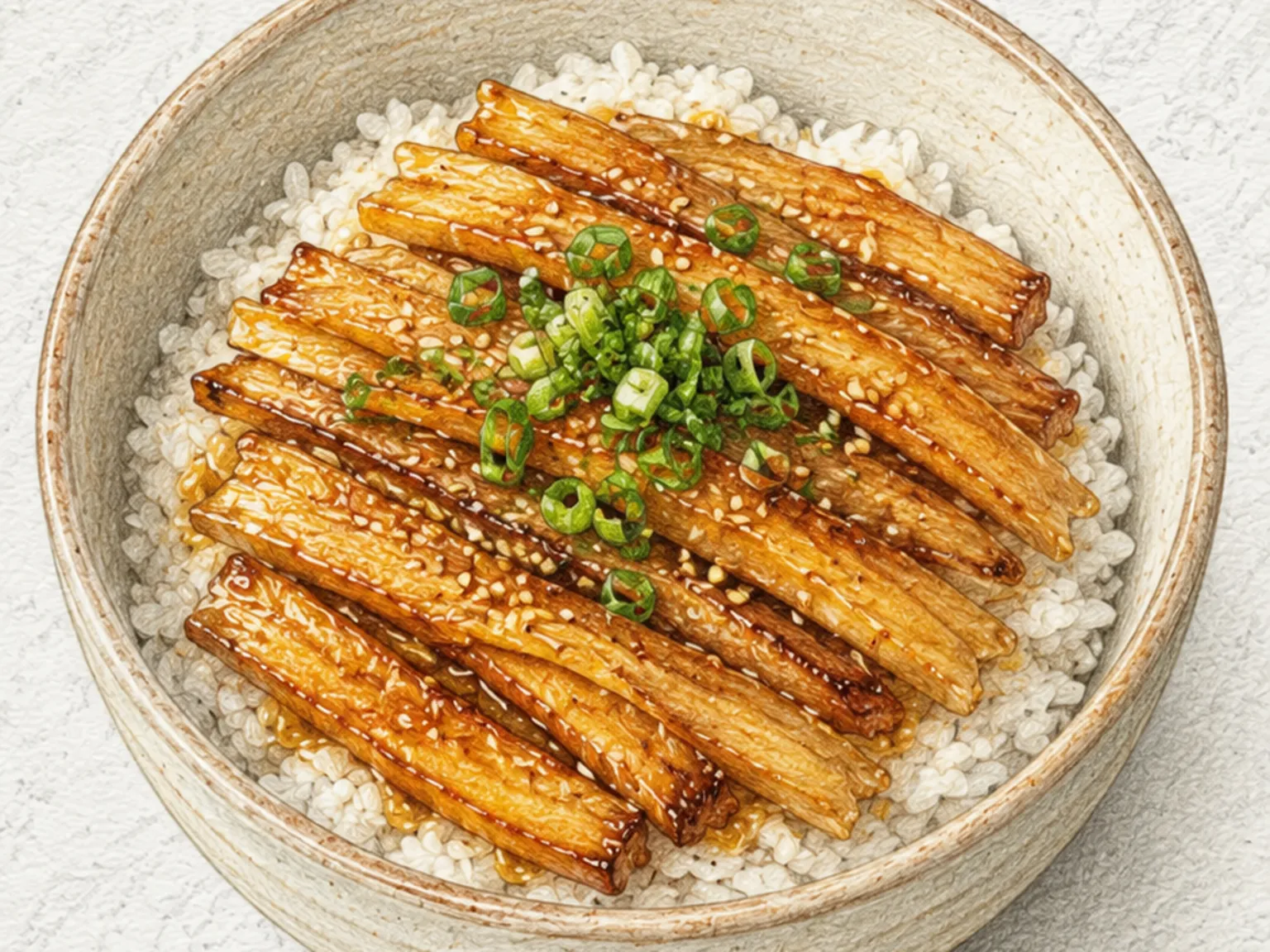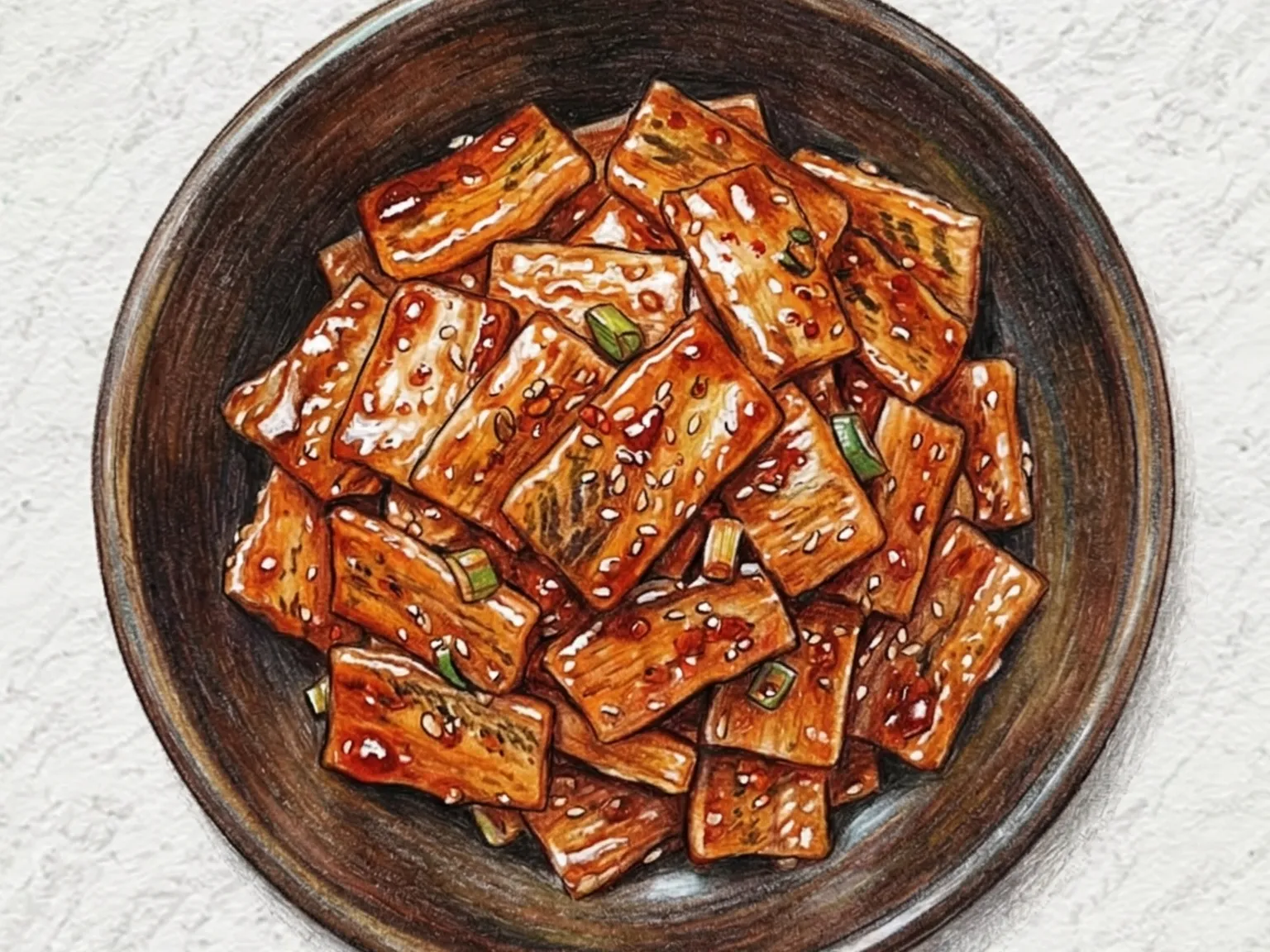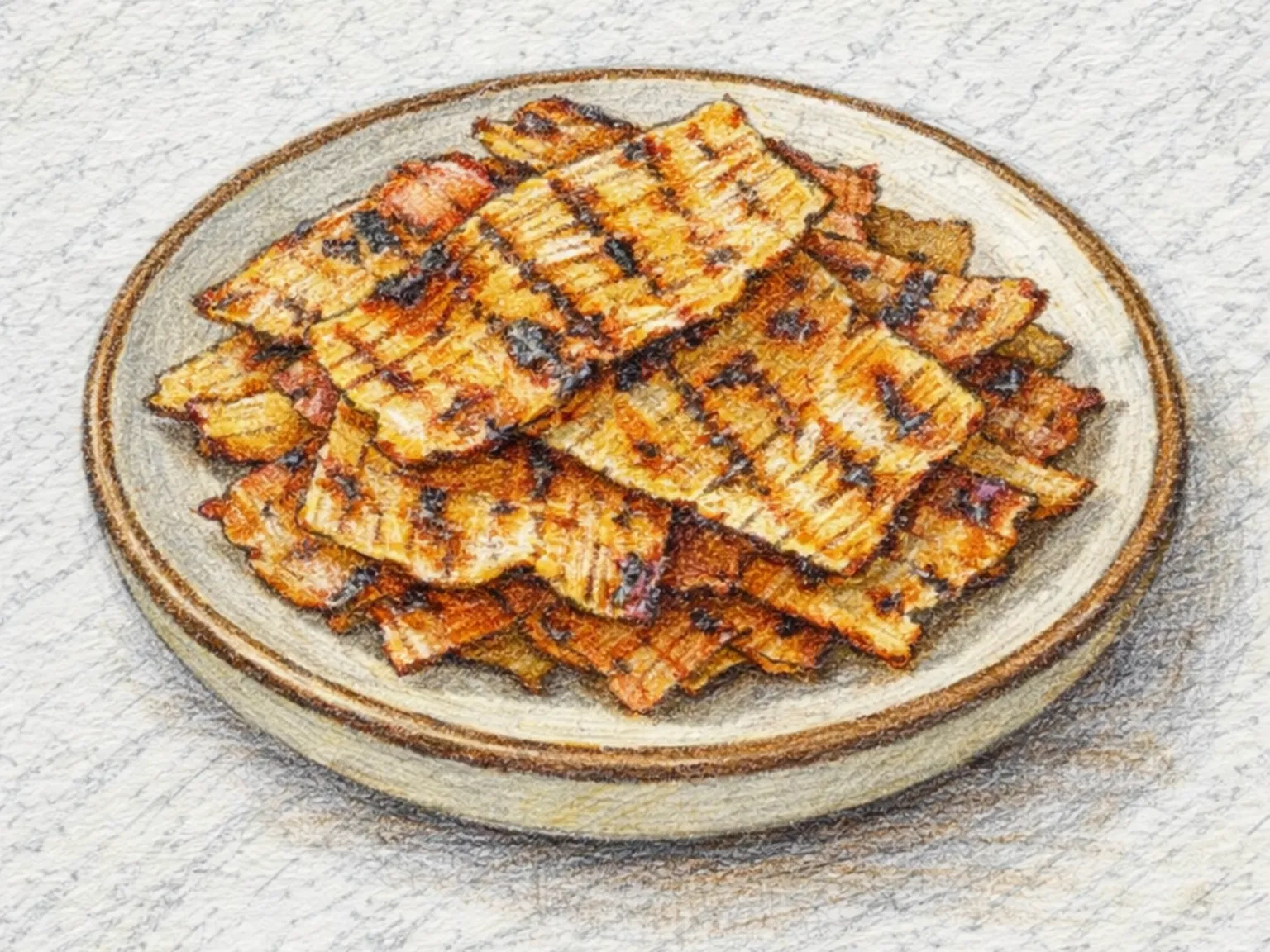
Korean Grilled Filefish Jerky
Quick answer
Jjipo-gui is a Korean bar snack made by pan-grilling dried filefish jerky in melted butter until golden on both sides.
What makes this special
- Pan-grilling dried filefish in butter intensifies the concentrated umami of Jjipo-gui.
- Butter fat bonds with dried filefish's concentrated umami for layered flavor
- Oligosaccharide-soy glaze caramelizes only at medium-low; high heat turns it bitter
Key ingredients
Core cooking flow
- 1 Wipe both sides of 150g filefish jerky lightly with a damp paper towel to re...
- 2 Mix 1 teaspoon soy sauce with 1 tablespoon oligosaccharide syrup until smooth before heating the pan.
- 3 Warm the pan over medium-low heat and add 15g butter, letting it melt slowly across the surface.
Jjipo-gui is a Korean bar snack made by pan-grilling dried filefish jerky in melted butter until golden on both sides. Jjipo - dried and pressed filefish - has a dense, chewy texture and a concentrated umami that intensifies the longer you chew, which is what makes it so effective as drinking food alongside beer or soju. Grilling it in butter rather than oil adds a rich, nutty fat quality that complements the inherent savoriness of the dried fish in a way that neutral oil cannot. A thin glaze of soy sauce and oligosaccharide syrup applied near the end of cooking transforms the surface into a glossy, sweet-savory crust that caramelizes without burning, and a pinch of red chili flakes dusted over the top adds a mild heat that persists through the finish. The key to getting the glaze right is temperature control - medium-low heat allows the sugars to caramelize gradually and evenly without scorching, while too high a flame will burn the coating and turn it bitter before the fish has fully grilled through. Too low, and the moisture simply steams off without the glaze setting properly. Cutting the grilled jjipo into long strips with kitchen scissors before serving preserves the chewy pull of the jerky and makes it easier to share and eat in pieces without tearing.
Instructions
Read the steps as a cooking flow: prep, heat, seasoning, doneness control, and finish.
- 1Step
Wipe both sides of 150g filefish jerky lightly with a damp paper towel to remove white surface powder and any grit.
Lay the pieces flat in a single layer so they heat evenly in the pan.
- 2Season
Mix 1 teaspoon soy sauce with 1 tablespoon oligosaccharide syrup until smooth before heating the pan.
Keep the glaze ready and plan to brush it on thinly, because the sugar can scorch quickly once it touches heat.
- 3Control
Warm the pan over medium-low heat and add 15g butter, letting it melt slowly across the surface.
If the butter foams hard or starts turning brown too fast, lower the heat before adding the jerky.
- 4Heat
Place the filefish jerky in the butter and grill each side for about 1 1/2 minutes.
Flip when the edges begin to curl slightly and the surface turns golden, keeping the heat steady rather than hot.
- 5Heat
Lower the heat to low and brush a thin layer of glaze over both sides.
Grill for only 30 seconds to 1 minute, turning often, until the surface looks glossy and lightly tacky instead of wet.
- 6Finish
Sprinkle 1/2 teaspoon red chili flakes and 1 teaspoon sesame seeds over the glazed jerky, then turn off the heat.
Cut it into long strips with scissors and serve while warm for the best chewy texture.
After the steps
Pick a recipe that fits this dish.
Continue with shared ingredients, meal pairings, or a similar method.
Recipes That Go Well With This
More Drinks →Based on shared ingredients and meal pairing
Korean Sweet Spicy Stir-fried Filefish Jerky
Jjipo-bokkeum is a Korean side dish made from flat dried filefish jerky tossed in a sweet and spicy glaze of gochujang, oligosaccharide syrup, soy sauce, garlic, and sesame oil. The jerky pieces are lightly pan-fried in a small amount of oil first to develop a toasty, nutty surface before the sauce goes in, which builds an initial layer of flavor and texture before the glaze coats the outside. The seasoning sauce is added over low heat and the pan is kept moving to prevent the sugar in the oligosaccharide syrup from burning, coating each piece evenly in a glossy, sticky layer. The syrup softens the otherwise tough chew of the dried fish so that each piece bends slightly rather than snapping, and every bite releases the filefish's concentrated, deeply savory umami that builds with each chew. Made ahead and stored refrigerated, jjipo-bokkeum keeps its flavor well for five to seven days, making it one of the more practical banchan to prepare in advance. It works equally well as a rice side, an afternoon snack eaten on its own, or served alongside drinks as an anju.
Korean Salt-Grilled Shrimp
Saeu-sogeum-gui is a Korean salt-bed grilled shrimp prepared by spreading coarse salt in a heavy pan, laying whole shell-on shrimp over it, and covering with a lid to cook. The thick layer of heated salt acts as an indirect heat source that traps moisture inside the shells, so the shrimp flesh steams from within and retains its natural sweetness. After four minutes covered, the shrimp are flipped for three more minutes, then finished with a light coat of melted butter that adds richness on top of the salt's seasoning. Black pepper, chopped parsley, and a wedge of lemon complete the dish, proving that minimal ingredients and a simple technique can concentrate shrimp flavor more effectively than elaborate sauces.
Gotgam Cream Cheese Roll (Dried Persimmon Rolls)
Gotgam cream cheese roll is a no-cook Korean dessert that requires nothing more than a knife, a bowl, and a refrigerator. Dried persimmons are slit open and flattened into thin sheets, each one acting as the outer wrapper. The filling is cream cheese mixed with honey and fresh lemon juice to balance its natural richness with acidity, and finely chopped walnuts are folded in throughout to add a crunchy, nutty element to every bite. The filling is spread across the opened persimmon, which is then rolled tightly and wrapped in plastic wrap. Twenty minutes in the refrigerator firms the roll enough to slice cleanly. Dipping the knife in warm water and wiping it dry before each cut produces the smoothest cross-sections. The finished slices reveal clearly defined layers: the chewy, caramel-sweet dried persimmon on the outside, the tangy cream cheese in the middle, and flecks of walnut distributed throughout. The combination makes it a natural pairing with wine or a polished addition to a traditional holiday table.
Korean Grilled Dried Pollock
Nogari-gui is a classic Korean bar snack in which semi-dried young pollock is cut into pieces with scissors, then cooked in a buttered pan over medium-low heat until golden and crisp on both sides. The low-and-slow approach matters: the thin fish needs time to dry out evenly into a chewy-crisp texture without scorching on the surface. Butter melts into the fibrous dried flesh with each pass over the heat, coating the fibers with richness that plain dry-frying cannot replicate. The dipping sauce is a deliberate combination of gochujang and mayonnaise, loosened with lemon juice, sweetened with a pinch of sugar, and sharpened with minced garlic, producing a sauce that is spicy, creamy, tangy, and savory all at once. That sauce against the salty, umami-concentrated pollock is the reason one piece is never enough. Cutting with scissors rather than a knife exposes more cross-section of the dried fibers, helping the sauce cling more effectively. The snack is closely associated with the pojangmacha stalls of Noryangjin and remains one of the most requested accompaniments to cold draft beer in Korea.
Serve with this
Korean Avocado Gimbap (Creamy Avocado Crab Seaweed Rice Roll)
Avocado gimbap is a contemporary Korean roll that emerged in the 2010s as avocado shifted from a specialty import to a common supermarket staple in Korea. The timing of Korean avocado adoption is traceable: consumption roughly doubled between 2014 and 2018, driven by cafe culture and wellness trends, and this gimbap variant followed directly from that availability. Where traditional gimbap - danmuji, ham, spinach, carrot, egg - delivers discrete, clearly differentiated flavors in each bite, avocado gimbap works differently. The avocado at the center is buttery and neutral, its creaminess binding the other ingredients rather than competing with them. Selecting the right avocado matters considerably: the fruit must be ripe enough to yield when bitten without resistance, but firm enough to hold a clean slice. Underripe avocado is hard and flavorless; overripe avocado collapses when cut and turns the cross-section muddy. The rice is seasoned simply with sesame oil and salt, and the sheet of dried laver wrapping everything contributes a roasted, oceanic note. Crab stick placed lengthwise in the center, alongside julienned cucumber and a strip of egg jidan, creates the characteristic cross-section: concentric rings of green, white, and yellow that have made this version one of the most photographed gimbap in Korean food media. The avocado begins oxidizing and browning within an hour of cutting, so the roll is best eaten soon after assembly. It has become one of the highest-selling items in Korean convenience store gimbap sections, and a standard offering at gimbap specialty restaurants.
Crispy Seaweed Chips
Basak gim-bugak is a traditional Korean snack made of seaweed sheets coated with glutinous rice paste and fried until crispy. The process begins by cooking a thick mixture of water, glutinous rice flour, and salt. After cooling the paste, it is spread thinly onto half of a seaweed sheet. The sheet is folded in half and coated with another thin layer of paste to build a double-layer structure. Sesame seeds are scattered on top before drying. The sheets are dried in a dehydrator or an air fryer at 80 degrees Celsius until stiff and hard. Ensuring the seaweed is completely dry, especially at the edges, is crucial for a crisp outcome. The dried pieces are flash-fried in hot oil at 180 degrees Celsius for just two to three seconds. They puff up instantly and must be removed quickly to prevent burning.
Dasik (Korean Honey-Pressed Roasted Grain Confection)
Dasik is a traditional Korean pressed confection made by kneading roasted grain or nut powders with honey and pressing the mixture into carved wooden molds. Unlike baked goods, dasik holds its shape entirely through the binding power of honey, with no heat applied during preparation. This technique produces a texture that is slightly resistant at first contact, then dissolves gently at body temperature in a way that releases the full aroma of the main ingredient. Roasted soybean powder yields a nutty version, black sesame produces a deeply aromatic one, and additions of pine nut powder or cinnamon develop the flavor in different directions. The wooden molds carve decorative patterns into the surface of each piece, giving dasik a visual refinement that matches its restrained sweetness. For centuries, dasik has been a standard offering at Korean tea gatherings, and its subtle flavor remains a natural match for the gentle bitterness of green tea.
Similar recipes
Korean Garlic-Grilled Octopus
Muneo-garlic-gui is a Korean seafood drinking snack made by slicing pre-boiled octopus into bite-size pieces, seasoning them with salt, pepper, and red chili flakes, then searing them hard in olive oil with minced garlic over high heat. The garlic goes in first at low heat to bloom slowly in the oil, then the flame is raised and the octopus is added so the exterior chars rapidly while the interior stays springy and resilient. The olive oil coats the surface at high temperature and locks in moisture, producing a scorched crust outside and a genuinely tender bite within. A squeeze of fresh lemon juice at the finish cuts through the oil and brings the natural brininess of the octopus into sharp relief. The octopus should go straight to the table after cooking, as the texture toughens quickly, and thorough pan preheating is essential to getting the sear right.
Korean Grilled Dried Pollack
Hwangtae-po-gui is a grilled dried pollack snack prepared by brushing seasoning paste onto semi-dried hwangtae fillets and cooking them over medium-low heat. Hwangtae is pollack that has been freeze-dried repeatedly through winter cycles, a process that puffs up the flesh and gives it a softer grain and chewier texture than ordinary dried fish. A paste of gochujang, soy sauce, and oligosaccharide syrup is spread on both sides and grilled slowly so the sugars caramelize into a glossy, sticky coating. Minced garlic, sesame oil, and sesame seeds add roasted richness, and each torn piece delivers alternating salty and sweet notes. Cooking over high heat is a common mistake that chars the surface while leaving the interior hard and dry, so maintaining a low, patient heat is what allows the seasoning to penetrate fully and the fillet to stay moist. The finished snack pairs well with makgeolli or soju, and dipping torn pieces into mayonnaise is a widely practiced variation that softens the saltiness with a creamy counterpoint.
Korean Grilled Dried Pollack
Dried pollack strips are briefly moistened, coated in a paste of gochujang, soy sauce, and oligosaccharide syrup, then grilled low and slow. The slow heat lets the glaze seep into the chewy dried fish without charring, building layers of spicy-sweet flavor. A touch of sesame oil applied at the finish adds a toasted aroma that rounds out the dish. The sweet-spicy glaze filling the kitchen with fragrance as the fish grills is part of what makes this a beloved home-cooked snack. Controlling surface browning and internal doneness helps the ingredients cook evenly while keeping the final seasoning balanced.