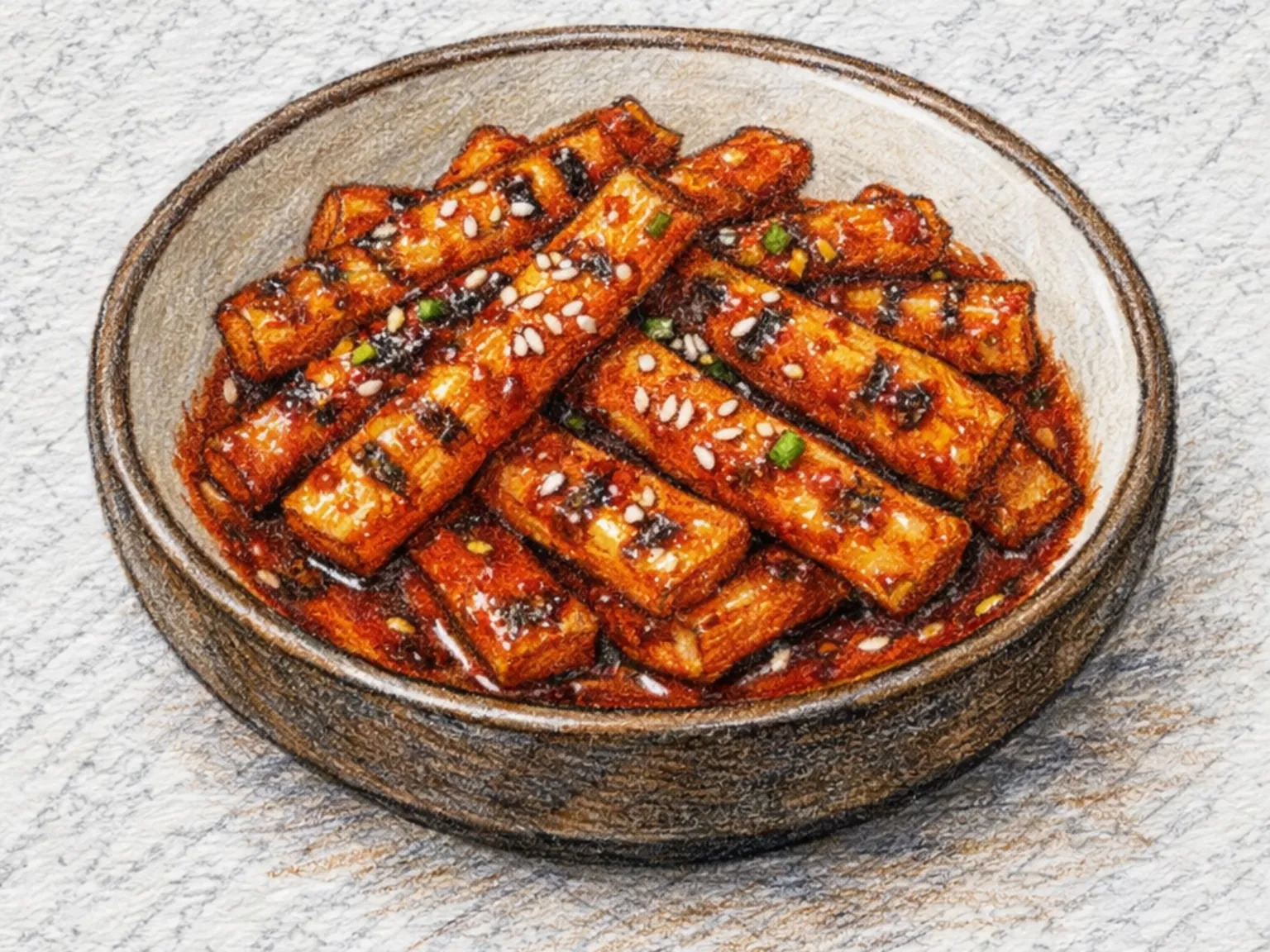
Korean Grilled Jjondeugi (Sweet Spicy Glazed Wheat Cracker Snack)

Korean Grilled Jjondeugi (Sweet Spicy Glazed Wheat Cracker Snack)

Quick answer

Jjondeugi-gui is a nostalgic Korean street snack made by gently heating thin pressed-wheat sheets over low heat until they become pliable, then applying a sauce of gochuj...

What makes this special

  • Jjondeugi-gui turns hard wheat sheets into chewy snacks over low heat with a spicy glaze.
  • Dry wheat cracker transforms from hard to chewy under gentle heat
  • Thin repeated glazing and grilling builds even flavor without scorching the surface
Total time
13 min
Level
Easy
Servings
2 servings
Ingredients
7
Calories
260 kcal
Protein
4 g

Key ingredients

jjondeugi sheetsgochujangsoy saucesugaroligosaccharide syrup

Core cooking flow

  1. 1 Separate the 6 jjondeugi sheets one by one and loosen any stuck edges.
  2. 2 In a bowl, mix 1 tablespoon gochujang, 1 tablespoon soy sauce, 1 tablespoon...
  3. 3 Warm a pan over low heat, then place the jjondeugi sheets in a single layer.

Jjondeugi-gui is a nostalgic Korean street snack made by gently heating thin pressed-wheat sheets over low heat until they become pliable, then applying a sauce of gochujang, soy sauce, sugar, oligosaccharide syrup, minced garlic, and sesame oil before returning them to the heat. The warming process shifts the sheets from rigid to genuinely chewy, and the sugars in the sauce caramelize slowly against the surface, building a sticky, sweet-spicy glaze that concentrates with each pass. Because the marinade has a high sugar content, applying it in a single thick coat scorches the outside before the heat can work evenly through the sheet. The correct technique is to brush on a thin layer, grill briefly, then repeat two or three times until the glaze has depth and the interior is fully softened. The finished pieces are cut into bite-size sections with kitchen scissors and served immediately while still warm.

Prep 5min Cook 8min 2 servings

Instructions

Read the steps as a cooking flow: prep, heat, seasoning, doneness control, and finish.

6 steps
  1. 1
    Step

    Separate the 6 jjondeugi sheets one by one and loosen any stuck edges.

    If they feel very stiff, lightly dampen the surface with water and let them sit for about 1 minute before heating.

  2. 2
    Season

    In a bowl, mix 1 tablespoon gochujang, 1 tablespoon soy sauce, 1 tablespoon sugar, 1 tablespoon oligosaccharide syrup, 0.5 tablespoon minced garlic, and 1 teaspoon sesame oil until the sugar starts dissolving and the sauce looks even.

  3. 3
    Control

    Warm a pan over low heat, then place the jjondeugi sheets in a single layer.

    Grill each side for about 20 seconds, turning when the edges curl slightly and the sheet feels more pliable when pressed.

  4. 4
    Season

    Do not spread the sauce thickly at once.

    Brush a thin layer over the first side, keep the heat low, and grill for 20 to 30 seconds until the surface turns glossy and lightly sticky instead of wet.

  5. 5
    Heat

    Turn the sheet over, brush the other side with another thin layer, and grill it the same way.

    If the color darkens too quickly, lower the heat further and turn it more often to prevent scorching.

  6. 6
    Finish

    Repeat the thin brushing and brief grilling 2 to 3 times so the glaze builds in layers.

    When the jjondeugi is soft through the center and glossy on the surface, cut it with scissors and serve warm immediately.

After the steps

Pick a recipe that fits this dish.

Continue with shared ingredients, meal pairings, or a similar method.

Recipes That Go Well With This

More Street food →

Based on shared ingredients and meal pairing

Watermelon Punch
Serve together Desserts

Watermelon Punch

Subak hwachae is a Korean summer punch that uses half its watermelon blended and strained into a smooth juice base, with the other half scooped into balls as garnish. Mixing the watermelon juice with milk creates a pink, creamy foundation, and lemon-lime soda is stirred in just before serving to preserve its fizz. Adding strawberries and blueberries introduces an acidic brightness and color contrast that watermelon alone lacks, and generous ice keeps the drink cold enough for the fruit aromas to stay sharp. Chilling the watermelon juice thoroughly before combining it with milk is essential to prevent the two liquids from separating. The layered colors of red watermelon, deep blueberries, and vivid strawberries in a single bowl make it as visually striking as it is refreshing, turning a straightforward summer drink into something worth presenting at the table.

Korean Job's Tears Walnut Latte
Serve together Drinks

Korean Job's Tears Walnut Latte

Yulmu-hodu latte is a traditional Korean grain-based beverage prepared by combining job's tears and walnuts with milk to create a thick and consistent texture. The preparation begins by soaking the job's tears in water for a minimum of two hours. This extended soaking period is necessary to soften the grains thoroughly, ensuring they pulverize completely during the blending process to avoid a gritty or sandy mouthfeel. Once softened, the job's tears are dry-toasted along with the walnuts in a pan. This heat application serves to caramelize the starches within the grains, which effectively removes the scent of raw grain and replaces it with a concentrated, roasted aroma. After the toasted ingredients are blended with milk, the liquid is passed through a fine strainer to achieve a smooth and silky finish. Sweetness is added using honey, accompanied by a small amount of salt to highlight the deep profile of the roasted nuts. A light sprinkle of ground cinnamon is applied to the surface to provide a subtle spice that balances the grounded flavor of the grain base. For cold servings, it is important to dissolve the honey while the liquid is still warm to ensure it distributes thoroughly throughout the drink instead of settling at the bottom of the container. The resulting beverage offers a depth of flavor and a rounded profile that is far more prominent than what is found in mass-produced, packaged versions of similar grain drinks.

Korean Rolled Omelette (Layered Vegetable Egg Roll)
Serve together Side dishes

Korean Rolled Omelette (Layered Vegetable Egg Roll)

Gyeran-mari - Korean rolled omelette - is a staple of Korean lunchboxes and dinner tables, a dish every Korean home cook masters early. Finely diced carrot, onion, and scallion are mixed into beaten eggs and poured in a thin stream across a lightly oiled rectangular pan. When the egg layer is half-set, it is rolled from one side to the other, then more egg mixture is poured beside the roll and the process repeats three to four times, building concentric yellow layers visible when sliced. Air trapped between the thin sheets gives the omelette its characteristic pillowy softness. Temperature control is critical - too hot and the egg browns; too cool and the layers will not bond. After cooking, wrapping the roll in a bamboo mat or kitchen towel for two minutes sets its shape into a clean cylinder. Found in school cafeterias, picnic bento boxes, and family dinners across Korea.

Korean Sausage Skewers
Similar recipe Street food

Korean Sausage Skewers

Sosiji kkochi are Korean sausage skewers made by scoring Vienna sausages deeply along their length and threading two or three onto wooden sticks, then pan-frying them until golden brown all over. The score marks serve a functional purpose: as the sausages heat, the cuts open up, allowing heat to penetrate to the center more evenly and creating edges that caramelize slightly and turn crisp. A thin film of oil in a medium-heat pan and steady rotation ensures even color across the entire surface, producing a skin that snaps on the outside while the inside stays juicy and springy. Ketchup and mustard are the classic accompaniments, with the tomato sweetness and the sharp, pungent bite of the mustard complementing the salt and fat of the sausage. Threading rice cakes between the sausage pieces transforms the skewer into a sotteok-sotteok style, a widely popular Korean street food variation. The dish comes together in under fifteen minutes and requires no special equipment beyond a pan and wooden skewers, making it a practical choice for a quick snack, a children's side dish, or a lunchbox item that holds up well at room temperature.

Similar recipes

Korean Grilled Rice Cake Skewers
Street food Easy

Korean Grilled Rice Cake Skewers

Tteokkochi are pan-seared rice cake skewers glazed in a thick gochujang-based sauce that builds depth through a combination of ketchup, oligosaccharide syrup, soy sauce, and minced garlic simmered down until the sauce reduces and concentrates. The rice cakes are first seared in a thin layer of oil until a lightly crisp shell forms across the surface before any sauce is applied, creating a textural contrast between the outer crust and the soft, chewy interior that defines what a good tteokkochi should feel like. The ketchup introduces a mild tomato acidity that tempers and rounds the raw heat of the gochujang, while the syrup adds sweetness without the grainy texture of sugar. After the sauce is brushed on, rolling the skewers over low heat for another minute fuses the glaze to the rice cake surface so it adheres firmly and does not peel off as the skewers cool. Adjusting the ratio of ketchup to syrup shifts the balance between sweetness and acidity, making it straightforward to tailor the sauce to individual preference. Making the sauce in a larger batch and storing it separately saves time on repeat preparations.

🧒 Kid-Friendly 🌙 Late Night
Prep 10min Cook 10min 2 servings
Korean Blood Sausage Skewers
Street food Easy

Korean Blood Sausage Skewers

Soondae-kkochi are Korean blood sausage skewers threaded alternately with onion and green onion pieces, pan-grilled and glazed with a sauce made from gochujang, ketchup, oligosaccharide syrup, and soy sauce. Applying the glaze in two separate rounds rather than all at once is critical: the first coat caramelizes and sets, then a second layer is brushed on over low heat to build a glossy, deeply lacquered finish without burning. The sundae must be cooked slowly over low heat, rolling it gently so the casing does not split while the interior stays chewy throughout. Onion and scallion segments release their moisture on the grill, concentrating into a natural sweetness that balances the bold, iron-rich flavor of the sausage and provides a textural shift between bites. A scatter of toasted sesame seeds over the finished skewers adds a final layer of nutty fragrance.

🧒 Kid-Friendly ⚡ Quick
Prep 15min Cook 12min 2 servings
Korean Kimchi Cheese Gimbap
Street food Easy

Korean Kimchi Cheese Gimbap

Kimchi cheese gimbap rolls seasoned rice, stir-fried kimchi, mozzarella cheese, and pickled daikon radish in sheets of dried seaweed. The kimchi must be stir-fried until all the moisture has evaporated before rolling: this concentrates the tangy fermented flavor and prevents the released liquid from softening the rice and making the seaweed tear during and after rolling. The fat in the mozzarella wraps around the kimchi's sharp heat and moderates it, and the pickled radish adds sweet-sour crunch that varies the texture across each bite. Keeping the cheese in a single narrow line down the center of the roll is the key technique for tight rolling and a clean cross-section: too much cheese makes the roll thick and causes the seaweed to split. Sliced processed cheese can be used in place of mozzarella and melts similarly. Brushing the outside of the finished roll lightly with sesame oil gives it a glossy surface and seals the seam.

🧒 Kid-Friendly ⚡ Quick
Prep 20min Cook 10min 2 servings
Korean Tteok Kkochi Yangnyeom Gui (Grilled Rice Cake Skewers)
Grilled Easy

Korean Tteok Kkochi Yangnyeom Gui (Grilled Rice Cake Skewers)

Cylinder rice cakes are threaded onto skewers, lightly brushed with oil, and rolled on a grill pan over medium heat for six to seven minutes until the exterior turns golden. A sauce of gochujang, ketchup, oligosaccharide syrup, soy sauce, and minced garlic is applied in two rounds, building a glossy red glaze that clings to the surface. The outer layer develops a slight crispness while the inside remains stretchy and dense - that textural duality is the hallmark of this dish. A light dusting of cheese powder turns it into a kid-friendly snack, and it stands as one of the most iconic items in Korean street-food culture.

🍺 Bar Snacks 🧒 Kid-Friendly
Prep 15min Cook 14min 4 servings
Korean Butter-Grilled Squid Beaks
Drinks Medium

Korean Butter-Grilled Squid Beaks

Ojingeo-ip-butter-gui is a Korean bar snack made by searing squid beaks in melted butter with minced garlic over high heat. Thoroughly patting the squid beaks dry with paper towels before they hit the pan is a non-negotiable step: any residual moisture causes violent splattering and prevents the butter from forming a direct, fragrant crust on the surface. Three minutes of rapid stir-frying over high heat keeps the texture springy and chewy rather than tough and rubbery, which is the line squid crosses the moment heat is applied too long. Adding soy sauce and cooking wine creates a savory glaze as the liquid rapidly evaporates and concentrates against the hot surface. A finish of red chili flakes and cracked black pepper introduces a clean, warm heat that lingers behind the buttery garlic aroma, rounding out every bite. The dish comes together in under five minutes, which makes it one of the most practical snacks to serve alongside drinks.

🍺 Bar Snacks
Prep 12min Cook 10min 2 servings

Tips

Direct flame adds smoky flavor, but keep heat low to avoid burning.
Apply sauce in thin layers so it caramelizes without scorching.

Nutrition (per serving)

Calories
260
kcal
Protein
4
g
Carbs
47
g
Fat
6
g